Enterprising teens need more than a career pathway or a good business idea — they need the right people around them and a passion strong enough to keep them moving forward.
After my son Jai and I discussed the first of Natalie Cook’s Five Ps, Purpose, I asked him to make a timeline of his life. I wanted him to focus on his surroundings, but more importantly, on the people who would be with him.
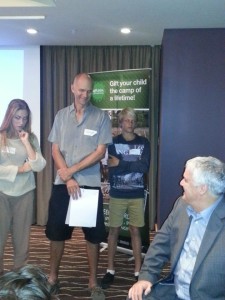
Jai thinking about the people and passions that could help shape his enterprising teen journey.
Why Enterprising Teens Need the Right People
Natalie Cook’s second P is People.
Attracting the right people in life is key to building a successful young entrepreneur. But whether Jai chose to be an enterprising teen or follow a different path, what mattered most to me was his mindset for success in whatever direction he chose.
So, I asked him to imagine where he would like to be sitting five years from now — and with whom.
Then ten years from now.
Then forty years from now.
I asked him to picture what was around him, who his associates were, and what made those people so valuable to him that their presence would still be visible in his future decades later.
What Natalie Cook Taught About People and Success
Natalie Cook’s career is a powerful example of what the right people, passion and support can help create. Her official Olympic profile describes her as a five-time Olympian and Olympic gold and bronze medallist in beach volleyball, making her a strong real-world role model for enterprising teens. Read more about Natalie Cook’s Olympic journey here.
Natalie discussed the value of surrounding herself with the right people while training to become an Olympic gold medallist. Around her were coaches, mindset mentors, professionals and peers whose encouragement lifted her up rather than criticism that tore her down.
This is a powerful lesson for enterprising teens.
The people around our children influence how they think, what they believe is possible, and the standards they quietly begin to accept for themselves. Friends, mentors, coaches, teachers, family members and business role models can all shape a child’s confidence and direction.
As parents, we cannot choose every influence our children will meet. But we can help them become more conscious of the people they allow close to them.
It is important for enterprising teens to spend time with the sort of people they would like to learn from, grow with and, in some ways, emulate.
This goes beyond simple peer pressure. Children and teenagers absorb attitudes, habits, language, confidence and expectations from the people around them. If they are constantly surrounded by people who complain, criticise or limit possibility, that can become their normal.
But if they are surrounded by people who encourage, create, question, build, serve and keep learning, that can also become their normal.
This does not mean they need to abandon old friends or judge others harshly. It simply means they can learn to ask better questions:
Who encourages me to become better?
Who helps me believe more is possible?
Who lives with values I respect?
Who makes me feel more confident, creative and capable?
Who would I love to learn from?
These are not just business questions. They are life questions.
Enterprising Teens Learn Success by Helping People
One of the things I love about business and enterprise is that, at its heart, it is about people.
It does not matter whether the enterprise is large or small. It could be a child’s first market stall, a family business, a service project, a creative idea, or a future company. When young people learn to be genuinely helpful to others, their chances of success increase.
Helping people gives enterprising teens and adults an energy that attracts the right people into their lives. It teaches them that business is not only about making money. It is also about solving problems, creating value and building relationships.
This is a lesson children can begin learning very early.
Why Passion Matters for Enterprising Teens
Natalie Cook’s third P is Passion.
People are naturally attracted to those who have passion for what they do. Passion gives energy to an idea. It helps a young person keep going when the excitement wears off and the work begins.
Natalie has spoken about the importance of loving the process, not just the outcome. That is a valuable message for enterprising teens, because the process is where most of the growth happens.
Success is not only found in the final result. It is found in the practice, the learning, the mistakes, the conversations, the courage and the small daily decisions that eventually become a life.
Jai wanted something he could stick with for the long term.
Having him visualise himself, his surroundings and his companions far into the future helped him reach a place that felt more connected to his own passion. It was something apart from what others were expecting of him. It was a desire that felt less likely to fade with time.
His spirit was guiding him, rather than the social conditioning of school, friends and family.
People and Passion Come Before the Pathway
This is one of the problems I see with the way many teenagers are asked to make career decisions.
They are often asked to choose a pathway before they have deeply considered the people they want around them, the kind of contribution they want to make, and the passions that might sustain them over time.
For enterprising teens, this matters.
A pathway without people can feel lonely.
A pathway without passion can become heavy.
But when a young person begins to understand who inspires them, who strengthens them, and what lights them up from the inside, their decisions become clearer.
That does not mean every choice becomes easy. It means the choices begin to come from a deeper place.
Natalie Cook’s Five Ps Series
This article is Part 2 in our series on Natalie Cook’s Five Ps for helping entrepreneurial kids and enterprising teens develop purpose, people, passion, perseverance, planning and a mindset for success.
If you could enlist three people in the world to personally be your friend and mentor, who would they be? Mine would be Richard Branson, Robert Kiyosaki and Michael Clouse. Leave us a comment and share who would be on your list.
Inside Green School Bali: The Bamboo School That Changed How We Thought About Education
Green School Bali is unlike almost any school we had encountered before.
Built largely from bamboo in the forest of Bali, this remarkable school combines nature, creativity, sustainability and real-world learning in a way that immediately challenges conventional ideas about what school should look like.
But what interested our family most was not simply the extraordinary bamboo architecture.
It was the question behind it: what happens when a school is deliberately designed to make children curious, engaged, creative and connected to the real world?
After hearing Green School Bali’s principal speak about its philosophy, and later seeing our own children experience some of those ideas through Green SuperCamp, it became one of those educational experiences we continued talking about for years.
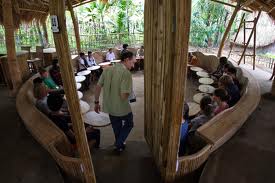
Green School Bali, the remarkable bamboo school set within the forests of Bali.
Editor’s note: This article was originally written during our early Enterprise for Kids journey and has been refreshed with updated formatting, links and reflections while retaining our original family experience of Green School Bali.
What Would You Like to Explore?
Green School Bali caught our attention for several reasons. Start with the part that interests you most, or keep scrolling for our full family story.
Why Is It Called Bali’s Bamboo School?
Explore the extraordinary bamboo architecture, natural campus and sustainable learning environment.
See the Bamboo Campus →
What Makes the Learning Different?
See how themes, creativity, real-world experiences and student engagement shaped the approach to learning.
Explore the Learning Approach →
What Did Our Kids Experience?
Follow our family connection with Green School Bali and the experience our children later had through Green SuperCamp.
Read Our Family Experience →
Green School Bali: A Different Vision for Education
Imagine a school with a natural, holistic, student-centred learning environment that encourages young people to be creative, innovative, environmentally aware and connected to the real world.
Many schools aspire to this kind of vision, but few capture the imagination quite like Green School Bali.
Located in the forests of Bali, Indonesia, the school is famous around the world for its remarkable bamboo buildings. This is why people searching for the bamboo school in Bali are often looking for Green School Bali.
But the buildings are only one part of the story.
The school also stood out to us because of its philosophy, curriculum, connection with nature and its willingness to question conventional ideas about how children learn.
Why Green School Bali Is Known as the Bamboo School
Green School Bali is famous for its extraordinary bamboo architecture.
One of the first things that makes Green School Bali unforgettable is the campus itself.
The school was constructed largely from bamboo and natural materials, creating buildings that seem to belong to the tropical landscape rather than sit apart from it.
For anyone searching for “bamboo school Bali” or “Bali bamboo school”, this extraordinary campus is usually what first captures their attention.
But the bamboo architecture also reflects something deeper about the school’s philosophy. Sustainability and connection to the natural environment were not simply topics children studied from a textbook. They were visible in the place where the children learned every day.
Students were involved in practical learning connected with sustainability, food, animals and environmental responsibility.
Gardens and campus fields at Green School Bali.
When this article was originally written, bamboo homes also surrounded the school. Local and international families had chosen to live in Bali so their children could experience this different approach to education.
There were also studios being developed with the idea that entrepreneurs could work nearby and students could gain exposure to real businesses.
That particularly interested us because it connected education with something we have always valued at Enterprise for Kids: letting children encounter the real world rather than keeping learning completely separate from it.
A Presentation That Challenged Our Thinking
Alan Wagstaff shared the Green School Bali philosophy.
Cathy, myself and our kids had the opportunity to attend an excellent presentation in Perth about Green School Bali.
The principal at the time, Mr Alan Wagstaff, showcased the school and spoke passionately about its philosophy on education.
Green School Bali was turning heads, but what stayed with us was not simply the novelty of a beautiful school made from bamboo.
Alan spoke about student engagement, relevance, creativity and preparing children for life beyond the classroom.
It raised a question that fitted closely with many of our own ideas about raising children:
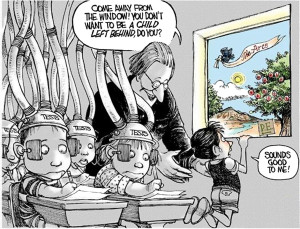
Is education mainly about compliance, testing and delivering content, or should it also help children develop confidence, initiative, creativity, problem-solving and a sense of purpose?
That question stayed with us.
Why Green School Bali Mattered to Our Family
At Enterprise for Kids, we have always been interested in experiences that help children become capable, confident and enterprising.
Literacy and numeracy are important, but children also need opportunities to create things, lead, solve problems, manage money, communicate, work with others and discover what they are capable of.
Children need space to think, question, experiment, make mistakes, solve real problems and connect what they are learning with the world around them.
They also need practical life skills such as financial education for kids, communication, responsibility and initiative.
What Makes Green School Bali So Different?
A Green School Bali classroom.
One of the most powerful ideas behind Green School Bali was that children should not simply be treated as numbers sitting at desks waiting to be told what to do next.
Ideas were encouraged to be noticed, explored and developed.
Creativity was not treated as something extra to squeeze in after the “important” subjects had been completed. It formed part of the learning environment itself.
That kind of educational philosophy speaks strongly to families who want children to grow into confident, creative and capable young people.
Student Engagement and Real-World Learning
Alan Wagstaff was very direct about one of the problems he saw in conventional education: older students can become disengaged from their learning.
Many children reach a point where they question how much of what they are learning will matter once they leave school.
We heard similar comments from our own teenage children. I can also think back to parts of my own schooling and teacher training where the content seemed disconnected from the skills I later needed in work and everyday life.
Alan challenged the way school timetables are traditionally structured.
Rather than allowing the entire day to revolve around disconnected subjects, Green School Bali explored more student-centred and integrated learning.
Literacy and numeracy matter enormously, but they are not the whole picture of a child’s development.
Children also need creativity, enterprise, emotional intelligence, communication, physical development, curiosity and meaningful connections between learning and life.
What Creates Life Success?
What is it about schooling that actually helps create success in life?
One powerful starting point is surprisingly simple:
Children need to turn up engaged.
When children are curious, interested and engaged, learning becomes more meaningful.
Their education needs to feel realistic and relevant to them as individuals.
Every day, children are developing academically, socially, emotionally and practically. Their progress cannot always be understood simply by comparing them with somebody else.
Parents can ask not only, “How does my child compare?” but also:
What is my child learning? What are they becoming? What strengths are beginning to emerge?
How Green School Bali Teaches Children
Alan explained how children were being educated at Green School Bali at the time of our original article.
Programs were structured around themes and collaboratively planned by teacher team leaders. Teachers then incorporated proficiency lessons within those broader themes.
Students could see the continuum of what they needed to learn in different areas of the curriculum and work towards those skills at an appropriate level.
Over time, this approach helped children take more responsibility for their own learning.
Green School Bali students learning through themes and real-world inquiry.
Within the broader themes, students followed interests, developed ideas, identified what they needed to learn and took part in investigations and study groups.
Every day, children were challenged across what Alan described as the Big Four: physical, emotional, intellectual and interpersonal learning.
For example, if the broad theme was “Waves”, learning might include:
Physical: experiencing waves by surfing.
Emotional: painting a wave or creating a wave melody.
Intellectual: investigating how waves form.
Interpersonal: sitting beside the waves and reflecting or meditating.
Instead of treating knowledge as a series of completely separate compartments, children could explore one theme through several different kinds of learning.
Learning Beyond the Classroom
Another part of Green School Bali that appealed strongly to us was its connection with authentic experience.
Alan explained that opportunities were used to provide practical real-life learning in areas such as:
environmental education
health and wellbeing
performing arts
enterprise education
visual arts
connection with the wider world
Learning did not have to stop at the edge of the school grounds.
Adults, businesses, the environment and the surrounding community could all become resources for learning.
Green School Bali’s aim was for children to want to go to school and to become genuinely engaged in what they were learning.
The emphasis was on relevance, purpose and valuing individual students rather than relying only on testing and comparison.
Comparison can place unnecessary pressure on children.
A more meaningful question may be whether a child is discovering what they are capable of and beginning to understand how their learning connects with their life.
Green School Bali as an Example of What Education Could Become
Green School Bali students learning in a natural environment.
When our original article was written, Green School Bali was still relatively young, yet it had already attracted considerable attention from families and educators interested in sustainability and alternative approaches to education.
Alan Wagstaff and the school’s founders had a vision to create change by demonstrating another way of educating children.
Instead of simply waiting for education systems to change from the top down, Green School Bali was attempting to model something different from the ground up.
For us, that was one of the most powerful aspects of the story.
It showed us that education could be creative, practical, sustainable and genuinely connected with real life.
Our Kids’ Green School Bali Experience Through Green SuperCamp
Green SuperCamp Bali gave our children a powerful real-world learning experience.
Our family’s connection with these ideas did not end with listening to a presentation.
Another way our children experienced the broader Green School Bali philosophy was through Green SuperCamp.
Kaitlin, Jai and Flynn attended Green SuperCamp and came back full of stories, experiences and new ideas.
At the time of this original article, we were planning for them to attend again along with our eleven-year-old daughter Amber.
The experience reinforced many of the same ideas that had first attracted us to Green School Bali: confidence, leadership, teamwork, reflection, challenge and learning by doing.
Entrepreneurship for students is not just about starting a business. It is about learning how to think differently, spot opportunities, solve problems, take action and build confidence in the real world.
When children learn how entrepreneurs think, they begin to see that their ideas matter. They also begin to understand that money, work, creativity and contribution can be approached in a very different way.
Jai coaching Chayse through business strategy and entrepreneurial thinking. Watch Jai coach Chayse.
Entrepreneurship for Students: How Do Entrepreneurs Think?
In an earlier article, we spoke of charitable entrepreneurs and successful business thinkers such as Richard Branson, Warren Buffett and John Templeton.
They, together with many other successful people, have extraordinary stories to tell about their entrepreneurial journeys. Some will tell you they struggled at school, dropped out, were dyslexic, or found reading and writing difficult. Others came from homes of poverty, while some were born into families where business and enterprise were already part of everyday life.
Although their backgrounds and circumstances differed, one thing often remained the same: they thought in a similar way.
It is not circumstance alone that creates an entrepreneur. It is mindset.
That is why entrepreneurship for students matters. Young people need more than information. They need the chance to develop the kind of thinking that helps them create opportunities, make decisions, solve problems and take responsibility for their future.
Why Entrepreneurial Thinking Matters for Families
What we have come to understand is that for our family to become economically and personally free, we need to question our conditioning around money and then reprogram our subconscious minds with a new success money mindset.
Many wealthy and successful people either developed this mindset from their upbringing, or they discovered it for themselves. Sometimes this happened consciously, through study and self-development. At other times, it happened unconsciously through experience, environment and action.
It is often said that only a small percentage of people live with real economic and personal freedom. The bigger question is this: what do they do differently?
More to the point: how do entrepreneurs think?
Before we look deeper into that, consider this.
Entrepreneurship for Students Starts with Money Mindset
The way children think about money can shape the opportunities they see.
Whether we like it or not, we are being conditioned constantly to think a certain way about money. We are conditioned by our family, schools, advertising, politicians, television, social media and friends.
Many people become tied to jobs and debt because the conditioning they have received favours a money mindset of lack, rather than abundance.
Do any of the following sound familiar?
“Money doesn’t grow on trees.”
“Money is the root of all evil.”
“You’ve got to work hard for your money.”
“Get a good, well-paying job and you’ll be set for life.”
“Buy a home, it will be your best investment ever.”
“We can’t afford it.”
“What job do you want to do when you grow up?”
“Go for the cheaper ones.”
Only this morning, I was listening to a friend talking with his teenage sons. He told them they needed to get jobs. He explained that he had a job pushing shopping trolleys at their age. He even went down to the local IGA supermarket and picked up applications for them to apply for jobs.
When I was fifteen, I started out with a casual job working at a Target store. My hourly rate was $2.90 an hour.
All of the above are examples of conditioning. Much of our thinking about money, work and possibility is formed very early in life.
What Schools Often Teach About Work and Money
Our schools are largely designed to prepare workers for the workforce. Banks make money by selling debt. Governments collect taxes and often depend on people staying within predictable systems. Retail businesses make money by encouraging us to spend. Big businesses need workers to build their businesses.
There is definitely a design to much of this madness.
That does not mean jobs are bad. It also does not mean every child needs to become a business owner. However, it does mean young people should know there are other pathways.
They should understand that work, money, creativity and contribution can be approached in different ways.
This is why financial education for kids is so important. Children need to learn about money, value, assets, liabilities, work, enterprise and choice before they enter adulthood.
Entrepreneurial Mindset for Young People
What our family has discovered is that our money mindsets are changing. We are learning that it is okay to accept money and to have money. In fact, it is okay to offer something of value to others and receive payment in return.
Working hard in a job is not the only pathway for young people entering our big world.
There are other ways. These pathways can allow young people to follow their passions and dreams while making a meaningful contribution to whatever they consider important.
Wouldn’t it be fantastic if all our kids could achieve economic and personal freedom?
People who have achieved financial freedom through being entrepreneurial tend to have a mindset of abundance. Their habits differ. Their thinking differs. Their actions differ.
This is why we keep coming back to the bigger idea of raising entrepreneurial kids. It is not just about business. It is about helping children become confident, capable, creative and resourceful.
How Entrepreneurs Think: Lessons from Napoleon Hill
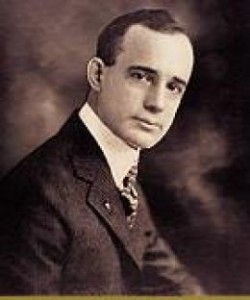
Napoleon Hill studied how successful people think and act.
Rather than attempting to explain every detail of how entrepreneurs think, I will refer to one of the most influential books ever written on personal and financial achievement.
Think and Grow Rich by Napoleon Hill was originally published in 1937. Hill spent his life studying successful people and recording how they think and act. He became successful himself by following the distinctions in his own book and by modelling himself on his mentors.
Think and Grow Rich is essentially a book about what to do and how to do it. It explores ideas such as self-direction, organised planning, autosuggestion, mastermind association, self-analysis and the selling of personal services.
The thirteen steps to riches described in the book offer a philosophy of individual achievement that has influenced thousands of people’s lives.
This book could be worth a great deal to you and your kids, not simply because of the money ideas, but because of the thinking behind them.
At the time of this original article, Cathy was rewriting Napoleon Hill’s book in a way that would be suitable for kids to read, with simple explanations and modern examples they could better relate to. It was a work in progress, built around the idea that children should be able to understand powerful success principles in language that makes sense to them.
For our family, entrepreneurship for students has never been just a theory. It has been something we have tried to encourage through conversations, real-life projects, mentoring and practical action.
Looking back now, we can see how these early conversations about entrepreneurial thinking have carried through into real life. The goal was never just to teach our children about business. It was to help them become confident, resourceful young people who could spot opportunities, solve problems and take action.
Today, we see that continuing as Jai shares business ideas and strategy with his younger brother Chayse, passing on what he has learnt through his own entrepreneurial journey.
Jai has gone on to build his own entrepreneurial path through creative work, content and business. You can see part of that journey through Art of Mondays.
Key Takeaway: Teach Students to Think Like Entrepreneurs
Key takeaway: Entrepreneurship for students is about far more than making money. It is about helping young people think differently, understand value, recognise opportunity, solve problems and take action in the real world.
Where to Next?
If you enjoyed this article about entrepreneurship for students and entrepreneurial thinking, you may also like:
Raise Entrepreneurial Kids — ideas for building confidence, initiative and real-world enterprise skills.
We would love to hear your thoughts. How do you think entrepreneurs think differently, and how can we help children develop that mindset while they are still young?
Teenage entrepreneur ideas can come from the most unexpected places. Sometimes the very children who do not fit neatly into the traditional school mould are the ones with the energy, creativity and problem-solving ability to become enterprising adults.
“`
That is the powerful message I took from Cameron Herold, a successful entrepreneur and speaker who challenges parents and teachers to recognise entrepreneurial strengths in children.
“`
Cameron Herold’s message challenges parents and teachers to recognise entrepreneurial strengths in children.
Teenage Entrepreneur Ideas from Cameron Herold
I was looking for conversations about raising enterprising kids when I came across a very inspirational entrepreneur called Cameron Herold.
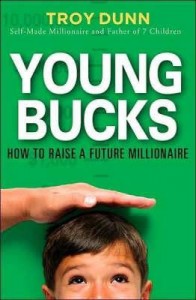
Cameron Herold is a successful entrepreneur with an excellent message for parents who want to raise children with entrepreneurial skills. He shares his own life story and also refers to the book Young Bucks: How to Raise a Future Millionaire by Troy Dunn.
What really caught my attention was Cameron’s view that many children with entrepreneurial potential are sitting in classrooms right now, but their strengths are not always being recognised.
Some children do not naturally fit into the regular schooling mould. They may be energetic, intense, talkative, distracted, creative, restless, curious or constantly looking for a different way to do things.
In a traditional classroom, those traits can sometimes be seen only as problems. Cameron’s message is that some of those same traits may also be signs of entrepreneurial thinking.
This does not mean genuine learning, behavioural or health needs should ever be ignored. Parents, teachers and health professionals all have important roles to play. But it does mean we should be careful not to miss the strengths that can sit beside those challenges.
Are Some School Challenges Entrepreneurial Strengths?
Creative thinkers do not always follow the expected path.
In his talk, Cameron Herold speaks openly and provocatively about children who are labelled as difficult, distracted or different. He argues that some of these children may have the raw traits of future entrepreneurs.
He even uses the line, “Bipolar is the CEO disease,” to make his point that intensity, drive and unusual thinking can sometimes show up in successful entrepreneurs and leaders.
That statement is deliberately provocative, and it should not be taken as medical advice. But the deeper message is worth considering.
What if some children who struggle with the school system are not simply “naughty” or “lazy”?
What if some of them are actually wired to create, sell, lead, negotiate, build, question and solve problems?
As a teacher and parent, this made me think deeply. There are certainly children who love the school system, enjoy academic pathways and are happy to work towards a traditional career. That is wonderful.
But there are also children who do not fit so neatly. For those children, entrepreneurship may offer another pathway to confidence, purpose and success.
Schools Often Prepare Children for Jobs, Not Enterprise
Cameron Herold makes the point that schools rarely teach children how to think like entrepreneurs.
Schools often condition children to fit into jobs, follow instructions, complete tasks, wait for permission and work towards a salary. Those are useful skills in many parts of life, but they are not the only skills children need.
Enterprising kids also need to learn how to:
spot opportunities,
solve problems,
negotiate,
sell an idea,
communicate clearly,
take initiative,
manage money,
learn from failure,
and keep going when things become difficult.
Cameron’s view is that entrepreneurship is not simply an inherited trait. It can be taught, modelled, practised and encouraged.
That is very encouraging for parents. It means we do not need to wait and see whether our children are “born entrepreneurs.” We can help them develop the skills of enterprise through real-world learning.
Teenage Entrepreneur Ideas Need Mentors
Entrepreneurs often learn through necessity, observation, family example or mentorship. Some children grow up around business owners and naturally absorb the language of enterprise. Others need someone outside the family to spark that thinking.
That is why mentors, books, videos, real-life stories and practical experiences matter so much.
If we want our children to learn about entrepreneurship, someone needs to teach it. That someone might be a parent, grandparent, teacher, coach, family friend, local business owner or online mentor.
This is one of the reasons we created Enterprise for Kids. We wanted our children to see that business, money, creativity and problem-solving were not only adult topics. They were life skills children could begin learning early.
Cameron Herold’s TED Talk on Raising Enterprising Kids
Cameron Herold’s TED talk is well worth watching if you are interested in raising enterprising kids.
If you are following our blog, you are probably a parent who wants to give your children more opportunities and choices in life. That includes helping them develop enterprise skills, money skills and the confidence to think differently.
Cameron’s talk is a must-see. It goes for about 15 minutes, but it contains many ideas that can change the way you see children, schooling and entrepreneurship.
The “Gift of Want”
Young Bucks: How to Raise a Future Millionaire.
In his talk, Cameron refers to the book Young Bucks: How to Raise a Future Millionaire by Troy Dunn.
Troy Dunn is also a self-made millionaire and successful entrepreneur. He also happens to be a father of seven children, just like us, so I found his perspective especially interesting.
In the book, Dunn explains that the first prerequisite for a young entrepreneur is the “Gift of Want.”
In other words, children need a real reason to pursue an enterprise idea. They need to want something badly enough to get started and to keep going when things become difficult.
This is such a practical insight for parents.
Many adults want children to be motivated by responsibility, discipline or long-term success. But children are often first motivated by something much more immediate: a toy, a bike, a game, a trip, a pet, an experience, a gift or a personal goal.
That desire can become the starting point for real learning.
From there, parents can guide children into lessons about planning, researching, marketing, pricing, negotiating, saving, giving and following through.
Practical Teenage Entrepreneur Ideas from Cameron Herold
Cameron Herold’s message is not only philosophical. It is also practical. He gives parents ideas for helping children develop entrepreneurial habits at home.
One of his strongest suggestions is to rethink pocket money.
Instead of simply giving children a regular allowance, he suggests teaching them to look for jobs that need doing around the house and then negotiate a fee for completing them.
That small shift teaches children several important enterprise skills:
looking for opportunities,
noticing problems that need solving,
putting forward an offer,
negotiating value,
completing work properly,
and understanding that money is connected to value creation.
That is a far more enterprising lesson than simply receiving a regular payment without needing to think, negotiate or act.
Teach Children to Save, Give and Buy Assets
Cameron also talks about teaching children strong money habits.
One simple idea is to use money boxes or jars with different purposes. For example, children can divide their money into:
Giving: money for charity, tithing, community support or helping others.
Spending: money for toys, treats or things they want now.
Assets: money for savings, investments, tools, equipment or future enterprise ideas.
This teaches children that money has choices attached to it. It is not only for spending. It can also be used to give, grow and create more opportunities.
One of the most powerful ways to raise enterprising kids is to use real life as the classroom.
When you are in a restaurant, point out good customer service. When you see a strong salesperson, discuss what made them effective. When a business solves a problem well, talk about it. When a product is poorly designed, ask your children how they would improve it.
Encourage your children to:
sell unwanted toys,
make and sell something small,
build inventions,
tell stories,
practise speaking to people,
notice problems around them,
and think of ways to create value.
These activities may seem simple, but they build confidence. They help children see themselves as people who can create, solve, serve and earn.
Raising Enterprising Kids Means Seeing Children Differently
Cameron Herold has allowed me, as a school teacher, to see some children in schools differently.
I can see that there are children who love the system and are more than happy to work towards a traditional career. That pathway suits many children well.
But I can also see that there are other children who do not fit so easily into the system. Some of those children may be budding entrepreneurs without knowing it yet.
They need someone to recognise the entrepreneur within them and provide opportunities for those strengths to develop.
This does not mean every child needs to become a business owner. It simply means children deserve the chance to develop enterprise skills: initiative, communication, creativity, leadership, resilience, sales, money management and problem-solving.
Those skills will help them whether they become entrepreneurs, employees, artists, tradespeople, professionals, community leaders or something else entirely.
Key Takeaway: Teenage Entrepreneur Ideas Start With Strengths
Key takeaway:teenage entrepreneur ideas do not always start with a business plan. They often start with noticing a child’s strengths, interests, frustrations and natural ways of thinking. Cameron Herold’s message reminds us to look for the entrepreneur within the child and give that child real opportunities to practise enterprise.
Business ideas for students do not have to be complicated. Sometimes they begin with a four-year-old, a box full of lolly bags, a soccer ground full of hungry kids and a very determined little Candy Man.
This is Part 3 of Chayse’s Candy Man story, where his lolly bag idea moved from planning and preparation into real selling, real customers and real profit.
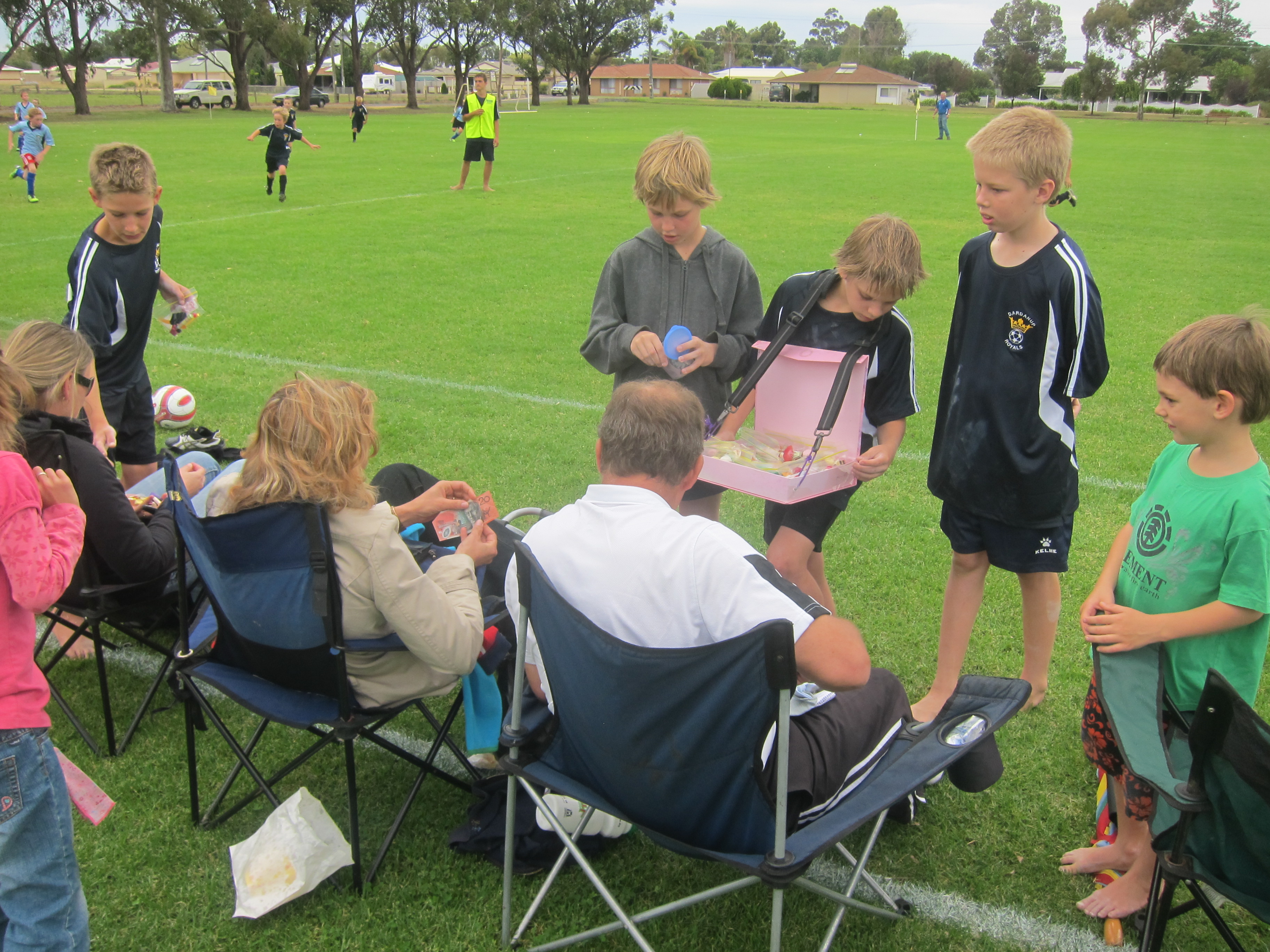
Chayse selling lolly bags at the soccer grounds as part of his Candy Man enterprise.
Business Ideas for Students: Chayse the Candy Man
We thought it was time that we revisited our little Candy Man Chayse. When we last followed his enterprising adventure, he had bought his lollies and bagged them up ready to sell.
If you missed the earlier parts of Chayse’s journey, you can follow the story from the beginning:
Part 3: Chayse the Candy Man — Chayse takes his product to the soccer grounds and makes his first real profit.
Now he has to find a market for his product and learn to be a salesman. Before we share Chayse’s exciting adventure, we thought it would be interesting to consider the benefits of children earning pocket money through enterprise, as opposed to children receiving a weekly allowance.
Why Business Ideas for Students Build a Different Mindset
Children earning pocket money through enterprise will develop the mindset and skills of an entrepreneur. Giving children a weekly allowance can condition them to think like “workers”.
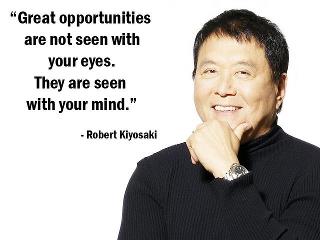
Robert Kiyosaki describes a worker as someone prepared to give their time for money, whilst an entrepreneur builds systems and businesses that produce cash flow. Workers are more often than not time poor and cash poor, whilst entrepreneurs are generally time rich and cash rich.
Why is it then that the vast majority of us leave school and become workers?
A child receiving a weekly pocket money allowance is equivalent to a worker receiving a weekly salary. Relying upon a weekly allowance will not necessarily encourage children to look for opportunities for enterprise.
Their pocket money may or may not be aligned with doing household chores, just as a worker receives payment for doing work. Many kids leave school and slot into jobs for the rest of their lives because they have not been able to explore the entrepreneur within themselves.
Children Earning Pocket Money Through Enterprise
Children earning pocket money through enterprise develop a whole different mindset. Parents of these children will encourage their children to look around to find opportunities.
These kids learn to identify problems that they can solve and they learn the art of negotiation. Enterprising children understand assets, liabilities, cash flow and profit. They will understand markets and customer service and they will develop the confidence to promote themselves.
Business ideas for students can also help children value their profits and spend their money wisely. Weekly allowances are easily received and easily spent, especially when children know that more money will follow. This can condition kids to be reliant on a salary.
Enterprising children become self-motivated to make money, and as they celebrate their successes, they quickly come to understand that they can in fact make a lot more money than their friends receiving weekly allowances.
Entrepreneur Cameron Herold makes a similar point in his TED talk, Let’s raise kids to be entrepreneurs. He encourages parents to help children look for opportunities, negotiate and learn how to create value rather than simply expect a regular allowance.
A Real Student Business Idea at the Soccer Grounds
Selling to customers.
Kids may not be motivated to do this at first, especially if they have been used to receiving a weekly allowance. The trick here is to make sure they have a big “Why!” They need to want something badly enough. This then becomes their goal and reason.
So let’s get back to Chayse’s enterprising story. Was he able to earn his pocket money through his lolly bag business?
He had his first opportunity to sell his lolly bags at his big brothers’ soccer games. During the game, the spectators, who were his potential customers, milled around on the sidelines.
So we primed him on what to say to customers. We also enlisted the help of his brothers, Amber and friends. It was all great fun and soon enough the customers came rolling in.
Now who could knock back buying lollies from a cute smiling four-year-old?
Business Ideas for Students Need Real Customers
His lolly bags sold like hot cakes for two dollars each. Chayse could not hold up the box because it was too heavy, so he managed the money jar whilst his helpers held the box.
He had to take his customers’ money and give change.
As word spread that there were lollies for sale, kids came racing in from all directions to buy Chayse’s product. The box became lighter and the money jar heavier, but despite the weight, he was not going to relinquish it.
Chayse looked after his helpers by giving them each a lolly bag. Hopefully they will be willing helpers the next time he sells something.
Chayse also paid back the money his Dad lent him as capital to buy the lollies and plastic bags from the supermarket.
Profit, Confidence and a Very Heavy Money Jar
Chayse was delighted with his profit.
All up, he was delighted with his fifty dollars net profit. He is now well on his way to reaching his goal to buy toy Nerf Guns.
In fact, his business was so successful that Kit has recently decided to partner with him for his next endeavour. Under their mother’s guidance, they will research and decide on a charity that could benefit from some of their profits.
So, stay tuned for that one!
Chayse is one of those children earning pocket money through enterprise. It would have taken him five weeks, with a weekly allowance of $5 a week, to save the equivalent of what he profited at the soccer grounds during one soccer game.
That is why simple business ideas for students can be so powerful. They give children a real reason to be brave, talk to people, handle money, serve customers and learn that effort can create opportunity.
The Candy Man Business Series
This post is Part 3 of Chayse’s Candy Man journey. You can follow the full series here:
Part 3: Chayse the Candy Man — Chayse sells his lolly bags at the soccer grounds and makes a profit.
Key Takeaway: Business Ideas for Students Can Start Small
Key takeaway: Business ideas for students do not need to be complicated. Chayse’s lolly bag business helped him learn about customers, selling, profit, confidence, helpers, start-up money and responsibility — all through one simple project at the soccer grounds.
Where to Next?
If you enjoyed Chayse’s Candy Man story, you may also like:
In our next Enterprise For Kids blog, we’ll introduce you to a self-made millionaire who has some excellent tips for parents wanting to raise entrepreneurial kids. Don’t miss this article!
We would love to hear from you, so please leave a comment.
Young Australian entrepreneurs can be powerful role models for children. When kids see real people building businesses, creating freedom and using their success with purpose, enterprise becomes much more than an idea in a book.
“`
Dale Beaumont is one of those examples. His story reminded us that who we spend time with, who we learn from and who we allow to influence our thinking can shape what we believe is possible.
“`
Dale Beaumont began his entrepreneurial journey young, making his story a powerful example for enterprising kids.
Young Australian Entrepreneurs: Lessons from Dale Beaumont
Part of what we love about this blog is that we get to share the success of young entrepreneurs with not only our readers, but also our kids.
As we have been learning through Paul Counsel’s course, and as Dale Beaumont also reinforced for us, who you “hang with” is often who you become like.
That can be a scary thought, or it can be an inspiring thought, depending on your peers and the people you spend the most time with.
Luckily, we have wonderful family and friends. But for us, it is also important to include people who have achieved success in areas where we are still learning and growing.
Some of our family and friends fulfil those needs, but a sure way of increasing self-efficacy for us and our kids is to mix with other successful entrepreneurs, business owners and people who think differently.
Dale Beaumont as a Young Australian Entrepreneur
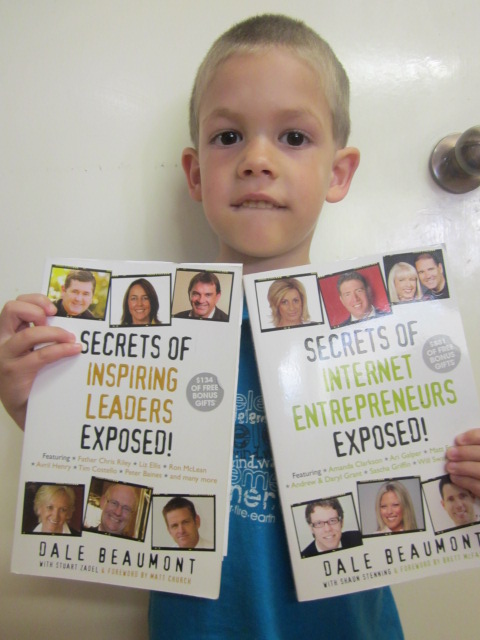
Dale Beaumont wrote the Secrets Exposed series.
Dale Beaumont is one such inspiring young Australian entrepreneur. He may not see himself as “young” anymore, but his success started at the tender age of 19.
Before developing his entrepreneurial skills, Dale was an accomplished gymnast and probably what many people would call an overachiever.
When Dale was 19, he co-authored a book called The World at Your Feet, which became the basis of his successful program, Tomorrow’s Youth. Through that program, he taught young people essential life skills.
From there, Dale went on to publish books, build relationships with other successful entrepreneurs, business owners and thought leaders, and eventually develop Business Blueprint.
His journey is a wonderful example for children because it shows that enterprise can begin young. It also shows that success is rarely about one single moment. It is built through learning, relationships, systems, action and persistence.
What Young Australian Entrepreneurs Teach Our Kids
One of the biggest lessons Dale Beaumont’s story teaches our children is that entrepreneurship is not just about making money.
It is about learning how to think. It is about developing skills, building useful systems, creating value, managing time, solving problems and making choices that can lead to more freedom.
Dale with one of his children.
Inside the Sistine Chapel.
Dale is married and has two boys, and one of the things that really appealed to Trevor and me was that his focus was not only on business growth. It was also on creating time and freedom to travel with his young family.
He was able to do this because he had built systems within his business so that everything could keep ticking along with or without him.
You can imagine how appealing that was to us.
We did not want business success that simply created another job. We wanted to learn how business could create choice, flexibility and meaningful family experiences.
Lessons from Business Blueprint
I will not go through the whole workshop that my good friend Sally and I attended in Perth, but I do want to share a few highlights that really stuck with me as Dale spoke.
Presenting at Business Blueprint.
Two sayings that stood out were:
“Empty bank accounts don’t feed the people.”
“The poor can’t help the poor.”
Those two sayings alone say a lot.
Some people want money purely for money’s sake — to have nice things and show others how well they are doing. Others want money so they can enjoy wonderful experiences, support their family, do good things in the world and make a difference in the lives of others.
We fall into that second category.
Dale’s example helped reinforce something important for our family: money with purpose can become a tool for freedom, contribution and service.
Money, Purpose and Making a Difference
One thing we found inspiring was Dale’s support for Hands Across the Water in Thailand. It was powerful to see an entrepreneur using his success and influence to make a difference in the lives of children.
This is an important message for enterprising kids.
We do not want our children to think that business is only about making money. We want them to understand that business can also create choices, opportunities and the ability to contribute.
If we do not embrace that change, our businesses can get left behind. A classic example was the way physical bookstores were challenged as online bookselling grew rapidly.
The point for our children is clear: the business world they are growing into is very different from the business world we grew up in.
Today’s young people need to understand technology, online marketing, digital systems, automation, websites, customer service, communication and content.
They do not need to master all of these skills as children, but they do need to grow up with the mindset that learning never stops.
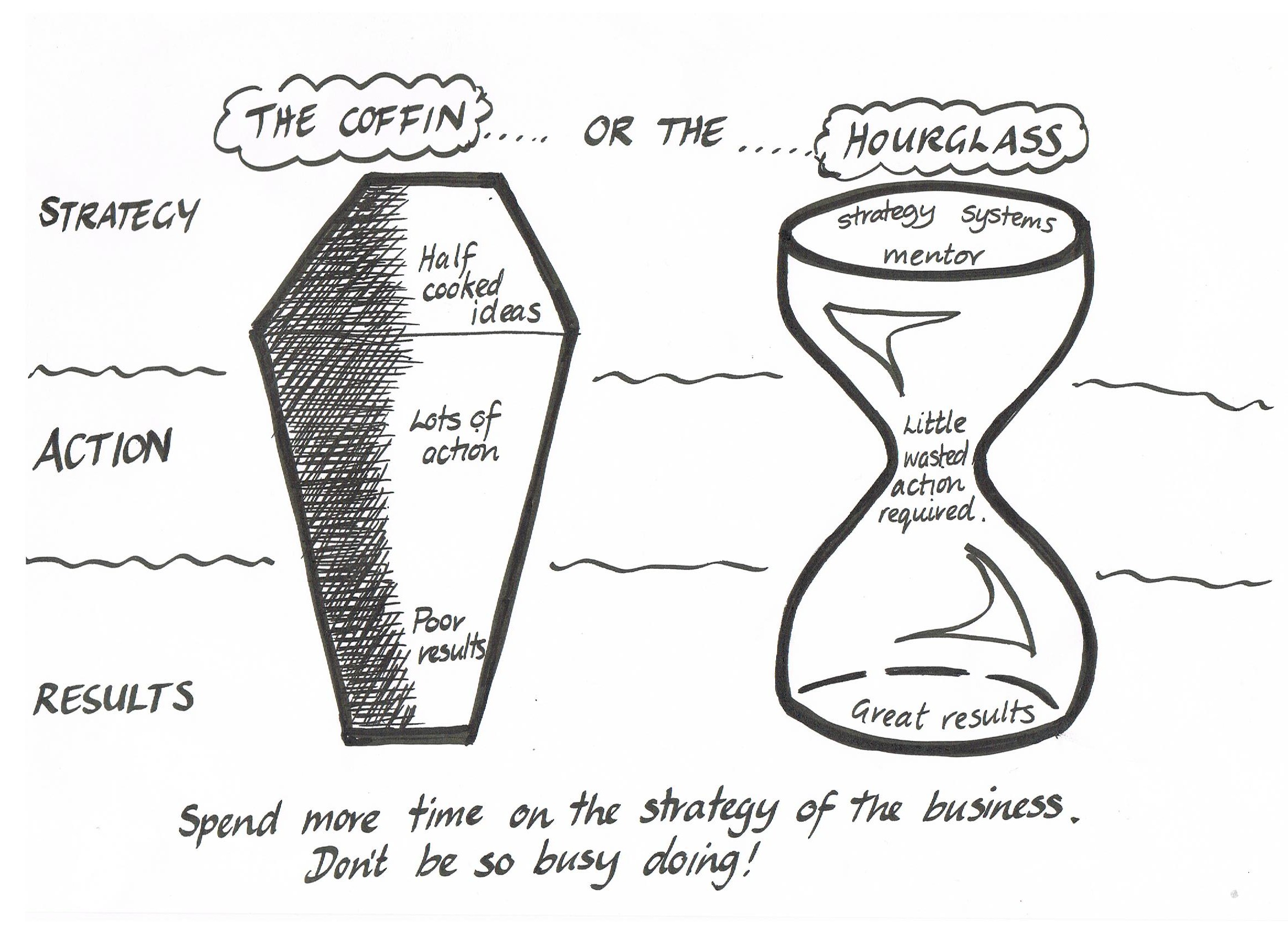
The Coffin or the Hourglass
Dale shared something he learnt when he was just starting out in business.
He called it the coffin or the hourglass.
The Coffin or the Hourglass.
Many people starting in business spend more time taking action than they do strategising or planning where they want their business to end up.
Taking action is important, of course. But you do not want your business to be like a coffin, where little time is spent thinking, planning and designing the right direction, while heaps of time is spent taking action that may not be very fruitful.
The hourglass, on the other hand, is about putting time into planning, strategising and thinking first.
With well thought-out plans in place, the action you take becomes more focused and the results are more fruitful.
So what would you prefer? A business with the coffin model, or one with the hourglass model?
Young Australian Entrepreneurs Need Systems
I think one of the reasons Dale became successful in a relatively short period of time was his ability to let go of things that could be done by someone else and focus on the things he needed to do to be effective within his business.
That is a major lesson for young Australian entrepreneurs.
Hard work matters, but systems matter too.
Business owners who try to do absolutely everything themselves can quickly become exhausted. Systems help free up time, improve consistency and allow business owners to focus on the areas where they can create the most value.
In the original version of this article, we talked in detail about a particular automation and CRM system we had started using at the time. Years later, the exact tools have changed, but the lesson remains the same.
Business systems can help with:
email follow-up,
customer records,
online payments,
memberships or subscriptions,
event management,
task management,
marketing follow-up,
and website processes.
The specific software will keep changing, but the mindset is timeless: build systems that help your business run more smoothly.
You can learn more about Dale Beaumont and his business education work through Business Blueprint.
What This Means for Enterprising Kids
So, how does all of this relate to enterprising kids?
For any business our kids choose to start, using the internet will be a given, especially as they grow into young adults.
If we want our kids to be competitive in today’s markets, we need to show them the way by continuing to learn ourselves.
They will follow our lead. They will absorb whether we are curious, whether we keep improving, whether we look for better systems and whether we are willing to adapt.
We want our children to have a mindset that says:
Get savvy. Learn. Improve. Keep going.
Bedtime Reading for Enterprising Kids
Bedtime reading for enterprising kids.
Generation Y and the generations after them are already building and creating things that improve efficiency in their lives.
Why spend six hours on something if you can learn how to streamline it and do it in one?
That is the world our children are growing into.
We agree completely that life is not meant to be all about work. We want to work to live, not live to work, and we want our kids to understand that concept too.
At the same time, we want them to know that learning from successful entrepreneurs can expand their thinking.
Books, mentors, workshops, conversations and real-world examples can all help children see what is possible.
We no longer need a long list of affiliate-linked books here. The bigger message is simply this: expose children to inspiring people and ideas, then help them apply those ideas in age-appropriate ways.
Key Takeaway: Young Australian Entrepreneurs Can Inspire Kids
Key takeaway:young Australian entrepreneurs like Dale Beaumont can help children see what is possible. When kids are exposed to mentors, business systems, purpose-driven money lessons and real-world learning, they begin to understand that enterprise can create freedom, contribution and choice.