Money Mastery: Lessons from Paul Counsel’s Program

Paul Counsel teaching in the Money Mastery Program about financial freedom and money mindset

Money Mastery became much more than a financial education program for us. It became a deep journey into mindset, values, financial freedom and the kind of life we wanted to model for our children.

Have you ever had that inner desire to make a difference in the world, but felt frustrated that so much of your time and energy was being poured into simply earning enough money to keep up with life, bills and raising a family?

Money Mastery quote about changing the world from within
The world can only change from within — a powerful idea behind our Money Mastery journey.

Money Mastery and the Desire to Make a Difference

Have you wondered what you could do if you had the resources of time, knowledge and money to be that difference?

Children grow up full of potential and excitement about their lives and what they wish to accomplish. Ideally, we as parents want to be an inspiration to them. We want to show by example that they too can achieve what they put their minds to.

Do you ever wonder what worldly achievements and contributions your children will end up making?

Cath and I have huge dreams. We are aiming for the stars. We aspire to achieve, experience and contribute in a grand way. We want to lead our own children to think big, experience life deeply and make a significant difference to the lives of others while they are here on Earth.

Money Mastery quote about thinking big and aiming for the stars
Money Mastery helped us think bigger about life, contribution and financial freedom.

This is our “Why”, and it is why we began the journey seeking the understanding and mindset shifts required to achieve financial freedom.

Paul Counsel and the Money Mastery Mentoring Program

This past year has been, by far, the biggest year for us in terms of shifting our mindset around success.

In March, we embarked on a year-long Money Mastery Mentoring Program led by Dr Paul Counsel. Paul opened our eyes to possibility, gave us tools to make the inner shifts required to achieve financial freedom, and helped us look more closely at the subconscious thinking and conditioning that can shape our results.

You can learn more about Paul Counsel’s current work through Money Mastery Academy.

Our year felt like a roller-coaster ride. There were ups, downs and plenty of bumps along the way. It was full-on trying to sort out the logistics of children, family life and busy schedules while still maintaining momentum.

Without our beautiful friends and family supporting us throughout the year, I am certain we would not have made it this far.

Stephen Covey quote connected to Money Mastery and personal change
Lasting change begins with the way we think, choose and act.

Money Mastery, Financial Freedom and Self Discovery

The Money Mastery program was largely about achieving financial freedom. But for us, it was also a self-discovery mentoring program.

Through the process, we revealed so much about ourselves: our deep-rooted values, our subconscious thinking, our conditioning and our future realities.

That matters because financial freedom is not only about numbers. It is also about beliefs, choices, habits, values and identity.

We came to understand that if our inner thinking does not shift, our outer financial results are unlikely to shift in a lasting way.

This is one of the lessons we want our children to absorb. Money is not just something to earn and spend. It is connected to choices, freedom, contribution and the way we design our lives.

Money Mastery and the Mindset We Model for Our Children

As parents, we can talk to our children about money, success and contribution. But what they watch matters even more.

They watch whether we think big or small. They watch whether we believe we can change. They watch whether we stay stuck in old patterns or choose to grow. They watch whether we simply talk about financial freedom or actually take steps toward it.

That is why Money Mastery was so important for us. It challenged us to look at the patterns we were living from and the example we were setting.

If we want our children to become confident, capable and entrepreneurial, then they need to see us learning, stretching and taking responsibility for our own growth as well.

Paul Counsel Money Mastery Mentoring Program quote about financial freedom and mindset
The Money Mastery Mentoring Program helped us reflect deeply on mindset, values and financial freedom.

Financial Freedom, Family Values and Big Dreams

One of the big distinctions for us was understanding the link between business, money and our highest values.

Our children have always been our highest value. That is beautiful, but it also meant that family life naturally took our time, focus and energy. We had to learn how to align our desire for business, contribution and financial freedom with our value of family, rather than feeling as if they were competing against each other.

That is one of the reasons Enterprise for Kids became so meaningful to us.

It allowed us to connect family, learning, enterprise and money lessons together. It gave us a way to grow our own entrepreneurial mindset while helping our children understand confidence, creativity, responsibility and opportunity.

Money Mastery helped us see that financial freedom is not separate from family. Done well, it can support family, strengthen choices and open up more possibilities for the future.

Our Money Mastery Review

As we reached the final weekend of our year-long Money Mastery Mentoring Program, we found ourselves reflecting on how much had changed.

There were many things to weigh up about what came next, but one thing was certain: our future felt as though it was opening wide before us.

We decided to write a full review of our Money Mastery Mentoring Program. In that review, we shared why we chose to take on such a mentoring program, what the year was like, and some of the massive distinctions that changed our lives.

We invite you to read about our journey and experiences, and to pass it on to interested friends.

Leo Tolstoy quote connected to Money Mastery and changing ourselves
Real change often begins when we are willing to look honestly at ourselves.

We are hopeful that when you read it, you gain inspiration and perhaps some real insight into your own life. We reflected on some of the reasons why things happen the way they do, and why they sometimes do not.

So go make yourself a cuppa, sit down in a comfy chair and take the time to read our full Money Mastery Mentoring Program review.

Read the full review here: Money Mastery Mentoring Program Reviewed

Key Takeaway: Money Mastery Starts From Within

Key takeaway: Money Mastery is not only about financial strategies. For us, it was about mindset, family values, financial freedom and the inner shifts needed to create a bigger future for ourselves and our children.

Where to Next?

Have you ever taken on a program, mentor or experience that changed the way you think about money, family and the future? We would love to hear your thoughts in the comments.

Entrepreneurship for Students: How Do Entrepreneurs Think?

Jai Howitt discussing his entrepreneurial journey on The Pocket with Chris Griffen

Entrepreneurship for students is not just about starting a business. It is about learning how to think differently, spot opportunities, solve problems, take action and build confidence in the real world.

When children learn how entrepreneurs think, they begin to see that their ideas matter. They also begin to understand that money, work, creativity and contribution can be approached in a very different way.

Entrepreneurship for students shown through Jai Howitt coaching Chayse on business strategy
Jai coaching Chayse through business strategy and entrepreneurial thinking. Watch Jai coach Chayse.

Entrepreneurship for Students: How Do Entrepreneurs Think?

In an earlier article, we spoke of charitable entrepreneurs and successful business thinkers such as Richard Branson, Warren Buffett and John Templeton.

They, together with many other successful people, have extraordinary stories to tell about their entrepreneurial journeys. Some will tell you they struggled at school, dropped out, were dyslexic, or found reading and writing difficult. Others came from homes of poverty, while some were born into families where business and enterprise were already part of everyday life.

Although their backgrounds and circumstances differed, one thing often remained the same: they thought in a similar way.

It is not circumstance alone that creates an entrepreneur. It is mindset.

That is why entrepreneurship for students matters. Young people need more than information. They need the chance to develop the kind of thinking that helps them create opportunities, make decisions, solve problems and take responsibility for their future.

Why Entrepreneurial Thinking Matters for Families

What we have come to understand is that for our family to become economically and personally free, we need to question our conditioning around money and then reprogram our subconscious minds with a new success money mindset.

Many wealthy and successful people either developed this mindset from their upbringing, or they discovered it for themselves. Sometimes this happened consciously, through study and self-development. At other times, it happened unconsciously through experience, environment and action.

It is often said that only a small percentage of people live with real economic and personal freedom. The bigger question is this: what do they do differently?

More to the point: how do entrepreneurs think?

Before we look deeper into that, consider this.

Entrepreneurship for Students Starts with Money Mindset

Wealth creation and poverty mindset lesson for students
The way children think about money can shape the opportunities they see.

Whether we like it or not, we are being conditioned constantly to think a certain way about money. We are conditioned by our family, schools, advertising, politicians, television, social media and friends.

Many people become tied to jobs and debt because the conditioning they have received favours a money mindset of lack, rather than abundance.

Do any of the following sound familiar?

  • “Money doesn’t grow on trees.”
  • “Money is the root of all evil.”
  • “You’ve got to work hard for your money.”
  • “Get a good, well-paying job and you’ll be set for life.”
  • “Buy a home, it will be your best investment ever.”
  • “We can’t afford it.”
  • “What job do you want to do when you grow up?”
  • “Go for the cheaper ones.”

Only this morning, I was listening to a friend talking with his teenage sons. He told them they needed to get jobs. He explained that he had a job pushing shopping trolleys at their age. He even went down to the local IGA supermarket and picked up applications for them to apply for jobs.

When I was fifteen, I started out with a casual job working at a Target store. My hourly rate was $2.90 an hour.

All of the above are examples of conditioning. Much of our thinking about money, work and possibility is formed very early in life.

What Schools Often Teach About Work and Money

Our schools are largely designed to prepare workers for the workforce. Banks make money by selling debt. Governments collect taxes and often depend on people staying within predictable systems. Retail businesses make money by encouraging us to spend. Big businesses need workers to build their businesses.

There is definitely a design to much of this madness.

That does not mean jobs are bad. It also does not mean every child needs to become a business owner. However, it does mean young people should know there are other pathways.

They should understand that work, money, creativity and contribution can be approached in different ways.

This is why financial education for kids is so important. Children need to learn about money, value, assets, liabilities, work, enterprise and choice before they enter adulthood.

Entrepreneurial Mindset for Young People

What our family has discovered is that our money mindsets are changing. We are learning that it is okay to accept money and to have money. In fact, it is okay to offer something of value to others and receive payment in return.

Working hard in a job is not the only pathway for young people entering our big world.

There are other ways. These pathways can allow young people to follow their passions and dreams while making a meaningful contribution to whatever they consider important.

Wouldn’t it be fantastic if all our kids could achieve economic and personal freedom?

People who have achieved financial freedom through being entrepreneurial tend to have a mindset of abundance. Their habits differ. Their thinking differs. Their actions differ.

This is why we keep coming back to the bigger idea of raising entrepreneurial kids. It is not just about business. It is about helping children become confident, capable, creative and resourceful.

How Entrepreneurs Think: Lessons from Napoleon Hill

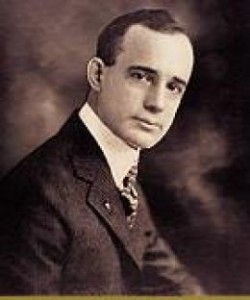
Napoleon Hill Think and Grow Rich entrepreneurial mindset lesson
Napoleon Hill studied how successful people think and act.

Rather than attempting to explain every detail of how entrepreneurs think, I will refer to one of the most influential books ever written on personal and financial achievement.

Think and Grow Rich by Napoleon Hill was originally published in 1937. Hill spent his life studying successful people and recording how they think and act. He became successful himself by following the distinctions in his own book and by modelling himself on his mentors.

Think and Grow Rich is essentially a book about what to do and how to do it. It explores ideas such as self-direction, organised planning, autosuggestion, mastermind association, self-analysis and the selling of personal services.

The thirteen steps to riches described in the book offer a philosophy of individual achievement that has influenced thousands of people’s lives.

This book could be worth a great deal to you and your kids, not simply because of the money ideas, but because of the thinking behind them.

At the time of this original article, Cathy was rewriting Napoleon Hill’s book in a way that would be suitable for kids to read, with simple explanations and modern examples they could better relate to. It was a work in progress, built around the idea that children should be able to understand powerful success principles in language that makes sense to them.

You can also learn more about Napoleon Hill’s work through the Napoleon Hill Foundation.

Entrepreneurship for Students in Real Life

For our family, entrepreneurship for students has never been just a theory. It has been something we have tried to encourage through conversations, real-life projects, mentoring and practical action.

Looking back now, we can see how these early conversations about entrepreneurial thinking have carried through into real life. The goal was never just to teach our children about business. It was to help them become confident, resourceful young people who could spot opportunities, solve problems and take action.

Today, we see that continuing as Jai shares business ideas and strategy with his younger brother Chayse, passing on what he has learnt through his own entrepreneurial journey.

Jai has gone on to build his own entrepreneurial path through creative work, content and business. You can see part of that journey through Art of Mondays.

Key Takeaway: Teach Students to Think Like Entrepreneurs

Key takeaway: Entrepreneurship for students is about far more than making money. It is about helping young people think differently, understand value, recognise opportunity, solve problems and take action in the real world.

Where to Next?

If you enjoyed this article about entrepreneurship for students and entrepreneurial thinking, you may also like:

We would love to hear your thoughts. How do you think entrepreneurs think differently, and how can we help children develop that mindset while they are still young?

An Entrepreneur’s Conscience!

Is Having a Money Mindset Charitable?


Yay! Enterprise For Kids Rock!

I was talking with a dear friend and asked what she thought of our Enterprise for Kids blog. She thought that it was very well done and that her kids were very inspired by our kids’ enterprise experiences. Her children had read every blog post and watched every video, then her nine year old daughter sat down and planned an enterprise following all the lessons we talk about in our blog.

Wow!

That is exactly the sort of inspiration we hope to develop, especially with kids.

What happened next was a real surprise to me!


What! I have to give it all away!

My friend explained that she didn’t mind the idea of enterprise, but she wasn’t OK with her kids having an enterprise where they make money for themselves.

I was a little taken back when my friend said this. I really had never thought that there would be people with the view that kids shouldn’t be making money for self interest. I was also grateful that my friend was frank in sharing her beliefs as it helps me better understand mine.

Firstly there is no right or wrong in what people believe or do. Everyone is entitled to their views and I respect my friend’s view.

After this enlightening conversation, I came to realize how far our mindset around money has changed since we started out on our journey in search for economic and personal freedom. It also had me thinking about the entrepreneur’s conscience!

Wealthy entrepreneurs think very differently to the rest of us.

Generally I would also say that they are not selfish; although I’m sure there are some who are, like there are selfish poor people as well!

Wealthy people would have persisted with their goals and taken certain risks to get to where they are now. Many of the wealthiest entrepreneurial people in the world are also very charitable and give millions away supporting causes they believe in. It is much easier to be charitable when you are rich! Many who are struggling to make ends meet do not have the time, energy or money to make larger contributions to the world.

Bill Gates
Warren Buffett
John Templeton


Bill Gates, for example, employs many people to spend his money on charitable causes! Warren Buffett, who has lived in a very modest house all his life, gives away billions to charity! And Sir John Templeton (1912 – 2008) contributes $70 million each year through his foundation providing research grants and programs relating to the Big Questions of human purpose and ultimate reality (very interesting if you have the time to delve!).

Only last week I was speaking with a new entrepreneur friend who lives in Perth. He has recently created tremendous wealth developing property mostly in the Western Australian mining town, Port Hedland. He explained to me that he no longer needs to work and he now channels his energy into his passion. He is planning to take his young family to America where he has enrolled in a Theology university course. From there he plans to do mission work in Africa. Being a successful entrepreneur is allowing him to follow his charitable dream!

It could be argued that entrepreneurs, as opposed to the rest of us “workers”, have more free time, are less stressed, enjoy better health, eat better, travel more and their families are given more opportunities in life.

Do the rich have an entrepreneur’s conscience?

Probably more so than the rest of us!

The difference being is that they are in a much better position to make a real difference in our world than those of us who are tied to a “job” and to “debt”.

I’d like to thank my friend who allowed me to consider my views of an “entrepreneur’s conscience”.  I certainly value the importance of teaching kids enterprise, and I do support the view that enterprising kids should also be taught to be charitable.

Our view also is that a child has to walk before they can run…..meaning that for us, it’s OK for our kids to have a “selfish” goal because that is what motivates them at the time to take action and learn the entrepreneurial skills necessary to succeed. Then, when they have mastered that skill, they are taught to have a goal, but think about where they may like some of the money they earn to go. That is exactly the process we taught our Chayse (who’s 4) and Kit (who’s now 7) when they reset their goals. See this in action in an upcoming blog.

The more entrepreneurs we create the better our world will be!


As we revisit our own kids entrepreneurial journeys in this blog, we will share the lessons around their entrepreneur’s consciences and how we are teaching them to be charitable.

Next time we will talk a little more about the conditioning we have around money and how the wealthy do think differently.

Keep this discussion going by sharing your view in the comment box below.

Lastly, I’d like to take this opportunity to remind you about the Gold and Silver Seminar that we are holding in Bunbury this Sunday. It will be an informative presentation that will open your eyes to some excellent investment opportunities. The discussion after the seminar is a great way to meet and network with other investors and business people. Bring along your teens to kick start their financial education. Click Here to view our flyer and please pass it around to others who you think may be interested.

Money… We All want it, but at what Cost?

In the last blog we spoke about “who it is that teaches our kids about money”. We’d like to delve a little deeper with this topic in this blog. Our intention is to build an understanding of why most of us have settled into the role of being a “worker” rather than following the “entrepreneurial” path. You will also learn a little more about what we are endeavoring to achieve as a family.

Our kids, like all kids, want to have their own money so that they can have a little independence and buy the things that they want. In our family our children sometimes receive money when it is their birthday and they also get a little pocket money.

Kaitlin, our eldest, has a part time job working at a local Brewery serving lunches and doing the kitchen work. She works hard and it pays pretty well. However, to take on a job, she loses some of her weekends and time to do her school work and have a social life. She also commits time to regular baby sitting work for some of the families in the area.

At present the money mindset of my children is much the same as ours, which is likely to be the same as most other people, and that is to earn money, spend and borrow money!

Generally most of us either have a job where we give time for a salary or we have a business where we give our time for a monetary return. Whatever the case, we are tied down and limited with what money we earn and we sacrifice our time for it. Sound familiar?

The funny thing is, that right from an early age we are conditioned to accept this to be the norm and often our minds are generally closed off to entrepreneurial ideas and opportunities. Our schools train us and prepare us for the workforce. Our parents will do the same by pointing us towards a vocation.

Adding to this, media advertising, TV, politicians, universities and our peers all guide us towards getting a job. It is all around us, well intentioned people and institutions all keeping us on the “straight and narrow” pathway of getting a job (earn!), then spending our money on things (spend!) and then borrowing money to spend on more things (borrow!).


Finance companies advertising loans

Look at the people around you and you will see this pattern repeated everywhere. People with expensive things like houses, TVs, holidays, cars, boats and caravans. Most are servicing mortgages to pay for it all. The more things they acquire during their lives the harder and longer they have to work to pay for the things. Most people can see no way out of their situation and accept that this is what is supposed to happen. The average Australian spends about $1.15 out of every dollar they earn!

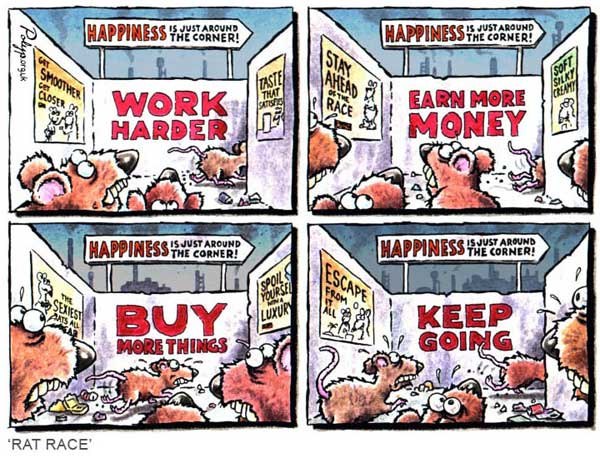
The Rat Race!

In fact most of us have been conditioned to accept this money mindset which locks us into the“Rat Race!”

Now you may challenge us by saying, what’s wrong with our kids entering the workforce, what’s wrong with spending what they earn and borrowing some more! Honestly, there is nothing wrong or right about it at all. It is just what it is.

For us though, we’re looking for a new direction where we have the time to follow our passions and to be able to give freely to our family, community and world without worrying how to pay for it. Our goal is to break out of the “worker” mindset.

We seek to know how the relatively few, “financially and time free” people managed to rise above the Rat Race. We want to know what they do that is different. How do they think and what is their conditioning around money mindset!

What’s more, we wish for our kids to grow up with the mindset of an entrepreneur! It is important to us that they get a “financial education”.

A Financial Education won't come from the teacher.

From what we’ve discovered so far, is that kids need to start very early to develop their entrepreneur mindset and the skills needed to manage money and build enterprise. They need role models who can foster a different thinking and parents who encourage and look for opportunities that foster enterprise. Open discussions about money and business will help to develop a financial education for kids.

We desire for our seven children to grow up having choices. We want their pathways to be wide with opportunity! We encourage them to follow their passion and not be conditioned into the “earn, spend and borrow” mindset. We hope that they will think differently, have belief in themselves and develop the habits of people who have achieved personal and financial freedom.

We know we have a challenge ahead of us, as our kids have already been conditioned from an early age. Using Kaitlin as an example; she earns money, spends freely and already has a debt. She is studying hard to go to university with all her friends and then ultimately to get a good paying job. Once again I’ll point out that there is no right or wrong about this, only that we would like her to see that there are other ways.

It is always going to be a challenge whilst we have that same conditioning and mindset. Although striving to change our thinking, we recognise that it will take time and persistence to learn new habits and shift old belief systems. However, we are very confident that this year, is the year that we will have a break through. We have enlisted the help of a Money Mindset personal mentor, who is helping us develop a new thinking. He is there to help us transform in our thinking through our actions…. and as we do so, so will our children.

With our up coming blogs we will share his education with you.


Enterprise for Kids… Our New Beginning!


Welcome to our blog Enterprise for Kids!

We are one average, large and happy family daring to “dream big”. We are on a journey to escape from the “Rat Race” and join the relative few who have achieved personal and financial freedom. But we have seven gorgeous reasons to try. We hope to inspire others to follow our lead and to provide our readers with insights and ideas into how it can be done.

About to embark on our new entrepreneurial adventure!

Our story begins with a huge understanding of what it takes to be a loving and adventurous family with wonderful family and friends, but only a little understanding of what it takes to be financially successful. It is from this point, and with the help of a successful entrepreneurial mentor, that we will start our journey. It is our hope that our children can gain a financial education and success mindsets surrounding money whilst maintaining a genuine love of life.

We want to teach our children how to develop enterprise skills (ie: how to spot an opportunity), how to put that opportunity into practise (entrepreneurial skills) and of course, how to manage money successfully. In addition to this, we want them to appreciate and be grateful for all the opportunities they attract and learn to give back to the community in a way that makes a real difference. This process will take time, but we hope you enjoy the learning with us.

You will have the opportunity to follow each of our kids on their individual journeys, (and ours too!) We also plan to introduce some of our kids’ friends to “Enterprise for Kids” and our blog will follow their journeys too.

Conventional thinking may be challenged as we look and reflect upon our own belief systems and learn what it takes for a person to become financially and personally free.

So jump on board and let’s see where this exciting new adventure “Enterprise for Kids” takes us.

Visit our About Us page to meet us all!