
Teenage entrepreneur ideas can come from the most unexpected places. Sometimes the very children who do not fit neatly into the traditional school mould are the ones with the energy, creativity and problem-solving ability to become enterprising adults.
“`
That is the powerful message I took from Cameron Herold, a successful entrepreneur and speaker who challenges parents and teachers to recognise entrepreneurial strengths in children.
“`

Teenage Entrepreneur Ideas from Cameron Herold
I was looking for conversations about raising enterprising kids when I came across a very inspirational entrepreneur called Cameron Herold.
Cameron Herold is a successful entrepreneur with an excellent message for parents who want to raise children with entrepreneurial skills. He shares his own life story and also refers to the book Young Bucks: How to Raise a Future Millionaire by Troy Dunn.
What really caught my attention was Cameron’s view that many children with entrepreneurial potential are sitting in classrooms right now, but their strengths are not always being recognised.
Some children do not naturally fit into the regular schooling mould. They may be energetic, intense, talkative, distracted, creative, restless, curious or constantly looking for a different way to do things.
In a traditional classroom, those traits can sometimes be seen only as problems. Cameron’s message is that some of those same traits may also be signs of entrepreneurial thinking.
This does not mean genuine learning, behavioural or health needs should ever be ignored. Parents, teachers and health professionals all have important roles to play. But it does mean we should be careful not to miss the strengths that can sit beside those challenges.
Are Some School Challenges Entrepreneurial Strengths?

In his talk, Cameron Herold speaks openly and provocatively about children who are labelled as difficult, distracted or different. He argues that some of these children may have the raw traits of future entrepreneurs.
He even uses the line, “Bipolar is the CEO disease,” to make his point that intensity, drive and unusual thinking can sometimes show up in successful entrepreneurs and leaders.
That statement is deliberately provocative, and it should not be taken as medical advice. But the deeper message is worth considering.
What if some children who struggle with the school system are not simply “naughty” or “lazy”?
What if some of them are actually wired to create, sell, lead, negotiate, build, question and solve problems?
As a teacher and parent, this made me think deeply. There are certainly children who love the school system, enjoy academic pathways and are happy to work towards a traditional career. That is wonderful.
But there are also children who do not fit so neatly. For those children, entrepreneurship may offer another pathway to confidence, purpose and success.
Schools Often Prepare Children for Jobs, Not Enterprise
Cameron Herold makes the point that schools rarely teach children how to think like entrepreneurs.
Schools often condition children to fit into jobs, follow instructions, complete tasks, wait for permission and work towards a salary. Those are useful skills in many parts of life, but they are not the only skills children need.
Enterprising kids also need to learn how to:
- spot opportunities,
- solve problems,
- negotiate,
- sell an idea,
- communicate clearly,
- take initiative,
- manage money,
- learn from failure,
- and keep going when things become difficult.
Cameron’s view is that entrepreneurship is not simply an inherited trait. It can be taught, modelled, practised and encouraged.
That is very encouraging for parents. It means we do not need to wait and see whether our children are “born entrepreneurs.” We can help them develop the skills of enterprise through real-world learning.

Teenage Entrepreneur Ideas Need Mentors
Entrepreneurs often learn through necessity, observation, family example or mentorship. Some children grow up around business owners and naturally absorb the language of enterprise. Others need someone outside the family to spark that thinking.
That is why mentors, books, videos, real-life stories and practical experiences matter so much.
If we want our children to learn about entrepreneurship, someone needs to teach it. That someone might be a parent, grandparent, teacher, coach, family friend, local business owner or online mentor.
This is one of the reasons we created Enterprise for Kids. We wanted our children to see that business, money, creativity and problem-solving were not only adult topics. They were life skills children could begin learning early.
Cameron Herold’s TED Talk on Raising Enterprising Kids
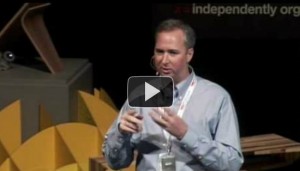
Cameron Herold offers many excellent suggestions in his talk, “Let’s raise kids to be entrepreneurs”.
If you are following our blog, you are probably a parent who wants to give your children more opportunities and choices in life. That includes helping them develop enterprise skills, money skills and the confidence to think differently.
Cameron’s talk is a must-see. It goes for about 15 minutes, but it contains many ideas that can change the way you see children, schooling and entrepreneurship.
The “Gift of Want”

In his talk, Cameron refers to the book Young Bucks: How to Raise a Future Millionaire by Troy Dunn.
Troy Dunn is also a self-made millionaire and successful entrepreneur. He also happens to be a father of seven children, just like us, so I found his perspective especially interesting.
In the book, Dunn explains that the first prerequisite for a young entrepreneur is the “Gift of Want.”
In other words, children need a real reason to pursue an enterprise idea. They need to want something badly enough to get started and to keep going when things become difficult.
This is such a practical insight for parents.
Many adults want children to be motivated by responsibility, discipline or long-term success. But children are often first motivated by something much more immediate: a toy, a bike, a game, a trip, a pet, an experience, a gift or a personal goal.
That desire can become the starting point for real learning.
From there, parents can guide children into lessons about planning, researching, marketing, pricing, negotiating, saving, giving and following through.
Practical Teenage Entrepreneur Ideas from Cameron Herold
Cameron Herold’s message is not only philosophical. It is also practical. He gives parents ideas for helping children develop entrepreneurial habits at home.
One of his strongest suggestions is to rethink pocket money.
Instead of simply giving children a regular allowance, he suggests teaching them to look for jobs that need doing around the house and then negotiate a fee for completing them.
That small shift teaches children several important enterprise skills:
- looking for opportunities,
- noticing problems that need solving,
- putting forward an offer,
- negotiating value,
- completing work properly,
- and understanding that money is connected to value creation.
That is a far more enterprising lesson than simply receiving a regular payment without needing to think, negotiate or act.
Teach Children to Save, Give and Buy Assets
Cameron also talks about teaching children strong money habits.
One simple idea is to use money boxes or jars with different purposes. For example, children can divide their money into:
- Giving: money for charity, tithing, community support or helping others.
- Spending: money for toys, treats or things they want now.
- Assets: money for savings, investments, tools, equipment or future enterprise ideas.
This teaches children that money has choices attached to it. It is not only for spending. It can also be used to give, grow and create more opportunities.
This connects closely with our own family lessons around teaching children the difference between assets and liabilities.
Use Real Life as the Classroom
One of the most powerful ways to raise enterprising kids is to use real life as the classroom.
When you are in a restaurant, point out good customer service. When you see a strong salesperson, discuss what made them effective. When a business solves a problem well, talk about it. When a product is poorly designed, ask your children how they would improve it.
Encourage your children to:
- sell unwanted toys,
- make and sell something small,
- build inventions,
- tell stories,
- practise speaking to people,
- notice problems around them,
- and think of ways to create value.
These activities may seem simple, but they build confidence. They help children see themselves as people who can create, solve, serve and earn.
Raising Enterprising Kids Means Seeing Children Differently
Cameron Herold has allowed me, as a school teacher, to see some children in schools differently.
I can see that there are children who love the system and are more than happy to work towards a traditional career. That pathway suits many children well.
But I can also see that there are other children who do not fit so easily into the system. Some of those children may be budding entrepreneurs without knowing it yet.
They need someone to recognise the entrepreneur within them and provide opportunities for those strengths to develop.
This does not mean every child needs to become a business owner. It simply means children deserve the chance to develop enterprise skills: initiative, communication, creativity, leadership, resilience, sales, money management and problem-solving.
Those skills will help them whether they become entrepreneurs, employees, artists, tradespeople, professionals, community leaders or something else entirely.
Key Takeaway: Teenage Entrepreneur Ideas Start With Strengths
Key takeaway: teenage entrepreneur ideas do not always start with a business plan. They often start with noticing a child’s strengths, interests, frustrations and natural ways of thinking. Cameron Herold’s message reminds us to look for the entrepreneur within the child and give that child real opportunities to practise enterprise.
Where to Next?
- Watch Cameron Herold’s TED talk, “Let’s raise kids to be entrepreneurs”
- Read Entrepreneurship for Students: How Entrepreneurs Think
- Read our financial education lesson on assets and liabilities
- Explore more Money Lessons for Kids
- Visit Raise Entrepreneurial Kids
What entrepreneurial strengths do you see in your child, and how could you give them a real-world opportunity to practise those strengths?