Enterprising Dinner Table Conversations

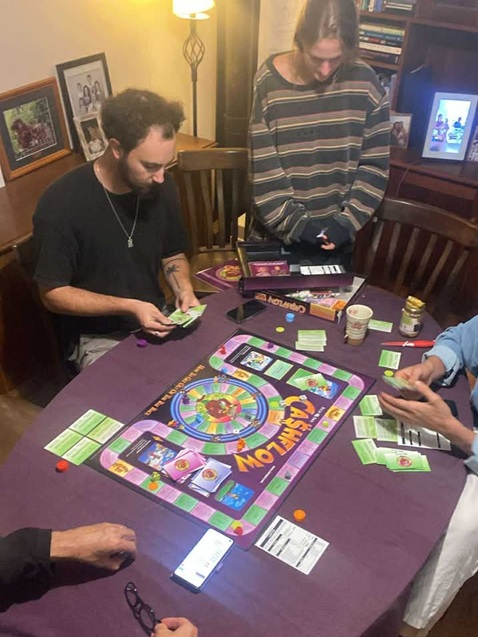
What do you think the Howitt’s talk about when around the dinner table?

It always begins with each member of the family sharing a gratitude, then usually the events of the day are told and achievements celebrated; however, what quite often happens next is that topics of business, enterprise, finance and investing govern the conversation.

Flynn Howitt taking his photography to another level. Check out his facebook blog and see what he can do!
Film making and photography have been the key to Flynn’s success in building his social media following

Lately, the topics of interest have been Instagram money making strategies, crypto assets and eCommerce.

Let’s look at these individually and look at how these present opportunities for kids to be entrepreneurial…

Instagram

Our older children, Kaitlin (now 24), Jai (now 22), Flynn (now 20) and Amber (now 18) all discovered social media when they were in their mid-teens. It started with facebook, then Instagram and now Tic Toc and Snap Chat. They discovered how to grow a true following of people by using regular posts of quality content about their lives. It helped living on a paradise Tropical Island atoll in the middle of the Indian Ocean- photos and videos here always look fabulous!

Kaitlin Howitt co-creating inspirational workshops with like minded people. Enterprising teen to entrepreneur.
Creating workshops that inspire has become Kaitlin passion.

As their following grew, so did their opportunities for enterprise. It began with something called ‘shoutouts’. Here other people/companies would pay cash for the enterprising kids to mention them in a post. This helps these people/companies grow their followers or promote their wares… and my kids were happy for the cash!

Next came real products. Companies would send them clothing, watches, surf gear and jewellery to wear and share on their Instagram accounts. The kids would get to keep the gear!

Following that, companies would not only send the gear, but also pay for the promotions. My enterprising teens were stoked with these opportunities!

As time went by and their social media followings grew and grew and their creative juices began to flow, real, much larger opportunities presented themselves.

Humble beginnings for Jai where he learnt to navigate the world of entrepreneurialism from his shared bedroom.
Jai building his enterprise from his bedroom a few years ago.
Jai Howitt's new warehouse where he runs his media company- Brand-Boostr. Jai's journey from enterprise for kids to today has been exceptional!
Handing over the keys to his new warehouse where he creates media content for international clients.

Kaitlin, along with Tully her husband, have built multiple streams of income using social media. Businesses that include coaching, MLM, and online courses. We’ll share more about this in a later blog post.

It’s taken Jai a few years, but now he has a thriving business where he creates content for international clients for their social media marketing. He uses his social influence through Instagram, Tic Toc and Facebook to generate leads for his very successful enterprise.

Crypto

You would have all heard about Bitcoin, but I’d say not many of people fully understand what it actually is. In a nutshell, Bitcoin is a block chain digital software developed in 2008 to be a currency. It is limited in supply, therefore very rare like gold. Other than its rarity, people like it for many reasons:

  • Decentralised, thus not controlled by one bank (centralised).
  • Cheap and quick to buy, sell and send.
  • Easy to store and secure.
  • A hedge against other asset classes.
  • Block chain technology is at its infancy and likely to become huge.
  • It is borderless. Can be traded and used in all countries.
  • Used as a currency.

There are thousands of different crypto currencies, although Bitcoin is by far the largest by market cap. Many of the crypto coins are based on block chain digital technologies (programs) that have real life applications. They are part of real bricks and mortar businesses. For example, Power Ledger is a renewable energy technology allowing people who have solar panels on their homes to be able to sell their excess energy to other people for a premium, rather than selling back to the to the Energy company for very pittance. People can buy the Power Ledger Coin. If the company continues to grow and expand and make profits, it will push the value of the coin up.

Block chain technology (crypto) is very new, and people are only just beginning to realise its potential. The infrastructure to utilise the technology is still being put into place. As mainstream companies, banks, fund managers and investors see the real benefits of block chain technology and recognise crypto currencies as being a strong asset class, the value of these rare assets will continue to rise.

The Howitt’s have investigated several crypto coins and have bought into them, with the intention to hold them for the long term. We believe it is a strong hedge against other asset classes, such as the stock market. We also believe crypto to have tremendous potential. 

eCommerce

As a family, we are all studying an eCommerce program called Web Dev. We are learning to build and monetise websites. We are also learning to identify value in websites for sale, buy them and then either renovate and flip them, or hold them for cash flow.

Websites can be monetised in many ways. The more common ways are through affiliating with companies selling real products and services (eg Amazon) or with advertising (AdSense). However; there are many other ways- like creating directory sites or selling digital products.

Building a website yourself from scratch costs very little, so anybody can afford to do so. Perfect for enterprising kids or teens. Buying readymade websites, already making a consistent monthly income can be an excellent investment, arguably better than any other asset class available today. For example, website that makes a $1000 a month can be bought for about $20 000. After costs, this asset will return in excess of 40% p/a. In addition, if you have the skills to improve the website and its income, then the asset will be worth more. Now, where else can you get a 40%+ return on an investment?

Currently, the younger Howitt kids are building websites. Amber has hers up and running. Go check it out www.sustainableperiodproducts.com. Chayse recently bought www.babyclient.com , which he is currently renovating. The other kids’ sites are a work in progress. We’ll keep you posted!

Our dinner table conversations may be a little different to the average family. We gain inspiration from one another through these conversations and through our mentors who support us on our entrepreneurial journeys. We are building skills, gaining knowledge, creating assets and most of all strengthening a mindset for enterprise.

Michael Clouse: How to Balance Money and Time

Cathy and Trevor with Michael Clouse after learning leadership lessons about money and time

Michael Clouse gave us a powerful reminder that most people are busy etching out a living, while only a handful of people are intentionally designing a life.

That idea stayed with us because it is exactly the kind of thinking we want our children to see. If we can learn to think differently about time, money, leadership and choices, then our children have another model for designing their own pathway in life.

Michael Clouse as an inspiration for leadership lessons for kids
Michael Clouse shared powerful ideas about leadership, time, money and designing a life.

Michael Clouse and the Choice to Design a Life

“Most people are etching out a living and only a handful of people are designing a life.”

This is such a powerful statement, and one we often do not take the time to consider carefully. After many years of etching out a living, we are finally ready to design a life for ourselves and our children.

When we can do that, our children have another example in front of them. They can begin to see that life does not have to be only about earning money, paying bills and following the same pathway as everyone else. They can begin to make more informed choices about their own future.

We were fortunate to hear Michael Clouse speak at the annual Isagenix Convention on the Gold Coast. Michael gave an excellent talk about leadership, time, money and the thinking behind success.

Cathy and Trevor with Michael Clouse after learning leadership lessons about money and time
Here we are with Michael Clouse after hearing his leadership message.

Who Is Michael Clouse?

Michael Clouse is a professional network marketer, author, trainer and speaker. His official website describes his long career in network marketing, along with his books, articles, videos and audio training programs. You can learn more through Michael Clouse’s official website.

Before I share the message we took from his talk, I want to introduce why Michael made such an impression on us.

Michael came from a disadvantaged home, yet managed to become highly successful. Early in his career, he studied successful network marketers around the world and modelled himself on their habits, thinking and leadership principles.

That alone is a valuable lesson for our children. Success often leaves clues. If children can learn to observe people who are already achieving something worthwhile, they can begin to notice the habits, values and decisions behind that success.

Michael Clouse on Balancing Money and Time

One of the strongest ideas Michael Clouse shared was the importance of balancing money and time.

Most people give up time in order to earn money. Throughout their lives, they work hard in a job or small business to bring home the bacon. As a result, they may slowly increase their money, but they often become time poor. Later in life, they may finally have more time, but their income can drop.

People will argue that they have little choice. They have families to raise, mortgages to pay and expenses to cover. They need to work. In many ways, this is true.

But from an entrepreneurial point of view, it is still worth asking a bigger question:

How can we create more freedom with both time and money?

Wealthy people often create or buy back time. This might mean paying someone to clean the house, do the accounts, cook meals or help with tasks that free them to spend more time with the people they love and the experiences they value.

This is not just a money lesson. It is a life lesson.

Leadership Lessons for Kids from Michael Clouse

The reason this message matters for Enterprise for Kids is not because every child should become a network marketer. It matters because children need to know there are many possible pathways in life.

They can choose a job. They can build a business. They can create a product. They can offer a service. They can invest. They can become leaders. They can learn from mentors. They can think carefully about the kind of life they want to design.

Michael Clouse challenged us to think about leadership, not just income. Leadership is about responsibility, commitment, communication, consistency and helping others grow.

These are lessons children can begin learning long before they become adults.

Network Marketing Success Principles

Michael Clouse Future Choice book about network marketing and career options
Future Choice by Michael Clouse explores network marketing as one possible career path.

According to Michael, network marketing was one possible solution to the time-money balance because it allowed people to build a business through systems, tools, relationships and leadership.

For us, the bigger lesson was not just about one business model. It was about studying success principles and then asking which of those principles our children could learn from.

Michael reminded us of a simple idea:

Success leaves clues.

Here are some of the success principles we took from his talk.

Get Into the Game and Stay in the Game

Figure out what is in it for you, and then commit. You will meet challenges and have to overcome barriers. Being fully committed helps carry you through the difficult parts.

This applies to children as much as adults. Whether they are learning an instrument, building a small enterprise, playing sport or developing a new skill, they need to learn that success usually requires staying in the game long enough to improve.

Focus on the Fundamentals

With a networking business, Michael explained that the fundamentals include connecting with people, presenting to people, and teaching others how to run their business when they say yes.

For children, we can translate this into simple leadership lessons:

  • Learn how to talk with people.
  • Learn how to explain your idea clearly.
  • Learn how to help others understand what to do next.
  • Learn how to keep improving your skills.

Keep the Main Thing the Main Thing

Michael’s phrase “Keep the main thing the main thing” is a good one for adults and children alike.

It means sticking to the system that works. It means not being distracted by every new idea. It means asking, “What is the most important thing I need to do today?”

In business, that might mean telling your story, using the tools provided, connecting with people and becoming better tomorrow than you were yesterday.

For children, it might mean finishing the project, practising the skill, serving the customer, asking for feedback, or following through on the plan they started.

Recognise Effort and Progress

Lynn Hagedorn as an example of network marketing success mentioned in Michael Clouse leadership lessons
Lynn Hagedorn was shared as an example of what can happen when strong systems, leadership and commitment come together.

Recognition was another important part of Michael’s leadership message.

Be sincere and recognise every accomplishment, both publicly and privately. Recognise yourself, the company and your team.

One of the lines that stood out was:

“Babies cry for it and men die from it.”

Praise and recognition matter. Children need to know that their effort has been seen. They need to experience the confidence that comes from being encouraged, acknowledged and supported.

Michael Clouse teaches and uses these simple principles. He built successful networking businesses and mentored others who went on to create strong results of their own. The example of Lynn Hagedorn shows what can happen when commitment, systems, belief and leadership come together.

Michael Clouse and Career Choices for Teenagers

Kaitlin, our eldest daughter, came along to hear Michael speak as well. We figured it was a tremendous opportunity for her to learn about success from a successful person.

Network marketing may or may not become part of her future. That is not really the point.

The point is that young people benefit from seeing different possibilities. They need to know about jobs, business, leadership, enterprise, investment, creativity and service. They need to understand that their future can include more than one pathway.

It simply broadens the choices a young person has.

This is why we believe exposing children and teenagers to strong leadership ideas is so valuable. It helps them think. It helps them question. It helps them notice the difference between simply earning a living and designing a life.

Michael Clouse, Time Freedom and Money Lessons for Kids

For us, the lasting lesson from Michael Clouse was not just about network marketing. It was about time freedom, leadership, contribution and being intentional.

Our children are watching how we live. They are watching how we work. They are watching whether we are exhausted, inspired, trapped, free, generous, stressed or purposeful.

If we want them to make strong choices later in life, we need to let them see different possibilities now.

That is why this message belongs on Enterprise for Kids. It is part of the wider conversation about raising entrepreneurial kids who can think clearly about money, time, leadership and the kind of life they want to create.

Key Takeaway: Help Children Think Beyond Earning a Living

Key takeaway: Michael Clouse challenged us to think about designing a life, not just earning a living. For children and teenagers, that message can open up powerful conversations about leadership, money, time freedom, career choices and entrepreneurial thinking.

Where to Next?

What do you think? Are we teaching children only how to earn a living, or are we helping them imagine how to design a life?

Money Mastery: Lessons from Paul Counsel’s Program

Paul Counsel teaching in the Money Mastery Program about financial freedom and money mindset

Money Mastery became much more than a financial education program for us. It became a deep journey into mindset, values, financial freedom and the kind of life we wanted to model for our children.

Have you ever had that inner desire to make a difference in the world, but felt frustrated that so much of your time and energy was being poured into simply earning enough money to keep up with life, bills and raising a family?

Money Mastery quote about changing the world from within
The world can only change from within — a powerful idea behind our Money Mastery journey.

Money Mastery and the Desire to Make a Difference

Have you wondered what you could do if you had the resources of time, knowledge and money to be that difference?

Children grow up full of potential and excitement about their lives and what they wish to accomplish. Ideally, we as parents want to be an inspiration to them. We want to show by example that they too can achieve what they put their minds to.

Do you ever wonder what worldly achievements and contributions your children will end up making?

Cath and I have huge dreams. We are aiming for the stars. We aspire to achieve, experience and contribute in a grand way. We want to lead our own children to think big, experience life deeply and make a significant difference to the lives of others while they are here on Earth.

Money Mastery quote about thinking big and aiming for the stars
Money Mastery helped us think bigger about life, contribution and financial freedom.

This is our “Why”, and it is why we began the journey seeking the understanding and mindset shifts required to achieve financial freedom.

Paul Counsel and the Money Mastery Mentoring Program

This past year has been, by far, the biggest year for us in terms of shifting our mindset around success.

In March, we embarked on a year-long Money Mastery Mentoring Program led by Dr Paul Counsel. Paul opened our eyes to possibility, gave us tools to make the inner shifts required to achieve financial freedom, and helped us look more closely at the subconscious thinking and conditioning that can shape our results.

You can learn more about Paul Counsel’s current work through Money Mastery Academy.

Our year felt like a roller-coaster ride. There were ups, downs and plenty of bumps along the way. It was full-on trying to sort out the logistics of children, family life and busy schedules while still maintaining momentum.

Without our beautiful friends and family supporting us throughout the year, I am certain we would not have made it this far.

Stephen Covey quote connected to Money Mastery and personal change
Lasting change begins with the way we think, choose and act.

Money Mastery, Financial Freedom and Self Discovery

The Money Mastery program was largely about achieving financial freedom. But for us, it was also a self-discovery mentoring program.

Through the process, we revealed so much about ourselves: our deep-rooted values, our subconscious thinking, our conditioning and our future realities.

That matters because financial freedom is not only about numbers. It is also about beliefs, choices, habits, values and identity.

We came to understand that if our inner thinking does not shift, our outer financial results are unlikely to shift in a lasting way.

This is one of the lessons we want our children to absorb. Money is not just something to earn and spend. It is connected to choices, freedom, contribution and the way we design our lives.

Money Mastery and the Mindset We Model for Our Children

As parents, we can talk to our children about money, success and contribution. But what they watch matters even more.

They watch whether we think big or small. They watch whether we believe we can change. They watch whether we stay stuck in old patterns or choose to grow. They watch whether we simply talk about financial freedom or actually take steps toward it.

That is why Money Mastery was so important for us. It challenged us to look at the patterns we were living from and the example we were setting.

If we want our children to become confident, capable and entrepreneurial, then they need to see us learning, stretching and taking responsibility for our own growth as well.

Paul Counsel Money Mastery Mentoring Program quote about financial freedom and mindset
The Money Mastery Mentoring Program helped us reflect deeply on mindset, values and financial freedom.

Financial Freedom, Family Values and Big Dreams

One of the big distinctions for us was understanding the link between business, money and our highest values.

Our children have always been our highest value. That is beautiful, but it also meant that family life naturally took our time, focus and energy. We had to learn how to align our desire for business, contribution and financial freedom with our value of family, rather than feeling as if they were competing against each other.

That is one of the reasons Enterprise for Kids became so meaningful to us.

It allowed us to connect family, learning, enterprise and money lessons together. It gave us a way to grow our own entrepreneurial mindset while helping our children understand confidence, creativity, responsibility and opportunity.

Money Mastery helped us see that financial freedom is not separate from family. Done well, it can support family, strengthen choices and open up more possibilities for the future.

Our Money Mastery Review

As we reached the final weekend of our year-long Money Mastery Mentoring Program, we found ourselves reflecting on how much had changed.

There were many things to weigh up about what came next, but one thing was certain: our future felt as though it was opening wide before us.

We decided to write a full review of our Money Mastery Mentoring Program. In that review, we shared why we chose to take on such a mentoring program, what the year was like, and some of the massive distinctions that changed our lives.

We invite you to read about our journey and experiences, and to pass it on to interested friends.

Leo Tolstoy quote connected to Money Mastery and changing ourselves
Real change often begins when we are willing to look honestly at ourselves.

We are hopeful that when you read it, you gain inspiration and perhaps some real insight into your own life. We reflected on some of the reasons why things happen the way they do, and why they sometimes do not.

So go make yourself a cuppa, sit down in a comfy chair and take the time to read our full Money Mastery Mentoring Program review.

Read the full review here: Money Mastery Mentoring Program Reviewed

Key Takeaway: Money Mastery Starts From Within

Key takeaway: Money Mastery is not only about financial strategies. For us, it was about mindset, family values, financial freedom and the inner shifts needed to create a bigger future for ourselves and our children.

Where to Next?

Have you ever taken on a program, mentor or experience that changed the way you think about money, family and the future? We would love to hear your thoughts in the comments.

Network Marketing Business Model: Lessons from David Wood

Cathy and Trevor at a network marketing event standing under a millionaire sign

Network marketing business model lessons became part of our wider journey into entrepreneurship, wealth creation, leadership and the kinds of business systems we wanted to understand for ourselves and our children.

“`

In our last article, we shared our mind-blowing experience at David Wood’s Break Through Training. This follow-up explores one of the bigger ideas from that training: how a business model, when built on systems, tools, leadership and genuine value, can become a possible wealth creation vehicle.

“`

Cathy and Trevor with David T.S. Wood at a network marketing event learning about the network marketing business model
Cathy and Trevor with David T.S. Wood at a network marketing event, where we explored business systems, leadership and wealth creation ideas.

Network Marketing Business Model: Lessons from David Wood

In our last article, we shared our experience at David Wood’s Break Through Training and reflected on his teaching around attitude, mindset, overcoming fear and becoming tremendously successful and happy.

David also spoke about the importance of having a vehicle, or ideally more than one vehicle, for building wealth. One of the wealth creation vehicles he spoke about was network marketing.

At the time, we were very excited by the possibilities. We were learning about business, personal development, leadership, systems and residual income. More importantly, we were beginning to think about the kinds of ideas and conversations we wanted our children to hear as they grew up.

Kiyosaki book connected to the network marketing business model and wealth creation
Network marketing was one of the business models we were exploring as a possible wealth creation vehicle.

What Is the Network Marketing Business Model?

The network marketing business model is based on people sharing products or services they use, believe in and are willing to recommend. In a genuine model, the product or service must have real value, and the business should be based on customers, sales, systems and leadership — not simply on recruiting people.

That distinction matters. The Australian Competition and Consumer Commission explains that multi-level marketing schemes involve making money from selling a genuine product or service, while pyramid schemes rely on recruitment rather than genuine product sales. You can read more through the ACCC’s unfair business practices guidance.

For us, this was an important learning point. Any business model we look at needs to be considered with wisdom, research and a strong ethical filter.

Network marketing business model as a possible wealth creation vehicle
A business model is strongest when it has products, systems, tools and leadership.

Why Systems Matter in a Network Marketing Business Model

One of David Wood’s key messages was that systems matter.

He explained that a business becomes more powerful when it is built on simple, repeatable systems and tools. In his words:

“Don’t be a tool, use the tools.”

“Systems are duplicable, people are not.”

This idea is useful far beyond network marketing. It applies to children’s enterprise projects, family businesses, online businesses and almost any venture where people need to learn a process and repeat it.

For our children, this is a valuable business lesson. A successful enterprise is not only about enthusiasm. It also needs systems, tools, routines, communication and follow-through.

Network Marketing Business Model Lessons About Leadership

David Wood also pointed out that leadership matters. Great leaders inspire people, help people grow and model the energy they want others to follow.

He explained that success comes from finding out what matters to people, understanding their problems, and looking for ways to be genuinely helpful. Connecting with people on a personal level cannot be underestimated.

This is one of the strongest lessons we took from the training. In any business, whether it is network marketing, a family enterprise, a student business or a future company our children may build, the heart of business is still people.

Help people. Solve problems. Build trust.

That is a lesson worth teaching children early.

Residual Income and Wealth Creation Ideas

One of the reasons people become interested in the network marketing business model is the possibility of residual income. Unlike a traditional job, where income is usually tied directly to hours worked, residual income aims to continue after the initial effort has been put in.

Of course, this does not mean easy money. Any real business takes dedication, honesty, perseverance, communication and hard work.

At David Wood’s training, there were everyday people who had built businesses in a relatively short time, but the message was still clear: success requires action, consistency, personal development and leadership.

For us, the bigger lesson was not that every person should join a network marketing company. The bigger lesson was that children and teenagers should grow up knowing there are different ways to create value, earn income and build a future.

Could Network Marketing Be a Business Option for Young People?

In the original excitement of this journey, we wondered whether network marketing could be a wealth creation vehicle for young people leaving school.

Rather than seeing a job as the only option, could a young person learn business, communication, sales, leadership and financial responsibility through a structured business model?

Possibly — but with strong guidance, maturity and careful research.

For teenagers, the real value may not be the specific business model itself. The value may be learning how to ask better questions:

  • Is the product genuine and useful?
  • Would I use and recommend it honestly?
  • How does the business actually make money?
  • Are people rewarded mainly for product sales or recruitment?
  • What are the costs, risks and responsibilities?
  • Does the company have ethical leadership and a good track record?
  • Would this build real skills and character?

Those questions are useful for any young person learning about business.

Choosing a Network Marketing Business Wisely

If someone is considering a network marketing business, there are several things worth checking carefully.

  1. The product must be strong. You need to use it, understand it and genuinely believe it has value.
  2. The company needs to be researched. Look at its history, leadership, annual growth, reputation and long-term vision.
  3. The compensation plan matters. Understand how people are paid and whether rewards are connected to genuine product sales.
  4. The culture matters. A good business should encourage ethical behaviour, not pressure, hype or unrealistic promises.
  5. The products should have long-term relevance. They should be credible, useful and likely to remain valuable in the future.
  6. The bigger vision matters. A company that contributes positively to people and communities is more aligned with the kind of business we want our children to understand.

These points are not only relevant to network marketing. They apply to many business opportunities that children, teenagers and adults may come across in life.

Robert Kiyosaki book about the network marketing business model
Reading widely helped us question different business models and wealth creation pathways.

Network Marketing Business Model and Entrepreneurial Kids

So what does all this have to do with Enterprise for Kids?

For us, the point is not to push a particular business model onto our children. The point is to expose them to different ways of thinking about work, money, value, systems and leadership.

A child who understands business systems will look at the world differently. They may notice how a market stall works, how a franchise works, how an online business works, how a family enterprise works, or how a network marketing business model works.

They begin to understand that income can come from more than a job. They begin to see that leadership, trust, service and systems all matter.

That is a powerful conversation for families who are raising entrepreneurial kids.

Kiyosaki book connected to network marketing business model lessons
Books and mentors helped us explore how different business models work.

David Wood Quotes Worth Remembering

To finish off, here are some of David Wood’s quotes that stayed with us:

“We don’t stop playing because we turn old, but turn old because we stop playing.”

“How I do anything is how I do everything.”

“Take 100% responsibility for everything in my life and for everything not in my life.”

These quotes connect strongly with the lessons we want our children to learn: take responsibility, stay playful, use tools, build systems, serve people and keep growing.

Key Takeaway: Understand the Network Marketing Business Model Before Choosing

Key takeaway: The network marketing business model can teach useful lessons about systems, tools, leadership, residual income and personal responsibility. But like any business opportunity, it needs to be researched carefully and approached ethically.

Where to Next?

What business models do you think young people should learn about before they leave school? We would love to hear your thoughts in the comments.

Plan to Buy Gold and Silver!

Kids holding large display gold nuggets outside the Perth Mint while learning about buying Perth Mint coins

Buy Perth Mint coins may sound like an unusual money lesson for kids, but for our family it became a practical way to talk about planning, saving, assets, liabilities and long-term thinking.

“`

Most people have a plan for how to make money, but not always a plan for what to do with that money once they earn it. This became an important conversation in our family as our children started earning money through their own little enterprises.

“`

Kids outside the Perth Mint learning how to buy Perth Mint coins and understand assets
A visit to the Perth Mint became a real-world money lesson about assets, saving and planning ahead.

Buy Perth Mint Coins: A Money Lesson for Kids

“Failing to plan is planning to fail!” — Robert Kiyosaki

Robert Kiyosaki points out that many people work hard to earn money, but do not have a clear plan for what to do with it. Often, those same people can still end up feeling short of money, even when they earn more.

That idea really made us think. Our own children were busy planning their enterprises and successfully making money. They had plans to buy things they wanted, such as Nerf guns, iPods, computers and other exciting items, but they did not yet have much of a plan to buy assets.

So we decided it was time to have a family conversation about planning what to do with earned money. The idea to buy Perth Mint coins gave us one very practical way to make that conversation real.

Kids money plan showing how children can plan for assets liabilities and saving
Kids need a simple plan for what to do with their money once they earn it.

Why Kids Need a Money Plan Before They Buy Perth Mint Coins

Kids need an education on how to plan what to do with their money when they earn it. It is not enough to teach children how to make money. They also need to learn how to save, give, spend wisely and think about assets.

Kiyosaki explains the difference between spending money on things that take money away from you and spending money on things that can hold or grow value over time.

The simple lesson for kids is this:

  • Liabilities are things we buy that usually lose value or cost us more money.
  • Assets are things that may hold value, grow in value, or help create income over time.

We had already written about our family conversations around assets and liabilities. You can read that article here: Financial Education for Kids: Teaching Assets and Liabilities.

Once the idea of assets and liabilities was explained to our kids, they could begin to make a more thoughtful money plan. That plan included money for things they wanted, money for giving, and money for buying assets.

Buy Perth Mint Coins as a Real-World Asset Lesson

When children are learning about assets, it helps if the lesson is concrete. Shares, property and business systems can be a bit abstract for young children, but coins are real. They can be held, seen, weighed and discussed.

That is why the idea to buy Perth Mint coins became such an interesting family money lesson. It gave us a way to talk about gold, silver, assets, inflation and long-term thinking in a way the kids could actually picture.

To be clear, this is not financial advice. Families need to do their own research, understand the risks, and make decisions based on their own circumstances. MoneySmart explains that an investing plan should consider your goals, timeframe and risk tolerance, and that diversification helps reduce risk by spreading money across different investments.

For us, the key lesson was not “everyone should buy gold or silver.” The key lesson was that children can learn to think differently about money.

Gold and Silver as One Example of an Asset

Subscribers to this blog may remember that we hosted a Gold and Silver Seminar in Bunbury. Our presenter, Andrew Smith, was a mining engineer, investor and businessman who had been closely involved with the world of gold and silver mining for many years.

He gave several reasons why gold and silver may be worth considering as long-term assets. More importantly for our kids, he gave us some great conversation starters about money, inflation and planning.

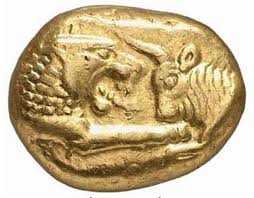
First gold coin from Lydia used in a kids money lesson about gold and assets
Gold Coin from Lydia.
Aussie gold coin used to teach kids about assets and long-term money planning
Aussie Gold 2012 Coin.

Gold and silver have been recognised around the world as stores of value for a very long time. Unlike paper currencies, which can lose buying power over time through inflation, precious metals are often discussed as a possible hedge against currency devaluation.

That became an interesting discussion point with the kids. We were not trying to turn them into investment experts. We were simply helping them understand that money has buying power, and buying power can change over time.

The Meat Pie Indicator: Inflation for Kids

Andrew explained inflation using what he called the “Meat Pie Indicator”.

Back in 1970, you could buy a meat pie for around 40 cents. Many years later, the same sort of pie might cost several dollars. That simple comparison helped the kids see that the dollar does not always buy the same amount over time.

That is a very practical way to explain inflation for kids. Rather than starting with economics, you start with something simple: a meat pie.

The money lesson is this:

  • If prices rise, the same amount of cash buys less.
  • If children only save cash and spend on liabilities, they may not build long-term value.
  • If children learn to plan, save and buy assets, they begin to think differently.

This was one of the reasons gold and silver became part of our conversation. It was not just about precious metals. It was about teaching the kids to ask, “What happens to my money over time?”

Buy Perth Mint Coins: Why the Perth Mint Made the Lesson Real

The Perth Mint gave this lesson a real-world connection. Instead of only talking about gold and silver in theory, the kids could see the building, look at coins and bullion, and understand that money can be connected to history, value and planning.

The Perth Mint sells gold, silver and platinum bullion coins, minted bars and cast bars in a variety of sizes. That makes it a useful place for families to explore the idea of precious metals as one possible asset class. You can visit the official Perth Mint bullion page to learn more.

For children, silver may be easier to understand than gold because the price point can be more manageable. A child may not be able to buy a gold coin, but they may be able to save toward a small silver coin or bar.

Again, the aim is not to pressure children into buying precious metals. The aim is to teach them to think:

  • What am I doing with the money I earn?
  • Am I spending everything?
  • Am I saving some?
  • Am I giving some?
  • Am I learning to buy assets?

For our family, the decision to buy Perth Mint coins was really a doorway into better conversations about money, choices and long-term thinking.

Buy Perth Mint Coins, But Teach the Bigger Money Lesson

The keyword may be buy Perth Mint coins, but the bigger lesson is not only about coins. It is about money planning.

Our children needed to understand that earning money through enterprise was only the beginning. Once they had money in their hands, they needed to make decisions. Would they spend it all? Would they save some? Would they give some? Would they set aside money for assets?

This is where a simple three-part money plan can help children.

1. Money for spending

Children still need to enjoy the reward of their work. Buying something they have worked for can be a powerful lesson in effort and reward.

2. Money for assets

This is the part that helps children think long term. Assets might include precious metals, shares, a small business asset, tools for their enterprise, or another age-appropriate example that helps them understand value.

3. Money for giving

Giving helps children connect money with generosity. In our family, this was important because we wanted enterprise to build character, not just cash.

Gold, Silver and Long-Term Thinking

During the seminar, we also discussed why gold and silver can attract long-term interest. People use them for jewellery, coins, bullion, technology and industry. Gold and silver are also often discussed during times when people are concerned about inflation, currencies or financial uncertainty.

These ideas can become quite complex, so for children we kept the lesson simple:

Some things we buy lose value quickly. Some things may hold value for longer.

That distinction is a powerful start.

Indian bridal jewellery used in a gold and silver money lesson for kids
Indian Bridal Jewellery.

In countries such as India and China, gold and silver have long been connected with culture, jewellery, celebrations and family wealth. That gave us another way to talk to the kids about how different cultures think about money, value and assets.

We also talked about silver being used in everyday products and technology. That helped the children see that precious metals are not only shiny objects. They can also have practical uses.

Charts, Prices and Why Children Need Context

The original version of this article included old gold and silver price charts from around 2012. They were useful at the time, but prices change constantly, so I would not want the children to focus only on old numbers.

The better lesson is to help children understand that prices move, markets change, and no asset goes up in a straight line forever.

Gold chart used to teach kids that asset prices change over time
Gold chart used as a discussion starter about changing prices.
Silver chart used in a kids money lesson about assets and price changes
Silver chart used as a discussion starter about long-term value.

That is why we also talked about diversification. Children do not need to understand the whole investment world at once, but they can begin to understand that putting every dollar into one thing may not be wise.

MoneySmart’s investing plan guidance is a useful Australian resource for families because it encourages people to set goals, understand risk, research options and think carefully before investing.

Buy Perth Mint Coins and Set Family Money Goals

The Perth Mint sells gold, silver and platinum, including coins and bullion. For our kids, the most realistic conversation was probably around silver, because gold was much more expensive.

Perth Mint building used in a money lesson about buying Perth Mint coins and assets
The Perth Mint helped make the money lesson feel real.

Our kids now had new goals. Their goals were broken into three parts:

  • a part for buying things they wanted,
  • a part for buying assets,
  • and a part for tithing or giving.

That simple structure helped them see that money does not have to disappear as soon as it is earned. Whether children eventually buy Perth Mint coins, save toward a business tool, or choose another asset later, the important lesson is that they are learning to plan.

A Four-Part Money Box for Kids

One practical tool that can help children is a money box divided into sections. Some families use jars, envelopes or labelled containers. The point is to help children physically separate their money into different purposes.

For example, children might divide their money into:

  • Spend — for things they want now.
  • Save — for bigger goals.
  • Invest — for assets or future opportunities.
  • Give — for generosity, tithing or causes they care about.
Money box for kids with sections for saving spending investing and giving
A divided money box can help children plan where their money goes.

Buy Perth Mint Coins as Part of a Bigger Financial Education

When we talk about how to buy Perth Mint coins, we are really talking about a much bigger financial education.

We are teaching children to pause before spending everything. We are teaching them to ask better questions. We are teaching them to think about the future. We are teaching them that money can be used for enjoyment, generosity and long-term goals.

The real win is not whether a child buys a silver coin, a gold coin, shares, tools for a small business or another asset later on. The real win is that they begin thinking like someone who plans.

Key Takeaway: Buy Perth Mint Coins to Teach Planning

Key takeaway: Learning how to buy Perth Mint coins can be a practical way to start a bigger family conversation about money planning, assets, liabilities, saving, giving, inflation and long-term thinking.

Where to Next?

Have you used coins, jars, money boxes or real-world experiences to teach your children about saving, giving and buying assets? We would love to hear your ideas in the comments.

Financial Literacy for Teens: Jai and Kaitlin’s Enterprise Journey

Jai and Kaitlin as young teens learning financial literacy through enterprise goals

Financial literacy for teens often becomes most powerful when it is connected to a real goal. For Jai, that goal was finding the money he needed for Country Week Soccer. For Kaitlin, it was learning how to manage her creative enterprise alongside study, sport, friends and teenage life.

“`

In this part of our family enterprise journey, Jai and Kaitlin remind us that teenagers do not always need another lecture about money. Sometimes they need a meaningful reason to take action.

“`

Akaisha as a toddler in a dog walking photo introducing financial literacy for teens through family enterprise stories
Enterprise lessons begin early in family life, but teenagers often need real goals before financial literacy truly comes alive.

Financial Literacy for Teens: Jai and Kaitlin’s Enterprise Journey

So far in our family enterprise journey, we have seen Flynn build a great honey enterprise and actually achieve his goal. Kit had a go at dog walking, but quickly realised that Chayse was making more money selling lollies at the local soccer fields, so he began pursuing that with his brother.

Kit and Chayse made quite a team, and we will revisit them again in another blog post. Amber also reached her goal with her “New from Old” endeavours, and we will celebrate her achievement separately too.

That leaves our creative artist, Kaitlin, and our budding app developer, Jai.

What has been interesting to notice on the children’s journeys is that it can be easier to introduce a different mindset around money to younger children than it is to teenagers or older children.

Why would financial literacy for teens be more challenging?

In our case, Kaitlin and Jai had already been around longer with us as their major source of education. That meant our own money thoughts, objections and subconscious beliefs had been absorbed by them for longer. It was now more of a process to help them question and reshape those beliefs.

Teenagers, Money Beliefs and Real-Life Goals

Kaitlin and Jai learning financial literacy for teens through youth enterprise goals
Kaitlin and Jai were learning that money goals need time, action and follow-through.

Luckily for us, Kaitlin and Jai are both quick learners and they understood the concepts we were trying to teach.

The main obstacle was finding the time to put this new knowledge into action.

Being teenagers, their lives were already full of homework, study, sporting commitments, social life and social media. All of these are things we wanted to encourage in our children, so our challenge was finding a way to include financial education without making it feel like one more burden.

In the end, as with many things, life became the best teacher of all.

Jai’s Teen Money Goal for Country Week Soccer

Jai setting teen money goals as part of financial literacy for teens
Jai’s focus changed when he had a real money goal to reach.

Jai had not had much urgency to pursue his app development because there was no clear timeline attached to his goal. His app idea was exciting, but it was also a long-term project.

Then his goal changed.

Jai was accepted into the Country Week Soccer team and would be competing in Perth during the holidays. He had to pay for a good portion of the trip himself.

Suddenly, he had a renewed vision and a very real money goal to aim for.

He spent countless hours researching ways to make the money in a short amount of time. This is where his youth enterprise thinking kicked into action.

Jai using enterprise ideas to help pay for his Country Week Soccer goal
Jai loves being active, and Country Week gave him a goal worth working for.

He came up with different ways to make the money, including some ideas he had not been interested in before.

The opportunities Jai looked at included:

  • mowing lawns in the neighbourhood,
  • finding good-quality items to sell,
  • hiring out exercise equipment,
  • negotiating paid jobs around the house that were above and beyond normal chores.

Together, Jai and Trevor worked out that he needed to find about $10 a day to afford his portion of the trip. That made the goal feel clearer and more achievable.

He began negotiating with us over jobs that needed doing around the house, and then he got on with them.

He also went through many of his good-quality items that had once been “must haves” when he bought them. He realised that perhaps he did not need them as much as he first thought, so he posted them on Facebook to sell.

What Jai Learnt About Financial Literacy for Teens

Jai’s Country Week goal became a practical financial literacy lesson. Instead of simply asking for money, he had to think about earning, selling, negotiating, time, effort and priorities.

He also had to work out the difference between a long-term enterprise idea and a short-term money need.

Although Jai’s app development journey had taken a back seat, it had not been forgotten. He simply recognised that app development was a longer-term project, while his Country Week Soccer goal needed faster action.

That is an important financial literacy lesson for teenagers. Not every money-making idea suits every goal. Sometimes a teen needs quick cash flow. Other times, they need patience, skill-building and a longer timeline.

We were proud of Jai’s efforts and were confident he would reach his goal in time.

Kaitlin’s Creative Enterprise and Time Management

Kaitlin painting as part of her creative enterprise and financial literacy for teens journey
Kaitlin doing what she loves — using her creative skill as a possible enterprise.

Kaitlin, our artist in residence, was also learning an important financial literacy lesson.

Her lesson was not only about how to make money. It was about how to manage her energy, time and priorities around study, social life, sport and her youth enterprise ventures.

Kaitlin had already explored the idea of turning her artistic skill into a student enterprise. You can read more about that earlier stage in Kaitlin’s portrait drawing enterprise.

Now she had a timeline in place and was receiving more requests for artwork. That meant she had to begin each piece early enough to finish it before Christmas for some customers, and earlier for others.

This was a different kind of money lesson. Kaitlin had to connect creativity with responsibility. If people were asking her to create artwork, she needed to protect the time and energy required to deliver it properly.

Teenage Distractions and Self-Efficacy

Kaitlin learning time management and self efficacy as a teenager with enterprise goals
Kaitlin and Lachlan.

Having a boyfriend actually increased Kaitlin’s self-efficacy because she needed to complete certain things before socialising.

Luckily, Lachlan encouraged Kaitlin to do that, because he actually wanted to have a social life too!

This connects beautifully with the lesson we explored later in Kaitlin’s article about avoiding distractions and following through on her enterprise goals.

For teenagers, financial literacy is not only about budgets and bank accounts. It is also about self-management. It is about learning that if you want to earn money through your skills, you need to manage your time, energy, focus and commitments.

Creative Enterprise with Kaitlin and Georgia

Kaitlin and Georgia exploring creative enterprise and real-world learning as teenagers
Kaitlin and Georgia exploring ideas, creativity and enterprise.

Kaitlin and her friend Georgia were also realising the power of leveraging their time.

They had come up with some great enterprise ideas and had put steps in place to pursue them. These were longer-term goals, but in the end they could reap more rewards than simply working a job.

At the same time, they still saw the need to pursue their jobs in the meantime, so they could have money to put towards their enterprise when it was up and running.

This is another important financial literacy lesson for teens: sometimes a job and an enterprise can work together.

A job can create cash flow. An enterprise can create ownership, learning, creativity and possibility. Both can play a role while a teenager is learning how money, work and opportunity connect.

Financial Literacy for Teens Happens Through Real Life

The journey towards financial freedom is always a rocky one, but it is one worth following regardless of what else is going on in life.

Our kids are teaching us so much along the way. Not all of their efforts are successful, but they are learning from each experience and moving forward.

That is what makes real-world learning so powerful.

Jai’s story shows how a clear money goal can turn a teenager into a problem-solver. Kaitlin’s story shows how creativity, customers and deadlines can teach responsibility and time management.

Neither of those lessons can be fully taught from a worksheet.

They are lived.

Where Jai and Kaitlin Are Today

Looking back 14 years later, it is beautiful to see how these early enterprise lessons continued to show up in Jai and Kaitlin’s lives.

Jai’s early interest in app development, problem-solving and online enterprise has grown into his current business, Art of Mondays. It is a wonderful example of how early exposure to enterprise, technology and financial literacy can keep developing over time.

Kaitlin’s creativity and interest in bringing ideas to life has also continued. You can see a glimpse of what she is creating now through Kaitlin’s Golden Days Club.

At the time, these teenage money goals may have looked like small family lessons. But years later, they remind us that children and teenagers are often building foundations long before we can see the full picture.

Key Takeaway: Financial Literacy for Teens Needs Real Goals

Key takeaway: financial literacy for teens becomes more meaningful when teenagers have real goals. Jai needed money for Country Week Soccer, while Kaitlin needed to manage creative requests and deadlines. Through youth enterprise, they learnt money skills, focus, responsibility and real-world problem-solving.

Where to Next?

What real goal could help your teenager learn more about money, responsibility and enterprise?