Business Ideas for Students: Chayse the Candy Man

Business ideas for students shown through Chayse selling lolly bags with Kit and Amber

Business ideas for students do not have to be complicated. Sometimes they begin with a four-year-old, a box full of lolly bags, a soccer ground full of hungry kids and a very determined little Candy Man.

This is Part 3 of Chayse’s Candy Man story, where his lolly bag idea moved from planning and preparation into real selling, real customers and real profit.
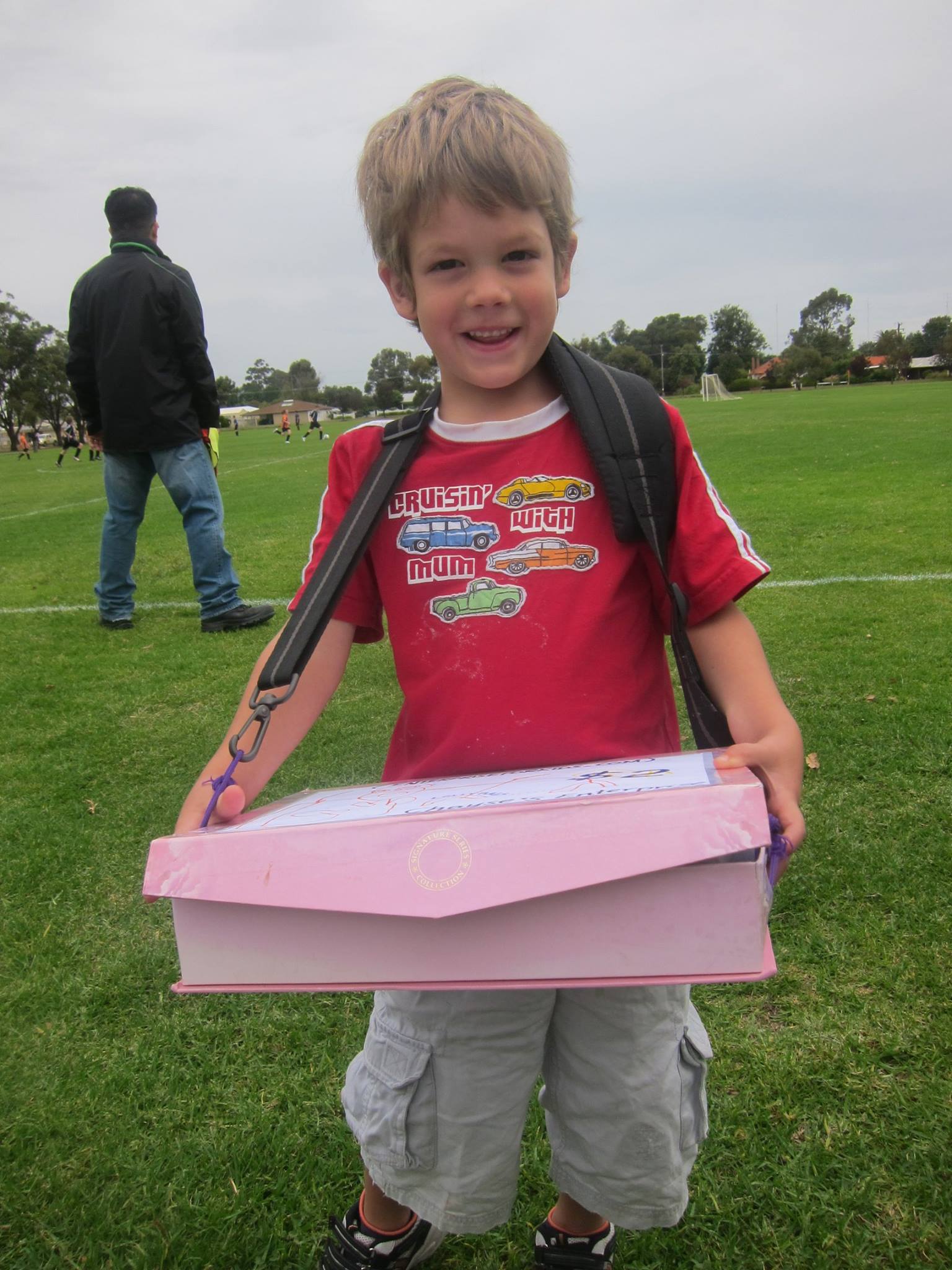
Business ideas for students shown through Chayse selling lolly bags at the soccer grounds
Chayse selling lolly bags at the soccer grounds as part of his Candy Man enterprise.

Business Ideas for Students: Chayse the Candy Man

We thought it was time that we revisited our little Candy Man Chayse. When we last followed his enterprising adventure, he had bought his lollies and bagged them up ready to sell.

If you missed the earlier parts of Chayse’s journey, you can follow the story from the beginning:

Now he has to find a market for his product and learn to be a salesman. Before we share Chayse’s exciting adventure, we thought it would be interesting to consider the benefits of children earning pocket money through enterprise, as opposed to children receiving a weekly allowance.

Why Business Ideas for Students Build a Different Mindset

Robert Kiyosaki quote about wealth and entrepreneurial thinking for children

Children earning pocket money through enterprise will develop the mindset and skills of an entrepreneur. Giving children a weekly allowance can condition them to think like “workers”.

Robert Kiyosaki describes a worker as someone prepared to give their time for money, whilst an entrepreneur builds systems and businesses that produce cash flow. Workers are more often than not time poor and cash poor, whilst entrepreneurs are generally time rich and cash rich.

Why is it then that the vast majority of us leave school and become workers?

A child receiving a weekly pocket money allowance is equivalent to a worker receiving a weekly salary. Relying upon a weekly allowance will not necessarily encourage children to look for opportunities for enterprise.

Their pocket money may or may not be aligned with doing household chores, just as a worker receives payment for doing work. Many kids leave school and slot into jobs for the rest of their lives because they have not been able to explore the entrepreneur within themselves.

Children Earning Pocket Money Through Enterprise

Children earning pocket money through enterprise develop a whole different mindset. Parents of these children will encourage their children to look around to find opportunities.

These kids learn to identify problems that they can solve and they learn the art of negotiation. Enterprising children understand assets, liabilities, cash flow and profit. They will understand markets and customer service and they will develop the confidence to promote themselves.

Business ideas for students can also help children value their profits and spend their money wisely. Weekly allowances are easily received and easily spent, especially when children know that more money will follow. This can condition kids to be reliant on a salary.

Enterprising children become self-motivated to make money, and as they celebrate their successes, they quickly come to understand that they can in fact make a lot more money than their friends receiving weekly allowances.

Entrepreneur Cameron Herold makes a similar point in his TED talk, Let’s raise kids to be entrepreneurs. He encourages parents to help children look for opportunities, negotiate and learn how to create value rather than simply expect a regular allowance.

A Real Student Business Idea at the Soccer Grounds

Chayse selling lolly bags to customers at the soccer grounds
Selling to customers.

Kids may not be motivated to do this at first, especially if they have been used to receiving a weekly allowance. The trick here is to make sure they have a big “Why!” They need to want something badly enough. This then becomes their goal and reason.

So let’s get back to Chayse’s enterprising story. Was he able to earn his pocket money through his lolly bag business?

He had his first opportunity to sell his lolly bags at his big brothers’ soccer games. During the game, the spectators, who were his potential customers, milled around on the sidelines.

So we primed him on what to say to customers. We also enlisted the help of his brothers, Amber and friends. It was all great fun and soon enough the customers came rolling in.

Now who could knock back buying lollies from a cute smiling four-year-old?

Business Ideas for Students Need Real Customers

His lolly bags sold like hot cakes for two dollars each. Chayse could not hold up the box because it was too heavy, so he managed the money jar whilst his helpers held the box.

He had to take his customers’ money and give change.

As word spread that there were lollies for sale, kids came racing in from all directions to buy Chayse’s product. The box became lighter and the money jar heavier, but despite the weight, he was not going to relinquish it.

Chayse looked after his helpers by giving them each a lolly bag. Hopefully they will be willing helpers the next time he sells something.

Chayse also paid back the money his Dad lent him as capital to buy the lollies and plastic bags from the supermarket.

Profit, Confidence and a Very Heavy Money Jar
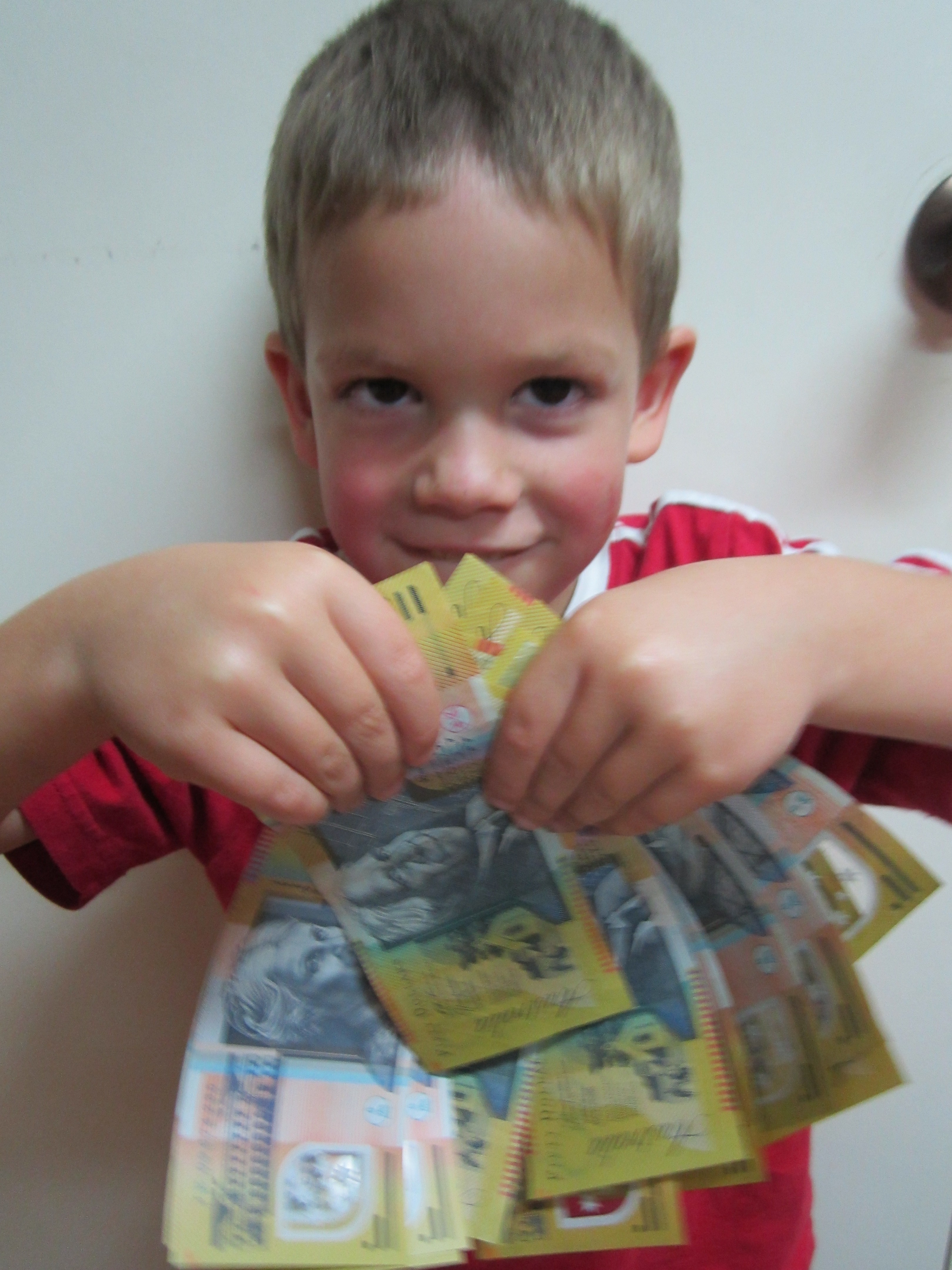
Chayse holding money earned from his lolly bag business
Chayse was delighted with his profit.

All up, he was delighted with his fifty dollars net profit. He is now well on his way to reaching his goal to buy toy Nerf Guns.

In fact, his business was so successful that Kit has recently decided to partner with him for his next endeavour. Under their mother’s guidance, they will research and decide on a charity that could benefit from some of their profits.

So, stay tuned for that one!

Chayse is one of those children earning pocket money through enterprise. It would have taken him five weeks, with a weekly allowance of $5 a week, to save the equivalent of what he profited at the soccer grounds during one soccer game.

That is why simple business ideas for students can be so powerful. They give children a real reason to be brave, talk to people, handle money, serve customers and learn that effort can create opportunity.

The Candy Man Business Series

This post is Part 3 of Chayse’s Candy Man journey. You can follow the full series here:

  • Part 1: The Candy Man Planning an Enterprise — Chayse plans his lolly bag business and receives $50 start-up capital.
  • Part 2: The Candy Man Entrepreneur — Chayse buys the lollies, prepares the bags and gets ready to sell.
  • Part 3: Chayse the Candy Man — Chayse sells his lolly bags at the soccer grounds and makes a profit.

Key Takeaway: Business Ideas for Students Can Start Small

Key takeaway: Business ideas for students do not need to be complicated. Chayse’s lolly bag business helped him learn about customers, selling, profit, confidence, helpers, start-up money and responsibility — all through one simple project at the soccer grounds.

In our next Enterprise For Kids blog, we’ll introduce you to a self-made millionaire who has some excellent tips for parents wanting to raise entrepreneurial kids. Don’t miss this article!

We would love to hear from you, so please leave a comment.

Entrepreneurship Ideas for Students: The Candy Man Entrepreneur

Entrepreneurship ideas for students shown through Chayse bringing home lollies for his business

Entrepreneurship ideas for students can start with something as simple as a four-year-old, fifty dollars, a supermarket trip and a mountain of lollies.

This is Part 2 of Chayse’s Candy Man story. His business idea had been planned. Now it was time to buy the product, package it properly and get ready to sell.

Entrepreneurship ideas for students with Chayse taking fifty dollars to buy lollies
The Candy Man with his $50.
Chayse outside the supermarket buying lollies for his student business idea
…outside the supermarket!

Entrepreneurship Ideas for Students: The Candy Man Entrepreneur

Enterprise for children can be a lot of fun, especially if it involves a four-year-old and a mountain of lollies! After you read this blog, you’ll understand why Hansel and Gretel gave in to temptation to eat the witch’s candy house.

This post follows on from The Candy Man Planning an Enterprise, where Chayse first planned his lolly bag business and received $50 in start-up capital.

In this part of the journey, Chayse takes his plan to the supermarket and begins turning a simple idea into a real product.

From Planning to Action

Chayse and I headed off to the supermarket with his $50, just as he had planned.

We walked the candy aisle and Chayse picked out the lollies he thought would be the yummiest. He bought everything from snakes and milk bottles to musks, liquorice and lollipops.

Next he added 50 plastic sandwich bags and some packets of brightly coloured balloons to the shopping trolley. His whole investment of $50 was spent in no time.

The checkout lady asked him if it was his birthday. Chayse nodded.

Well, why complicate things when you are four?

Entrepreneurship Ideas for Students Need Real Products

Chayse setting up a lolly bag production line for his entrepreneurship idea
The production line!

Chayse’s brothers and sisters were at the car ready and waiting to escort him into the house and feast their eyes on all his lollies.

Chayse was really enjoying all the attention. He bossed his brothers and sisters around as they bugged him for a lolly and offered to carry his bags.

This is one of the reasons entrepreneurship ideas for students can be so powerful. A child suddenly has a real reason to make decisions, manage resources and take responsibility for something that belongs to them.

The Candy Man Production Line

Lollies being sorted into bags for Chayse's Candy Man business
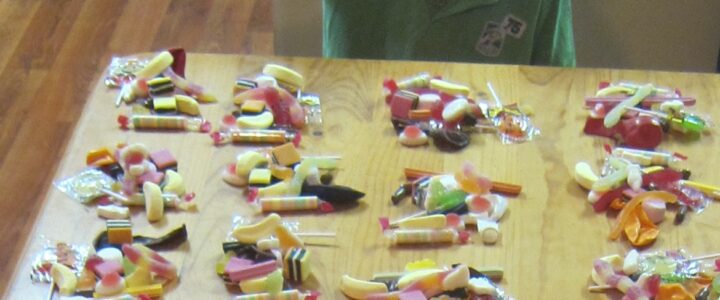
Sorting the lollies into bags.

It was all hands on deck. Jaxon and Mitchy from next door came over to help out and a production line was organised around the kitchen table.

The lollies and balloons were placed into fifty piles and bagged up.

Chayse’s intention was to sell each bag for $2. So if all went to plan, he should make 100% on his investment.

That is not a bad return for a four-year-old Candy Man!

Learning About Price, Profit and Helpers

Chayse's production line team helping make lolly bags
The production line team!

Cathy and I helped him with a sturdy box to display his product. We attached a strap to the box to help him hold it up and then made up a sign.

Mitchy and Jackson ran off home and immediately returned with money to buy a bag each.

Chayse’s first customers!

98 candy bags to go!

Chayse’s brothers and sisters also wanted to buy a bag each with their pocket money. We had to put a halt to that as it was going to create troubles, especially as Chayse wanted to buy his own lollies too.

So the compromise was that they were able to polish off the leftover lollies. Of course, Chayse was in charge of sharing them out to his drooling family.

Entrepreneurship Ideas for Students Build Confidence

Chayse's first customer buying a lolly bag from his Candy Man business
Chayse’s first customer, Mitchy.

Chayse’s enterprise for children business was now all set to go. His next job was to market and sell his product.

Simple projects like this can become powerful kids business ideas, because children are not just pretending to run a business. They are learning about customers, product value, helpers, pricing, profit and confidence through real experience.

They are also learning the sort of practical money lessons for kids that are hard to teach from a worksheet.

Entrepreneur Cameron Herold makes a similar point in his TED talk, Let’s raise kids to be entrepreneurs. Children often learn entrepreneurial thinking best when they are encouraged to look for opportunities and create value.

The Candy Man Business Series

This post is Part 2 of Chayse’s Candy Man journey. You can follow the full series here:

Key Takeaway: Entrepreneurship Ideas for Students Can Start Small

Key takeaway: Entrepreneurship ideas for students do not need to be big, polished or complicated. Chayse’s Candy Man business started with $50, a trip to the supermarket and a family production line around the kitchen table.

Next up, we’ll tune in with Kit the Dog Whisperer and see whether his enterprising idea has evolved.

We would love to hear from you, so please leave a comment.

Ways to Earn Money for Students: Chayse Plans a Candy Business

Ways to earn money for students shown through Chayse preparing lolly bags for his Candy Man business

Ways to earn money for students can start with a very simple idea. For Chayse, that idea was lollies — or candy for our American readers — and a plan to turn fifty dollars into his very own Candy Man business.

This is Part 1 of Chayse’s Candy Man story. Before the selling, the soccer grounds and the very heavy money jar, there had to be a plan.

Ways to earn money for students shown through Chayse preparing lolly bags after planning his Candy Man business
After planning his Candy Man business, Chayse soon moved into action.

Ways to Earn Money for Students: Chayse Plans a Candy Business

All kids love lollies. Chayse too really loves lollies! So it came as no surprise to see Chayse planning an enterprise that revolved around lollies.

Now Chayse is only four years old, so he needed a little help formulating his plan. Initially, he liked the idea of buying a heap of lollies, but I think he was thinking that he was going to be the one eating them!

Eventually, after much explaining, it became clear to him that he would be selling them, not eating them himself. His brothers and sisters all thought his enterprise idea was pretty cool and I’m sure were thinking, “Why didn’t I think of that!”

A Simple Business Plan for a Four-Year-Old

We don’t have a video of Chayse explaining his business plan. In fact, there isn’t much to it, so I’ll just explain it for you here.

We lent Chayse $50 to run his business. He planned to buy large bags of lollies from the supermarket, bag them up into small mixed bags, then sell them for twice what he paid.

His market would be all the hungry kids who play and watch soccer games on Saturday mornings at the local soccer fields.

For a four-year-old, that was a pretty good business plan. Product, start-up capital, packaging, pricing, customers and a selling location. Not bad for a little Candy Man!

Why This Is One of the Simplest Ways to Earn Money for Students

When families think about kids business ideas, it is easy to overcomplicate things. But children often learn best when the idea is simple enough for them to understand and exciting enough for them to care about.

Chayse understood lollies. He understood that kids liked lollies. He understood that soccer grounds were full of kids. With a little help from us, he could begin to understand buying, selling, profit and customers.

That is why simple projects can become powerful money lessons for kids. Children do not just hear words like “profit” and “investment”; they get to experience what those words mean.

From Pocket Money to Enterprise

Many children earn or receive pocket money each week, and there is nothing wrong with that. But when children create a small enterprise, they begin to see money differently.

Instead of waiting for money to arrive, they start looking for opportunities. They begin asking questions like:

  • What could I sell?
  • Who would buy it?
  • How much will it cost me?
  • How much could I sell it for?
  • What will I do if it works?

These are the sorts of questions that help children develop confidence, initiative and responsibility.

Entrepreneur Cameron Herold makes a similar point in his TED talk, Let’s raise kids to be entrepreneurs. Children can learn entrepreneurial thinking when they are encouraged to look for opportunities and create value.

Chayse’s Goal: Double His Money

If Chayse’s enterprise went to plan, he would double his money or get a 100% return. That would put a smile on any young four-year-old’s face.

Of course, before he could make any money, he still had to buy the lollies, package them, carry them around and sell them to real customers. That is where the real learning would begin.

The image above actually shows the next stage of Chayse’s Candy Man journey, when his plan moved from an idea into action. First came the goal, the $50 start-up capital and the discussion about what he could sell. Then came the exciting part — buying the lollies, sorting them into bags and getting ready to find his first customers.

The Candy Man Business Series

This post is Part 1 of Chayse’s Candy Man journey. You can follow the full series here:

Key Takeaway: Ways to Earn Money for Students Can Start Small

Key takeaway: Ways to earn money for students do not need to be complicated. Chayse’s Candy Man idea started with something he loved, a clear market, a simple product and a small amount of start-up money.

We will keep you updated with how his money-making enterprise goes.

Next up is Kit planning an enterprise. Kit is so excited that he reminds me of our late over-zealous Jack Russell Terrier when she used to go out for a walk!

We would love to hear from you, so please leave a comment.