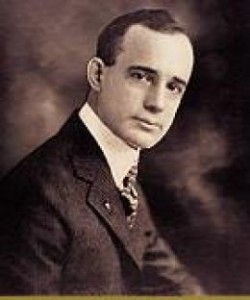
Business plan ideas for students do not need to begin with a complicated document, a bank loan or a grown-up business plan. Sometimes they can begin with a simple formula children can understand and apply to a real enterprise project.
In our previous post, we shared Sean Rasmussen’s teachings around developing a healthy self-image. This article follows on from that discussion as we look at one of his valuable lessons about success in business: a simple formula that can help children understand training, tools, teamwork, time and results.

Business Plan Ideas for Students: A Simple Success Formula
How would you like to know Sean Rasmussen’s business success formula?
Teaching these understandings to your children can help set them on the path to becoming successful, confident and practical young entrepreneurs. The point is not to make business complicated. The point is to give children a way to understand how effort, systems and support work together.
Sean introduced a simple formula that can help produce results in business:
(Training + Tools + Team) × Time = Results

For us, this became one of the clearest business plan ideas for students because it turned business planning into something practical: learn the system, use the right tools, build a team, give it time and then measure the results.
This formula can fit many business models, whether it is a conventional business, an internet-based business, a family enterprise project or a small student business idea. It also fits with what we have read about Robert Kiyosaki and his “business builder” model, where the aim is to build a business system rather than simply create another job for yourself.
In our blog about David Wood, we discovered that he also used this kind of formula for business success and taught how it could apply to network marketing.
For Enterprise for Kids, the real value is this: children can use the same basic thinking when they start small. A child’s enterprise might be honey, lolly bags, artwork, dog walking, plant sales or a market stall. The business may be small, but the planning lessons can be very real.
Why Business Plan Ideas for Students Need a Formula
Students often hear the word “business plan” and imagine something long, formal and boring. But business plan ideas for students can be much simpler than that.
A good plan helps answer practical questions:
- What am I trying to create or sell?
- What training or knowledge do I need?
- What tools will help me do it properly?
- Who can be part of my team?
- How much time will I need to put in?
- What result am I aiming for?
The Australian Government’s business.gov.au guidance explains that a business plan can help give direction, define objectives, map out goals and identify risks. That is a useful idea for students too, even if their first “business plan” is simple and practical. Read more about developing a business plan here.
When children learn to think this way, they are not just playing business. They are learning how ideas become action.

Business Plan Ideas for Students: The Success Formula Explained
Here is how Sean Rasmussen’s formula can be explained in a way children and teenagers can understand.
Training
Training means learning what you need to know. That might mean attending a boot camp, joining a program, finding a mentor, watching someone with experience, asking questions, reading books or studying how a business system works.
For students, training might be as simple as learning how to make a product properly, how to speak to customers, how to calculate costs, or how to display a stall so people notice it.
Tools
Tools are the things that help the business work better. In some businesses, the tools might be websites, templates, software, equipment, signs, packaging or scripts. In a child’s enterprise, the tools might be jars, labels, an extractor, a notebook, a calculator, a table, a sign or a money tin.
Sean and David Wood both made the same point in different ways: use the tools that work. Don’t waste all your energy trying to reinvent everything from scratch.
Team
Team means the people who help the business work. In internet marketing, that might include virtual assistants, writers, marketers and technical people. In network marketing, it might include mentors, upline support and business partners.
For children, a team may be much simpler. It might be a grandparent with expertise, a parent who can supervise, a sibling who can help, a friend who can bottle honey, or someone willing to sell the product on consignment.
Time
Time means giving the business enough focused effort to get results.
Many businesses require a lot of effort in the beginning before the rewards appear. This is a very important lesson for children. They need to understand that success is not usually instant. They may need to practise, prepare, improve, sell, try again and keep going.
Results
Results are what come from the combination of training, tools, team and time. In a child’s enterprise, results might include profit, confidence, better communication, practical money lessons, self-belief or a stronger understanding of how business works.
When students can see the connection between effort and results, business becomes much easier to understand.
Teaching Entrepreneurship to Kids With Business Plan Ideas for Students
The business success formula can easily be taught to kids. Firstly, help them get started with an enterprise so they can learn from experience.
For example, our son Flynn learned a huge amount about beekeeping, harvesting and processing honey, bottling it, marketing it and selling it.


Next, teach children how they can make their business easier by using the right tools. In Flynn’s case, this meant borrowing the right extractor equipment and using expert advice from his Grandad. That saved him time and helped him do the job properly.
Then investigate ways of putting a team together to make the process less work and more profitable. Flynn used friends to help bottle the honey. He had people selling his honey on consignment, and he found people who could take his honey to market.
He was not doing all the work himself, and that is one of the important lessons inside this business plan idea for students: a business is stronger when the right people and tools are involved.
Business Plan Ideas for Students and Delayed Gratification
One of the biggest lessons children can learn from enterprise is delayed gratification.
Delayed gratification means putting in the hard yards now for a financial reward later. Once children see a result in their wallet or purse, they begin to understand the formula in a real way.
Flynn realised this through his honey business. He used his own money to buy honey and paid for what he needed to bottle and market it. He understood that he needed to make the business work if he wanted to get his money back with profit.
Once he experienced a result with his first batch of honey, he became much more focused and determined with his second batch. In fact, he invested twice the capital.
That is a powerful money lesson for kids. It teaches them that business involves risk, effort, patience and responsibility.
Three Reasons People Are Not Making Money
Sean Rasmussen also pointed out three reasons why people may not be making money in their chosen enterprise. He emphasised the importance of action, intention and value.
When students use the business success formula and are also clear on action, intention and value, they are much better set up to make progress in a business or enterprise project.
Action
Action is obvious, but it is often where people get stuck.
Take action straight away whenever an idea or opportunity presents itself. As soon as an idea appears, build upon it. Avoid killing the idea with too many “what ifs” before it has even had a chance to grow.
For children, this might mean making the first batch, creating the sign, asking the first customer, setting up the stall, writing down the costs or testing the idea with family and friends.
Intention
To illustrate the point about intention, Sean had us write on a small card what our intent was for the three days at boot camp, then carry the card with us in our pocket.
The idea was to think about our intent and hold it clearly without trying to force the answer or outcome. Amazingly, by the end of the three days, many of the answers to our intentions had appeared.
Intention can also be aligned with having a plan. For students, it might sound like:
- I intend to sell ten jars of honey this weekend.
- I intend to learn how to speak confidently to customers.
- I intend to make enough profit to pay back my costs.
- I intend to learn from this project, even if everything does not go perfectly.
Value
Sean referred to value as being connected to your highest values. He explained that your highest values dictate what you focus on.
So it is crucial to ensure that what you want — whether it is health, money, family, contribution, freedom or creativity — is high enough on your value list, otherwise it is unlikely to receive your best energy.
Our Money Mastery mentor, Paul Counsel, also helped us understand this distinction. For us, we struggled with putting business ahead of family as our highest value. Our kids have always been our highest value, and consequently they take up our time and energy.
So what we learned was that we needed to align business with our highest value of family. That is part of why this blog exists. Enterprise for Kids allows us to grow our own entrepreneurial mindset while also helping our children learn about business, money, confidence and opportunity.
Business Plan Ideas for Students Should Connect to Values
This is an important point for parents and teachers.
Business plan ideas for students should not only be about making money. They should also connect to what children value. A child who loves animals might enjoy a pet-sitting idea. A child who loves art might create portraits or handmade cards. A child who loves cooking might sell biscuits or preserves with family support. A child who loves nature might grow plants or make garden products.
When business connects to values, children are more likely to stay interested, take ownership and learn deeply from the experience.
That is the heart of teaching entrepreneurship to kids. We are not just teaching them to sell things. We are teaching them to think, plan, act, serve, learn and grow.

Key Takeaway: Business Plan Ideas for Students Can Start Simple
Key takeaway: Business plan ideas for students can begin with a simple formula: training, tools, team and time lead to results. When children apply this to real enterprise projects, they learn business planning, delayed gratification, action, intention, value and money lessons in a practical way.
Where to Next?
- Read Flynn’s honey business story
- Explore financial education for kids
- Read more about entrepreneurship for students
- Visit Raise Entrepreneurial Kids
- Explore more family enterprise stories
What business plan ideas for students have you tried with your children, class or family enterprise project? We would love to hear how young people are learning through real enterprise.