Financial Literacy for Teens: Jai and Kaitlin’s Enterprise Journey

Jai and Kaitlin as young teens learning financial literacy through enterprise goals

Financial literacy for teens often becomes most powerful when it is connected to a real goal. For Jai, that goal was finding the money he needed for Country Week Soccer. For Kaitlin, it was learning how to manage her creative enterprise alongside study, sport, friends and teenage life.

“`

In this part of our family enterprise journey, Jai and Kaitlin remind us that teenagers do not always need another lecture about money. Sometimes they need a meaningful reason to take action.

“`

Akaisha as a toddler in a dog walking photo introducing financial literacy for teens through family enterprise stories
Enterprise lessons begin early in family life, but teenagers often need real goals before financial literacy truly comes alive.

Financial Literacy for Teens: Jai and Kaitlin’s Enterprise Journey

So far in our family enterprise journey, we have seen Flynn build a great honey enterprise and actually achieve his goal. Kit had a go at dog walking, but quickly realised that Chayse was making more money selling lollies at the local soccer fields, so he began pursuing that with his brother.

Kit and Chayse made quite a team, and we will revisit them again in another blog post. Amber also reached her goal with her “New from Old” endeavours, and we will celebrate her achievement separately too.

That leaves our creative artist, Kaitlin, and our budding app developer, Jai.

What has been interesting to notice on the children’s journeys is that it can be easier to introduce a different mindset around money to younger children than it is to teenagers or older children.

Why would financial literacy for teens be more challenging?

In our case, Kaitlin and Jai had already been around longer with us as their major source of education. That meant our own money thoughts, objections and subconscious beliefs had been absorbed by them for longer. It was now more of a process to help them question and reshape those beliefs.

Teenagers, Money Beliefs and Real-Life Goals

Kaitlin and Jai learning financial literacy for teens through youth enterprise goals
Kaitlin and Jai were learning that money goals need time, action and follow-through.

Luckily for us, Kaitlin and Jai are both quick learners and they understood the concepts we were trying to teach.

The main obstacle was finding the time to put this new knowledge into action.

Being teenagers, their lives were already full of homework, study, sporting commitments, social life and social media. All of these are things we wanted to encourage in our children, so our challenge was finding a way to include financial education without making it feel like one more burden.

In the end, as with many things, life became the best teacher of all.

Jai’s Teen Money Goal for Country Week Soccer

Jai setting teen money goals as part of financial literacy for teens
Jai’s focus changed when he had a real money goal to reach.

Jai had not had much urgency to pursue his app development because there was no clear timeline attached to his goal. His app idea was exciting, but it was also a long-term project.

Then his goal changed.

Jai was accepted into the Country Week Soccer team and would be competing in Perth during the holidays. He had to pay for a good portion of the trip himself.

Suddenly, he had a renewed vision and a very real money goal to aim for.

He spent countless hours researching ways to make the money in a short amount of time. This is where his youth enterprise thinking kicked into action.

Jai using enterprise ideas to help pay for his Country Week Soccer goal
Jai loves being active, and Country Week gave him a goal worth working for.

He came up with different ways to make the money, including some ideas he had not been interested in before.

The opportunities Jai looked at included:

  • mowing lawns in the neighbourhood,
  • finding good-quality items to sell,
  • hiring out exercise equipment,
  • negotiating paid jobs around the house that were above and beyond normal chores.

Together, Jai and Trevor worked out that he needed to find about $10 a day to afford his portion of the trip. That made the goal feel clearer and more achievable.

He began negotiating with us over jobs that needed doing around the house, and then he got on with them.

He also went through many of his good-quality items that had once been “must haves” when he bought them. He realised that perhaps he did not need them as much as he first thought, so he posted them on Facebook to sell.

What Jai Learnt About Financial Literacy for Teens

Jai’s Country Week goal became a practical financial literacy lesson. Instead of simply asking for money, he had to think about earning, selling, negotiating, time, effort and priorities.

He also had to work out the difference between a long-term enterprise idea and a short-term money need.

Although Jai’s app development journey had taken a back seat, it had not been forgotten. He simply recognised that app development was a longer-term project, while his Country Week Soccer goal needed faster action.

That is an important financial literacy lesson for teenagers. Not every money-making idea suits every goal. Sometimes a teen needs quick cash flow. Other times, they need patience, skill-building and a longer timeline.

We were proud of Jai’s efforts and were confident he would reach his goal in time.

Kaitlin’s Creative Enterprise and Time Management

Kaitlin painting as part of her creative enterprise and financial literacy for teens journey
Kaitlin doing what she loves — using her creative skill as a possible enterprise.

Kaitlin, our artist in residence, was also learning an important financial literacy lesson.

Her lesson was not only about how to make money. It was about how to manage her energy, time and priorities around study, social life, sport and her youth enterprise ventures.

Kaitlin had already explored the idea of turning her artistic skill into a student enterprise. You can read more about that earlier stage in Kaitlin’s portrait drawing enterprise.

Now she had a timeline in place and was receiving more requests for artwork. That meant she had to begin each piece early enough to finish it before Christmas for some customers, and earlier for others.

This was a different kind of money lesson. Kaitlin had to connect creativity with responsibility. If people were asking her to create artwork, she needed to protect the time and energy required to deliver it properly.

Teenage Distractions and Self-Efficacy

Kaitlin learning time management and self efficacy as a teenager with enterprise goals
Kaitlin and Lachlan.

Having a boyfriend actually increased Kaitlin’s self-efficacy because she needed to complete certain things before socialising.

Luckily, Lachlan encouraged Kaitlin to do that, because he actually wanted to have a social life too!

This connects beautifully with the lesson we explored later in Kaitlin’s article about avoiding distractions and following through on her enterprise goals.

For teenagers, financial literacy is not only about budgets and bank accounts. It is also about self-management. It is about learning that if you want to earn money through your skills, you need to manage your time, energy, focus and commitments.

Creative Enterprise with Kaitlin and Georgia

Kaitlin and Georgia exploring creative enterprise and real-world learning as teenagers
Kaitlin and Georgia exploring ideas, creativity and enterprise.

Kaitlin and her friend Georgia were also realising the power of leveraging their time.

They had come up with some great enterprise ideas and had put steps in place to pursue them. These were longer-term goals, but in the end they could reap more rewards than simply working a job.

At the same time, they still saw the need to pursue their jobs in the meantime, so they could have money to put towards their enterprise when it was up and running.

This is another important financial literacy lesson for teens: sometimes a job and an enterprise can work together.

A job can create cash flow. An enterprise can create ownership, learning, creativity and possibility. Both can play a role while a teenager is learning how money, work and opportunity connect.

Financial Literacy for Teens Happens Through Real Life

The journey towards financial freedom is always a rocky one, but it is one worth following regardless of what else is going on in life.

Our kids are teaching us so much along the way. Not all of their efforts are successful, but they are learning from each experience and moving forward.

That is what makes real-world learning so powerful.

Jai’s story shows how a clear money goal can turn a teenager into a problem-solver. Kaitlin’s story shows how creativity, customers and deadlines can teach responsibility and time management.

Neither of those lessons can be fully taught from a worksheet.

They are lived.

Where Jai and Kaitlin Are Today

Looking back 14 years later, it is beautiful to see how these early enterprise lessons continued to show up in Jai and Kaitlin’s lives.

Jai’s early interest in app development, problem-solving and online enterprise has grown into his current business, Art of Mondays. It is a wonderful example of how early exposure to enterprise, technology and financial literacy can keep developing over time.

Kaitlin’s creativity and interest in bringing ideas to life has also continued. You can see a glimpse of what she is creating now through Kaitlin’s Golden Days Club.

At the time, these teenage money goals may have looked like small family lessons. But years later, they remind us that children and teenagers are often building foundations long before we can see the full picture.

Key Takeaway: Financial Literacy for Teens Needs Real Goals

Key takeaway: financial literacy for teens becomes more meaningful when teenagers have real goals. Jai needed money for Country Week Soccer, while Kaitlin needed to manage creative requests and deadlines. Through youth enterprise, they learnt money skills, focus, responsibility and real-world problem-solving.

Where to Next?

What real goal could help your teenager learn more about money, responsibility and enterprise?

Teenage Entrepreneur Ideas from Cameron Herold

Child using a laptop with entrepreneur ideas on the wall for raising enterprising kids

Teenage entrepreneur ideas can come from the most unexpected places. Sometimes the very children who do not fit neatly into the traditional school mould are the ones with the energy, creativity and problem-solving ability to become enterprising adults.

“`

That is the powerful message I took from Cameron Herold, a successful entrepreneur and speaker who challenges parents and teachers to recognise entrepreneurial strengths in children.

“`

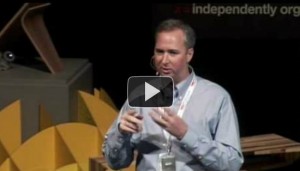
Cameron Herold sharing teenage entrepreneur ideas and advice for raising enterprising kids
Cameron Herold’s message challenges parents and teachers to recognise entrepreneurial strengths in children.

Teenage Entrepreneur Ideas from Cameron Herold

I was looking for conversations about raising enterprising kids when I came across a very inspirational entrepreneur called Cameron Herold.

Cameron Herold is a successful entrepreneur with an excellent message for parents who want to raise children with entrepreneurial skills. He shares his own life story and also refers to the book Young Bucks: How to Raise a Future Millionaire by Troy Dunn.

What really caught my attention was Cameron’s view that many children with entrepreneurial potential are sitting in classrooms right now, but their strengths are not always being recognised.

Some children do not naturally fit into the regular schooling mould. They may be energetic, intense, talkative, distracted, creative, restless, curious or constantly looking for a different way to do things.

In a traditional classroom, those traits can sometimes be seen only as problems. Cameron’s message is that some of those same traits may also be signs of entrepreneurial thinking.

This does not mean genuine learning, behavioural or health needs should ever be ignored. Parents, teachers and health professionals all have important roles to play. But it does mean we should be careful not to miss the strengths that can sit beside those challenges.

Are Some School Challenges Entrepreneurial Strengths?

Steve Jobs as an example of creative entrepreneurial thinking and innovation
Creative thinkers do not always follow the expected path.

In his talk, Cameron Herold speaks openly and provocatively about children who are labelled as difficult, distracted or different. He argues that some of these children may have the raw traits of future entrepreneurs.

He even uses the line, “Bipolar is the CEO disease,” to make his point that intensity, drive and unusual thinking can sometimes show up in successful entrepreneurs and leaders.

That statement is deliberately provocative, and it should not be taken as medical advice. But the deeper message is worth considering.

What if some children who struggle with the school system are not simply “naughty” or “lazy”?

What if some of them are actually wired to create, sell, lead, negotiate, build, question and solve problems?

As a teacher and parent, this made me think deeply. There are certainly children who love the school system, enjoy academic pathways and are happy to work towards a traditional career. That is wonderful.

But there are also children who do not fit so neatly. For those children, entrepreneurship may offer another pathway to confidence, purpose and success.

Schools Often Prepare Children for Jobs, Not Enterprise

Cameron Herold makes the point that schools rarely teach children how to think like entrepreneurs.

Schools often condition children to fit into jobs, follow instructions, complete tasks, wait for permission and work towards a salary. Those are useful skills in many parts of life, but they are not the only skills children need.

Enterprising kids also need to learn how to:

  • spot opportunities,
  • solve problems,
  • negotiate,
  • sell an idea,
  • communicate clearly,
  • take initiative,
  • manage money,
  • learn from failure,
  • and keep going when things become difficult.

Cameron’s view is that entrepreneurship is not simply an inherited trait. It can be taught, modelled, practised and encouraged.

That is very encouraging for parents. It means we do not need to wait and see whether our children are “born entrepreneurs.” We can help them develop the skills of enterprise through real-world learning.

Robert Kiyosaki quote about entrepreneurship and learning outside the traditional school system

Teenage Entrepreneur Ideas Need Mentors

Entrepreneurs often learn through necessity, observation, family example or mentorship. Some children grow up around business owners and naturally absorb the language of enterprise. Others need someone outside the family to spark that thinking.

That is why mentors, books, videos, real-life stories and practical experiences matter so much.

If we want our children to learn about entrepreneurship, someone needs to teach it. That someone might be a parent, grandparent, teacher, coach, family friend, local business owner or online mentor.

This is one of the reasons we created Enterprise for Kids. We wanted our children to see that business, money, creativity and problem-solving were not only adult topics. They were life skills children could begin learning early.

Cameron Herold’s TED Talk on Raising Enterprising Kids

Cameron Herold TED talk about raising kids to be entrepreneurs
Cameron Herold’s TED talk is well worth watching if you are interested in raising enterprising kids.

Cameron Herold offers many excellent suggestions in his talk, “Let’s raise kids to be entrepreneurs”.

If you are following our blog, you are probably a parent who wants to give your children more opportunities and choices in life. That includes helping them develop enterprise skills, money skills and the confidence to think differently.

Cameron’s talk is a must-see. It goes for about 15 minutes, but it contains many ideas that can change the way you see children, schooling and entrepreneurship.

The “Gift of Want”

Young Bucks How to Raise a Future Millionaire book for parents raising entrepreneurial kids
Young Bucks: How to Raise a Future Millionaire.

In his talk, Cameron refers to the book Young Bucks: How to Raise a Future Millionaire by Troy Dunn.

Troy Dunn is also a self-made millionaire and successful entrepreneur. He also happens to be a father of seven children, just like us, so I found his perspective especially interesting.

In the book, Dunn explains that the first prerequisite for a young entrepreneur is the “Gift of Want.”

In other words, children need a real reason to pursue an enterprise idea. They need to want something badly enough to get started and to keep going when things become difficult.

This is such a practical insight for parents.

Many adults want children to be motivated by responsibility, discipline or long-term success. But children are often first motivated by something much more immediate: a toy, a bike, a game, a trip, a pet, an experience, a gift or a personal goal.

That desire can become the starting point for real learning.

From there, parents can guide children into lessons about planning, researching, marketing, pricing, negotiating, saving, giving and following through.

Practical Teenage Entrepreneur Ideas from Cameron Herold

Cameron Herold’s message is not only philosophical. It is also practical. He gives parents ideas for helping children develop entrepreneurial habits at home.

One of his strongest suggestions is to rethink pocket money.

Instead of simply giving children a regular allowance, he suggests teaching them to look for jobs that need doing around the house and then negotiate a fee for completing them.

That small shift teaches children several important enterprise skills:

  • looking for opportunities,
  • noticing problems that need solving,
  • putting forward an offer,
  • negotiating value,
  • completing work properly,
  • and understanding that money is connected to value creation.

That is a far more enterprising lesson than simply receiving a regular payment without needing to think, negotiate or act.

Teach Children to Save, Give and Buy Assets

Cameron also talks about teaching children strong money habits.

One simple idea is to use money boxes or jars with different purposes. For example, children can divide their money into:

  • Giving: money for charity, tithing, community support or helping others.
  • Spending: money for toys, treats or things they want now.
  • Assets: money for savings, investments, tools, equipment or future enterprise ideas.

This teaches children that money has choices attached to it. It is not only for spending. It can also be used to give, grow and create more opportunities.

This connects closely with our own family lessons around teaching children the difference between assets and liabilities.

Use Real Life as the Classroom

One of the most powerful ways to raise enterprising kids is to use real life as the classroom.

When you are in a restaurant, point out good customer service. When you see a strong salesperson, discuss what made them effective. When a business solves a problem well, talk about it. When a product is poorly designed, ask your children how they would improve it.

Encourage your children to:

  • sell unwanted toys,
  • make and sell something small,
  • build inventions,
  • tell stories,
  • practise speaking to people,
  • notice problems around them,
  • and think of ways to create value.

These activities may seem simple, but they build confidence. They help children see themselves as people who can create, solve, serve and earn.

Raising Enterprising Kids Means Seeing Children Differently

Cameron Herold has allowed me, as a school teacher, to see some children in schools differently.

I can see that there are children who love the system and are more than happy to work towards a traditional career. That pathway suits many children well.

But I can also see that there are other children who do not fit so easily into the system. Some of those children may be budding entrepreneurs without knowing it yet.

They need someone to recognise the entrepreneur within them and provide opportunities for those strengths to develop.

This does not mean every child needs to become a business owner. It simply means children deserve the chance to develop enterprise skills: initiative, communication, creativity, leadership, resilience, sales, money management and problem-solving.

Those skills will help them whether they become entrepreneurs, employees, artists, tradespeople, professionals, community leaders or something else entirely.

Key Takeaway: Teenage Entrepreneur Ideas Start With Strengths

Key takeaway: teenage entrepreneur ideas do not always start with a business plan. They often start with noticing a child’s strengths, interests, frustrations and natural ways of thinking. Cameron Herold’s message reminds us to look for the entrepreneur within the child and give that child real opportunities to practise enterprise.

Where to Next?

What entrepreneurial strengths do you see in your child, and how could you give them a real-world opportunity to practise those strengths?

Leadership Activities for Teens: Jai’s Green SuperCamp Bali Experience

Leadership activities for teens during team games at Green SuperCamp Bali

Leadership activities for teens do not always look like formal lessons. Sometimes they look like dance, drama, team games, high ropes, trust-building, public speaking, friendships and learning how to step outside your comfort zone.

“`

That is exactly what Jai experienced at Green SuperCamp Bali. He returned to Australia with stories to share, new confidence and a stronger sense of what it means to be motivated, balanced and willing to have a go.

“`

Leadership activities for teens through dance and drama at Green SuperCamp Bali
Dance, drama and group challenges helped Jai step outside his comfort zone at Green SuperCamp Bali.

Leadership Activities for Teens: Jai’s Green SuperCamp Bali Experience

Jai and Kaitlin also attended Green SuperCamp Bali, although their experiences were a little different to Flynn’s Green SuperCamp experience.

Jai and Kaitlin were with teenagers from around 14 to 17 years old, so their learning and activities were different from the younger group. They still had life-changing experiences and returned to Australia with plenty of stories to share and noticeable positive changes.

You can also read Amber’s Green SuperCamp reflection and the earlier post about why our kids wanted to attend Green SuperCamp.

For readers interested in current Bali-based camp experiences, you can also explore the official Green Camp Bali kids and youth camps, which continue the spirit of outdoor, hands-on learning and personal growth.

Here is Jai’s account in his own words.

Jai’s First Impressions of Green SuperCamp Bali

Jai being prepared by his team to present a talk during leadership activities for teens at Green SuperCamp Bali
Jai being prepared by his team to present a talk to the group.

The Green Super Camp was a once in a lifetime opportunity! I reckon I learnt more in the one week I was there than I have all of high school!

It’s hard to explain what we learnt, but it involved quantum strategies, learning how to trust, have integrity, be balanced, and be self motivated. We also learnt some easy ways to increase our grades!

The way we were taught these things was also very unique. There were so many skits and stories and we were involved in any way possible. Learning became fun and we found it easier to remember things.

Everybody there was so friendly and strong friendships were formed quickly.

What stands out in Jai’s reflection is that the camp did not separate learning from experience. The teenagers were not simply sitting and listening. They were involved, moving, speaking, presenting, laughing, trying, trusting and remembering through action.

That is why leadership activities for teens can be so powerful. They help young people learn by doing.

Leadership Activities for Teens Through Trust and Challenge

Green SuperCamp Bali gave Jai the chance to learn alongside teenagers from around the world. The activities were designed to build confidence, trust, teamwork and self-motivation.

Jai at Green SuperCamp Bali learning confidence trust and self motivation
Green SuperCamp Bali.
High ropes course as a leadership activity for teens at Green SuperCamp Bali
High ropes course.
Bamboo construction project at Green SuperCamp Bali teaching teamwork and problem solving
Building project.

Although the kids on the camp were from all around the world, we all got on really well and learnt a lot about each other!

The Green Super Camp Bali was very different to any other camp I have been on.

The high ropes course, building projects, drama, games and group challenges were not just activities to keep the teenagers busy. They were leadership activities for teens designed to develop trust, courage, communication and perseverance.

These are the same qualities we want our children to develop through real-world learning and enterprise.

Teamwork Activities for Teens at Green SuperCamp

Every morning, before breakfast, Jai and his team had to stand up together and chant:

Leadership activities for teens during team games at Green SuperCamp Bali
Team games at Green SuperCamp Bali.
Jai making friends at Green SuperCamp Bali during teamwork activities for teens
Making friends, with the camp in the background.

“HUNGRY HUNGRY
*clap clap*
VERY VERY
*clap clap*
HUNGRY VERY
*clap clap*
VERY HUNGRY
*clap clap*
TI CALACKA PI A PI A
MAKAN!”

At first we all thought this was really weird and immature and none of us were really comfortable chanting it, but after a few days, nobody cared about how they looked, which was another thing we learnt, and we all got right into it!

This is one of the great lessons of camp experiences like this. Teenagers often worry about how they look, what others think and whether they will be judged.

But in the right environment, with strong facilitators and a group willing to participate, those barriers can begin to fall away.

Leadership for teens often begins when young people stop worrying so much about looking silly and start participating fully.

Confidence Building and International Friendships

Green SuperCamp Bali 2012 group photo showing international leadership activities for teens
Green SuperCamp Bali 2012.

My favourite part of the camp was interacting with the people there and mucking around with new-found mates!

If I had to say my least favourite part of the camp, it would be the fact that we sat a lot and our bums were sore by the end of the camp, but that was minor compared to how much fun we had.

Overall this camp was an amazing experience and I would happily go back any day!

I would recommend this camp to anyone who is experiencing problems in their life, or would just like to try something new!

By Jai

Jai’s words say so much.

For us as parents, Green SuperCamp Bali was not just about a week away. It was about confidence building, self-motivation, friendship, courage, integrity, trust and learning how to participate in life more fully.

Those are not small lessons.

Why Leadership Activities for Teens Matter

Leadership activities for teens matter because young people often need experiences that help them discover who they are outside their normal routines.

At home and school, teenagers can become locked into familiar roles. They might be seen as the sporty one, the shy one, the loud one, the academic one, the distracted one, the confident one or the one who never volunteers.

A camp experience can shake that up.

Suddenly they are in a new environment, with new people, new expectations and new challenges. They have to speak, listen, trust, try, fail, laugh, lead, follow and contribute.

That is real-world learning.

These kinds of experiences also connect closely with the broader ideas we explored in our article on Green School Bali and real-world learning.

They also connect with the current Green Camp Bali kids and youth camps, where young people continue to learn through immersive, nature-based experiences.

What Jai’s Green SuperCamp Experience Taught Us

Jai’s Green SuperCamp Bali experience reminded us that teenagers can grow quickly when they are placed in the right environment.

He learnt about quantum strategies, trust, integrity, balance, self-motivation, study habits, friendship and confidence. Just as importantly, he learnt that learning can be fun, active and memorable.

For enterprising kids, these lessons matter.

Entrepreneurship is not only about business. It is about leadership, communication, resilience, initiative and the ability to work with others.

That is why leadership activities for teens can support the same qualities we want in young entrepreneurs.

Key Takeaway: Leadership Activities for Teens Build Confidence

Key takeaway: leadership activities for teens can build confidence, trust, self-motivation and real-world learning. Jai’s Green SuperCamp Bali experience showed us that teenagers can grow powerfully through team games, high ropes, drama, friendships and stepping outside their comfort zone.

Where to Next?

What kind of leadership experience could help your teenager build confidence, trust and self-motivation?