Network Marketing Business Model: Lessons from David Wood

Cathy and Trevor at a network marketing event standing under a millionaire sign

Network marketing business model lessons became part of our wider journey into entrepreneurship, wealth creation, leadership and the kinds of business systems we wanted to understand for ourselves and our children.

“`

In our last article, we shared our mind-blowing experience at David Wood’s Break Through Training. This follow-up explores one of the bigger ideas from that training: how a business model, when built on systems, tools, leadership and genuine value, can become a possible wealth creation vehicle.

“`

Cathy and Trevor with David T.S. Wood at a network marketing event learning about the network marketing business model
Cathy and Trevor with David T.S. Wood at a network marketing event, where we explored business systems, leadership and wealth creation ideas.

Network Marketing Business Model: Lessons from David Wood

In our last article, we shared our experience at David Wood’s Break Through Training and reflected on his teaching around attitude, mindset, overcoming fear and becoming tremendously successful and happy.

David also spoke about the importance of having a vehicle, or ideally more than one vehicle, for building wealth. One of the wealth creation vehicles he spoke about was network marketing.

At the time, we were very excited by the possibilities. We were learning about business, personal development, leadership, systems and residual income. More importantly, we were beginning to think about the kinds of ideas and conversations we wanted our children to hear as they grew up.

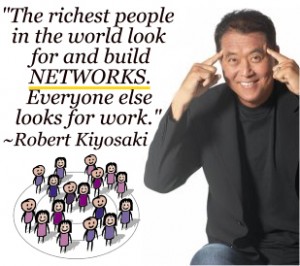
Kiyosaki book connected to the network marketing business model and wealth creation
Network marketing was one of the business models we were exploring as a possible wealth creation vehicle.

What Is the Network Marketing Business Model?

The network marketing business model is based on people sharing products or services they use, believe in and are willing to recommend. In a genuine model, the product or service must have real value, and the business should be based on customers, sales, systems and leadership — not simply on recruiting people.

That distinction matters. The Australian Competition and Consumer Commission explains that multi-level marketing schemes involve making money from selling a genuine product or service, while pyramid schemes rely on recruitment rather than genuine product sales. You can read more through the ACCC’s unfair business practices guidance.

For us, this was an important learning point. Any business model we look at needs to be considered with wisdom, research and a strong ethical filter.
Network marketing business model as a possible wealth creation vehicle
A business model is strongest when it has products, systems, tools and leadership.

Why Systems Matter in a Network Marketing Business Model

One of David Wood’s key messages was that systems matter.

He explained that a business becomes more powerful when it is built on simple, repeatable systems and tools. In his words:

“Don’t be a tool, use the tools.”

“Systems are duplicable, people are not.”

This idea is useful far beyond network marketing. It applies to children’s enterprise projects, family businesses, online businesses and almost any venture where people need to learn a process and repeat it.

For our children, this is a valuable business lesson. A successful enterprise is not only about enthusiasm. It also needs systems, tools, routines, communication and follow-through.

Network Marketing Business Model Lessons About Leadership

David Wood also pointed out that leadership matters. Great leaders inspire people, help people grow and model the energy they want others to follow.

He explained that success comes from finding out what matters to people, understanding their problems, and looking for ways to be genuinely helpful. Connecting with people on a personal level cannot be underestimated.

This is one of the strongest lessons we took from the training. In any business, whether it is network marketing, a family enterprise, a student business or a future company our children may build, the heart of business is still people.

Help people. Solve problems. Build trust.

That is a lesson worth teaching children early.

Residual Income and Wealth Creation Ideas

One of the reasons people become interested in the network marketing business model is the possibility of residual income. Unlike a traditional job, where income is usually tied directly to hours worked, residual income aims to continue after the initial effort has been put in.

Of course, this does not mean easy money. Any real business takes dedication, honesty, perseverance, communication and hard work.

At David Wood’s training, there were everyday people who had built businesses in a relatively short time, but the message was still clear: success requires action, consistency, personal development and leadership.

For us, the bigger lesson was not that every person should join a network marketing company. The bigger lesson was that children and teenagers should grow up knowing there are different ways to create value, earn income and build a future.

Could Network Marketing Be a Business Option for Young People?

In the original excitement of this journey, we wondered whether network marketing could be a wealth creation vehicle for young people leaving school.

Rather than seeing a job as the only option, could a young person learn business, communication, sales, leadership and financial responsibility through a structured business model?

Possibly — but with strong guidance, maturity and careful research.

For teenagers, the real value may not be the specific business model itself. The value may be learning how to ask better questions:

  • Is the product genuine and useful?
  • Would I use and recommend it honestly?
  • How does the business actually make money?
  • Are people rewarded mainly for product sales or recruitment?
  • What are the costs, risks and responsibilities?
  • Does the company have ethical leadership and a good track record?
  • Would this build real skills and character?

Those questions are useful for any young person learning about business.

Choosing a Network Marketing Business Wisely

If someone is considering a network marketing business, there are several things worth checking carefully.

  1. The product must be strong. You need to use it, understand it and genuinely believe it has value.
  2. The company needs to be researched. Look at its history, leadership, annual growth, reputation and long-term vision.
  3. The compensation plan matters. Understand how people are paid and whether rewards are connected to genuine product sales.
  4. The culture matters. A good business should encourage ethical behaviour, not pressure, hype or unrealistic promises.
  5. The products should have long-term relevance. They should be credible, useful and likely to remain valuable in the future.
  6. The bigger vision matters. A company that contributes positively to people and communities is more aligned with the kind of business we want our children to understand.

These points are not only relevant to network marketing. They apply to many business opportunities that children, teenagers and adults may come across in life.

Robert Kiyosaki book about the network marketing business model
Reading widely helped us question different business models and wealth creation pathways.

Network Marketing Business Model and Entrepreneurial Kids

So what does all this have to do with Enterprise for Kids?

For us, the point is not to push a particular business model onto our children. The point is to expose them to different ways of thinking about work, money, value, systems and leadership.

A child who understands business systems will look at the world differently. They may notice how a market stall works, how a franchise works, how an online business works, how a family enterprise works, or how a network marketing business model works.

They begin to understand that income can come from more than a job. They begin to see that leadership, trust, service and systems all matter.

That is a powerful conversation for families who are raising entrepreneurial kids.

Kiyosaki book connected to network marketing business model lessons
Books and mentors helped us explore how different business models work.

David Wood Quotes Worth Remembering

To finish off, here are some of David Wood’s quotes that stayed with us:

“We don’t stop playing because we turn old, but turn old because we stop playing.”

“How I do anything is how I do everything.”

“Take 100% responsibility for everything in my life and for everything not in my life.”

These quotes connect strongly with the lessons we want our children to learn: take responsibility, stay playful, use tools, build systems, serve people and keep growing.

Key Takeaway: Understand the Network Marketing Business Model Before Choosing

Key takeaway: The network marketing business model can teach useful lessons about systems, tools, leadership, residual income and personal responsibility. But like any business opportunity, it needs to be researched carefully and approached ethically.

Where to Next?

What business models do you think young people should learn about before they leave school? We would love to hear your thoughts in the comments.


Young Australian Entrepreneurs: Lessons from Dale Beaumont

Dale Beaumont presenting at Business Blueprint as an example of young Australian entrepreneurs

Young Australian entrepreneurs can be powerful role models for children. When kids see real people building businesses, creating freedom and using their success with purpose, enterprise becomes much more than an idea in a book.

“`

Dale Beaumont is one of those examples. His story reminded us that who we spend time with, who we learn from and who we allow to influence our thinking can shape what we believe is possible.

“`

Dale Beaumont as a young entrepreneur inspiring enterprising kids
Dale Beaumont began his entrepreneurial journey young, making his story a powerful example for enterprising kids.

Young Australian Entrepreneurs: Lessons from Dale Beaumont

Part of what we love about this blog is that we get to share the success of young entrepreneurs with not only our readers, but also our kids.

As we have been learning through Paul Counsel’s course, and as Dale Beaumont also reinforced for us, who you “hang with” is often who you become like.

That can be a scary thought, or it can be an inspiring thought, depending on your peers and the people you spend the most time with.

Luckily, we have wonderful family and friends. But for us, it is also important to include people who have achieved success in areas where we are still learning and growing.

Some of our family and friends fulfil those needs, but a sure way of increasing self-efficacy for us and our kids is to mix with other successful entrepreneurs, business owners and people who think differently.

Dale Beaumont as a Young Australian Entrepreneur

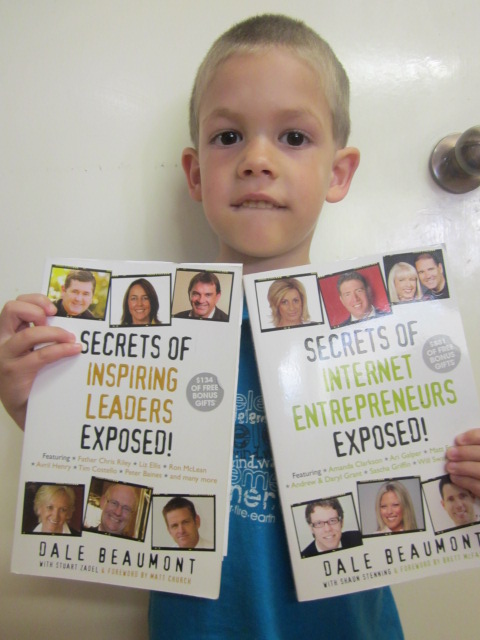
Dale Beaumont Secrets Exposed Series as an example of young Australian entrepreneurs creating books and business education
Dale Beaumont wrote the Secrets Exposed series.

Dale Beaumont is one such inspiring young Australian entrepreneur. He may not see himself as “young” anymore, but his success started at the tender age of 19.

Before developing his entrepreneurial skills, Dale was an accomplished gymnast and probably what many people would call an overachiever.

When Dale was 19, he co-authored a book called The World at Your Feet, which became the basis of his successful program, Tomorrow’s Youth. Through that program, he taught young people essential life skills.

From there, Dale went on to publish books, build relationships with other successful entrepreneurs, business owners and thought leaders, and eventually develop Business Blueprint.

His journey is a wonderful example for children because it shows that enterprise can begin young. It also shows that success is rarely about one single moment. It is built through learning, relationships, systems, action and persistence.

What Young Australian Entrepreneurs Teach Our Kids

One of the biggest lessons Dale Beaumont’s story teaches our children is that entrepreneurship is not just about making money.

It is about learning how to think. It is about developing skills, building useful systems, creating value, managing time, solving problems and making choices that can lead to more freedom.

Dale Beaumont with his family showing family freedom through entrepreneurship
Dale with one of his children.
Dale Beaumont and his wife travelling as a result of business systems and financial freedom
Inside the Sistine Chapel.

Dale is married and has two boys, and one of the things that really appealed to Trevor and me was that his focus was not only on business growth. It was also on creating time and freedom to travel with his young family.

He was able to do this because he had built systems within his business so that everything could keep ticking along with or without him.

You can imagine how appealing that was to us.

We did not want business success that simply created another job. We wanted to learn how business could create choice, flexibility and meaningful family experiences.

Lessons from Business Blueprint

I will not go through the whole workshop that my good friend Sally and I attended in Perth, but I do want to share a few highlights that really stuck with me as Dale spoke.

Dale Beaumont presenting at Business Blueprint as an example of young Australian entrepreneurs
Presenting at Business Blueprint.

Two sayings that stood out were:

“Empty bank accounts don’t feed the people.”

“The poor can’t help the poor.”

Those two sayings alone say a lot.

Some people want money purely for money’s sake — to have nice things and show others how well they are doing. Others want money so they can enjoy wonderful experiences, support their family, do good things in the world and make a difference in the lives of others.

We fall into that second category.

Dale’s example helped reinforce something important for our family: money with purpose can become a tool for freedom, contribution and service.

Money, Purpose and Making a Difference

One thing we found inspiring was Dale’s support for Hands Across the Water in Thailand. It was powerful to see an entrepreneur using his success and influence to make a difference in the lives of children.

This is an important message for enterprising kids.

We do not want our children to think that business is only about making money. We want them to understand that business can also create choices, opportunities and the ability to contribute.

That idea connects beautifully with our own reflections on whether having a money mindset can also be charitable.

The Internet Changed Business Forever

New Rules of Business seminar showing how the internet changed business for young Australian entrepreneurs
New Rules of Business seminar.

The internet has changed business forever.

If we do not embrace that change, our businesses can get left behind. A classic example was the way physical bookstores were challenged as online bookselling grew rapidly.

The point for our children is clear: the business world they are growing into is very different from the business world we grew up in.

Today’s young people need to understand technology, online marketing, digital systems, automation, websites, customer service, communication and content.

They do not need to master all of these skills as children, but they do need to grow up with the mindset that learning never stops.

The Coffin or the Hourglass

Dale shared something he learnt when he was just starting out in business.

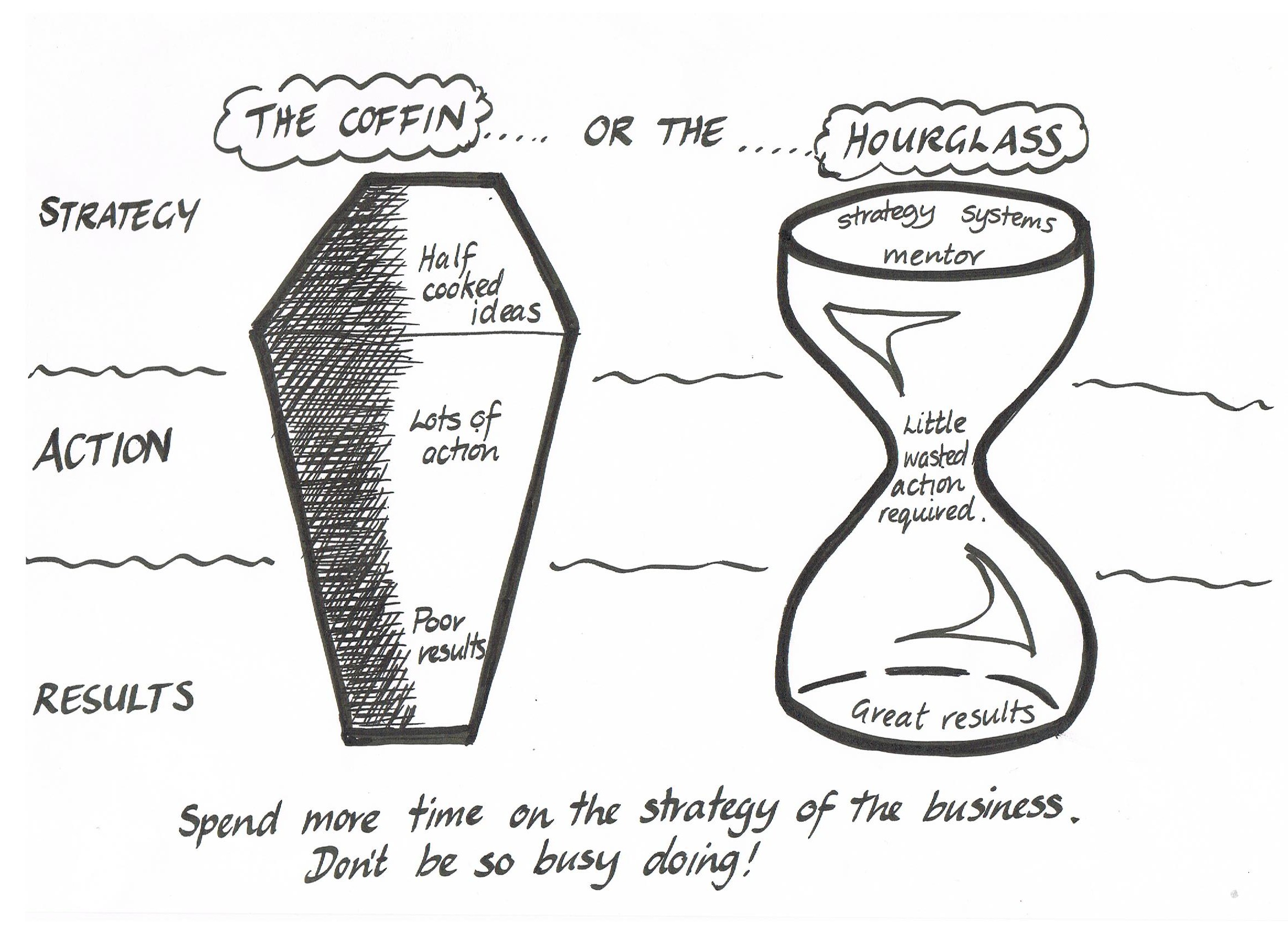
He called it the coffin or the hourglass.

The coffin or the hourglass business planning model taught by Dale Beaumont
The Coffin or the Hourglass.

Many people starting in business spend more time taking action than they do strategising or planning where they want their business to end up.

Taking action is important, of course. But you do not want your business to be like a coffin, where little time is spent thinking, planning and designing the right direction, while heaps of time is spent taking action that may not be very fruitful.

The hourglass, on the other hand, is about putting time into planning, strategising and thinking first.

With well thought-out plans in place, the action you take becomes more focused and the results are more fruitful.

So what would you prefer? A business with the coffin model, or one with the hourglass model?

Young Australian Entrepreneurs Need Systems

I think one of the reasons Dale became successful in a relatively short period of time was his ability to let go of things that could be done by someone else and focus on the things he needed to do to be effective within his business.

That is a major lesson for young Australian entrepreneurs.

Hard work matters, but systems matter too.

Business owners who try to do absolutely everything themselves can quickly become exhausted. Systems help free up time, improve consistency and allow business owners to focus on the areas where they can create the most value.

In the original version of this article, we talked in detail about a particular automation and CRM system we had started using at the time. Years later, the exact tools have changed, but the lesson remains the same.

Business systems can help with:

  • email follow-up,
  • customer records,
  • online payments,
  • memberships or subscriptions,
  • event management,
  • task management,
  • marketing follow-up,
  • and website processes.

The specific software will keep changing, but the mindset is timeless: build systems that help your business run more smoothly.

You can learn more about Dale Beaumont and his business education work through Business Blueprint.

What This Means for Enterprising Kids

So, how does all of this relate to enterprising kids?

For any business our kids choose to start, using the internet will be a given, especially as they grow into young adults.

If we want our kids to be competitive in today’s markets, we need to show them the way by continuing to learn ourselves.

They will follow our lead. They will absorb whether we are curious, whether we keep improving, whether we look for better systems and whether we are willing to adapt.

We want our children to have a mindset that says:

Get savvy. Learn. Improve. Keep going.

Bedtime Reading for Enterprising Kids

Chayse holding business books as bedtime reading for enterprising kids
Bedtime reading for enterprising kids.

Generation Y and the generations after them are already building and creating things that improve efficiency in their lives.

Why spend six hours on something if you can learn how to streamline it and do it in one?

That is the world our children are growing into.

We agree completely that life is not meant to be all about work. We want to work to live, not live to work, and we want our kids to understand that concept too.

At the same time, we want them to know that learning from successful entrepreneurs can expand their thinking.

Books, mentors, workshops, conversations and real-world examples can all help children see what is possible.

We no longer need a long list of affiliate-linked books here. The bigger message is simply this: expose children to inspiring people and ideas, then help them apply those ideas in age-appropriate ways.

Key Takeaway: Young Australian Entrepreneurs Can Inspire Kids

Key takeaway: young Australian entrepreneurs like Dale Beaumont can help children see what is possible. When kids are exposed to mentors, business systems, purpose-driven money lessons and real-world learning, they begin to understand that enterprise can create freedom, contribution and choice.

Where to Next?

Who are your children learning from, and what kind of thinking are those influences helping them develop?