Entrepreneurship Activities for Students: Amber’s Green SuperCamp Reflection

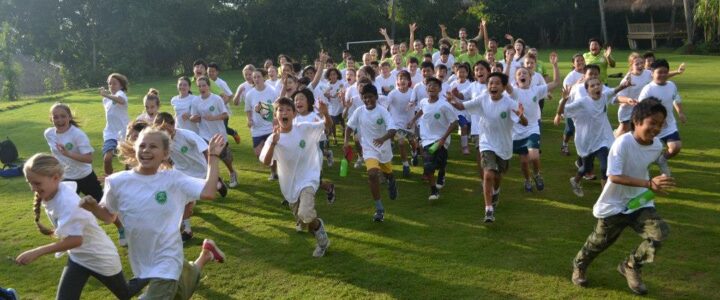
entrepreneurship activities for students Amber leading run at Green SuperCamp

Entrepreneurship activities for students do not always look like business plans and market stalls. Sometimes they look like leadership camps, team challenges, goal setting, confidence building and learning how to step out of your comfort zone.

Amber’s Green SuperCamp reflection shows how real-world learning experiences can help children grow in confidence, courage, communication and initiative.

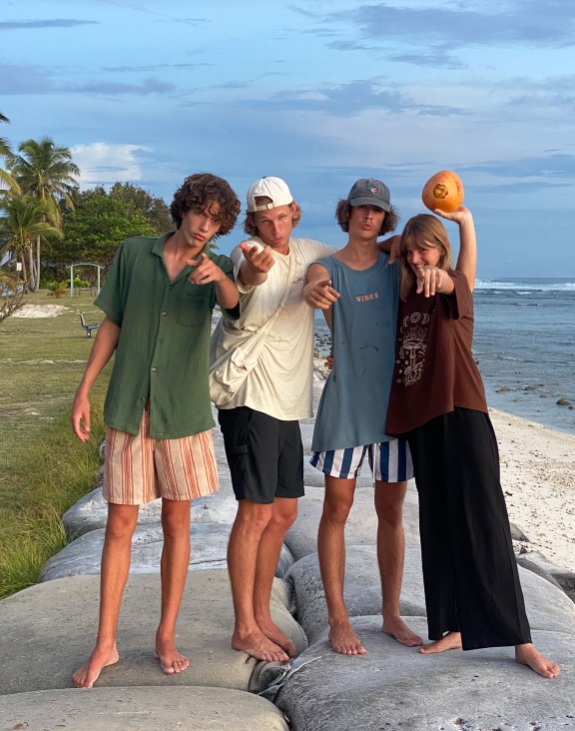
entrepreneurship activities for students Amber at Green SuperCamp with new friends
Amber and new friends.

Entrepreneurship Activities for Students at Green SuperCamp

For our readers who were expecting Part 3 to our “Teaching Your Kids To Achieve Success” series of articles, I’d like to let you know that will be up very soon and it will be well worth the read.

Flynn and Amber Howitt have just returned from a Young Leaders Camp in Bali. As it is so fresh and exciting, I thought we would interrupt our five-part series and share some snippets of Amber’s experience whilst on camp.

Before I hand you over to Amber, I would like to give our readers a little background about Green SuperCamp, which was held at Green School Bali.

In 2012, three of our children — Kaitlin, Jai and Flynn — attended the camp and returned full of experience and wisdom. The camp is designed to create young leaders who care for our future world.

It does this by building their confidence, encouraging them to think big, and giving them the skills to learn, interact and step out of their comfort zones. In this way, it becomes one of those powerful entrepreneurship activities for students that teaches far more than a normal classroom lesson.

Leadership and learning activities:

student leadership activity Amber participating in a team performance
Amber participating in a team performance.
entrepreneurship activities for students Flynn learning trust through teamwork
Flynn learning to trust.

This year Amber was old enough to go along too. She was very excited because she had heard all the awesome stories and learning from her siblings’ camp experiences the year before.

Also, a bunch of friends from Western Australia were coming along as well — Maddi Barrett, Macy Hobson, Georgia Dewar and Lachlan McRoberts.

To learn more about the philosophy of Green School Bali, you can read our earlier article.

Amber Howitt’s Green SuperCamp Reflection

So enough from me… here is Amber Howitt’s Green SuperCamp reflection.

Green SuperCamp, for me, was an amazing experience! Everyone there is treated evenly and kindly. No one is excluded or mistreated, so everyone is happy.

Your phones and valuables are given in, but you can reunite with your valuables almost every night to contact your parents.

Learning through real activities:

student learning activity grinding grain at Green SuperCamp
Grinding grain.
entrepreneurship activities for students teamwork at Green SuperCamp
Flynn and his SuperCamp team.

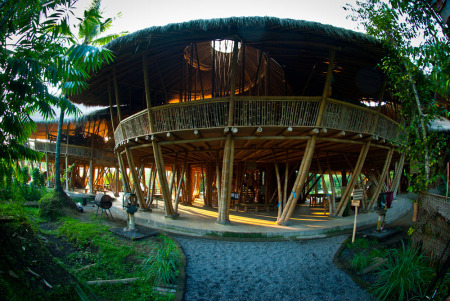
The Green SuperCamp itself is built mainly out of bamboo. It is nurtured and cared for by the people within it.

They use water from their lake and purify it. People from the world outside Green School can come and collect the water for free and use it in their homes.

Green School is meant so people around the community can be involved with the school. They make their own power using solar energy and grow their own food in food gardens.

Goal Setting as Entrepreneurship Activities for Students

The camp has inspired me to do more with my life, rather than just sit around and be… normal.

It has inspired me to take challenges, adventures and think of the things I could be doing. Writing books and travelling around the world are two of my crazy ideas. Those things might be a little hard for someone at the age of eleven though, but I can try to work up to that goal.

The steps for goal making are:

  • Design it
  • Outline it
  • In your face — tackle barriers
  • Take action!

Because of this, goal setting is one of the most practical entrepreneurship activities for students. It helps children imagine a future, break it into steps and take responsibility for moving forward.

Facing challenges and building trust:

entrepreneurship activities for students high ropes course facing fears
High ropes course. Facing fears!
team trust activity for students Flynn floating on hands
Flynn floating on hands.

Learning Strategies and Student Confidence

We were taught Quantum Reading and Writing. I improved my reading speed with the same comprehension by over 100%.

I concentrated by using the Alpha State. Alpha State is a technique to relax and concentrate better.

The steps to Alpha State are:

  • Sit up
  • Breathe in and out
  • Close eyes
  • Think of a peaceful place
  • Roll eyes up and down
  • Open eyes
  • Concentrate

These strategies are useful because they help students understand how they learn. For entrepreneurial kids, focus, confidence and self-awareness are just as important as having a business idea.

Camp life and friendships:

student life skills activity preparing home grown food at camp
Maddi preparing the home grown food.
students building friendships at Green SuperCamp
Macy and Georgia

Communication as Entrepreneurship Activities for Students

The friendships you can make at Green SuperCamp are really special. I made friends with both team leaders and kids from all over the world.

It is really easy to do so because everyone wants to make friends. Sometimes your relationships can last forever.

Green SuperCamp teaches you how to have the courage to become friends. No one is alone at Green School or Green SuperCamp.

I also learnt techniques to help me learn. These help me improve my relationship with my teachers. We call this “SLANT”.

Here are the “Tips for Learning” or “SLANT”:

  • Sit up
  • Lean forward
  • Ask questions
  • Nod your head
  • Talk to your teacher

Communication skills are an important part of entrepreneurship activities for students. Students need to ask questions, listen well, speak clearly and build trust with people around them.

Thanking and Apologising

students saying goodbye to leaders after Green SuperCamp
Flynn saying goodbye to new friends!

We also learnt the importance of thanking people and apologising. We were taught how to do this properly.

We call the steps to thanking “OTFD” or “Open The Front Door”.

Observation, Think, Feel, Desire

We call the steps to apologise “AAMR”, pronounced “A Mr!”

Acknowledge, Apologise, Make it Right, Recommit

Eight Keys of Success

Lastly, we were taught the “Eight Keys of Success”. These are the keys that keep you on course for success.

For each of these keys, we learn a different hand movement. This helps us remember them.

Here they are:

  1. Integrity
  2. Failure Leads to Success
  3. Speak With Good Purpose
  4. This Is It
  5. Commitment
  6. Ownership
  7. Flexibility
  8. Balance

Altogether, these keys are another example of entrepreneurship activities for students because they build the habits children need for leadership, responsibility and future enterprise.

Why These Experiences Matter

If you read this and think, “Nah… my child wouldn’t want to go to that camp!” think again.

Any child, from any place, no matter what, will want to go to GreenSuperCamp.

Thank you to my parents and camp sponsors for making it possible for me to attend Green SuperCamp. Thank you to my friends and new friends that supported me on camp.

Also, thank you to all the team leaders and facilitators who taught me all the tools I need for life. Lastly, thank you my team. GO TEAM H!

Thanks Amber for your reflection.

Jai, Kaitlin and Lachlan are currently on the Senior Green SuperCamp. You can also read Jai’s Green SuperCamp experience and Flynn’s Green SuperCamp reflection.

Kaitlin also shared why she wanted to attend the Green SuperCamp in Why Our Kids Wanted to Attend the Green SuperCamp.

Our “Teaching Your Kids To Achieve Success” series will continue with Part 3. You can also read Part 1 and Part 2.

Key takeaway: Entrepreneurship activities for students can include leadership camps, goal setting, teamwork, confidence building, communication skills and real-world challenges. Amber’s Green SuperCamp reflection shows how these experiences help children grow.

Where to Next?

If you enjoyed Amber’s Green SuperCamp reflection, you may also like:

Amber would love to hear your comments. Be sure to ask her some questions below.
Green School Bali Leading The Way!

Green School Bali real-world learning environment for kids

Green School Bali is an inspiring example of what education can look like when children are surrounded by nature, creativity, real-world learning and a strong sense of purpose.

Built from bamboo in the forest of Bali, this remarkable school challenges traditional thinking about education and invites us to ask an important question: are our schools truly preparing children for the modern world?

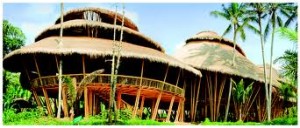
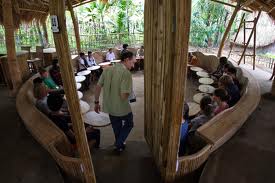
Green School Bali bamboo school building
Green School Bali is built from bamboo in a natural learning environment.

Green School Bali: A Different Vision for Education

Imagine a school with a natural, holistic, student-centred learning environment that empowers and inspires young people to be creative, innovative, green leaders.

There are many schools that aspire to a vision such as this, but very few achieve it. In all my years as a teacher, I know of only one school that has gained the genuine attention of educators and parents from around the world in quite this way.

This unique school is located in a forest on the island of Bali in Indonesia, and it is constructed largely from bamboo. You can learn more through the official Green School Bali website.

Green School Bali is an innovative school that is different in just about every aspect from regular Australian schools. It is different in its construction, the way it is run, its philosophy on raising and teaching children, and the way its curriculum is brought to life.

A Presentation That Challenged Our Thinking

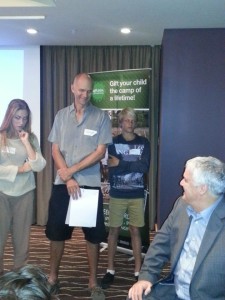
Alan Wagstaff speaking about Green School Bali
Alan Wagstaff shared the Green School Bali philosophy.

Cathy, myself and our kids had the opportunity to attend an excellent presentation in Perth on Green School Bali. The principal, Mr Alan Wagstaff, showcased his school and shared their philosophy on education. He spoke with passion and with tremendous pride.

Rightly so. Green School Bali was turning many heads.

The founders of the school think way outside the box and have created a harmonious learning environment that children can excel in. They, and a growing group of others, believe this school offers a glimpse of what education could become in the future.

Perhaps the policy makers, politicians and leaders of our outdated education system should take a serious look at Green School Bali.

Why Green School Bali Matters for Entrepreneurial Kids

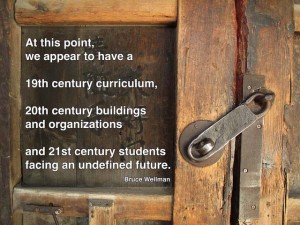
In previous articles, we have challenged the pedagogical practices of our current schooling system here in Australia. We have the view that it provides a good literacy education. However, the design of the system often conditions young people to be obedient, hard-working and compliant.

Now, that does not sound entirely bad. The world does need workers who can fill jobs and contribute well. However, what happens if a child wants to become an entrepreneur, innovator, creator or change-maker?

Many schools do not strongly foster true leadership, innovation or enterprise. Many schools also do not provide a strong financial education for kids, nor do they intentionally teach children to develop the habits and thinking of an entrepreneur.

This is why we care so deeply about raising entrepreneurial kids. Children need opportunities to think, question, create, solve problems and connect their learning to real life.

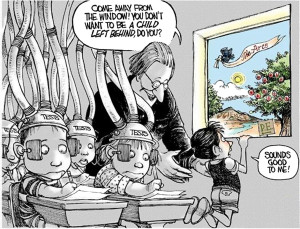
Cartoon about national testing and traditional schooling

Disengaged students in a traditional classroom
Disengaged students

Alan Wagstaff was also very direct about his views on the archaic education system currently running in Australia and other western societies. He pointed out many issues that should not be dismissed, and he backed his views with facts, figures and research conducted by qualified experts in education.

He cited the work of respected thinkers and authors such as Alfie Kohn and Stephen Covey.

What Makes Green School Bali So Special?

This quote by Michael Franti begins to paint a picture:

Green School Bali classroom made from bamboo
A Green School Bali classroom

“For anybody that’s considering sending your kid to school here, it’s different than other schools where your kid’s going to be assigned a number and a desk and you show up and you do exactly what you’re told. Here if you have an idea to do something that’s outside of the box, that idea is going to be fostered and nurtured rather than pushed down.”

– Michael Franti, poet, musician and activist

That is the kind of educational philosophy that speaks strongly to families who want children to grow as confident, creative and capable young people.

Student Engagement and Real-World Learning

Alan Wagstaff shared an interesting statistic about students in regular schools. He explained that many students over 11 years old are not fully engaged in their learning and do not really like school.

Many of these students feel they are learning irrelevant things that will not be useful when they leave school. We have heard similar comments from our own teenage children at times. I can also think back to much of the mundane content I had to master and be tested on as a high school student and then again at Teachers College. Much of it was of little use to me in what I do today.

Cartoon about testing and conditioning children

Alan said we need to change the structure of timetabling. We need to move from purely subject-based teaching to student-centred learning.

In many schools, the timetable revolves heavily around literacy and numeracy, with subjects such as the arts being pushed into the afternoon gaps. We push students in literacy and numeracy to uphold the education brand and satisfy national testing. The curriculum can become prescribed, inflexible and overly focused on measurement.

With all that emphasis on literacy and numeracy, why do we still have so many children not meeting the grade?

What Creates Life Success?

What is it about schooling that creates life success? The short answer is simple: have children turn up at school fully engaged, and you will get there.

Quote about outdated education systems

Therefore, we need children to be satisfied and engaged. Schools need to link students into life. Their learning needs to be realistic and relevant to each of them individually.

Every day, we should be academically upskilling children, but not simply comparing them with other children.

Parents should ask not only how their child compares with others, but what their child is actually learning.

How Green School Bali Teaches Children

Alan explained how they educate children at Green School Bali.

The programs are structured around themes. These are collaboratively planned by the teacher team leaders. Teachers then run proficiency lessons within these short-term themes.

Each student is shown the continuum of what they need to learn in different areas of the curriculum. From there, they work towards learning what they need at their own level. Over time, this helps children take responsibility for their own learning.

Green School Bali students learning in class
Green School Bali students learning through themes and real-world inquiry.

Within the broader themes, students follow their own individual interests. They develop ideas, and those ideas are fostered and expanded. They identify what they need to learn and then conduct investigations and study groups to understand and practise skills.

Every day, the children are engaged in practical lessons that challenge the Big Four: physical, emotional, intellectual and interpersonal learning.

For example, if the general theme was “Waves”, the Big Four might look like this:

  • Physical: Go and experience waves by surfing.
  • Emotional: Paint a wave or sing a wave melody.
  • Intellectual: Study wave formations.
  • Interpersonal: Sit by the waves and meditate.

At Green School Bali, there are no rigid timetables in the traditional sense. This allows themes to develop through what Alan described as dynamic chaos. Specialist teachers decide what will be done, teachers research the theme and subject areas, and students engage in proficiency lessons.

Authentic Learning Beyond the Classroom

Alan said that in order for students to learn something deeply, they must “hit it three times in three different ways during the week”. Mini themes develop within the bigger themes, and teachers help children self-manage their way through learning.

This leads to engagement and lifelong learning.

Opportunities are seized as they arise to provide practical real-life lessons in areas such as:

  • connecting to the real world
  • environmental education
  • health and wellbeing
  • performing arts
  • enterprise education
  • visual arts

These lessons are timed, sustainable, flexible and authentic. They happen by venturing beyond the school and accessing adults and resources in the enterprising world.

This connects strongly with the kind of family adventure and real-world learning that we value at Enterprise for Kids.

A School Designed for Engagement

Green School Bali’s aim is for children to want to go to school and to be fully engaged. The emphasis is on relevance to learning and valuing students, not on testing and comparing students as we often do in our current schooling system.

That comparison can put unnecessary pressure on children. A more meaningful goal is to help children discover what they are capable of and how their learning connects to life.

Green School Bali’s Bamboo Campus

Green School Bali bamboo architecture and campus
Green School Bali is known for its bamboo architecture and natural campus.

Green School Bali is an architectural masterpiece. It is a masterwork built of bamboo and mud brick. There are no traditional classroom walls and very little impact on the environment.

The school is designed to be sustainable, with power sourced from solar panels and hydro power from the river. Students also assist with growing food in the large permaculture garden where animals are kept.

Green School Bali gardens and campus fields
Gardens and campus fields at Green School Bali.

Surrounding the school are bamboo homes built by local and international families who choose to live in Bali so their children can attend the school.

At the time of this original article, there were also studios under construction to be leased cheaply to entrepreneurs, with the idea that students could be involved with these businesses. This would allow students to develop enterprise skills and ultimately learn how entrepreneurship works in the real world.

Green School Bali as an Example for the Future

Green School Bali is a real-life example of an exemplary school. Students attending the school were reported to be achieving outstanding results in many aspects of their development, including academics.

Although the school had only been running for a relatively short time when this original post was written, its first graduates were already graduating, and those choosing to do so were being accepted into universities around the world.

Green School Bali students learning in a natural environment
Green School Bali students learning in a natural environment.

Alan Wagstaff and the founders of the school had a vision to create change in how schools educate. They knew they would be challenged if they targeted the top of the education hierarchy in Australia, so they were working to make change from the bottom up.

One way they were doing this was by being an exemplary school and by being noticed. At the same time, Green School Bali was also training teachers on mainland Australia with Green School ideologies, with the hope that those teachers would make gradual changes in their own schools.

Green SuperCamp and Our Family’s Experience

Green SuperCamp Bali experience for kids
Green SuperCamp Bali gave our children a powerful learning experience.

Another way to have your children experience the Green School Bali philosophy is through Green SuperCamp.

Kaitlin, Jai and Flynn attended Green SuperCamp, and they came back transformed. At the time of this original post, we were working towards them attending again, along with our eleven-year-old daughter Amber.

You may like to read our earlier post about Green SuperCamp and our kids’ experiences there.

Flynn’s Green SuperCamp Reflection

Check out what Flynn had to say about Green SuperCamp:

John Hardy, Founder of Green School Bali

John Hardy, founder of Green School Bali, also spoke about the school at TED:

Key takeaway: Green School Bali shows what can happen when education becomes connected to nature, creativity, enterprise, sustainability and real-world learning. It challenges us to think more deeply about what children truly need in order to thrive.

Where to Next?

If you enjoyed this article about Green School Bali and real-world learning, you may also like:

Marketing Lesson for Kids: Burekup Country Club Heats Up

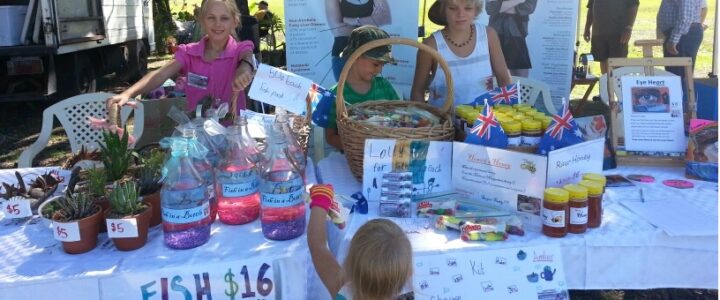
Amber Flynn and Kit running a stall at the Burekup Country Fair as a marketing lesson for kids

Marketing lesson for kids sounds like something that belongs in a classroom, but for our family it came alive through fire, publicity, product preparation and the Burekup Australia Day Fair.

Last week there was both fear and excitement in the small township of Burekup. The Burekup Country Club had been on fire, and for a moment it looked as though the Burekup Australia Day Fair might even be cancelled. Thankfully, the fire crew put the fire out before it caused too much damage or anyone was hurt.

What followed became a very real lesson in marketing, attention and opportunity for our enterprising kids.

Amber showing her product during a marketing lesson for kids at the Burekup Country Fair
Amber showing one of her products ready for the Burekup Country Fair.

A Marketing Lesson for Kids at the Burekup Country Fair

Once a year for Australia Day, Burekup hosts a fun family fair. Everyone in town usually comes along, together with people from the surrounding areas.

This year, the fair had a little more publicity than normal.

The local Burekup Country Club, which helps organise the event, had a fire that threatened to burn down the old wooden clubhouse and town hall. The newspaper heard about the near disaster and ran a story about the fire that almost sabotaged the Burekup Australia Day Fair.

Burekup Country Club hall before the Australia Day Fair marketing lesson for kids
Burekup Country Club Hall.

The story stimulated fear and interest, which in turn created excellent publicity for the Burekup Fair.

Marketing a product, service or brand can be very challenging, especially if you are not naturally marketing savvy. A very good marketing campaign can sell even an ordinary product, while a very good product may not sell easily unless people know about it, understand it and feel interested enough to buy it.

That is why this became such a useful marketing lesson for kids. Our children were not just making products. They were preparing to put those products in front of real people.

What Our Kids Learned About Marketing Their Products

Our enterprising kids have all been challenged with marketing their products and brands. Cathy and I have also been challenged with marketing when promoting events or selling our own products.

The Howitt family booked two stalls for the Burekup Australia Day Fair. One stall was for our enterprising kids to display and sell their products. The other was for Cathy and me to share information about our home business, as well as promote the Enterprise for Kids brand and blog.

Putting ourselves out there in our small community for the first time was a little confronting. Some people knew what we had been up to, but for many it was going to be a surprise.

Despite the challenge, we saw this as a chance to practise in readiness for bigger and better things to come.

Kids Business Ideas Prepared for the Burekup Fair

The fair gave each child a real opportunity to prepare, promote and sell something of their own. That is where a simple family event becomes powerful real-world learning.

Flynn had been preparing his raw, unprocessed honey under his brand, Howitt’s Honey. He had a fresh batch ready to sell, and he had also bought a good set of golf clubs for a very good price, which he intended to resell at the fair.

Flynn showing honey pots for his kids business idea at the Burekup Fair
Flynn showing his honey pots.
Honey jars bottled and ready for labels before the Burekup Country Fair
All bottled awaiting labels!

Kit and Chayse were preparing their lolly bag business. They bought, sorted and bagged lollies to sell. Chayse also had a small fish tank to sell, along with colourful guppies he had bred.

Kit and Chayse sorting lollies for a kids business idea at the Burekup Fair
Kit and Chayse sorting lollies.
Lolly bags ready to sell as part of a kids market stall
Lolly bags all set to be sold!

Amber’s Products and a Creative Marketing Lesson for Kids

Amber had been busy all year collecting succulents from people’s gardens. She artistically potted these up into all kinds of unusual pots, including large seashells, kettles and ceramic plant pots.

Amber watering succulents for her kids business idea at the Burekup Country Fair
Amber watering her succulents ready to be sold.

She and Flynn also planned to sell aquarium fish they had bred. They salvaged and cleaned large glass wine flagons, which made terrific fish bowls. They decided to market this product under the brand name “Fish in a Bottle”.

Fish in a Bottle product prepared for a marketing lesson for kids
Fish in a Bottle.
Fish in a Bottle product showing how kids can create unusual market stall ideas
Can you see the fish?

Amber also planned to sell selected items from her New from Old business, and she was putting together a Lucky Dip.

Jai and Kaitlin Prepare Their Own Enterprise Ideas

Jai was preparing to promote his “Hire a Teenager” service. He already had clients in Burekup who hired him to do work on their properties, such as mowing and window cleaning.

Jai also prepared a batch of frozen juice ice cups on sticks. He came up with some creative ideas to add value to his product. He was also considering promoting “Rent Exercise Equipment”, although this business idea was still in its infancy and may not have been quite ready to run.

Lastly, Kaitlin was preparing to promote her new brand, “Eye heART”. Akaisha was still a little young to have an enterprise of her own, but Kaitlin was ready to share her creative skills.

Being the creative one in the family, Kaitlin planned to sell her skills by painting the eye of clients from a photograph. Around the eye, she would also paint three things dear to them.

Jai showing icy poles prepared for the Burekup Country Fair market stall
Jai showing his icy poles.
Kaitlin's Eye heART creative business idea for kids
Kaitlin’s Eye heART.

This opportunity for us all to market our brands, services and products helped the Howitt clan develop self-efficacy around being entrepreneurial.

What Children Can Learn From a Real Marketing Plan

A good marketing lesson for kids does not need to be complicated. Children can begin by learning that marketing is about understanding who might want your product, why they might want it, and how you can show them its value.

The Australian Government’s business.gov.au marketing planning guidance explains that a marketing plan can help define a target market, choose messages and channels, set goals and evaluate whether marketing activities were successful. That is exactly the kind of thinking children can begin to practise with a simple market stall. Read more about developing a marketing plan here.

For our kids, the Burekup Fair raised practical questions:

  • Who would want to buy this product?
  • How should we display it?
  • What makes it interesting or different?
  • How much should we charge?
  • What story does the product tell?
  • How can we speak confidently to customers?

These questions are useful for any young entrepreneur.

Marketing, Emotion and Real-World Learning

Our mentor, Paul Counsel, had plenty to say about marketing. One of the ideas he shared was that people often respond to emotion before they respond to logic.

In simple terms, customers usually want to move away from a problem and toward a better result. A product, service or experience becomes more interesting when people can clearly see the difference it might make.

For children, this can be taught in a practical and age-appropriate way.

If they are selling honey, they can show that it is fresh, local and real.

If they are selling lolly bags, they can make them colourful, tidy and fun.

If they are selling succulents, they can show how each one has been creatively potted and cared for.

If they are selling a service, they can explain clearly how they can help someone.

This is where marketing becomes much more than advertising. It becomes communication.

A Fire, a Fair and a Marketing Lesson for Kids

Pain Island to Pleasure Island drawing used in a marketing lesson for kids
Just need the right ship to get them there!

Luckily, the fire did not burn down the club or spoil the Burekup Australia Day Fair.

But it certainly woke people up.

The fear that the fair might be cancelled created attention. The newspaper story created discussion. The near disaster gave people another reason to talk about the event. In an unexpected way, it became publicity.

That is not something anyone would wish for, of course. But it did show our kids something important: people pay attention when a story matters to them.

For our family, the fair became more than a day out. It became a real-world lesson in product preparation, branding, confidence, customer communication and marketing.

In our next blog, we will share photos and experiences from the Burekup Australia Day Fair.

Where to Next?

We would love to hear from our readers. What marketing lesson for kids have you seen through a school fair, market stall or family business idea? Share your thoughts in the comment box below.
Entrepreneurship for Students: How Do Entrepreneurs Think?

Jai Howitt discussing his entrepreneurial journey on The Pocket with Chris Griffen

Entrepreneurship for students is not just about starting a business. It is about learning how to think differently, spot opportunities, solve problems, take action and build confidence in the real world.

When children learn how entrepreneurs think, they begin to see that their ideas matter. They also begin to understand that money, work, creativity and contribution can be approached in a very different way.

Entrepreneurship for students shown through Jai Howitt coaching Chayse on business strategy
Jai coaching Chayse through business strategy and entrepreneurial thinking. Watch Jai coach Chayse.

Entrepreneurship for Students: How Do Entrepreneurs Think?

In an earlier article, we spoke of charitable entrepreneurs and successful business thinkers such as Richard Branson, Warren Buffett and John Templeton.

They, together with many other successful people, have extraordinary stories to tell about their entrepreneurial journeys. Some will tell you they struggled at school, dropped out, were dyslexic, or found reading and writing difficult. Others came from homes of poverty, while some were born into families where business and enterprise were already part of everyday life.

Although their backgrounds and circumstances differed, one thing often remained the same: they thought in a similar way.

It is not circumstance alone that creates an entrepreneur. It is mindset.

That is why entrepreneurship for students matters. Young people need more than information. They need the chance to develop the kind of thinking that helps them create opportunities, make decisions, solve problems and take responsibility for their future.

Why Entrepreneurial Thinking Matters for Families

What we have come to understand is that for our family to become economically and personally free, we need to question our conditioning around money and then reprogram our subconscious minds with a new success money mindset.

Many wealthy and successful people either developed this mindset from their upbringing, or they discovered it for themselves. Sometimes this happened consciously, through study and self-development. At other times, it happened unconsciously through experience, environment and action.

It is often said that only a small percentage of people live with real economic and personal freedom. The bigger question is this: what do they do differently?

More to the point: how do entrepreneurs think?

Before we look deeper into that, consider this.

Entrepreneurship for Students Starts with Money Mindset

Wealth creation and poverty mindset lesson for students
The way children think about money can shape the opportunities they see.

Whether we like it or not, we are being conditioned constantly to think a certain way about money. We are conditioned by our family, schools, advertising, politicians, television, social media and friends.

Many people become tied to jobs and debt because the conditioning they have received favours a money mindset of lack, rather than abundance.

Do any of the following sound familiar?

  • “Money doesn’t grow on trees.”
  • “Money is the root of all evil.”
  • “You’ve got to work hard for your money.”
  • “Get a good, well-paying job and you’ll be set for life.”
  • “Buy a home, it will be your best investment ever.”
  • “We can’t afford it.”
  • “What job do you want to do when you grow up?”
  • “Go for the cheaper ones.”

Only this morning, I was listening to a friend talking with his teenage sons. He told them they needed to get jobs. He explained that he had a job pushing shopping trolleys at their age. He even went down to the local IGA supermarket and picked up applications for them to apply for jobs.

When I was fifteen, I started out with a casual job working at a Target store. My hourly rate was $2.90 an hour.

All of the above are examples of conditioning. Much of our thinking about money, work and possibility is formed very early in life.

What Schools Often Teach About Work and Money

Our schools are largely designed to prepare workers for the workforce. Banks make money by selling debt. Governments collect taxes and often depend on people staying within predictable systems. Retail businesses make money by encouraging us to spend. Big businesses need workers to build their businesses.

There is definitely a design to much of this madness.

That does not mean jobs are bad. It also does not mean every child needs to become a business owner. However, it does mean young people should know there are other pathways.

They should understand that work, money, creativity and contribution can be approached in different ways.

This is why financial education for kids is so important. Children need to learn about money, value, assets, liabilities, work, enterprise and choice before they enter adulthood.

Entrepreneurial Mindset for Young People

What our family has discovered is that our money mindsets are changing. We are learning that it is okay to accept money and to have money. In fact, it is okay to offer something of value to others and receive payment in return.

Working hard in a job is not the only pathway for young people entering our big world.

There are other ways. These pathways can allow young people to follow their passions and dreams while making a meaningful contribution to whatever they consider important.

Wouldn’t it be fantastic if all our kids could achieve economic and personal freedom?

People who have achieved financial freedom through being entrepreneurial tend to have a mindset of abundance. Their habits differ. Their thinking differs. Their actions differ.

This is why we keep coming back to the bigger idea of raising entrepreneurial kids. It is not just about business. It is about helping children become confident, capable, creative and resourceful.

How Entrepreneurs Think: Lessons from Napoleon Hill

Napoleon Hill Think and Grow Rich entrepreneurial mindset lesson
Napoleon Hill studied how successful people think and act.

Rather than attempting to explain every detail of how entrepreneurs think, I will refer to one of the most influential books ever written on personal and financial achievement.

Think and Grow Rich by Napoleon Hill was originally published in 1937. Hill spent his life studying successful people and recording how they think and act. He became successful himself by following the distinctions in his own book and by modelling himself on his mentors.

Think and Grow Rich is essentially a book about what to do and how to do it. It explores ideas such as self-direction, organised planning, autosuggestion, mastermind association, self-analysis and the selling of personal services.

The thirteen steps to riches described in the book offer a philosophy of individual achievement that has influenced thousands of people’s lives.

This book could be worth a great deal to you and your kids, not simply because of the money ideas, but because of the thinking behind them.

At the time of this original article, Cathy was rewriting Napoleon Hill’s book in a way that would be suitable for kids to read, with simple explanations and modern examples they could better relate to. It was a work in progress, built around the idea that children should be able to understand powerful success principles in language that makes sense to them.

You can also learn more about Napoleon Hill’s work through the Napoleon Hill Foundation.

Entrepreneurship for Students in Real Life

For our family, entrepreneurship for students has never been just a theory. It has been something we have tried to encourage through conversations, real-life projects, mentoring and practical action.

Looking back now, we can see how these early conversations about entrepreneurial thinking have carried through into real life. The goal was never just to teach our children about business. It was to help them become confident, resourceful young people who could spot opportunities, solve problems and take action.

Today, we see that continuing as Jai shares business ideas and strategy with his younger brother Chayse, passing on what he has learnt through his own entrepreneurial journey.

Jai has gone on to build his own entrepreneurial path through creative work, content and business. You can see part of that journey through Art of Mondays.

Key Takeaway: Teach Students to Think Like Entrepreneurs

Key takeaway: Entrepreneurship for students is about far more than making money. It is about helping young people think differently, understand value, recognise opportunity, solve problems and take action in the real world.

Where to Next?

If you enjoyed this article about entrepreneurship for students and entrepreneurial thinking, you may also like:

We would love to hear your thoughts. How do you think entrepreneurs think differently, and how can we help children develop that mindset while they are still young?

Entrepreneurship Games for Students: Flynn’s Green SuperCamp Reflection

entrepreneurship games for students Flynn at Green SuperCamp Bali

Entrepreneurship games for students can help young people develop confidence, leadership, resilience and teamwork through real-world experiences. Twelve-year-old Flynn confidently walked through the international airport departure gate, heading off to Bali for an experience of a lifetime at Green SuperCamp Bali.

Although Flynn was excited, saying goodbye at five in the morning and watching him leave Australia without us for more than a week filled us with both pride and nerves.

Flynn participating in entrepreneurship games for students at Green SuperCamp Bali
Flynn enjoying the activities at Green SuperCamp Bali.

Entrepreneurship Games for Students at Green SuperCamp

Students learning quantum strategies at Green SuperCamp Bali
Learning Quantum learning strategies.
Entrepreneurship games for students including Balinese martial arts activities
Balinese martial arts in the mud pit!

When Cathy and I first learnt about Green SuperCamp, we immediately recognised the tremendous character-building benefits it could provide for our children.

The activities challenged students physically, emotionally and mentally. They also helped the children build confidence, courage and self-belief.

Many activities at camp acted as entrepreneurship games for students. They encouraged teamwork, leadership, perseverance and problem-solving — all important qualities for future entrepreneurs.

Students building focus and discipline at Green SuperCamp Bali
Focus…
Students building confidence through entrepreneurship games for students
… self confidence…
Students learning determination at Green SuperCamp Bali
… determination!

We wanted to share Flynn’s experience on our Enterprise for Kids blog because we strongly believe the values taught at Green SuperCamp help build future leaders and entrepreneurial kids.

Flynn’s Reflection on Green SuperCamp Bali

Below is Flynn’s reflection written in his own words after returning home from camp.

Students participating in cultural activities at Green SuperCamp Bali
The Balinese mud dance!
Fun entrepreneurship games for students at Green SuperCamp Bali
Green SuperCamp was an awesome experience!

“SuperCamp was an absolutely awesome experience!

The biggest challenge that I faced was going to Bali on my own without my parents. I just knew that I wanted to go on the Green SuperCamp, and to do that I had to go on my own.

I loved trying all the fun activities like mud wrestling, the high ropes course, Balinese dancing and seeing all the zoo animals.

Students participating in teamwork activities at Green SuperCamp Bali

I became friends with kids from all over the world. There were kids from America, Australia, Bali, Indonesia, London, India, New Zealand and Japan.

Everyone there was really nice, happy and determined to persevere through challenges. I liked everyone at Green SuperCamp!

One of my favourite activities was the mud fighting because I learnt self-defence and how to throw people over my back. This activity taught me perseverance and the importance of never giving up.

Leadership and Entrepreneurship Games for Students

Students learning leadership and entrepreneurship strategies
Learning…
Key success strategies taught at Green SuperCamp Bali
… the key to success!

We were taught Quantum strategies to think and learn. As a result, my reading became seven times faster.

The Bali Green SuperCamp was a fantastic experience. I think everyone should have a chance to go!”

Watch Flynn sharing his Green SuperCamp experience after returning home.

Positive Changes After Camp

Team-building entrepreneurship games for students
Team building…
Students learning responsibility and teamwork at Green SuperCamp
… responsibility and care!

Since returning home, we have noticed a number of positive changes in Flynn. His teachers commented that he had been making a real effort at school and staying away from mischief.

He even started reading books willingly — something he usually avoided. In fact, Flynn reached his school reading goal within only three weeks.

In addition, he showed greater responsibility with chores, stronger focus in soccer and more confidence in everyday life.

Experiences like these demonstrate how entrepreneurship games for students and leadership activities can positively influence young people long after camp finishes.

To learn more about Green SuperCamp and its programs, visit SuperCamp International.

Key Takeaway: Entrepreneurship Games for Students Build Confidence

Key takeaway: Entrepreneurship games for students help children build confidence, resilience, leadership and teamwork through real-world learning experiences.

Where to Next?

If you enjoyed this Green SuperCamp story, you may also enjoy:

Next up we share Jai’s experience at Green SuperCamp Bali!

We would love to hear your thoughts, so please leave a comment below.
Youth Entrepreneurship: Why Our Kids Wanted to Attend Green SuperCamp

Jai and Kaitlin with students at Green SuperCamp Bali learning leadership and youth entrepreneurship skills

Youth entrepreneurship often begins with confidence, leadership and real-world learning experiences. We were delighted that our three eldest children were able to attend Green SuperCamp Bali, where they had life-changing experiences that gave them new understandings and beliefs about themselves.

These experiences will stay with them forever. For Kaitlin, Jai and Flynn, Green SuperCamp was a chance to step outside their comfort zones, meet new people and begin thinking differently about their future.

youth entrepreneurship at Green SuperCamp Bali with Kaitlin in a crowd
Kaitlin attending Green SuperCamp Bali.

Youth Entrepreneurship and Green SuperCamp Bali

Each of our kids applied for a Green SuperCamp scholarship. The scholarships would help us cover the cost of the camp. Kaitlin, Jai and Flynn each wrote why they wanted to attend.

We were very inspired by the passionate words they wrote in their applications. Their writing showed us how much they wanted to grow, learn and take hold of new opportunities.

Below we have some words from Kaitlin. We are very proud of her passion and talent in getting her message across to the organisers of the SuperCamp.

You may also enjoy reading Amber’s Green SuperCamp reflection, where she shares what she learnt from her own camp experience.

Kaitlin’s Green SuperCamp Scholarship Application

Here’s what Kaitlin wrote:

“I am the eldest of seven children in my family. We have been brought up to strive for excellence and to aim as high as we can. My parents have always been determined to give us kids the best opportunities possible to get the best out of life.

This year I have started year 11, and have found it quite difficult. I have been held up by limitations of my time and motivation. I would love to attend the “Green Super Camp” in order to break these barriers. I want a life where I can be a role model and inspiration for my siblings and others. I want to be able to contribute to the world and show so many people a way to be free, but I’m still trying to work out how to get there.

youth entrepreneurship and confidence building at Green SuperCamp Bali
Kaitlin taking part in confidence-building activities at Green SuperCamp Bali.

I’m so keen to develop a mindset for success. I want to meet new people from around the world, and absorb their confidence and energy. My goal is to become a school prefect or Head Girl and to be accepted into University.

To do this I need to understand and learn about myself. I want to know what it takes to be a leader and to be confident in myself to be one.

If I receive this Scholarship, I would be determined, open and ready, to absorb all the information possible for me to be the best person I can and to motivate others to be the same. This is an experience of a lifetime, and I’m ready for it now.”

Why Youth Entrepreneurship Starts with Confidence

Kaitlin’s words show that youth entrepreneurship is not only about starting a business. It is also about confidence, leadership, courage and the willingness to grow.

Before children can step into real-world opportunities, they often need to believe they are capable. Experiences like Green SuperCamp can help young people see themselves differently.

For Kaitlin, the camp offered a chance to break through barriers, meet inspiring people and learn tools that could help her become a stronger leader.

Real-World Learning for Young Entrepreneurs

Green SuperCamp gave our kids the opportunity to learn outside the normal classroom. They were challenged physically, emotionally and socially.

These kinds of experiences matter because young entrepreneurs need more than ideas. They need confidence, communication skills, resilience and the ability to take action.

For more information about the broader Green School Bali philosophy, you can read our earlier post on Green School Bali Leading the Way.

You can also visit Green School Bali to learn more about their approach to education and sustainability.

Youth Entrepreneurship Through Leadership and Action

When children attend camps, join projects, speak up, set goals and work with others, they are building many of the same skills needed for youth entrepreneurship.

They learn to take responsibility. They practise courage. Most importantly, they begin to see that their actions can make a difference.

Kaitlin wanted to be a role model for her siblings and others. That desire to contribute, lead and grow is a powerful foundation for future enterprise.

Key takeaway: Youth entrepreneurship begins long before a child starts a business. Confidence, leadership, goal setting and real-world learning all help children believe they can create opportunities and contribute to the world around them.

Where to Next?

If you enjoyed this post about youth entrepreneurship and Green SuperCamp Bali, you may also like:

You will have to wait for the next blog to discover what each of them learnt from their camp experience! Until then…

SEO title: