Entrepreneurship Activities for Students: Amber’s Green SuperCamp Reflection

entrepreneurship activities for students Amber leading run at Green SuperCamp

Entrepreneurship activities for students do not always look like business plans and market stalls. Sometimes they look like leadership camps, team challenges, goal setting, confidence building and learning how to step out of your comfort zone.

Amber’s Green SuperCamp reflection shows how real-world learning experiences can help children grow in confidence, courage, communication and initiative.

entrepreneurship activities for students Amber at Green SuperCamp with new friends
Amber and new friends.

Entrepreneurship Activities for Students at Green SuperCamp

For our readers who were expecting Part 3 to our “Teaching Your Kids To Achieve Success” series of articles, I’d like to let you know that will be up very soon and it will be well worth the read.

Flynn and Amber Howitt have just returned from a Young Leaders Camp in Bali. As it is so fresh and exciting, I thought we would interrupt our five-part series and share some snippets of Amber’s experience whilst on camp.

Before I hand you over to Amber, I would like to give our readers a little background about Green SuperCamp, which was held at Green School Bali.

In 2012, three of our children — Kaitlin, Jai and Flynn — attended the camp and returned full of experience and wisdom. The camp is designed to create young leaders who care for our future world.

It does this by building their confidence, encouraging them to think big, and giving them the skills to learn, interact and step out of their comfort zones. In this way, it becomes one of those powerful entrepreneurship activities for students that teaches far more than a normal classroom lesson.

Leadership and learning activities:

student leadership activity Amber participating in a team performance
Amber participating in a team performance.
entrepreneurship activities for students Flynn learning trust through teamwork
Flynn learning to trust.

This year Amber was old enough to go along too. She was very excited because she had heard all the awesome stories and learning from her siblings’ camp experiences the year before.

Also, a bunch of friends from Western Australia were coming along as well — Maddi Barrett, Macy Hobson, Georgia Dewar and Lachlan McRoberts.

To learn more about the philosophy of Green School Bali, you can read our earlier article.

Amber Howitt’s Green SuperCamp Reflection

So enough from me… here is Amber Howitt’s Green SuperCamp reflection.

Green SuperCamp, for me, was an amazing experience! Everyone there is treated evenly and kindly. No one is excluded or mistreated, so everyone is happy.

Your phones and valuables are given in, but you can reunite with your valuables almost every night to contact your parents.

Learning through real activities:

student learning activity grinding grain at Green SuperCamp
Grinding grain.
entrepreneurship activities for students teamwork at Green SuperCamp
Flynn and his SuperCamp team.

The Green SuperCamp itself is built mainly out of bamboo. It is nurtured and cared for by the people within it.

They use water from their lake and purify it. People from the world outside Green School can come and collect the water for free and use it in their homes.

Green School is meant so people around the community can be involved with the school. They make their own power using solar energy and grow their own food in food gardens.

Goal Setting as Entrepreneurship Activities for Students

The camp has inspired me to do more with my life, rather than just sit around and be… normal.

It has inspired me to take challenges, adventures and think of the things I could be doing. Writing books and travelling around the world are two of my crazy ideas. Those things might be a little hard for someone at the age of eleven though, but I can try to work up to that goal.

The steps for goal making are:

  • Design it
  • Outline it
  • In your face — tackle barriers
  • Take action!

Because of this, goal setting is one of the most practical entrepreneurship activities for students. It helps children imagine a future, break it into steps and take responsibility for moving forward.

Facing challenges and building trust:

entrepreneurship activities for students high ropes course facing fears
High ropes course. Facing fears!
team trust activity for students Flynn floating on hands
Flynn floating on hands.

Learning Strategies and Student Confidence

We were taught Quantum Reading and Writing. I improved my reading speed with the same comprehension by over 100%.

I concentrated by using the Alpha State. Alpha State is a technique to relax and concentrate better.

The steps to Alpha State are:

  • Sit up
  • Breathe in and out
  • Close eyes
  • Think of a peaceful place
  • Roll eyes up and down
  • Open eyes
  • Concentrate

These strategies are useful because they help students understand how they learn. For entrepreneurial kids, focus, confidence and self-awareness are just as important as having a business idea.

Camp life and friendships:

student life skills activity preparing home grown food at camp
Maddi preparing the home grown food.
students building friendships at Green SuperCamp
Macy and Georgia

Communication as Entrepreneurship Activities for Students

The friendships you can make at Green SuperCamp are really special. I made friends with both team leaders and kids from all over the world.

It is really easy to do so because everyone wants to make friends. Sometimes your relationships can last forever.

Green SuperCamp teaches you how to have the courage to become friends. No one is alone at Green School or Green SuperCamp.

I also learnt techniques to help me learn. These help me improve my relationship with my teachers. We call this “SLANT”.

Here are the “Tips for Learning” or “SLANT”:

  • Sit up
  • Lean forward
  • Ask questions
  • Nod your head
  • Talk to your teacher

Communication skills are an important part of entrepreneurship activities for students. Students need to ask questions, listen well, speak clearly and build trust with people around them.

Thanking and Apologising

students saying goodbye to leaders after Green SuperCamp
Flynn saying goodbye to new friends!

We also learnt the importance of thanking people and apologising. We were taught how to do this properly.

We call the steps to thanking “OTFD” or “Open The Front Door”.

Observation, Think, Feel, Desire

We call the steps to apologise “AAMR”, pronounced “A Mr!”

Acknowledge, Apologise, Make it Right, Recommit

Eight Keys of Success

Lastly, we were taught the “Eight Keys of Success”. These are the keys that keep you on course for success.

For each of these keys, we learn a different hand movement. This helps us remember them.

Here they are:

  1. Integrity
  2. Failure Leads to Success
  3. Speak With Good Purpose
  4. This Is It
  5. Commitment
  6. Ownership
  7. Flexibility
  8. Balance

Altogether, these keys are another example of entrepreneurship activities for students because they build the habits children need for leadership, responsibility and future enterprise.

Why These Experiences Matter

If you read this and think, “Nah… my child wouldn’t want to go to that camp!” think again.

Any child, from any place, no matter what, will want to go to GreenSuperCamp.

Thank you to my parents and camp sponsors for making it possible for me to attend Green SuperCamp. Thank you to my friends and new friends that supported me on camp.

Also, thank you to all the team leaders and facilitators who taught me all the tools I need for life. Lastly, thank you my team. GO TEAM H!

Thanks Amber for your reflection.

Jai, Kaitlin and Lachlan are currently on the Senior Green SuperCamp. You can also read Jai’s Green SuperCamp experience and Flynn’s Green SuperCamp reflection.

Kaitlin also shared why she wanted to attend the Green SuperCamp in Why Our Kids Wanted to Attend the Green SuperCamp.

Our “Teaching Your Kids To Achieve Success” series will continue with Part 3. You can also read Part 1 and Part 2.

Key takeaway: Entrepreneurship activities for students can include leadership camps, goal setting, teamwork, confidence building, communication skills and real-world challenges. Amber’s Green SuperCamp reflection shows how these experiences help children grow.

Where to Next?

If you enjoyed Amber’s Green SuperCamp reflection, you may also like:

Amber would love to hear your comments. Be sure to ask her some questions below.
What Can I Sell to Make Money as a Student? Amber’s Resale Enterprise

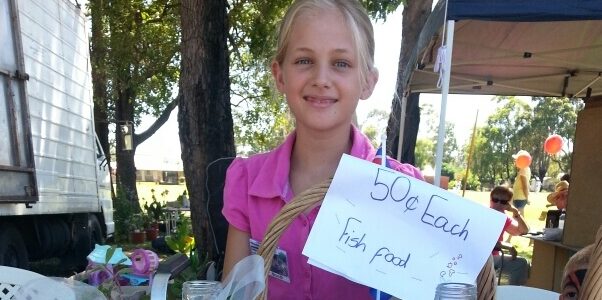
what can i sell to make money as a student Amber holding price sign

What can I sell to make money as a student? Amber’s “New From Old” enterprise is a real family example of how a young person can buy, clean, advertise and resell second-hand items for profit.

Instead of waiting for the perfect idea, Amber looked for useful items, solved simple problems for buyers and learned valuable business skills along the way.

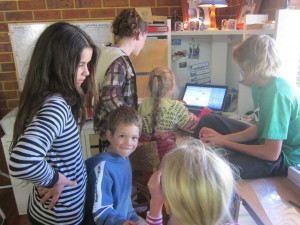
what can i sell to make money as a student brainstorming resale ideas
Brainstorming ideas for a kids resale enterprise.

What Can I Sell to Make Money as a Student?

What can I sell to make money as a student? That is a question many kids and parents ask when they want a simple, practical business idea.

There are hundreds of possibilities. Yet when chatting to parents, they often tell me they would really like their kids to have a little business enterprise of their own, but they just can’t think of a good idea.

Here’s the tip: think about the problems or needs your local community has. Then ask whether a kids’ enterprise could be built around solving one of those problems.

Another angle is to consider what skill your child already has and how they could put that skill to good use.

Brainstorming What Students Can Sell

If your child is wondering, what can I sell to make money as a student?, start by brainstorming ideas on paper. Keep going until you have exhausted all possible ideas, whether or not you intend to use them.

Try asking neighbours what issues or problems they have and add these to your list.

Generally, people have time issues. That is where a business idea can begin. Not enough time to mow the lawn, clean large rubbish bins, chop wood, tend to the kids’ homework, clean windows, rake leaves, tutor younger children, pull weeds or clean the car — you get the picture.

If you are still stumped, this blog is full of real family enterprise stories and practical kids business ideas.

Amber’s “New From Old” Resale Enterprise

Amber’s “New From Old” enterprise has been going great guns right from the beginning. Her money jars are filling up, and really she hasn’t had to do much work at all.

She reached the goal she set a while back and is now preparing to take her business to another level. We’ll talk more about that in a later blog.

If you are new to our blog and haven’t yet followed Amber’s enterprise journey, you may like to start with Kids Business Ideas: Amber’s Kids Biz Program.

Amber’s resale enterprise in action:

what can i sell to make money as a student Amber resale enterprise sign
Recycling for profit
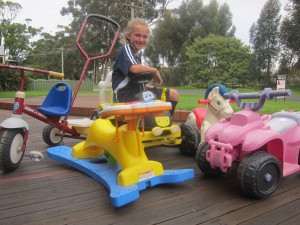
student resale business idea selling toddler ride-on toys
Toddler ride-on toys

Finding Things to Sell for Profit

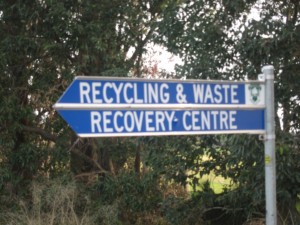
Amber makes the fortnightly trip to the local Recycling and Waste Recovery Centre. It sells anything salvageable.

The guy who runs the place now knows Amber and understands that she is running her own business. Through this process, Amber has developed important skills in negotiating and connecting with a network.

When she identifies an opportunity, she confidently strikes up a deal with the Recycle Man.

Much of the stuff for sale is really not worth the effort to resell. It is a bit like looking for a gold nugget among the boulders. Over the months, Amber’s ability to pick profitable items has improved and she now has an eye for a bargain.

This is one reason the question, what can I sell to make money as a student?, is so useful. It teaches children to think carefully about value, demand and effort before spending their money.

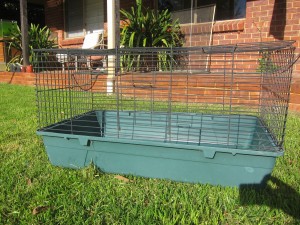
student resale idea pet cage cleaned and sold for profit
Pet cage

Learning What Is Worth Buying

The items that can be resold are generally the ones that solve people’s problems. Pet cages, baby toys, storage items and exercise equipment are good examples.

These items need to be well presented and in good condition. Amber looks for opportunities that don’t require spending lots of time and money fixing them up.

Ideally, she buys things that just need a good clean, a lick of paint or a new set of batteries.

Amber has also learnt from her mistakes. She once bought a perfect condition four-man tent still in its new box for $10, only to discover later that it had no pegs or poles. Buying pegs and poles new would blow her costs out and leave her running at a loss.

That one was put down to experience. Does anyone have free pegs and poles?

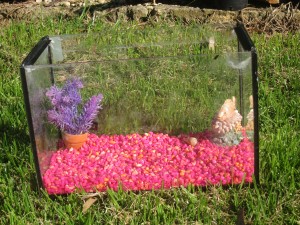
what can i sell to make money as a student aquarium resale idea
Fish aquarium

What Can I Sell to Make Money as a Student? Research First

Sometimes Amber sees a possible opportunity but holds off buying it until she has done her research.

She works out what it will cost to repair or tidy up the item. Paint brushes, varnish, batteries, sandpaper and labour all need to be considered.

Then she looks at what others are selling similar items for online. By doing her research, Amber has a better idea of how much she can pay in order to make a reasonable profit.

For older students ready to take a business idea further, Business.gov.au has helpful information on starting a business when you’re under 18.

Writing Ads and Making Sales

Amber sells almost all her items on Buy and Sell Bunbury Facebook. She set up her own Facebook page for the sole purpose of participating in the buy-and-sell market.

She writes her own ads, uploads her own pictures and converses with customers online and on the telephone.

When a buyer arrives, Amber presents her goods and collects payment.

student selling online writing ads for resale items
Amber placing her adverts onto Buy & Sell Facebook with the gang watching on!

Real Examples of What Amber Sold

We’ve watched Amber continuously grow in confidence with her enterprise. She has found and built her own business around solving problems, using creativity and communicating with people.

Some of the items Amber acquired and on-sold for profit can be seen in the pictures on this blog.

The five outdoor toddler toys were bought for a good price. She scrubbed them, put new batteries in one, charged the battery in another and sold them all for $60.

The aquarium and pet cages just needed a clean, and she made a profit of $25.

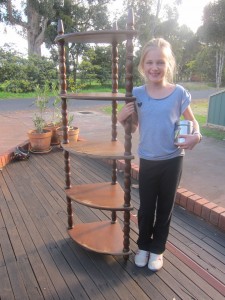
student resale enterprise display shelves sold for profit
Display shelves

Her corner display required screwing together, and she made a profit of $20.

Her current project is a very large timber outdoor table. She paid $10 and hopes to sell it for a profit after sanding it back and varnishing it.

Amber has also been collecting succulent plants from friends. Her plan is to paint decorative ceramic pots and plant hardy succulents in them, then sell them at a market day.

What Students Can Learn from Amber’s Enterprise

This story is a practical answer to the question, what can I sell to make money as a student?

Amber’s answer was simple: find items people need, buy carefully, improve presentation, advertise clearly and communicate well with buyers.

She also talks about her goals, buying assets and gifting money in the original video clip. You can view it here: Amber reflecting on her business and goals.

Amber making a sale in her student resale enterprise
Amber making a sale!

It will be very interesting to see where her entrepreneurial journey takes her as she grows older. She loves writing, so maybe she will write a book about her journey one day.

Key takeaway: If your child is asking, “what can I sell to make money as a student?”, start with simple resale opportunities. Look for useful items, check the costs, solve a buyer’s problem and learn from each sale.

Where to Next?

If you enjoyed this family enterprise story, you may also like:

We would love to hear from you, so please leave a comment.

Upcycling Business Ideas: Amber’s New From Old Project 2

Amber Howitt learning upcycling business ideas through her New From Old enterprise

Upcycling business ideas can start very small. Sometimes all a child needs is a second-hand item, a little imagination, a few practical skills and the confidence to have a go.

“`

After Amber’s first New From Old project was successful, she was ready to keep her enterprise momentum moving. This time, her opportunity came from a visit to the Geraldton Recycling Centre with her Gran.

“`

Amber finding an item at the recycling centre for an upcycling business idea
Amber learnt that enterprise opportunities can sometimes be found in unexpected places.

Upcycling Business Ideas: Amber’s New From Old Project 2

Amber’s rabbit hutch project was hugely successful. She made an easy sale with excellent profit, and it gave her the confidence to look for another enterprise opportunity.

This post is part of Amber’s New From Old resale enterprise series, where she learnt how to find second-hand items, improve them and sell them for profit.

After the success of the rabbit hutch, Amber was looking for a new Enterprise for Kids project to keep her momentum moving forward.

So she planned a visit to the Geraldton Recycling Centre with her Gran to see if she could find another opportunity.

Finding Upcycling Business Ideas at the Recycling Centre

Amber was under instructions to only bring home something small, as we were returning to Burekup and already had a lot to fit into the car.

That is often a useful boundary for kids. It helps them look carefully, think practically and choose something they can actually manage.

For families in the Geraldton area today, the City of Greater Geraldton’s Resource Recovery Station is a useful reminder that recycling and reuse can create real-world learning opportunities for children.

Amber negotiating at the recycling centre as part of an upcycling business idea
Amber negotiates with the recycling centre man.
Pine timber display shelves Amber found for her upcycling business idea
Amber’s pine timber display shelves before the makeover.

What Amber found was a small pine display cupboard.

She thought it could make a good doll house. As an alternative, she could simply tidy it up and resell it.

That was smart thinking. She was not locked into only one idea. She could see more than one possible use for the item, which gave her flexibility.

Negotiating, Improving and Selling for Profit

Amber negotiated with the recycling centre man, batted her big blue eyes, and bought the shelves for a couple of dollars.

This was a simple but valuable enterprise lesson.

She was learning how to:

  • spot an opportunity,
  • look for resale potential,
  • negotiate a price,
  • improve an item,
  • advertise it,
  • and sell it for profit.

These are the kinds of practical skills that children can learn through real-world enterprise projects.

Amber sanded the cupboard back, gave it a coat of varnish and advertised it for sale.

Amber's upcycled display shelves after varnish ready to sell for profit
After a lick of varnish, the shelves were ready to sell.

Sold for $15!

Once again, Amber was happy with her profit. She added the cash to her money jar in readiness for her next Enterprise for Kids opportunity.

What Amber Learnt from Her Upcycling Business Idea

We watched Amber’s confidence skyrocket from running her little business projects.

This is one of the things we love about small enterprise experiences for children. The money matters, but the learning is even bigger.

Through this project, Amber was developing skills in:

  • opportunity spotting,
  • creative thinking,
  • negotiation,
  • marketing,
  • basic pricing,
  • follow-through,
  • and confidence.

She was also learning that value can be created.

The pine shelves were not worth much sitting at the recycling centre. But with a little care, sanding, varnish and marketing, they became something someone else was willing to buy.

That is a powerful lesson for children.

Amber’s Reflection on How her Money Goal Has Been Progressing

Amber reflects on what her money target is and how she has been progressing towards her goal. Click the image to view her reflection.

Amber's Reflection on how her Money Goal is Progressing
Amber’s Reflection on how her Money Goal is Progressing (click to view video)

Upcycling Business Ideas Teach Kids to Spot Opportunity

Upcycling business ideas are wonderful for kids because they do not need to start with a lot of money.

Children can begin by looking for small, manageable items that can be cleaned, repaired, painted, polished, repurposed or presented better.

They can learn to ask:

  • Could this be useful to someone?
  • Could this be cleaned up?
  • Could this be turned into something else?
  • Could this be advertised better?
  • Could I buy this cheaply enough to make a profit?
  • Who might want this once it is improved?

These questions help children think like entrepreneurs.

They begin to see that opportunity is not always obvious. Sometimes it is hidden under dust, scratches, old paint or someone else’s discarded item.

Amber’s New From Old Series

This project was another step in Amber’s New From Old journey.

Her first project showed her that she could buy and sell for profit. This second project showed her that she could take something simple, improve it and make another successful sale.

Each small project helped her build belief in herself.

We do hold the crystal ball, and we know what Amber gets up to next. You will be amazed by the opportunities she finds.

Stay tuned for more in Amber’s enterprise journey.

Key Takeaway: Upcycling Business Ideas Can Start Small

Key takeaway: upcycling business ideas can teach children how to spot opportunity, negotiate, improve an item, advertise and sell for profit. Amber’s New From Old project showed that a small recycling centre find can become a valuable real-world money lesson.

Where to Next?

What second-hand item could your child clean up, improve or resell as a small enterprise project?

Buy and Sell for Profit: Amber’s Rabbit Hutch Flip

Buy and sell for profit with Amber's rabbit hutch flip

Buy and sell for profit sounds simple, but it teaches children a lot. They have to spot an opportunity, understand value, negotiate a price, improve the item, advertise it well and then complete the sale.

“`

This is the second article in Amber’s New From Old series. After planning her enterprise idea, Amber wasted no time putting it into action — and her rabbit hutch flip became a wonderful first success.

“`

Amber contemplating how to buy and sell for profit through her New From Old enterprise
Amber contemplating her next New From Old enterprise opportunity.

Buy and Sell for Profit: Amber’s Rabbit Hutch Flip

Amber didn’t waste any time jumping into her New From Old money-making enterprise.

She bugged me to take her to the Dardanup Tip to see what she could find. So, after her Saturday soccer game, we paid a visit.

At the tip there was a salvage area where anything that could be recycled was put aside and sold. The current Shire of Dardanup Waste Transfer Station and Recycling Centre information still shows how recycling and Tip Shop-style reuse can be part of local waste recovery.

Almost immediately, Amber spotted an opportunity.

She saw a damaged rabbit hutch. We looked over it and could see that it was generally in good structural condition and could easily be repaired. However, it did need a paint job.

So Amber went up to the tip man and struck up a deal.

She bought the cage for $10.

Ten dollars was a real bargain! We looked up the exact same cage sold online in kit form and saw that people were paying around $180 for them.

Amber’s New From Old Series

This post belongs in Amber’s New From Old series, where she learns how to find second-hand items, improve them and sell them for profit.

Repairing the Rabbit Hutch

Arriving home, there was a buzz of interest as the neighbouring kids headed around to see Amber’s rabbit hutch. They were really curious to see what she was up to.

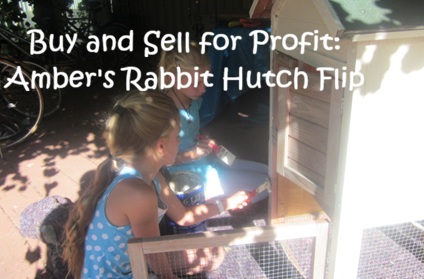
Amber bought a couple of paint brushes for $5. Then, using some old house paint she found in the shed, she and her friends set to work painting.

She also employed her brother Flynn and his mate Dan for $2 each to fix the broken part of the cage.

They thought that would be awesome!

Enterprise for Kids was now becoming infectious in the neighbourhood.

Chayse helping Amber repair the rabbit hutch for a buy and sell for profit project
Chayse helping Amber repair the rabbit hutch.
Amber fixing the door latch on a rabbit hutch to sell for profit
Amber fixing the door latch.

Learning to Add Value

This was a wonderful real-world money lesson.

Amber had not simply found something to sell. She had found something that needed attention, repair, paint and presentation before someone else would see its value.

That is one of the big lessons in learning to buy and sell for profit.

Profit often comes from seeing value that other people miss.

Amber was learning how to:

  • spot a bargain,
  • research the value,
  • negotiate the purchase price,
  • make repairs,
  • use help wisely,
  • advertise the item,
  • and sell for a profit.
Amber employing Flynn to help repair her rabbit hutch for a resale project
Amber employing Flynn to help her fix the rabbit hutch.

Pricing and Advertising the Rabbit Hutch

It was all great fun and, in no time at all, the cage was ready to be sold.

Amber continued her research into what to sell the cage for. She spoke with Darcy’s Mum about cages and also to Nicolette from next door. Both had owned rabbit cages and understood their value.

Finally, Amber decided that she would ask $90 for the bunny hutch.

Her next job was to put a free advert on the local Buy and Sell Bunbury Facebook page.

She put her ad up with a photo and waited for a response.

Amber photographing her rabbit hutch before advertising it to sell for profit
Now for the picture for Amber’s Facebook advert.
Amber's finished rabbit hutch ready to sell for profit
Amber’s finished enterprise idea.

Sold for $90!

You wouldn’t believe it!

Within ten minutes, the cage was sold for the full $90.

In fact, two other people had their hand up to buy the cage if the first deal fell through.

Amber met and thanked the man who came around to pick the cage up and eagerly took the cash payment.

She really did pull the money bunny out of the hat!

Amber’s Profit

All up, it was an outstanding result.

In only a few days, Amber’s profit was $71 after costs.

She was well on the way to attaining her goal.

With her money jar now looking very full, she was rearing to go for another visit to the tip!

She had already begun developing an enterprise mindset around business and money, and her financial IQ was growing.

What Amber Learnt About Buying and Selling

Amber’s rabbit hutch flip was not just about making $71.

It taught her that she could take an idea, act on it, solve problems, ask for help, make decisions and sell something successfully.

That kind of learning is powerful.

She also learnt that buying and selling for profit is not only about finding something cheap. It is about understanding value.

She had to ask:

  • Is this item worth fixing?
  • Can it be repaired easily?
  • What will the costs be?
  • What are similar items selling for?
  • Who might want to buy it?
  • How should I photograph and advertise it?
  • What price should I ask?

These are real business questions.

Buy and Sell for Profit: The Bigger Lesson

For children, a simple resale project can teach lessons that are difficult to learn from a worksheet.

Amber learnt through action.

She learnt that opportunity can sometimes be sitting at the tip, waiting for someone with imagination to notice it.

She learnt that old things can become valuable again.

She learnt that money can be created through effort, creativity and follow-through.

Most importantly, she learnt that she could do it.

That belief is one of the most valuable outcomes of all.

Key Takeaway: Buy and Sell for Profit Starts With Spotting Value

Key takeaway: buy and sell for profit projects can teach children how to spot value, negotiate, repair, research prices, advertise and complete a sale. Amber’s rabbit hutch flip showed that one small second-hand item can become a powerful real-world money lesson.

Where to Next?

What second-hand item could your child buy, improve and sell for profit?

Business Ideas for Kids: Finding Enterprise Ideas

kids entrepreneur ideas inspired by real family enterprise experiences

Business ideas for kids often begin with everyday problems, useful skills and a little creative thinking.

Coming up with an enterprise idea that makes money, solves a real problem and keeps a child motivated is a tall order for an adult, let alone a kid.

Children do not need a perfect idea to get started. In fact, many of the best ideas come from noticing what people need, thinking creatively and using the skills children already have.

business ideas for kids through real family enterprise experiences
Looking for enterprise ideas as a family.

Business Ideas for Kids: Finding Enterprise Ideas

Business ideas for kids are often found by looking closely at everyday life. Coming up with an enterprise idea that makes money, solves a real problem and keeps a child motivated can be a tall order for an adult, let alone a kid.

The trick is to spend time brainstorming ideas together and helping children notice the small problems around them.

What I explained to my entrepreneurial kids was that they needed to think about the problems in our small community town, then look for possible solutions.

By solving people’s problems, children begin to create real opportunities for enterprise.

Business Ideas for Kids Start with Solving Problems

In the original video for this post, I gave the kids a simple example. Winter was drawing near and people were chopping wood ready to fuel their fires.

Problem: No one likes scrambling around outside on a cold and rainy day gathering kindling to get their fire started.

Solution: Collect bundles of gum tree sticks, tie them up and sell them to people who need kindling ready to go.

Step one was finding the problem. Step two was finding the solution. Putting the idea into action would be step three.

What a great and simple enterprise idea.

After hearing this example, the kids had no trouble finding enterprise ideas of their own.

Using Skills to Create Kids Entrepreneur Ideas

Our mentor, Paul Counsel, often shares a great educational basis behind what it means to be entrepreneurial.

He encourages us to consider how we are an asset to others. What skills and knowledge do we have that could be of service to others? What are we good at?

For example, Kaitlin and Amber are very good with toddlers and babies. Every day they were helping with their baby sister Akaisha. They fed her, changed her nappy, bathed her and took her for walks.

Both girls were very skilled and had a natural ease with babies. Knowing when Akaisha was tired and how to soothe her when she was upset became second nature. These abilities could easily lead to real enterprise opportunities.

Everyday skills can become enterprise ideas:

kids helping younger siblings read as part of business ideas for kids
Reading with siblings
kids caring for younger siblings and developing enterprise skills
Looking after Akaisha

Turning Everyday Skills into Enterprise Ideas

The obvious enterprise would be babysitting, but other ideas include:

  • Homework Support — busy parents may need someone to listen to younger children read, practise spelling words or help with writing.
  • Toddler Playmate — after school, some parents may appreciate an older child entertaining and playing with their toddler or baby.
  • Walking Younger Children Home from School — busy parents may appreciate a responsible older child helping with the school run.
  • Sports, Dance, Music or Art Coaching — Amber and Kaitlin could teach other kids how to throw, catch, draw, dance or play music.
child who enjoys helping younger kids as a business idea for kids
Kaitlin loves kids.

These are not complicated ideas, but they are valuable and practical. Children can easily miss this point. Often, they do not realise that skills they use every day may be helpful to someone else.

Finding Business Ideas for Kids Through Imagination

All it requires, when finding enterprise ideas for kids, is a little imagination.

Take the time to identify problems and look at what assets you have that could help people. Helping people is the key to enterprise.

Many ideas are not new. However, children often need guidance to look at their existing skills and realise how valuable they already are.

young musician developing skills that could become business ideas for kids
Budding young musician

A tip for everyone: you can increase your value by up-skilling and becoming an expert in an area.

As your skill increases, your value increases too. Over time, people are more likely to seek your help and pay for your time and knowledge.

How Kids Can Start a Business by Increasing Their Value

For example, being a whiz at sorting computer glitches would make you valuable to people who have computer problems. Being an expert pianist could create opportunities to teach others how to play piano.

Many of these ideas are simple. The real lesson is helping children notice what they are already good at, then think about how those skills could help others.

For older children who are ready to take an idea further, Business.gov.au has helpful information for young people starting a business.

Business Ideas for Kids Are Everywhere

Finding enterprise ideas can be fun, and it isn’t that hard if you do a little thinking and brainstorming first.

Amber will reveal her enterprise idea in the next blog as she begins her quest to reach her goals, so stay tuned.

Key takeaway: Business ideas for kids often begin with simple problem-solving. When children learn to notice problems, use their skills and think about how they can help others, they begin to see enterprise opportunities everywhere.

Where to Next?

If you enjoyed this post about finding business ideas for kids, you may also like:

We would love to hear from you, so please leave a comment.