Enterprising Dinner Table Conversations

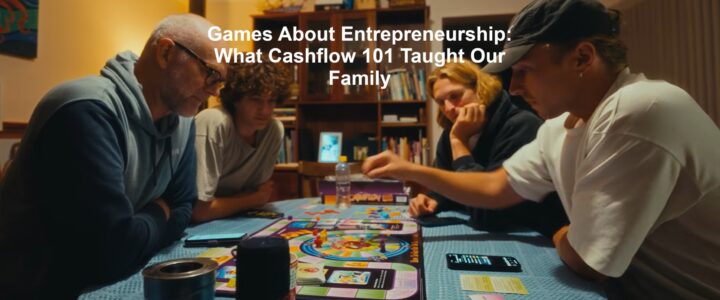
What do you think the Howitt’s talk about when around the dinner table?

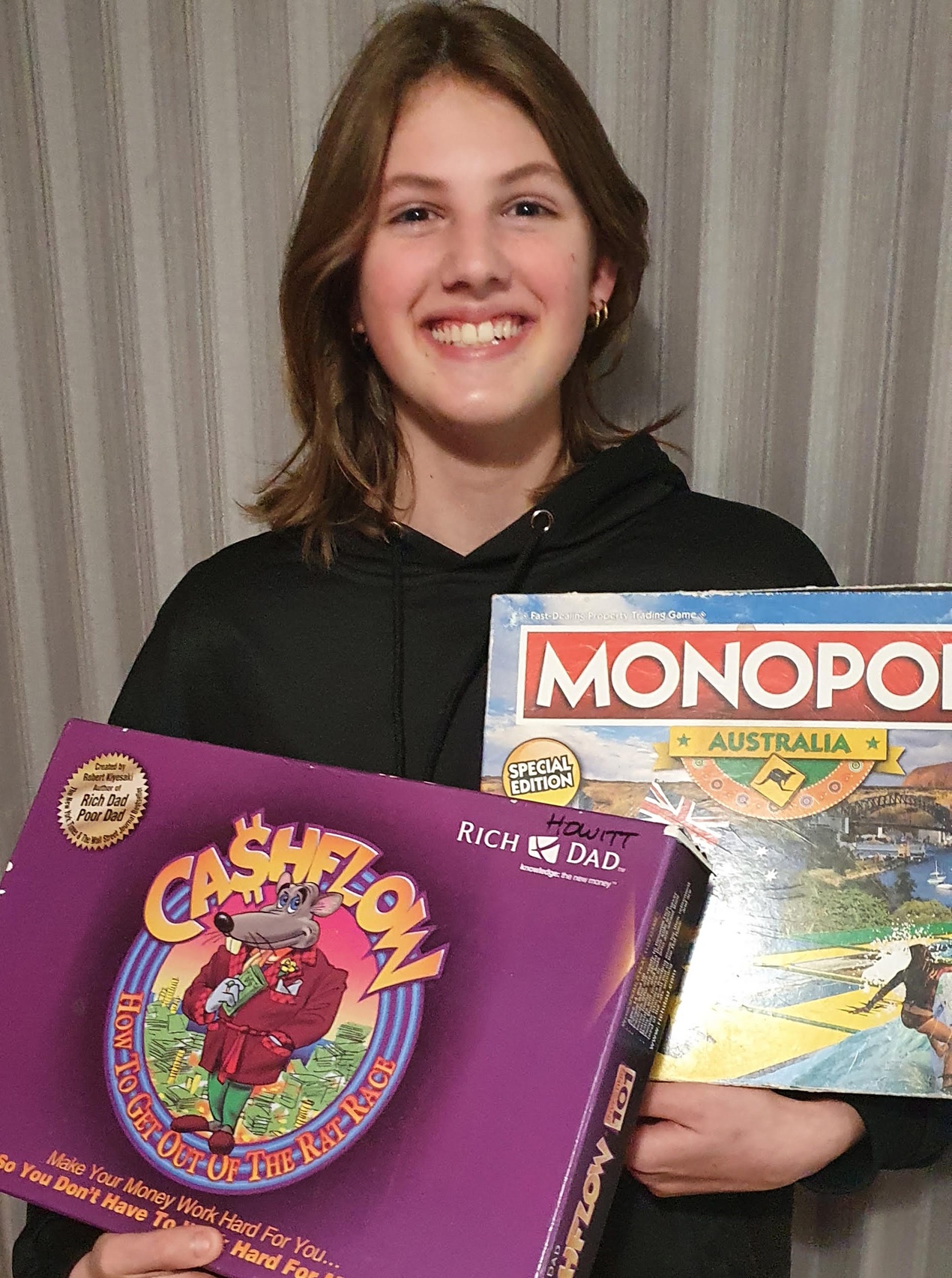
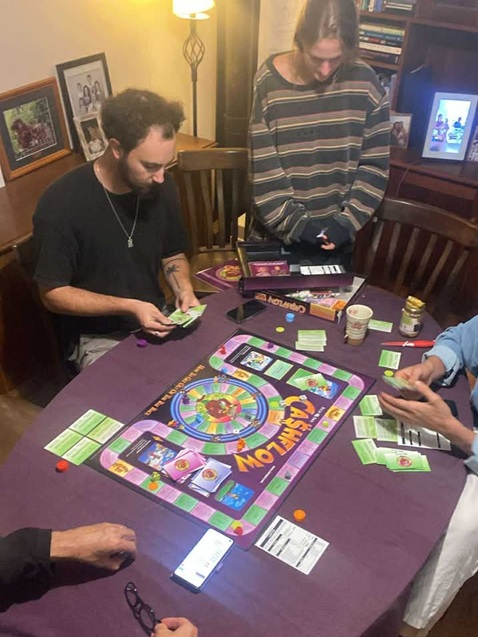
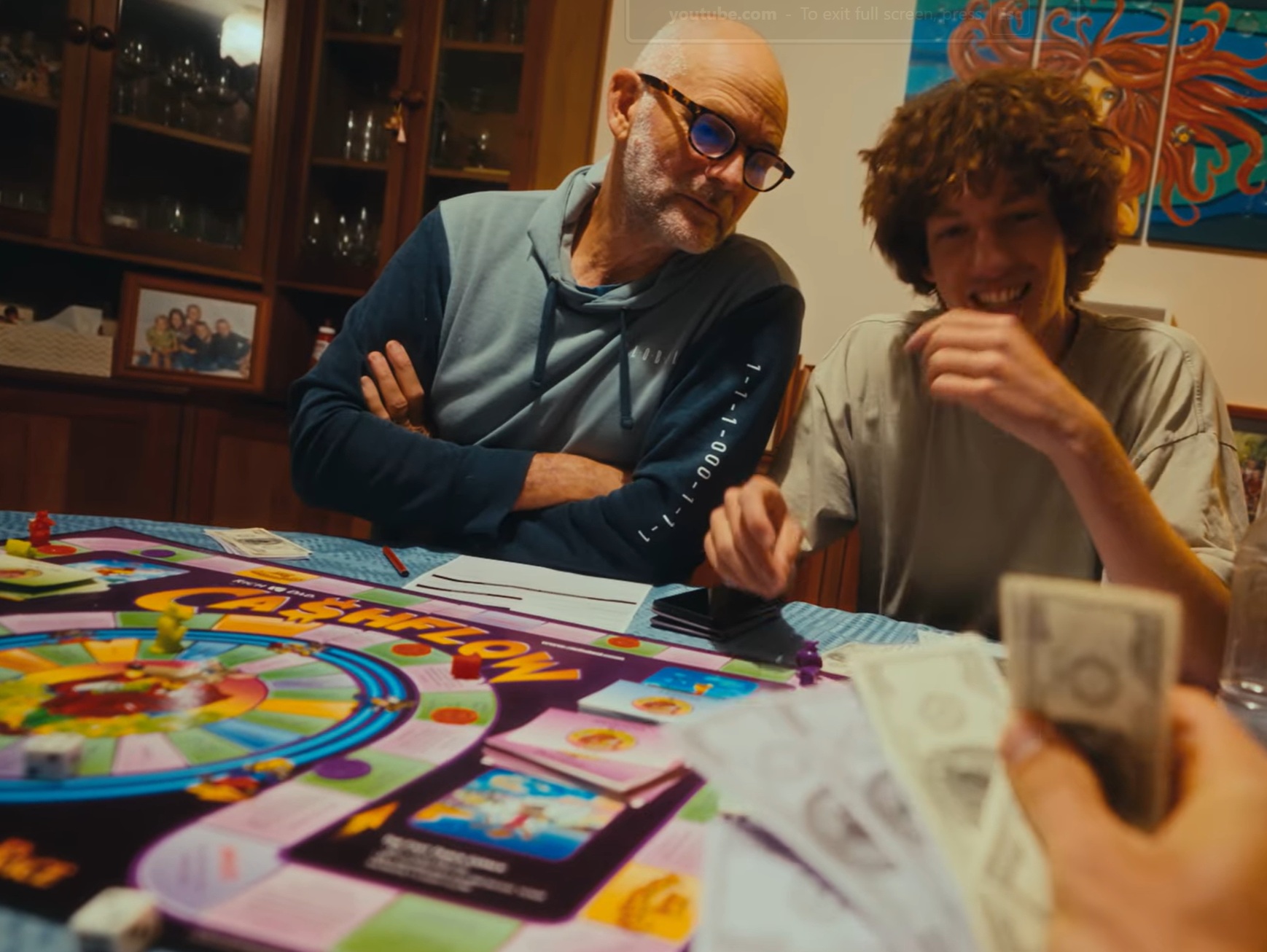
It always begins with each member of the family sharing a gratitude, then usually the events of the day are told and achievements celebrated; however, what quite often happens next is that topics of business, enterprise, finance and investing govern the conversation.

Flynn Howitt taking his photography to another level. Check out his facebook blog and see what he can do!
Film making and photography have been the key to Flynn’s success in building his social media following

Lately, the topics of interest have been Instagram money making strategies, crypto assets and eCommerce.

Let’s look at these individually and look at how these present opportunities for kids to be entrepreneurial…

Instagram

Our older children, Kaitlin (now 24), Jai (now 22), Flynn (now 20) and Amber (now 18) all discovered social media when they were in their mid-teens. It started with facebook, then Instagram and now Tic Toc and Snap Chat. They discovered how to grow a true following of people by using regular posts of quality content about their lives. It helped living on a paradise Tropical Island atoll in the middle of the Indian Ocean- photos and videos here always look fabulous!

Kaitlin Howitt co-creating inspirational workshops with like minded people. Enterprising teen to entrepreneur.
Creating workshops that inspire has become Kaitlin passion.

As their following grew, so did their opportunities for enterprise. It began with something called ‘shoutouts’. Here other people/companies would pay cash for the enterprising kids to mention them in a post. This helps these people/companies grow their followers or promote their wares… and my kids were happy for the cash!

Next came real products. Companies would send them clothing, watches, surf gear and jewellery to wear and share on their Instagram accounts. The kids would get to keep the gear!

Following that, companies would not only send the gear, but also pay for the promotions. My enterprising teens were stoked with these opportunities!

As time went by and their social media followings grew and grew and their creative juices began to flow, real, much larger opportunities presented themselves.

Humble beginnings for Jai where he learnt to navigate the world of entrepreneurialism from his shared bedroom.
Jai building his enterprise from his bedroom a few years ago.
Jai Howitt's new warehouse where he runs his media company- Brand-Boostr. Jai's journey from enterprise for kids to today has been exceptional!
Handing over the keys to his new warehouse where he creates media content for international clients.

Kaitlin, along with Tully her husband, have built multiple streams of income using social media. Businesses that include coaching, MLM, and online courses. We’ll share more about this in a later blog post.

It’s taken Jai a few years, but now he has a thriving business where he creates content for international clients for their social media marketing. He uses his social influence through Instagram, Tic Toc and Facebook to generate leads for his very successful enterprise.

Crypto

You would have all heard about Bitcoin, but I’d say not many of people fully understand what it actually is. In a nutshell, Bitcoin is a block chain digital software developed in 2008 to be a currency. It is limited in supply, therefore very rare like gold. Other than its rarity, people like it for many reasons:

  • Decentralised, thus not controlled by one bank (centralised).
  • Cheap and quick to buy, sell and send.
  • Easy to store and secure.
  • A hedge against other asset classes.
  • Block chain technology is at its infancy and likely to become huge.
  • It is borderless. Can be traded and used in all countries.
  • Used as a currency.

There are thousands of different crypto currencies, although Bitcoin is by far the largest by market cap. Many of the crypto coins are based on block chain digital technologies (programs) that have real life applications. They are part of real bricks and mortar businesses. For example, Power Ledger is a renewable energy technology allowing people who have solar panels on their homes to be able to sell their excess energy to other people for a premium, rather than selling back to the to the Energy company for very pittance. People can buy the Power Ledger Coin. If the company continues to grow and expand and make profits, it will push the value of the coin up.

Block chain technology (crypto) is very new, and people are only just beginning to realise its potential. The infrastructure to utilise the technology is still being put into place. As mainstream companies, banks, fund managers and investors see the real benefits of block chain technology and recognise crypto currencies as being a strong asset class, the value of these rare assets will continue to rise.

The Howitt’s have investigated several crypto coins and have bought into them, with the intention to hold them for the long term. We believe it is a strong hedge against other asset classes, such as the stock market. We also believe crypto to have tremendous potential. 

eCommerce

As a family, we are all studying an eCommerce program called Web Dev. We are learning to build and monetise websites. We are also learning to identify value in websites for sale, buy them and then either renovate and flip them, or hold them for cash flow.

Websites can be monetised in many ways. The more common ways are through affiliating with companies selling real products and services (eg Amazon) or with advertising (AdSense). However; there are many other ways- like creating directory sites or selling digital products.

Building a website yourself from scratch costs very little, so anybody can afford to do so. Perfect for enterprising kids or teens. Buying readymade websites, already making a consistent monthly income can be an excellent investment, arguably better than any other asset class available today. For example, website that makes a $1000 a month can be bought for about $20 000. After costs, this asset will return in excess of 40% p/a. In addition, if you have the skills to improve the website and its income, then the asset will be worth more. Now, where else can you get a 40%+ return on an investment?

Currently, the younger Howitt kids are building websites. Amber has hers up and running. Go check it out www.sustainableperiodproducts.com. Chayse recently bought www.babyclient.com , which he is currently renovating. The other kids’ sites are a work in progress. We’ll keep you posted!

Our dinner table conversations may be a little different to the average family. We gain inspiration from one another through these conversations and through our mentors who support us on our entrepreneurial journeys. We are building skills, gaining knowledge, creating assets and most of all strengthening a mindset for enterprise.

Kids Mindset for Success: Planning and Goal Setting

Young kids in suits showing a determined kids mindset for success

Kids mindset for success begins with helping children turn their dreams, ideas and intentions into a clear plan they can actually follow.

During my career-path conversation with my son Jai, he was able to visualise himself, his surroundings and the companions he wanted in his adult future. The final step was to solidify the pathway that would take him to his version of a successful life: a plan, Natalie Cook’s fifth P.

Natalie Cook with Cathy showing a kids mindset for success
Natalie Cook stood on a chair for this photo!

Kids Mindset for Success Starts With a Plan

It is always a good idea to sit down and plot out short-term and long-term goals, especially for entrepreneurial kids who are cultivating a kids mindset for success.

On an adult level, well-made plans should be a natural component of what you perceive as your life’s purpose — your “Why” in life. Of course, children who are entrepreneurial may not have solidified their life purpose to this extent yet. But they can still begin learning how to set meaningful goals, create intentions and take practical steps forward.

A plan helps children move from vague wishing into purposeful action.

Helping Kids Set Clear Intentions

Sean Rasmussen, our internet marketing mentor, taught me a trick that can be successful with kids as well.

Write an intention on a small piece of paper, but do not use the future tense.

For instance, an adult might write:

“I have attracted a healthy, motivated business person to my business this month.”

That is much stronger than writing:

“I will attract…”

A child might write:

“I have kicked two goals at this Saturday’s soccer match.”

Place the written intention under your pillow, in your wallet, or somewhere you will view it regularly. The idea is to set a specific and realistic goal, then see it, believe it and feel it.

Plan for kids mindset for success

People who practise this mindset for success technique can go on to set bigger and grander intentions over time.

For children, this is not about pressure. It is about learning to direct their thoughts, language and energy toward something positive and achievable.

Having a Defined Goal Builds a Kids Mindset for Success

My friend Michael Clouse says that not having a clearly defined plan is like an archer who aims at a target with a blindfold on.

There is no chance of hitting the bullseye if you are unable to see it.

That image is a wonderful one for children. If they cannot see what they are aiming for, how can they know which direction to move? A clearly defined goal helps children understand what they are working toward and why their daily actions matter.

This is especially important for entrepreneurial kids, because business ideas can easily remain just ideas unless they are supported by a plan.

Vision Boards and a Kids Mindset for Success

Another technique is visualising goals using a vision board.

Select the experiences, goals and things that you would like to have in your life. Then make a poster board using images, words and graphics. Place the vision board somewhere you will see it daily.

The important part is not just making the board. The important part is seeing it often, visualising the items on the board, and imagining them as if they were real and already present in your life.

Child facing fears and building a mindset for success
Facing your fears! Walking on broken glass!

A vision board can help children begin to connect their imagination with action. It gives them a visual reminder of what they care about and where they are heading.

For some kids, this might include sport, travel, family, creativity, business ideas, friendships, learning goals or ways they want to contribute to the world.

Positive Affirmations Lead to a Success Mindset in Kids

Speaking positive affirmations aloud two or three times a day is another way of setting your intention and belief. Again, these should be in the present tense.

Natalie Cook likes to declare her intentions and plans before a public audience, making herself accountable to a lot of people for achieving her aims. Her Olympic journey is a strong example of discipline, planning and follow-through. You can read more about her work and speaking through Natalie Cook’s official website.

So be bold.

Change your way of thinking.

Get rid of the negatives.

Affirm the positives.

Make sure that your plans are well aligned with your life vision. Set grand goals and follow your plan. This is a kids mindset for success.

Natalie Cook’s Five Ps Series

This article is Part 4 in our series on Natalie Cook’s Five Ps for helping entrepreneurial kids and enterprising teens develop purpose, people, passion, perseverance, planning and a mindset for success.

Where to Next?

How do you help your children set goals and follow a plan? Leave a comment and share one strategy that has helped build a mindset for success in your family.

Teaching Perseverance to Kids: Natalie Cook’s Five Ps

Cathy Howitt with Natalie Cook in a lesson about teaching perseverance to kids

Teaching perseverance to kids is one of the most important parts of helping them develop a mindset for success, because every child will face setbacks, rejection and moments when things feel too hard.

A baby learns to walk by falling over many times. An entrepreneur learns to succeed after stumbling along the way. In this third part of Natalie Cook’s Five Ps series, we look at her fourth P: Perseverance — perseverance on our children’s part, and perseverance on ours as parents too.

Kids working together on a computer while learning perseverance and problem solving
Perseverance grows when children work through challenges, solve problems together and keep going when learning gets difficult.

Teaching Perseverance to Kids Through Real-Life Setbacks

One of the best ways to teach children perseverance is to let them see adults handle setbacks in a healthy way.

For example, Cathy and I have learned that in the business of referring people to an opportunity, many people will simply not be interested. With enterprising teens watching, how do parents set an example to persevere when people say “No”?

The mindset for success is to celebrate the “No.”

After enough “No” responses, a “Yes” will inevitably follow. One of my mentors, David Wood, says to do the Happy Dance whenever you get a “No,” because the rejection has only moved you one step closer to the “Yes.”

Perseverance for Kids Means Learning to Handle Rejection

Your kids, whether entrepreneurial or not, are going to like seeing that Happy Dance.

It becomes a practical, memorable way to help seal the behavioural pattern of success in their mindsets. Being able to overcome rejection in business, rejection from friends and even rejection from family is paramount when teaching perseverance to kids.

The lesson is simple but powerful: rejection is not the end of the road. It is part of the road.

For entrepreneurial kids and enterprising teens, this matters. A child who can hear “No” and still keep going has a much stronger foundation than a child who believes every “No” means they have failed.

Changing the Language Children Use About Perseverance

Our vocabulary also plays a huge part in our ability to persevere.

In our family, “Can’t” is a swear word and is not allowed to be used at any time. “Can” is encouraged.

Many people, including kids, are quick to give up when the going gets tough. They say, “I can’t,” rather than “I can.” The little kids in my family actually believe “can’t” is a swear word, right up there with the other big four-letter words!

This might sound funny, but it is also a powerful family rule.

When children repeatedly say “I can’t,” they begin training themselves to stop. When they learn to say “I can try,” “I can learn,” or “I can have another go,” they begin building the internal language of perseverance.

Teaching Perseverance to Kids With “That Was Easy”

Another phrase to abandon is, “It’s too hard.”

Natalie Cook showed us a little trick she used to change her perception of what is hard. She bought a toy button that calls out, “That was easy!” when you press it. Natalie would strap this toy button to her volleyball net pole.

Whenever she did something very well that was also very difficult, she would run up to press the button:

“That was easy!”

Try it for yourself. Press the button below.

Being the best in the world at your sport certainly has its challenges, and my kids would love to try out one of those buttons.

But whether or not you have the button, the point is not to keep telling yourself, “That was hard.”

A child’s brain listens carefully to repeated language. If the phrase is always “too hard,” the child begins to expect defeat. If the phrase becomes “I can try,” “I can learn,” or even “that was easy,” the child begins to rehearse a different identity.

Natalie Cook’s Example of Perseverance

Natalie Cook’s Olympic journey is a strong example of perseverance in action. Her official Olympic profile describes her as a five-time Olympian and Olympic gold and bronze medallist in beach volleyball, which makes her a powerful role model when teaching children about commitment, setbacks and long-term success. Read more about Natalie Cook’s Olympic journey here.

Children often see the medal, the success or the final moment of victory.

What they do not always see are the early mornings, the missed shots, the injuries, the disappointments, the training sessions and the moments when an athlete has to choose whether to keep going.

That is why perseverance is such an important lesson for kids. It teaches them that success is not just about talent. It is also about what they do after things become difficult.

Why Perseverance Belongs in the Mindset for Success

These tactics — celebrating the “No,” changing our language, and reframing hard things as achievable — can all increase the level of perseverance in kids and help keep them on a successful track.

But perseverance becomes easier when children also have direction.

That is where the next P comes in: Plan.

A plan gives perseverance somewhere to go. It helps children understand the next step, not just the final dream. Without a plan, perseverance can feel like pushing in the dark. With a plan, children can see that each effort is moving them forward.

Make sure you have a look at the short video above that we made of Natalie Cook giving a special message to our kids. Can you spot the blooper?

Natalie Cook’s Five Ps Series

This article is Part 3 in our series on Natalie Cook’s Five Ps for helping entrepreneurial kids and enterprising teens develop purpose, people, passion, perseverance, planning and a mindset for success.

Where to Next?

How do you help your children persevere when things get tough? Leave us a comment and share one strategy that has worked in your family.

Entrepreneurial Kids: How to Teach Purpose and Success

Natalie Cook diving for the ball at the Sydney Olympics beach volleyball final

Entrepreneurial kids need more than a good idea or a burst of enthusiasm — they need a strong sense of purpose that helps them keep going when the path becomes difficult.

This lesson became very clear to me after hearing Olympic gold medallist Natalie Cook speak in Perth. Natalie is a five-time Olympian and one of Australia’s most inspiring beach volleyball champions. Her message about success, purpose and the mindset of high achievers was powerful not only for athletes, but also for parents raising entrepreneurial kids.

Natalie Cook gold medallist sharing lessons for entrepreneurial kids
Natalie Cook, Olympic gold medallist, shared powerful lessons about purpose and success.

Why Entrepreneurial Kids Need a Strong Purpose

Natalie Cook is a wonderful example of the connection between sport, business and personal success. She won Olympic gold with Kerri Pottharst at the Sydney 2000 Olympic Games and went on to become a respected speaker, leader and businesswoman. You can read more about her Olympic journey on the Australian Olympic Committee’s Natalie Cook profile.

When Natalie spoke in Perth, she explained that professional athletes and successful business owners have many things in common. Both need discipline, courage, focus and the ability to keep moving towards a goal, even when the obstacles are real.

Her message was captivating, humorous and very useful for cultivating a mindset for success in entrepreneurial kids — and, just as importantly, in their adult counterparts.

Natalie Cook’s Five Ps for Success

Natalie built her talk around what she called the Five Ps. These were principles that could apply to children, athletes, families and business owners alike.

Over a series of posts, I wanted to share these Five Ps and connect them to the way we raise enterprising, confident and purpose-driven children. I will also be adding one extra “P” of my own at the end. After hearing Natalie’s five, I wonder if you can guess what mine might be.

For this first part, we begin with one of the most important foundations of all.

Entrepreneurial Kids and the Power of Purpose

A person who truly reaches for success has a mindset that carries with it a very strong “Why,” or purpose.

Your “Why” must be stronger than your “Why not?”

If it is not, you may not have enough purpose to muster up the will to make your goals happen when barriers appear. A strong purpose gives children something deeper to hold onto. It turns a vague wish into a reason to keep trying.

Your “Why” has to be specific and close to the heart. It does not need to be complicated.

A friend of mine is driven to succeed because she desperately wants her mum to be happy and not have to work anymore. Another wants to buy a villa in Tuscany so that she can reconnect with her Italian family roots and create a sense of belonging.

These “Whys” are very different from saying, “Why not?” They are clear purposes, not poor explanations.

Teaching Purpose to Kids Through Real Conversations

Your “Why” will often come from one of two emotions: pain or pleasure. Usually, pain is the stronger of the two.

Think about the rags-to-riches stories we often hear about well-known success mentors and creators such as JK Rowling, Colonel Sanders, Sylvester Stallone, Walt Disney, Steve Jobs, Susan Boyle and Richard Branson. Their difficult experiences helped shape a strong “Why,” and that purpose became part of what carried them forward.

For entrepreneurial kids, this does not mean they need to experience hardship before they can succeed. It means they need to understand what matters to them. They need to begin asking deeper questions about contribution, growth, family, freedom, creativity and the kind of life they want to build.

Cathy and Trevor with Natalie Cook after a talk about purpose and success
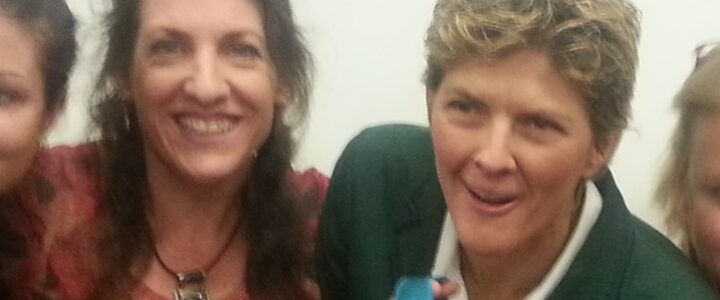
Amy, Cathy, Natalie, Tracey, Kym and Trevor after Natalie Cook’s inspiring talk.

I recently carried out a “Why” exercise with my son, Jai.

We had just returned from a career pathway meeting for his upcoming senior class. Every pathway the school presented seemed to end in landing a j-o-b — just-over-broke. Whether the route was through university, technical school or straight into the average 40-year career, the end result sounded much the same.

There was nothing for an enterprising teen to really grab hold of.

Worse still, because the students were nearing the end of high school, the pressure was on to make a choice. It felt like a limited choice, based on hastily presented ideas rather than a deeply considered purpose.

The result was confusion. Jai seemed torn between going to university with his mates because it sounded like fun, or leaving school with his cousin and going to make money in the mines.

This inconsistency told me that Jai’s “Whys” for both of these career paths were too vague.

Purpose quote for entrepreneurial kids learning their why

Questions That Help Entrepreneurial Kids Find Their Why

So, we got to work.

We discussed why these two ideas sounded interesting to him. We talked about the difference between a strong “Why” and a casual “Why not?” We also explored why “Why not?” is unlikely to carry a person through the hard parts of either choice.

Then I asked Jai to ponder three questions:

  1. How do you want to contribute to this world?
  2. How do you want to grow as a person?
  3. How do you want to be remembered when you pass?

These are big questions for a teenager. In fact, they are big questions for adults too.

But they matter.

If we want to raise entrepreneurial kids who can think for themselves, create opportunities and build meaningful lives, we need to help them move beyond surface-level choices. We need to help them understand what drives them.

Purpose Comes Before the Plan

Many children are asked what job they want before they are asked what kind of life they want.

They are asked what subjects they will choose before they are asked what they care about.

They are asked which pathway they will follow before they have had time to discover the purpose behind the pathway.

This is why purpose matters so much. A plan without purpose can become a list of tasks. Purpose gives the plan energy, direction and meaning.

For entrepreneurial kids, purpose is not just about making money. It is about knowing why they want to create, serve, solve, build, lead or contribute in the first place.

Next, we continue the journey in Part 2: People and Passion, where we explore how the right people and passions can help shape entrepreneurial kids and enterprising teens.

Natalie Cook’s Five Ps Series

This article is Part 1 in our series on Natalie Cook’s Five Ps for helping entrepreneurial kids and enterprising teens develop purpose, people, passion, perseverance, planning and a mindset for success.

Where to Next?

We are always looking for feedback on our entrepreneurial kids articles. What is your “Why”? Leave a comment and share the purpose that keeps you moving forward.

Enterprising Teens: People, Passion and Success

Jai thinking about people and passion as an enterprising teen

Enterprising teens need more than a career pathway or a good business idea — they need the right people around them and a passion strong enough to keep them moving forward.

After my son Jai and I discussed the first of Natalie Cook’s Five Ps, Purpose, I asked him to make a timeline of his life. I wanted him to focus on his surroundings, but more importantly, on the people who would be with him.

Jai thinking about the people and passions that support enterprising teens
Jai thinking about the people and passions that could help shape his enterprising teen journey.

Why Enterprising Teens Need the Right People

Natalie Cook’s second P is People.

Attracting the right people in life is key to building a successful young entrepreneur. But whether Jai chose to be an enterprising teen or follow a different path, what mattered most to me was his mindset for success in whatever direction he chose.

So, I asked him to imagine where he would like to be sitting five years from now — and with whom.

Then ten years from now.

Then forty years from now.

I asked him to picture what was around him, who his associates were, and what made those people so valuable to him that their presence would still be visible in his future decades later.

People quote for enterprising teens learning about success

What Natalie Cook Taught About People and Success

Natalie Cook’s career is a powerful example of what the right people, passion and support can help create. Her official Olympic profile describes her as a five-time Olympian and Olympic gold and bronze medallist in beach volleyball, making her a strong real-world role model for enterprising teens. Read more about Natalie Cook’s Olympic journey here.

Natalie discussed the value of surrounding herself with the right people while training to become an Olympic gold medallist. Around her were coaches, mindset mentors, professionals and peers whose encouragement lifted her up rather than criticism that tore her down.

This is a powerful lesson for enterprising teens.

The people around our children influence how they think, what they believe is possible, and the standards they quietly begin to accept for themselves. Friends, mentors, coaches, teachers, family members and business role models can all shape a child’s confidence and direction.

As parents, we cannot choose every influence our children will meet. But we can help them become more conscious of the people they allow close to them.

Helping Enterprising Teens Choose Positive Influences

It is important for enterprising teens to spend time with the sort of people they would like to learn from, grow with and, in some ways, emulate.

This goes beyond simple peer pressure. Children and teenagers absorb attitudes, habits, language, confidence and expectations from the people around them. If they are constantly surrounded by people who complain, criticise or limit possibility, that can become their normal.

But if they are surrounded by people who encourage, create, question, build, serve and keep learning, that can also become their normal.

This does not mean they need to abandon old friends or judge others harshly. It simply means they can learn to ask better questions:

  • Who encourages me to become better?
  • Who helps me believe more is possible?
  • Who lives with values I respect?
  • Who makes me feel more confident, creative and capable?
  • Who would I love to learn from?

These are not just business questions. They are life questions.

Enterprising Teens Learn Success by Helping People

One of the things I love about business and enterprise is that, at its heart, it is about people.

It does not matter whether the enterprise is large or small. It could be a child’s first market stall, a family business, a service project, a creative idea, or a future company. When young people learn to be genuinely helpful to others, their chances of success increase.

Helping people gives enterprising teens and adults an energy that attracts the right people into their lives. It teaches them that business is not only about making money. It is also about solving problems, creating value and building relationships.

This is a lesson children can begin learning very early.

Why Passion Matters for Enterprising Teens

Natalie Cook’s third P is Passion.

People are naturally attracted to those who have passion for what they do. Passion gives energy to an idea. It helps a young person keep going when the excitement wears off and the work begins.

Natalie has spoken about the importance of loving the process, not just the outcome. That is a valuable message for enterprising teens, because the process is where most of the growth happens.

Success is not only found in the final result. It is found in the practice, the learning, the mistakes, the conversations, the courage and the small daily decisions that eventually become a life.

Passion quote for enterprising teens developing a mindset for success

Jai wanted something he could stick with for the long term.

Having him visualise himself, his surroundings and his companions far into the future helped him reach a place that felt more connected to his own passion. It was something apart from what others were expecting of him. It was a desire that felt less likely to fade with time.

His spirit was guiding him, rather than the social conditioning of school, friends and family.

People and Passion Come Before the Pathway

This is one of the problems I see with the way many teenagers are asked to make career decisions.

They are often asked to choose a pathway before they have deeply considered the people they want around them, the kind of contribution they want to make, and the passions that might sustain them over time.

For enterprising teens, this matters.

A pathway without people can feel lonely.

A pathway without passion can become heavy.

But when a young person begins to understand who inspires them, who strengthens them, and what lights them up from the inside, their decisions become clearer.

That does not mean every choice becomes easy. It means the choices begin to come from a deeper place.

Natalie Cook’s Five Ps Series

This article is Part 2 in our series on Natalie Cook’s Five Ps for helping entrepreneurial kids and enterprising teens develop purpose, people, passion, perseverance, planning and a mindset for success.

Where to Next?

If you could enlist three people in the world to personally be your friend and mentor, who would they be? Mine would be Richard Branson, Robert Kiyosaki and Michael Clouse. Leave us a comment and share who would be on your list.

Positive Self Image: Lessons for Entrepreneurial Kids

Sean Rasmussen and family connected to positive self image lessons for entrepreneurial kids

Positive self image is one of the most powerful foundations children can develop if we want them to grow into confident, capable and entrepreneurial people.

Our family’s entrepreneurial journey so far has been exhilarating. The more we learn about successful people and what makes them different, the more we understand our own subconscious beliefs, values, habits and mindset — and the more aware we become of what our children may be learning from us.

Sean Rasmussen and Cherie with Cathy and Trevor learning about positive self image at Boot Camp
Sean, Cherie and us at Boot Camp — a weekend that helped us think deeply about self-image, success and mindset.

Positive Self Image and Our Entrepreneurial Journey

Our journey of self-discovery has allowed us to look deeply into our own habits, thoughts and belief systems, as well as the beliefs and behaviours our children may be developing.

What has really inspired us along the way are the people we are becoming friends with. Positive people with energy, motivation, connectedness and drive. These people are becoming part of our reference group, and simply being around them helps us absorb their energy and possibility.

We flew to Surfers Paradise on the Queensland Gold Coast to attend a three-day intensive Internet Marketing Boot Camp run by Sean Rasmussen. Sean’s rags-to-riches story was an inspiration. From working as an electrician on a mine site near Karratha in Western Australia, carrying a large debt and working very long hours, he became a wealthy and successful self-taught internet marketer.

He would spend long days working on the mine site, then teach himself internet marketing during the few waking hours he had at home. He made it his highest value to change his family’s economic situation by finding a way to build an online business.

Sean’s focus, persistence and family support paid off. Within a couple of years, he had built a successful business that replaced his income from his job and continued to grow from there.

Sean Rasmussen, Success and Positive Self Image

Our experience over the three-day weekend was mind-blowing. Sean’s knowledge, enthusiasm and sense of humour kept us captivated throughout the event.

We met many fantastic people who inspired us with their commitment, passion and the variety of topics they were blogging about.

Sean Rasmussen and David Wood teaching mindset for success at Boot Camp
Sean and David at our Boot Camp.

Many people had major hurdles to overcome while pursuing their passions. There was Dave, who was 21 and had cerebral palsy. His supportive mum, Lynda, had four other children at home and still took the time to bring Dave to Sean’s Boot Camps because she wanted to expose him to the possibilities available.

There was Dr William — or Dr Bill as he was affectionately known — who was a spritely 80-plus years young. There was Catherine, who dreamed of working from home so she could spend more time with her baby girl. There was Helen, who came along with her husband Alex, and we worked out that Trev had taught her in Year 5 in Geraldton. There was Dale, who was passionate about natural health.

These were just some of the incredible people we met. Being around them reminded us how important environment, reference groups and self-belief are when building a positive self image and a mindset for success.

Connecting With People and Helping Them Find Answers

What we liked about Sean was his down-to-earth approach to life. He carried no airs or graces. He and his family enjoyed many of the same things our family does: a hobby farm, animals, weekend sport, family life and the simple everyday things.

Sean genuinely wanted to help people succeed. He gave value far beyond what you would expect from his training and programs, and he made genuine connections with people.

Sean explained that business is about finding out people’s problems and then providing answers.

This was not the first time we had heard this idea. Many successful people and mentors we have learned from have said the same thing:

Connect with people and help provide them the answers.

Connecting with people at Boot Camp while learning about positive self image and success
Connecting with people at the Boot Camp.

Sean pointed out that everybody is an expert in something. Find what you are passionate about, become that expert, discover what people want to know, and then build a business around your area of expertise.

For our children, this is a powerful lesson. A child does not have to wait until adulthood to notice their interests, practise their skills and begin seeing themselves as someone who can contribute value.

Why Positive Self Image Matters for Children

Self-esteem and self-image are important contributors to success. People must learn to take responsibility for their results in life rather than always looking for fault or blame in others.

Sean pointed out something powerful:

Your dreams already do come true. Make your dreams good ones.

This is where the idea of a positive self image becomes so important. Children tend to act in alignment with how they see themselves. If they see themselves as capable, creative, helpful and resilient, they are more likely to act that way. If they see themselves as failures, troublemakers or not good at anything, they may begin to live from that story too.

That is a heavy responsibility for parents, teachers and mentors.

Maxwell Maltz and Positive Self Image

Maxwell Maltz and positive self image ideas from Psycho-Cybernetics
Maxwell Maltz helped popularise the idea that self-image shapes behaviour and success.

Maxwell Maltz wrote Psycho-Cybernetics, a self-help classic that influenced many later teachers of success and mindset. His work explored the idea that self-image is central to human personality and behaviour. You can read more about Maxwell Maltz here.

Many success teachers, including Tony Robbins, Dr John Demartini, David Wood, Paul Counsel and Sean Rasmussen, have referred to similar ideas about self-image, belief and behaviour.

The idea is simple but powerful:

Change your self-image and you change the person.

Action, results and perception tend to stay consistent with self-image. We often act like the person we perceive ourselves to be, and our experiences often reinforce the way we already see ourselves.

Building a Positive Self Image in Children

We see examples of this every day. People act according to the way they perceive themselves, and these perceptions are often shaped at a young age.

To put it into context, students may fail because they are repeatedly told they are failures by parents, teachers or peers. Babies are born “clean”, and then the world begins shaping their self-image through words, reactions, expectations and experiences.

Success runs in the family — in the mind.

Maxwell Maltz quote about positive self image and success
Success runs in the family — in the mind.

Maltz pointed out that success and defeat can travel through families because patterns of thought and behaviour are carried in the mind. If a person accepts defeat as part of their identity, they are more likely to behave from that place.

Sean explained that you are better off moving in the wrong direction than not moving at all. At least when you are going in the wrong direction, you can alter course and start heading in the right one.

It is important to set goals and move forward rather than live in the past. Negative feedback should not be seen as failure. It can be useful because it helps us correct errors and stay on track.

How to Develop a Healthy Self Image

A healthy self image allows children to search for answers rather than collapse in the face of difficulty. It helps them believe that even if they do not know the answer yet, an answer can be found.

These are some of the ideas we took from Sean Rasmussen’s Boot Camp and the teachings around self-image:

  1. Have a goal that already exists in actual or potential form. Choose something that feels achievable, while still encouraging children to aim high.
  2. Have the end result in mind. The “how” does not always need to be clear at the beginning. Sometimes the path appears once the intention is strong enough.
  3. Do not fear mistakes. Negative feedback is a vital part of learning. It helps children self-correct and stay on course.
  4. Dwell on successes. Children need to remember what worked, not only what went wrong. Success patterns can be strengthened through repetition.
  5. Trust the process. Worry can jam up progress. A clear intention and a healthy self image help children keep looking for solutions.

Rational Thinking and Self-Image

Sean Rasmussen and family connected to healthy self image and family success lessons
Sean and his family showed us that success can still be grounded in everyday family life.

Your subconscious mind has no “will” of its own. It obeys your conscious demands, which are often based around your self-image thoughts.

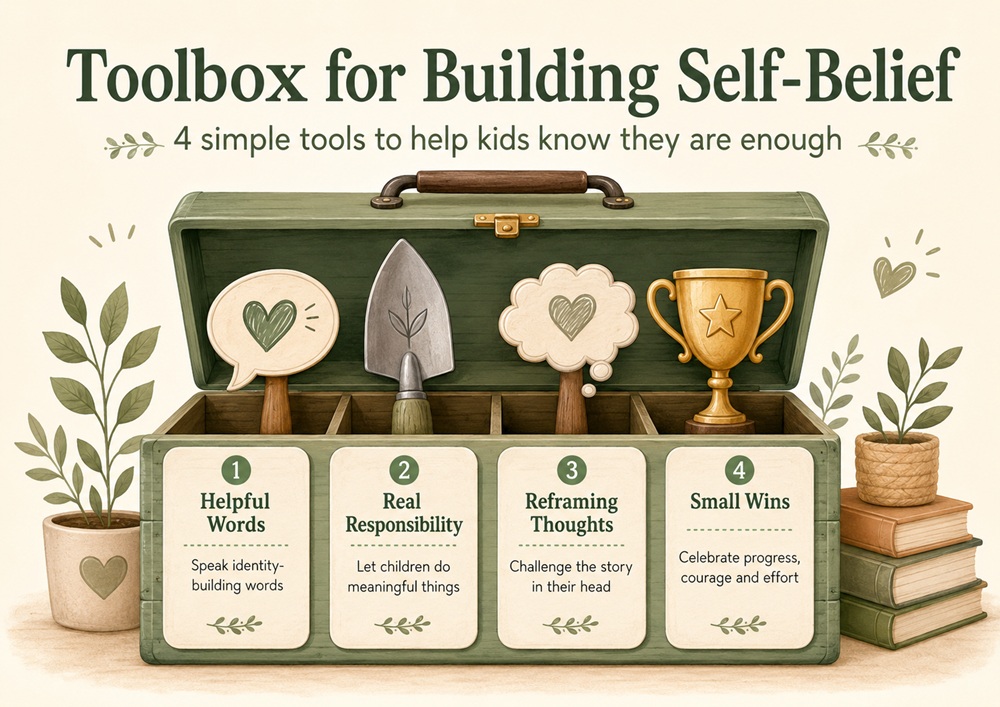
Through conscious thinking, children can begin to challenge self-imposed limits. They can learn to question the stories they tell themselves, such as “I can’t do this,” “I always fail,” or “I’m not good at anything.”

Instead, we can help them practise more useful thoughts:

  • I can learn this.
  • I can try again.
  • I can ask for help.
  • I can improve with practise.
  • I can solve problems.

This kind of thinking supports a positive self image and builds confidence over time.

Habits and Positive Self Image

It is often said that it takes about twenty-one days for something new to become familiar. Whether or not the exact number is always true, the principle is useful: repeated action begins to create comfort, familiarity and habit.

A simple exercise to test changing a habit is brushing your teeth for twenty-one days using your opposite hand. At first it feels awkward, but gradually it becomes more comfortable.

Children can use this same idea by copying the habits of people they admire. If they want better results, they can observe people who are already achieving those results and practise similar habits.

Napoleon Hill also referred to the importance of studying and developing the habits of successful people in Think and Grow Rich. For entrepreneurial kids, this is a practical way to build a stronger self-image: act like someone who learns, contributes, serves and keeps going.

Tips for Parents of Entrepreneurial Children

Cath and Trevor in Surfers Paradise during their entrepreneurial learning journey
Cath and Trev in Surfers Paradise during our entrepreneurial learning journey.

Why not teach your entrepreneurial kids to develop the habits of successful people?

Start by noticing everyday habits of people around them. Discuss how those habits may have contributed to the results they now have. Encourage your children to read or listen to biographies of successful people. Build your children’s self-image. Encourage them to lead, speak publicly, help with enterprise projects and celebrate their successes.

You can also challenge them with simple exercises that change the way they do things. These small changes help children realise that habits are not fixed. They can be changed, strengthened and improved.

A positive self image is not built through empty praise. It is built through repeated experiences of effort, responsibility, encouragement, courage and growth.

Key Takeaway: A Positive Self Image Shapes Success

Key takeaway: A positive self image helps children see themselves as capable, creative and able to grow. When parents model strong habits, encourage effort and help children reframe mistakes, they give entrepreneurial kids a stronger foundation for success.

Where to Next?

How do you help your children build a positive self image? We would love to hear what has helped your family develop confidence, habits and a stronger mindset for success.