Network Marketing Business Model: Lessons from David Wood

Cathy and Trevor at a network marketing event standing under a millionaire sign

Network marketing business model lessons became part of our wider journey into entrepreneurship, wealth creation, leadership and the kinds of business systems we wanted to understand for ourselves and our children.

“`

In our last article, we shared our mind-blowing experience at David Wood’s Break Through Training. This follow-up explores one of the bigger ideas from that training: how a business model, when built on systems, tools, leadership and genuine value, can become a possible wealth creation vehicle.

“`

Cathy and Trevor with David T.S. Wood at a network marketing event learning about the network marketing business model
Cathy and Trevor with David T.S. Wood at a network marketing event, where we explored business systems, leadership and wealth creation ideas.

Network Marketing Business Model: Lessons from David Wood

In our last article, we shared our experience at David Wood’s Break Through Training and reflected on his teaching around attitude, mindset, overcoming fear and becoming tremendously successful and happy.

David also spoke about the importance of having a vehicle, or ideally more than one vehicle, for building wealth. One of the wealth creation vehicles he spoke about was network marketing.

At the time, we were very excited by the possibilities. We were learning about business, personal development, leadership, systems and residual income. More importantly, we were beginning to think about the kinds of ideas and conversations we wanted our children to hear as they grew up.

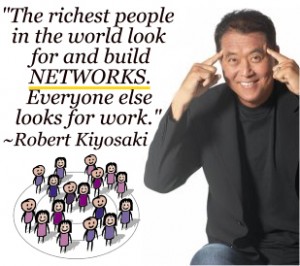
Kiyosaki book connected to the network marketing business model and wealth creation
Network marketing was one of the business models we were exploring as a possible wealth creation vehicle.

What Is the Network Marketing Business Model?

The network marketing business model is based on people sharing products or services they use, believe in and are willing to recommend. In a genuine model, the product or service must have real value, and the business should be based on customers, sales, systems and leadership — not simply on recruiting people.

That distinction matters. The Australian Competition and Consumer Commission explains that multi-level marketing schemes involve making money from selling a genuine product or service, while pyramid schemes rely on recruitment rather than genuine product sales. You can read more through the ACCC’s unfair business practices guidance.

For us, this was an important learning point. Any business model we look at needs to be considered with wisdom, research and a strong ethical filter.

Network marketing business model as a possible wealth creation vehicle
A business model is strongest when it has products, systems, tools and leadership.

Why Systems Matter in a Network Marketing Business Model

One of David Wood’s key messages was that systems matter.

He explained that a business becomes more powerful when it is built on simple, repeatable systems and tools. In his words:

“Don’t be a tool, use the tools.”

“Systems are duplicable, people are not.”

This idea is useful far beyond network marketing. It applies to children’s enterprise projects, family businesses, online businesses and almost any venture where people need to learn a process and repeat it.

For our children, this is a valuable business lesson. A successful enterprise is not only about enthusiasm. It also needs systems, tools, routines, communication and follow-through.

Network Marketing Business Model Lessons About Leadership

David Wood also pointed out that leadership matters. Great leaders inspire people, help people grow and model the energy they want others to follow.

He explained that success comes from finding out what matters to people, understanding their problems, and looking for ways to be genuinely helpful. Connecting with people on a personal level cannot be underestimated.

This is one of the strongest lessons we took from the training. In any business, whether it is network marketing, a family enterprise, a student business or a future company our children may build, the heart of business is still people.

Help people. Solve problems. Build trust.

That is a lesson worth teaching children early.

Residual Income and Wealth Creation Ideas

One of the reasons people become interested in the network marketing business model is the possibility of residual income. Unlike a traditional job, where income is usually tied directly to hours worked, residual income aims to continue after the initial effort has been put in.

Of course, this does not mean easy money. Any real business takes dedication, honesty, perseverance, communication and hard work.

At David Wood’s training, there were everyday people who had built businesses in a relatively short time, but the message was still clear: success requires action, consistency, personal development and leadership.

For us, the bigger lesson was not that every person should join a network marketing company. The bigger lesson was that children and teenagers should grow up knowing there are different ways to create value, earn income and build a future.

Could Network Marketing Be a Business Option for Young People?

In the original excitement of this journey, we wondered whether network marketing could be a wealth creation vehicle for young people leaving school.

Rather than seeing a job as the only option, could a young person learn business, communication, sales, leadership and financial responsibility through a structured business model?

Possibly — but with strong guidance, maturity and careful research.

For teenagers, the real value may not be the specific business model itself. The value may be learning how to ask better questions:

  • Is the product genuine and useful?
  • Would I use and recommend it honestly?
  • How does the business actually make money?
  • Are people rewarded mainly for product sales or recruitment?
  • What are the costs, risks and responsibilities?
  • Does the company have ethical leadership and a good track record?
  • Would this build real skills and character?

Those questions are useful for any young person learning about business.

Choosing a Network Marketing Business Wisely

If someone is considering a network marketing business, there are several things worth checking carefully.

  1. The product must be strong. You need to use it, understand it and genuinely believe it has value.
  2. The company needs to be researched. Look at its history, leadership, annual growth, reputation and long-term vision.
  3. The compensation plan matters. Understand how people are paid and whether rewards are connected to genuine product sales.
  4. The culture matters. A good business should encourage ethical behaviour, not pressure, hype or unrealistic promises.
  5. The products should have long-term relevance. They should be credible, useful and likely to remain valuable in the future.
  6. The bigger vision matters. A company that contributes positively to people and communities is more aligned with the kind of business we want our children to understand.

These points are not only relevant to network marketing. They apply to many business opportunities that children, teenagers and adults may come across in life.

Robert Kiyosaki book about the network marketing business model
Reading widely helped us question different business models and wealth creation pathways.

Network Marketing Business Model and Entrepreneurial Kids

So what does all this have to do with Enterprise for Kids?

For us, the point is not to push a particular business model onto our children. The point is to expose them to different ways of thinking about work, money, value, systems and leadership.

A child who understands business systems will look at the world differently. They may notice how a market stall works, how a franchise works, how an online business works, how a family enterprise works, or how a network marketing business model works.

They begin to understand that income can come from more than a job. They begin to see that leadership, trust, service and systems all matter.

That is a powerful conversation for families who are raising entrepreneurial kids.

Kiyosaki book connected to network marketing business model lessons
Books and mentors helped us explore how different business models work.

David Wood Quotes Worth Remembering

To finish off, here are some of David Wood’s quotes that stayed with us:

“We don’t stop playing because we turn old, but turn old because we stop playing.”

“How I do anything is how I do everything.”

“Take 100% responsibility for everything in my life and for everything not in my life.”

These quotes connect strongly with the lessons we want our children to learn: take responsibility, stay playful, use tools, build systems, serve people and keep growing.

Key Takeaway: Understand the Network Marketing Business Model Before Choosing

Key takeaway: The network marketing business model can teach useful lessons about systems, tools, leadership, residual income and personal responsibility. But like any business opportunity, it needs to be researched carefully and approached ethically.

Where to Next?

What business models do you think young people should learn about before they leave school? We would love to hear your thoughts in the comments.

Mindset Shift: Lessons from David Wood’s Break Through Training

Cathy and Trevor with friends at leadership training challenging comfort zones and mindset

Mindset shift was the biggest lesson we took from David Wood’s Break Through Training. It challenged us to face fear, take responsibility, change our environment and step beyond what felt comfortable.

“`

This article is not just about a training weekend. It is about the kind of thinking we want our children to grow up around: courage, connection, responsibility, positive reference groups and the belief that who you were does not have to be who you become.

“`

David Wood teaching mindset shift lessons through Break Through Training
David Wood’s Break Through Training challenged us to face fear, take responsibility and shift our mindset.

Mindset Shift: Lessons from David Wood’s Break Through Training

We were spellbound by David Wood’s energy, inspiration and mastery when he presented his Break Through Training Program to us. His message was confronting, exciting and deeply practical:

Everything is possible for anyone, despite circumstance.

But possibility is not enough on its own. David challenged us to step out, go after what we want, and stop allowing fear to pull us back. He taught that we must take 100% responsibility for what we have and what we do not have, without blame, justification or excuse.

That is where the real mindset shift begins.

We are the only ones who can make the shift in thinking and create success for ourselves. No one else can do that inner work for us.

Why a Mindset Shift Matters for Adults and Children

During the three-day program, we gained tremendous insights into ourselves, how we connect with people and how we approach life.

David emphasised the importance of connecting with people. His tip was very simple:

Say “hello” — and do it as often as you can, with energy.

This sounds simple, but it is a powerful lesson. Many adults and children hold themselves back because they are afraid of rejection, embarrassment or not knowing what to say. A small act like saying hello can become a starting point for confidence, connection and courage.

This links closely with what many educators now call a growth mindset: the belief that abilities can develop over time through effort, strategies and learning. Stanford’s growth mindset resources explain that this idea comes from Carol Dweck’s child psychology research. You can read more about growth mindset through Stanford here.

For us, David’s training was a very real, physical version of this lesson. We were not just hearing about growth. We were being pushed to practise it.

Break Through Training in Perth helping people create a mindset shift
Break Through Training in Perth challenged us to think differently, connect with people and take action.

A Mindset Shift Around Hearing “No”

One of the things that stood out for us was David’s teaching that “no” does not always mean “no forever”.

David reminded us, in a fun game, how to respond when we hear a “no”. Instead of shrinking, blaming ourselves or deciding we are not good enough, he encouraged us to do the Happy Dance.

And he meant really do it.

Do not let yourself go down the path of:

  • I didn’t present well enough.
  • I didn’t know my stuff well enough.
  • I’m not qualified enough.
  • They rejected me, so I should stop trying.

Instead, whenever you hear a no, see it as one step closer to your next yes.

That is a powerful mindset shift for children too. Whether they are selling lolly bags, speaking in front of a class, trying out for a team, making a new friend or asking for help, they need to learn that a “no” is not the end of the road.

Reference Groups and the Mindset Shift We Want for Our Kids

Many of the distinctions and lessons David taught were strongly aligned with what we had been learning through our Money Mastery course with our mentor Paul Counsel. One of those lessons was the importance of a reference group.

“I become the sum of the five people I spend the most time with.”

If we want amazing results in our lives, we need to associate with people who are moving toward those results. One way to do that is to attend events, join mentor groups and build friendships with energetic, motivated and successful people.

We also recognise that this is just as important for our children. That is why we encourage them to mix with positive peer groups and get involved in sporting teams, enterprise projects and real-world learning experiences.

As David put it:

“Environment is stronger than willpower.”

Rather than relying on willpower alone, we can change the environment and reference group. For children, this might mean being around teammates, creative friends, entrepreneurial families, positive mentors and adults who model courage and responsibility.

Cathy and Trevor with David Wood learning about reference groups and mindset shift
Being around motivated people reminded us how powerful our reference group can be.

Mindset Shift Through Getting Uncomfortable

We also learned that success is not convenient. It requires getting out of routine and comfort.

During the training program, David pushed our boundaries so we could practise being uncomfortable. We talked to strangers on the street, missed coffee breaks, hugged each other, held hands with people we did not know, stayed late past the planned program times, spoke publicly, became vulnerable, and danced and danced and danced.

We loved one of his favourite sayings:

“Get so uncomfortable about being uncomfortable that you get comfortable.”

This is something we definitely need to encourage in schools and families. Children need safe opportunities to stretch. They need to try things that feel a little awkward at first. That might be public speaking, selling a product, meeting someone new, performing, joining a team, making a phone call or trying again after failure.

Confidence grows when children do brave things in small steps.

Cathy and Trevor with David Wood after learning comfort zone and mindset shift lessons
David Wood pushed us to get comfortable being uncomfortable.

Personal Responsibility Creates a Mindset Shift

David shared a simple exercise that he said could completely change your life:

Do not blame, justify or complain for ninety days.

That is a huge challenge. It asks us to stop handing away responsibility and start noticing what we can change.

David truly believes that no dreamer is ever too small and no dream is ever too big. He says that if you do not know where you are going, every road will get you there. So the first step is to begin. Choose a direction and start walking.

He also reminded us:

“We will miss 100% of the shots we never take.”

So just believe in yourself and have a go.

This is another important lesson for entrepreneurial kids. They do not need to wait until they are perfect. They need to begin, learn, adjust and keep going.

Who You Were Can Completely Change

David pointed out that everyone was once a disaster, including him.

His life certainly did not start out on the right track. His dad left the family when he was seven, and he grew up angry with his mother. He dropped out of school and was in all kinds of trouble as a teenager living on the streets. He spent years travelling around the world, broke and living day to day. He worked as a chimney sweeper, window cleaner and barman.

But David discovered for himself that who you were can completely change. This realisation led to different thinking, which brought him wealth, success and happiness beyond what he had once expected.

His success was a direct result of a change in thinking and attitude.

Paul Counsel also supports the view that we are a product of our thinking. What we think and believe can shape our reality, choices and results.

David points out that our results tell us what is going on in our lives. If we are unhappy, stuck or struggling, then we may need to consider whether what we have been doing up until now is working. If we do not find a new way and make changes, our results may continue to look the same.

His advice was to stop taking advice from broke, unhappy people and seek out successful mentors and friends who can move us in the right direction.

Mindset Shift Lessons from Friends at the Training

Friends who attended the Break Through Training with us shared how deeply the weekend affected them.

“An amazing weekend with David in Perth along with an awesome group of people… all willing to feel the fear and do it anyway! Life is not a dress rehearsal… just do it! Stop justifying, blaming and complaining… Grab happiness with both hands… Thank you so much! If you ever have the opportunity to spend time with David — take it!” — Tracey

“Thanks David for an awesome weekend! If someone had told me I could sit through three massive days of training and never once feel like I was falling asleep, I would have said impossible. The way you share the information and teach is inspirational. So many laughs and take-away lessons — none more so than how to connect and change the warmth in a room. Inspired to say hello more often.” — Melissa

“David, this weekend in Perth has left a permanent imprint in my heart and mind. I will take 100% responsibility for what I have and what I do not have! Your seminar was so well presented and motivational that I have already started applying the strategies to every aspect of my life and have been dancing my no boogie quite regularly!” — Denise

David Wood, The Kickass Life and Managing Your Thoughts

One of our favourite podcast episodes from David Wood’s The Kickass Life series was his interview with Andrea Owen. She talked about becoming your own biggest fan and becoming a legend in your own mind.

We loved that idea. Get rid of disempowering thoughts. And if the thoughts will not go away, learn to manage them. Take the power away from the gremlins inside your head.

Jack Canfield interview with David Wood about mindset shift and personal responsibility
David Wood’s ideas also connected with wider personal development lessons about responsibility, courage and taking action.

Why This Mindset Shift Matters for Entrepreneurial Kids

David Wood gave excellent teachings about daily life, relationships and business, especially around referral businesses and the power of connecting with people.

In this day and age, referrals are still a powerful way that businesses keep loyal customers. Young people are growing up in a world where networking, connection and communication are part of everyday life through sport, school, community and multimedia.

But the bigger lesson is not only about business. It is about helping children become brave enough to take responsibility, connect with people, try new things, dream big and recover from rejection.

That is the mindset shift we want for our children.

Key Takeaway: A Mindset Shift Begins With Responsibility

Key takeaway: A real mindset shift begins when we stop blaming, step outside our comfort zone, choose positive reference groups and take responsibility for our results. These are powerful lessons for adults, children and entrepreneurial families.

Where to Next?

Have you ever experienced a mindset shift that changed the way you handled fear, responsibility or discomfort? We would love to hear your story in the comments.

Entrepreneurship for Students: How Do Entrepreneurs Think?

Jai Howitt discussing his entrepreneurial journey on The Pocket with Chris Griffen

Entrepreneurship for students is not just about starting a business. It is about learning how to think differently, spot opportunities, solve problems, take action and build confidence in the real world.

When children learn how entrepreneurs think, they begin to see that their ideas matter. They also begin to understand that money, work, creativity and contribution can be approached in a very different way.

Entrepreneurship for students shown through Jai Howitt coaching Chayse on business strategy
Jai coaching Chayse through business strategy and entrepreneurial thinking. Watch Jai coach Chayse.

Entrepreneurship for Students: How Do Entrepreneurs Think?

In an earlier article, we spoke of charitable entrepreneurs and successful business thinkers such as Richard Branson, Warren Buffett and John Templeton.

They, together with many other successful people, have extraordinary stories to tell about their entrepreneurial journeys. Some will tell you they struggled at school, dropped out, were dyslexic, or found reading and writing difficult. Others came from homes of poverty, while some were born into families where business and enterprise were already part of everyday life.

Although their backgrounds and circumstances differed, one thing often remained the same: they thought in a similar way.

It is not circumstance alone that creates an entrepreneur. It is mindset.

That is why entrepreneurship for students matters. Young people need more than information. They need the chance to develop the kind of thinking that helps them create opportunities, make decisions, solve problems and take responsibility for their future.

Why Entrepreneurial Thinking Matters for Families

What we have come to understand is that for our family to become economically and personally free, we need to question our conditioning around money and then reprogram our subconscious minds with a new success money mindset.

Many wealthy and successful people either developed this mindset from their upbringing, or they discovered it for themselves. Sometimes this happened consciously, through study and self-development. At other times, it happened unconsciously through experience, environment and action.

It is often said that only a small percentage of people live with real economic and personal freedom. The bigger question is this: what do they do differently?

More to the point: how do entrepreneurs think?

Before we look deeper into that, consider this.

Entrepreneurship for Students Starts with Money Mindset

Wealth creation and poverty mindset lesson for students
The way children think about money can shape the opportunities they see.

Whether we like it or not, we are being conditioned constantly to think a certain way about money. We are conditioned by our family, schools, advertising, politicians, television, social media and friends.

Many people become tied to jobs and debt because the conditioning they have received favours a money mindset of lack, rather than abundance.

Do any of the following sound familiar?

  • “Money doesn’t grow on trees.”
  • “Money is the root of all evil.”
  • “You’ve got to work hard for your money.”
  • “Get a good, well-paying job and you’ll be set for life.”
  • “Buy a home, it will be your best investment ever.”
  • “We can’t afford it.”
  • “What job do you want to do when you grow up?”
  • “Go for the cheaper ones.”

Only this morning, I was listening to a friend talking with his teenage sons. He told them they needed to get jobs. He explained that he had a job pushing shopping trolleys at their age. He even went down to the local IGA supermarket and picked up applications for them to apply for jobs.

When I was fifteen, I started out with a casual job working at a Target store. My hourly rate was $2.90 an hour.

All of the above are examples of conditioning. Much of our thinking about money, work and possibility is formed very early in life.

What Schools Often Teach About Work and Money

Our schools are largely designed to prepare workers for the workforce. Banks make money by selling debt. Governments collect taxes and often depend on people staying within predictable systems. Retail businesses make money by encouraging us to spend. Big businesses need workers to build their businesses.

There is definitely a design to much of this madness.

That does not mean jobs are bad. It also does not mean every child needs to become a business owner. However, it does mean young people should know there are other pathways.

They should understand that work, money, creativity and contribution can be approached in different ways.

This is why financial education for kids is so important. Children need to learn about money, value, assets, liabilities, work, enterprise and choice before they enter adulthood.

Entrepreneurial Mindset for Young People

What our family has discovered is that our money mindsets are changing. We are learning that it is okay to accept money and to have money. In fact, it is okay to offer something of value to others and receive payment in return.

Working hard in a job is not the only pathway for young people entering our big world.

There are other ways. These pathways can allow young people to follow their passions and dreams while making a meaningful contribution to whatever they consider important.

Wouldn’t it be fantastic if all our kids could achieve economic and personal freedom?

People who have achieved financial freedom through being entrepreneurial tend to have a mindset of abundance. Their habits differ. Their thinking differs. Their actions differ.

This is why we keep coming back to the bigger idea of raising entrepreneurial kids. It is not just about business. It is about helping children become confident, capable, creative and resourceful.

How Entrepreneurs Think: Lessons from Napoleon Hill

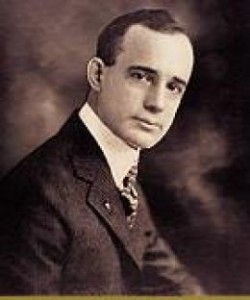
Napoleon Hill Think and Grow Rich entrepreneurial mindset lesson
Napoleon Hill studied how successful people think and act.

Rather than attempting to explain every detail of how entrepreneurs think, I will refer to one of the most influential books ever written on personal and financial achievement.

Think and Grow Rich by Napoleon Hill was originally published in 1937. Hill spent his life studying successful people and recording how they think and act. He became successful himself by following the distinctions in his own book and by modelling himself on his mentors.

Think and Grow Rich is essentially a book about what to do and how to do it. It explores ideas such as self-direction, organised planning, autosuggestion, mastermind association, self-analysis and the selling of personal services.

The thirteen steps to riches described in the book offer a philosophy of individual achievement that has influenced thousands of people’s lives.

This book could be worth a great deal to you and your kids, not simply because of the money ideas, but because of the thinking behind them.

At the time of this original article, Cathy was rewriting Napoleon Hill’s book in a way that would be suitable for kids to read, with simple explanations and modern examples they could better relate to. It was a work in progress, built around the idea that children should be able to understand powerful success principles in language that makes sense to them.

You can also learn more about Napoleon Hill’s work through the Napoleon Hill Foundation.

Entrepreneurship for Students in Real Life

For our family, entrepreneurship for students has never been just a theory. It has been something we have tried to encourage through conversations, real-life projects, mentoring and practical action.

Looking back now, we can see how these early conversations about entrepreneurial thinking have carried through into real life. The goal was never just to teach our children about business. It was to help them become confident, resourceful young people who could spot opportunities, solve problems and take action.

Today, we see that continuing as Jai shares business ideas and strategy with his younger brother Chayse, passing on what he has learnt through his own entrepreneurial journey.

Jai has gone on to build his own entrepreneurial path through creative work, content and business. You can see part of that journey through Art of Mondays.

Key Takeaway: Teach Students to Think Like Entrepreneurs

Key takeaway: Entrepreneurship for students is about far more than making money. It is about helping young people think differently, understand value, recognise opportunity, solve problems and take action in the real world.

Where to Next?

If you enjoyed this article about entrepreneurship for students and entrepreneurial thinking, you may also like:

We would love to hear your thoughts. How do you think entrepreneurs think differently, and how can we help children develop that mindset while they are still young?

How Bad Do You Want It?

Kids jumping off a sand dune on a USA family trip with the words How Bad Do You Want It

How bad do you want it? That question became a powerful student motivation lesson in our family after Kaitlin shared a short video about success, focus and wanting something badly enough to keep going.

“`

We were originally going to write about Kit and Chayse’s enterprise goals, but this video made us pause. It challenged us to think about what real commitment looks like — not just for business, but for study, sport, family, financial freedom and life.

“`

How Bad Do You Want It video clip used as a student motivation lesson about focus and goals
How Bad Do You Want It? Click the image to watch the video that sparked this lesson on focus, goals and success.

How Bad Do You Want It? A Student Motivation Lesson

Our daughter Kaitlin saw the How Bad Do You Want It? video on YouTube and sent us the link. We thought it was awesome. It does not go for very long, but the message is strong enough to stay with you.

The video tells the story of a young man who wanted to be successful. He went to a guru and said he wanted to be on the same level. The guru took him into the water and eventually held his head under until the young man desperately wanted air.

“When you want to succeed as bad as you want to breathe, then you’ll be successful.”

That is a confronting image, but it makes the point. Many of us say we want success, but we also want comfort, convenience, distraction and easy results at the same time.

After watching the video, it made us ask ourselves honestly: do we really want it, or do we only kind of want it?

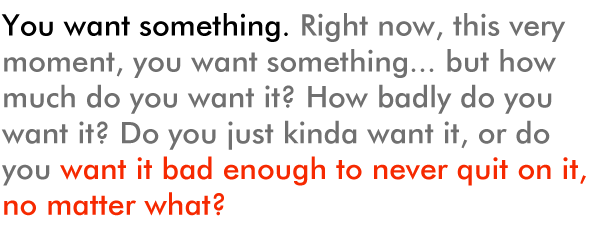
Intense desire quote from How Bad Do You Want It student motivation lesson

How Bad Do You Want It When Life Gets Busy?

Want what, you may ask?

Well, anything really.

How much do we want our fitness levels to be at their best? How much do we want to be financially free? How much do we want a happy and loving family life? How much do we want time with friends, unique experiences and a life that feels meaningful?

For us, it is a little bit of everything.

But one of the things we realised while completing Paul Counsel’s Money Mastery course was this: when we split our attention between everything, we often get a medium result from everything.

There is nothing wrong with that. It can make life comfortable, and that is fine for many people.

But for us, we were ready to challenge ourselves. We were ready to step up and make a difference in those areas in a big way, not an average way.

How Bad Do You Want It quote about wanting success and staying committed
Wanting success is easy. Staying focused long enough to earn it is the challenge.

Student Motivation Starts With Focus

This is where the video becomes such a useful student motivation lesson.

Students often say they want strong results. They want good marks, sporting success, creative achievement, friendships, confidence or future opportunities. But the real question is whether their daily actions match what they say they want.

That is not a criticism. It is a life lesson.

Focus is difficult. Life is noisy. Friends, phones, family, sport, school, work, hobbies and distractions all pull at our attention. Even adults struggle with this.

But if a teenager wants a result badly enough, they need to learn how to protect their focus. That might mean:

  • doing the study before the distraction,
  • finishing the task before moving on,
  • training when they do not feel like training,
  • asking for help instead of giving up,
  • and remembering why the goal matters.

This is not only about school. The same lesson applies to young entrepreneurs, young athletes, musicians, writers and children with business ideas.

How Bad Do You Want It as a Family?

As parents, we also had to ask ourselves the same question.

So, while we may not exist on three hours of sleep a night — although that has been debatable at times with an eighteen-month-old in the house — we do put in long hours.

We stay up late, long after the kids have gone to bed, working on our internet business, studies, trading and health and wellbeing business. We are not doing this because we want to be busy for the sake of being busy. We are doing it because we are trying to build a future with more freedom, more choice and more meaningful experiences for our family.

Focus your mind and energy on what you want as a student motivation lesson
Where your attention goes, your results often follow.

We know we are already successful in some parts of our lives. We have a wonderful family and supportive friends, and we know that came through dedication and focus.

Now we are working to transfer that same focus into other areas of life.

Financial Freedom and Determined Focus

Financial freedom has always been one of the bigger goals behind Enterprise for Kids. Not because money is the only measure of success, but because freedom gives families options.

When we are financially free, we can create more time with our kids. We can hire help for some of the mundane things in life. We can create awesome experiences beyond what we have already had. We can take time to enrich our relationships without constantly worrying about the next bill.

That takes determined focus.

It may take us longer to achieve our goals than it will for Giavanni Ruffin, the athlete in the video. He has major, unstoppable focus and he will achieve. It is not a matter of if. It is a matter of when.

But even if we used just a tenth of that energy and commitment, it would still be better than having no focus at all.

Commitment quote about focus and how bad do you want it
Clear intention and determined focus help turn goals into action.

How to Stay Focused on Your Goals

One of the strongest lessons from this video is that attention matters.

Where your attention is held is what tends to show up in your life. You need to attend to your intention. A clear intention, backed by determined focus, can set you on the right path to success.

For children and teenagers, this can be made very practical.

1. Name the goal clearly

A vague goal is easy to ignore. A clear goal gives the mind something to aim at.

2. Ask why it matters

Children need to know why the goal matters to them, not just why it matters to the adults around them.

3. Remove one distraction

Focus does not always require a complete life overhaul. Sometimes it starts by removing one distraction for one hour.

4. Take one action today

The best motivation for students often comes after action, not before it. Start small, then build momentum.

5. Review the result

After the action, ask: what worked, what did not work, and what is the next step?

Goal Setting for Teenagers and Enterprising Kids

This lesson on focus can be applied by anyone. It applies to teenagers studying at high school, kids with big sporting ambitions, parents developing a business, and young people building an enterprise.

Kaitlin was challenged with maintaining focus in her studies. We were glad she discovered this video, thought about its excellent message, and decided to share it with us.

That is exactly what we want for our children. We want them to notice ideas that challenge them. We want them to question themselves. We want them to think about what they want and whether their habits are helping them get there.

For enterprising kids, this is especially important. Business ideas are exciting at the start, but results usually come after the boring, repetitive, uncomfortable parts: following up, finishing the job, practising the skill, serving the customer, improving the offer and trying again after disappointment.

How Bad Do You Want It? Part 2

If you enjoyed the first video clip and thought that was all there was, you may also like the second part.

How Bad Do You Want It Part 2 video for student motivation and focus
How Bad Do You Want It? Part 2 — click the image to view.

Key Takeaway: How Bad Do You Want It?

Key takeaway: How bad do you want it? Success is not only about wanting a result. It is about focus, commitment and taking repeated action when the goal matters enough.

Where to Next?

How badly do you want the goal you say matters to you? And what is one action you can take today to move closer to it?

An Entrepreneur’s Conscience!

Toddler dressed like a businessman representing Kidpreneurs learning enterprise and generosity

Kidpreneurs can learn far more than how to make money. When children start small enterprises, they can also learn generosity, responsibility, confidence, persistence and the importance of using money wisely.

“`

This article began with a conversation I had with a dear friend. Her children were inspired by our Enterprise for Kids stories, but she raised a thoughtful question: should children be encouraged to make money for themselves, or should enterprise always be connected to giving?

“`

Child celebrating a Kidpreneurs enterprise lesson about making money and giving generously
Enterprise for Kids was created to inspire children to think bigger, take action and learn real-world money lessons.

Kidpreneurs: Can Kids Make Money and Still Be Charitable?

I was talking with a dear friend and asked what she thought of our Enterprise for Kids blog. She said it was very well done and that her kids were inspired by our children’s enterprise experiences.

Her children had read every blog post and watched every video. Then her nine-year-old daughter sat down and planned an enterprise of her own, following many of the lessons we had shared on the blog.

Wow!

That is exactly the kind of inspiration we hoped to encourage, especially with kids. We wanted children to see other children having ideas, taking action, learning from real experiences and discovering that they could create something of their own.

What Happened Next Surprised Me

Child frustrated while learning a Kidpreneurs money lesson about enterprise and generosity
Children can feel confused when adults send mixed messages about money, enterprise and giving.

My friend explained that she liked the idea of enterprise, but she was not comfortable with children having an enterprise where they make money for themselves.

I was a little taken aback when she said this. I had never really thought that some people might believe children should not make money from their own efforts unless it was all being given away.

I was also grateful that my friend was honest enough to share her belief. It helped me better understand her thinking, but it also helped me clarify my own.

Firstly, there is no right or wrong in what people believe or do. Everyone is entitled to their views, and I respect my friend’s view.

After this enlightening conversation, I came to realise how far our own mindset around money had changed since we started searching for economic and personal freedom. It also made me think deeply about something I now call the entrepreneur’s conscience.

Kidpreneurs Need a Healthy Money Mindset

If children are going to become confident, capable and generous, they need a healthy money mindset. That means they need to learn that money is not bad, enterprise is not selfish, and making money does not automatically make someone greedy.

Money is a tool. Like any tool, it can be used well or poorly.

A child who learns to earn money can also learn to save, give, invest, spend wisely and support causes they care about. In fact, earning their own money may give children a stronger understanding of generosity because they know the effort that went into creating it.

That is an important lesson for Kidpreneurs.

Money mindset quote for Kidpreneurs learning about enterprise and generosity

Wealthy entrepreneurs often think differently about money. Generally, I would also say that many are not selfish. Of course, some wealthy people are selfish, just as some people without wealth are selfish too.

But many successful entrepreneurial people have persisted with their goals, taken risks, created value, employed people and then used their wealth to support causes they believe in.

It is much easier to be charitable when you have resources. Many people who are struggling to make ends meet simply do not have the time, energy or money to make larger contributions to the world, even if they have a generous heart.

Entrepreneurs and Charitable Giving

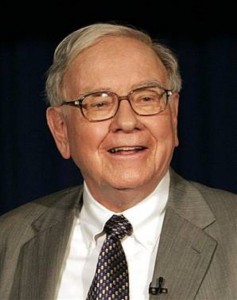
Warren Buffett is one example of an entrepreneur and investor who has made philanthropy a major part of his life. On his Giving Pledge page, he states that more than 99% of his wealth will go to philanthropy during his lifetime or at death.

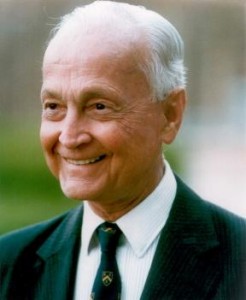
Sir John Templeton is another example. He created the John Templeton Foundation, which supports research and conversations around big questions connected to science, philosophy, theology, character, freedom and human purpose.

Warren Buffett as an example of charitable giving and entrepreneur conscience
Warren Buffett.
John Templeton as an example of philanthropy and values-based entrepreneurship
John Templeton.

These examples matter because they challenge the idea that enterprise and generosity are opposites.

In many cases, enterprise can actually make generosity possible on a much larger scale.

Can Making Money Help Children Become More Generous?

Only last week I was speaking with a new entrepreneur friend who lives in Perth. He had created tremendous wealth developing property, mostly in the Western Australian mining town of Port Hedland.

He explained that he no longer needed to work in the same way and could now channel his energy into his passion. He was planning to take his young family to America, where he had enrolled in a Theology university course. From there, he hoped to do mission work in Africa.

Being a successful entrepreneur was allowing him to follow his charitable dream.

That really stayed with me.

If we teach children that making money is selfish, we may unintentionally close their minds to the possibility that wealth can be used to serve, support, create and give.

However, if we teach Kidpreneurs that enterprise comes with responsibility, we can help them develop both capability and conscience.

The Entrepreneur’s Conscience

Entrepreneur conscience quote for Kidpreneurs learning about money and giving

It could be argued that entrepreneurs may have more freedom, more time, less stress, better health, more travel and more opportunities for their families than those of us tied tightly to a job and debt.

That is not always true, of course. Many entrepreneurs work extremely hard, especially in the early stages.

But successful enterprise can create options. It can create space. It can create time. It can create resources. And when people have more options, they are often in a better position to make a difference.

So, do successful entrepreneurs have an entrepreneur’s conscience?

Some do, and some do not. But the point for children is this: conscience can be taught alongside enterprise.

We can teach kids how to make money and how to think about others. Those two lessons belong together.

Teaching Kidpreneurs to Give

I would like to thank my friend for helping me consider my views on the entrepreneur’s conscience. I certainly value the importance of teaching kids enterprise, and I also strongly support the idea that enterprising kids should be taught to be charitable.

Our view is that children need to walk before they can run.

For us, it is okay for our kids to begin with a “selfish” goal, because that is often what motivates them at the time to take action and learn the entrepreneurial skills necessary to succeed.

A young child may first want to make money for a toy, a game, a bike, a computer or something else that excites them. That motivation gets them moving.

Then, once they begin learning the skill of earning money, we can help them think about where some of that money could go.

That is exactly the process we taught Chayse, who was four, and Kit, who was seven, when they reset their goals. Their enterprise journey became not only about making money, but also about learning to give.

A Simple Giving Plan for Kidpreneurs

One practical way to teach kids generosity is to create a simple money plan. This does not need to be complicated.

Children can divide their money into a few clear purposes:

  • Spend: money for something they want now.
  • Save: money for a bigger goal.
  • Grow: money for an asset, tool or future enterprise idea.
  • Give: money for charity, tithing, community support or someone in need.

This kind of plan teaches children that money has purpose. It is not just something to grab, spend or hoard.

It can be used to enjoy life, build future options and help others.

For Australian families, it can also be useful to talk to children about choosing causes carefully. The Australian Charities and Not-for-profits Commission provides a public charity register families can use when checking registered charities.

The More Values-Based Kidpreneurs We Create, the Better

The more values-based Kidpreneurs we create, the better our world can become.

As we revisit our own children’s entrepreneurial journeys on this blog, we will continue to share the lessons around their entrepreneur’s consciences and how we are teaching them to be charitable.

We do not want children to grow up thinking money is bad. We also do not want them to grow up thinking money is everything.

We want them to understand that enterprise can build confidence, creativity, responsibility and choice. We also want them to understand that with those opportunities comes the chance to contribute.

Key Takeaway: Kidpreneurs Can Earn and Give

Key takeaway: Kidpreneurs can learn to make money and still develop generosity. Enterprise does not have to replace charity. When taught well, it can help children become more capable, responsible and giving.

Where to Next?

What do you think? Should children be encouraged to make money for themselves, give some away, or both? We would love to hear your thoughts in the comments.

Teenage Entrepreneur Ideas from Cameron Herold

Child using a laptop with entrepreneur ideas on the wall for raising enterprising kids

Teenage entrepreneur ideas can come from the most unexpected places. Sometimes the very children who do not fit neatly into the traditional school mould are the ones with the energy, creativity and problem-solving ability to become enterprising adults.

“`

That is the powerful message I took from Cameron Herold, a successful entrepreneur and speaker who challenges parents and teachers to recognise entrepreneurial strengths in children.

“`

Cameron Herold sharing teenage entrepreneur ideas and advice for raising enterprising kids
Cameron Herold’s message challenges parents and teachers to recognise entrepreneurial strengths in children.

Teenage Entrepreneur Ideas from Cameron Herold

I was looking for conversations about raising enterprising kids when I came across a very inspirational entrepreneur called Cameron Herold.

Cameron Herold is a successful entrepreneur with an excellent message for parents who want to raise children with entrepreneurial skills. He shares his own life story and also refers to the book Young Bucks: How to Raise a Future Millionaire by Troy Dunn.

What really caught my attention was Cameron’s view that many children with entrepreneurial potential are sitting in classrooms right now, but their strengths are not always being recognised.

Some children do not naturally fit into the regular schooling mould. They may be energetic, intense, talkative, distracted, creative, restless, curious or constantly looking for a different way to do things.

In a traditional classroom, those traits can sometimes be seen only as problems. Cameron’s message is that some of those same traits may also be signs of entrepreneurial thinking.

This does not mean genuine learning, behavioural or health needs should ever be ignored. Parents, teachers and health professionals all have important roles to play. But it does mean we should be careful not to miss the strengths that can sit beside those challenges.

Are Some School Challenges Entrepreneurial Strengths?

Steve Jobs as an example of creative entrepreneurial thinking and innovation
Creative thinkers do not always follow the expected path.

In his talk, Cameron Herold speaks openly and provocatively about children who are labelled as difficult, distracted or different. He argues that some of these children may have the raw traits of future entrepreneurs.

He even uses the line, “Bipolar is the CEO disease,” to make his point that intensity, drive and unusual thinking can sometimes show up in successful entrepreneurs and leaders.

That statement is deliberately provocative, and it should not be taken as medical advice. But the deeper message is worth considering.

What if some children who struggle with the school system are not simply “naughty” or “lazy”?

What if some of them are actually wired to create, sell, lead, negotiate, build, question and solve problems?

As a teacher and parent, this made me think deeply. There are certainly children who love the school system, enjoy academic pathways and are happy to work towards a traditional career. That is wonderful.

But there are also children who do not fit so neatly. For those children, entrepreneurship may offer another pathway to confidence, purpose and success.

Schools Often Prepare Children for Jobs, Not Enterprise

Cameron Herold makes the point that schools rarely teach children how to think like entrepreneurs.

Schools often condition children to fit into jobs, follow instructions, complete tasks, wait for permission and work towards a salary. Those are useful skills in many parts of life, but they are not the only skills children need.

Enterprising kids also need to learn how to:

  • spot opportunities,
  • solve problems,
  • negotiate,
  • sell an idea,
  • communicate clearly,
  • take initiative,
  • manage money,
  • learn from failure,
  • and keep going when things become difficult.

Cameron’s view is that entrepreneurship is not simply an inherited trait. It can be taught, modelled, practised and encouraged.

That is very encouraging for parents. It means we do not need to wait and see whether our children are “born entrepreneurs.” We can help them develop the skills of enterprise through real-world learning.

Robert Kiyosaki quote about entrepreneurship and learning outside the traditional school system

Teenage Entrepreneur Ideas Need Mentors

Entrepreneurs often learn through necessity, observation, family example or mentorship. Some children grow up around business owners and naturally absorb the language of enterprise. Others need someone outside the family to spark that thinking.

That is why mentors, books, videos, real-life stories and practical experiences matter so much.

If we want our children to learn about entrepreneurship, someone needs to teach it. That someone might be a parent, grandparent, teacher, coach, family friend, local business owner or online mentor.

This is one of the reasons we created Enterprise for Kids. We wanted our children to see that business, money, creativity and problem-solving were not only adult topics. They were life skills children could begin learning early.

Cameron Herold’s TED Talk on Raising Enterprising Kids

Cameron Herold TED talk about raising kids to be entrepreneurs
Cameron Herold’s TED talk is well worth watching if you are interested in raising enterprising kids.

Cameron Herold offers many excellent suggestions in his talk, “Let’s raise kids to be entrepreneurs”.

If you are following our blog, you are probably a parent who wants to give your children more opportunities and choices in life. That includes helping them develop enterprise skills, money skills and the confidence to think differently.

Cameron’s talk is a must-see. It goes for about 15 minutes, but it contains many ideas that can change the way you see children, schooling and entrepreneurship.

The “Gift of Want”

Young Bucks How to Raise a Future Millionaire book for parents raising entrepreneurial kids
Young Bucks: How to Raise a Future Millionaire.

In his talk, Cameron refers to the book Young Bucks: How to Raise a Future Millionaire by Troy Dunn.

Troy Dunn is also a self-made millionaire and successful entrepreneur. He also happens to be a father of seven children, just like us, so I found his perspective especially interesting.

In the book, Dunn explains that the first prerequisite for a young entrepreneur is the “Gift of Want.”

In other words, children need a real reason to pursue an enterprise idea. They need to want something badly enough to get started and to keep going when things become difficult.

This is such a practical insight for parents.

Many adults want children to be motivated by responsibility, discipline or long-term success. But children are often first motivated by something much more immediate: a toy, a bike, a game, a trip, a pet, an experience, a gift or a personal goal.

That desire can become the starting point for real learning.

From there, parents can guide children into lessons about planning, researching, marketing, pricing, negotiating, saving, giving and following through.

Practical Teenage Entrepreneur Ideas from Cameron Herold

Cameron Herold’s message is not only philosophical. It is also practical. He gives parents ideas for helping children develop entrepreneurial habits at home.

One of his strongest suggestions is to rethink pocket money.

Instead of simply giving children a regular allowance, he suggests teaching them to look for jobs that need doing around the house and then negotiate a fee for completing them.

That small shift teaches children several important enterprise skills:

  • looking for opportunities,
  • noticing problems that need solving,
  • putting forward an offer,
  • negotiating value,
  • completing work properly,
  • and understanding that money is connected to value creation.

That is a far more enterprising lesson than simply receiving a regular payment without needing to think, negotiate or act.

Teach Children to Save, Give and Buy Assets

Cameron also talks about teaching children strong money habits.

One simple idea is to use money boxes or jars with different purposes. For example, children can divide their money into:

  • Giving: money for charity, tithing, community support or helping others.
  • Spending: money for toys, treats or things they want now.
  • Assets: money for savings, investments, tools, equipment or future enterprise ideas.

This teaches children that money has choices attached to it. It is not only for spending. It can also be used to give, grow and create more opportunities.

This connects closely with our own family lessons around teaching children the difference between assets and liabilities.

Use Real Life as the Classroom

One of the most powerful ways to raise enterprising kids is to use real life as the classroom.

When you are in a restaurant, point out good customer service. When you see a strong salesperson, discuss what made them effective. When a business solves a problem well, talk about it. When a product is poorly designed, ask your children how they would improve it.

Encourage your children to:

  • sell unwanted toys,
  • make and sell something small,
  • build inventions,
  • tell stories,
  • practise speaking to people,
  • notice problems around them,
  • and think of ways to create value.

These activities may seem simple, but they build confidence. They help children see themselves as people who can create, solve, serve and earn.

Raising Enterprising Kids Means Seeing Children Differently

Cameron Herold has allowed me, as a school teacher, to see some children in schools differently.

I can see that there are children who love the system and are more than happy to work towards a traditional career. That pathway suits many children well.

But I can also see that there are other children who do not fit so easily into the system. Some of those children may be budding entrepreneurs without knowing it yet.

They need someone to recognise the entrepreneur within them and provide opportunities for those strengths to develop.

This does not mean every child needs to become a business owner. It simply means children deserve the chance to develop enterprise skills: initiative, communication, creativity, leadership, resilience, sales, money management and problem-solving.

Those skills will help them whether they become entrepreneurs, employees, artists, tradespeople, professionals, community leaders or something else entirely.

Key Takeaway: Teenage Entrepreneur Ideas Start With Strengths

Key takeaway: teenage entrepreneur ideas do not always start with a business plan. They often start with noticing a child’s strengths, interests, frustrations and natural ways of thinking. Cameron Herold’s message reminds us to look for the entrepreneur within the child and give that child real opportunities to practise enterprise.

Where to Next?

What entrepreneurial strengths do you see in your child, and how could you give them a real-world opportunity to practise those strengths?