Kidpreneurs can learn far more than how to make money. When children start small enterprises, they can also learn generosity, responsibility, confidence, persistence and the importance of using money wisely.
“`
This article began with a conversation I had with a dear friend. Her children were inspired by our Enterprise for Kids stories, but she raised a thoughtful question: should children be encouraged to make money for themselves, or should enterprise always be connected to giving?
“`

Kidpreneurs: Can Kids Make Money and Still Be Charitable?
I was talking with a dear friend and asked what she thought of our Enterprise for Kids blog. She said it was very well done and that her kids were inspired by our children’s enterprise experiences.
Her children had read every blog post and watched every video. Then her nine-year-old daughter sat down and planned an enterprise of her own, following many of the lessons we had shared on the blog.
Wow!
That is exactly the kind of inspiration we hoped to encourage, especially with kids. We wanted children to see other children having ideas, taking action, learning from real experiences and discovering that they could create something of their own.
What Happened Next Surprised Me

My friend explained that she liked the idea of enterprise, but she was not comfortable with children having an enterprise where they make money for themselves.
I was a little taken aback when she said this. I had never really thought that some people might believe children should not make money from their own efforts unless it was all being given away.
I was also grateful that my friend was honest enough to share her belief. It helped me better understand her thinking, but it also helped me clarify my own.
Firstly, there is no right or wrong in what people believe or do. Everyone is entitled to their views, and I respect my friend’s view.
After this enlightening conversation, I came to realise how far our own mindset around money had changed since we started searching for economic and personal freedom. It also made me think deeply about something I now call the entrepreneur’s conscience.
Kidpreneurs Need a Healthy Money Mindset
If children are going to become confident, capable and generous, they need a healthy money mindset. That means they need to learn that money is not bad, enterprise is not selfish, and making money does not automatically make someone greedy.
Money is a tool. Like any tool, it can be used well or poorly.
A child who learns to earn money can also learn to save, give, invest, spend wisely and support causes they care about. In fact, earning their own money may give children a stronger understanding of generosity because they know the effort that went into creating it.
That is an important lesson for Kidpreneurs.

Wealthy entrepreneurs often think differently about money. Generally, I would also say that many are not selfish. Of course, some wealthy people are selfish, just as some people without wealth are selfish too.
But many successful entrepreneurial people have persisted with their goals, taken risks, created value, employed people and then used their wealth to support causes they believe in.
It is much easier to be charitable when you have resources. Many people who are struggling to make ends meet simply do not have the time, energy or money to make larger contributions to the world, even if they have a generous heart.
Entrepreneurs and Charitable Giving
Warren Buffett is one example of an entrepreneur and investor who has made philanthropy a major part of his life. On his Giving Pledge page, he states that more than 99% of his wealth will go to philanthropy during his lifetime or at death.
Sir John Templeton is another example. He created the John Templeton Foundation, which supports research and conversations around big questions connected to science, philosophy, theology, character, freedom and human purpose.
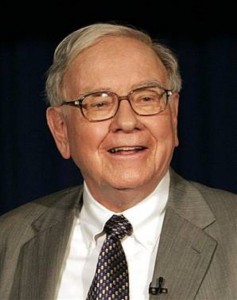

These examples matter because they challenge the idea that enterprise and generosity are opposites.
In many cases, enterprise can actually make generosity possible on a much larger scale.
Can Making Money Help Children Become More Generous?
Only last week I was speaking with a new entrepreneur friend who lives in Perth. He had created tremendous wealth developing property, mostly in the Western Australian mining town of Port Hedland.
He explained that he no longer needed to work in the same way and could now channel his energy into his passion. He was planning to take his young family to America, where he had enrolled in a Theology university course. From there, he hoped to do mission work in Africa.
Being a successful entrepreneur was allowing him to follow his charitable dream.
That really stayed with me.
If we teach children that making money is selfish, we may unintentionally close their minds to the possibility that wealth can be used to serve, support, create and give.
However, if we teach Kidpreneurs that enterprise comes with responsibility, we can help them develop both capability and conscience.
The Entrepreneur’s Conscience

It could be argued that entrepreneurs may have more freedom, more time, less stress, better health, more travel and more opportunities for their families than those of us tied tightly to a job and debt.
That is not always true, of course. Many entrepreneurs work extremely hard, especially in the early stages.
But successful enterprise can create options. It can create space. It can create time. It can create resources. And when people have more options, they are often in a better position to make a difference.
So, do successful entrepreneurs have an entrepreneur’s conscience?
Some do, and some do not. But the point for children is this: conscience can be taught alongside enterprise.
We can teach kids how to make money and how to think about others. Those two lessons belong together.
Teaching Kidpreneurs to Give
I would like to thank my friend for helping me consider my views on the entrepreneur’s conscience. I certainly value the importance of teaching kids enterprise, and I also strongly support the idea that enterprising kids should be taught to be charitable.
Our view is that children need to walk before they can run.
For us, it is okay for our kids to begin with a “selfish” goal, because that is often what motivates them at the time to take action and learn the entrepreneurial skills necessary to succeed.
A young child may first want to make money for a toy, a game, a bike, a computer or something else that excites them. That motivation gets them moving.
Then, once they begin learning the skill of earning money, we can help them think about where some of that money could go.
That is exactly the process we taught Chayse, who was four, and Kit, who was seven, when they reset their goals. Their enterprise journey became not only about making money, but also about learning to give.
A Simple Giving Plan for Kidpreneurs
One practical way to teach kids generosity is to create a simple money plan. This does not need to be complicated.
Children can divide their money into a few clear purposes:
- Spend: money for something they want now.
- Save: money for a bigger goal.
- Grow: money for an asset, tool or future enterprise idea.
- Give: money for charity, tithing, community support or someone in need.
This kind of plan teaches children that money has purpose. It is not just something to grab, spend or hoard.
It can be used to enjoy life, build future options and help others.
For Australian families, it can also be useful to talk to children about choosing causes carefully. The Australian Charities and Not-for-profits Commission provides a public charity register families can use when checking registered charities.
The More Values-Based Kidpreneurs We Create, the Better
The more values-based Kidpreneurs we create, the better our world can become.
As we revisit our own children’s entrepreneurial journeys on this blog, we will continue to share the lessons around their entrepreneur’s consciences and how we are teaching them to be charitable.
We do not want children to grow up thinking money is bad. We also do not want them to grow up thinking money is everything.
We want them to understand that enterprise can build confidence, creativity, responsibility and choice. We also want them to understand that with those opportunities comes the chance to contribute.
Key Takeaway: Kidpreneurs Can Earn and Give
Key takeaway: Kidpreneurs can learn to make money and still develop generosity. Enterprise does not have to replace charity. When taught well, it can help children become more capable, responsible and giving.
What do you think? Should children be encouraged to make money for themselves, give some away, or both? We would love to hear your thoughts in the comments.
Enjoyed this article?
Join the Enterprise for Kids community for practical family activities, money lessons, inspiring stories and new resources to help raise confident, capable and entrepreneurial young people.
We respect your privacy. No spam. Unsubscribe at any time.


Hi Guys
great blog. Yep, I too have to constantly remind myself that there is no “right/wrong/good /bad”. Teaching children to be self sufficient AND to be charitable seems like a good idea. If self sufficiency means being enterprising even better, because I believe the skills of enterprise spill over into many areas of our lives, especially when problems need to be addressed. Forge ahead Howitts!
Thank you Linda for your thoughts on this topic. Totally agree. If the kids are entrepreneurial in one area, this will indeed spill into other areas of their lives. Its also great to hear the views of others and then use this to reflect on your own.
That’s what this blog is all about – food for thought 🙂
Cath and Trev
Hmmm…kinda makes you think doesn’t it. For me, charity goes far beyond money. If you teach your children empathy and expose them to the multiple dimensions of our world…perhaps charity will naturally follow? Whether it is sharing your lunch with someone at school or donating dollars to a good cause…it is so much about intent. Do you donate to charity to look good or is it driven by an intrinsic motivation to support a cause you are passionate about? It is easy to give away things you don’t want, but how many of us truly go without something we may not need, but want, in order to help someone else out?
Life is a moral minefield, and I love the stories about those who have worked hard in order to obtain their own financial freedom, which has in turn given them the opportunity to give back.
Keep up the great work!… such questions deserve to be debated!
Love your comments Tracey,
We most certainly are a multidimensional world and children learn naturally throught the actions of their parents and other role models around them.
Absolutely agree about “charity” being in the “intent”. Luckily our children have grown up with the idea of sharing, caring and being passionate about something. I also believe that giving something to someone simply to “look good” or be seen to be doing the “right” thing is in actual fact, not very charitable………….giving from the heart is what counts.
Our kids do that in so many ways, and for me as a mother, I initially struggled with them making money for their own purposes. But I realised that was my social conditioning and if having a “goal” that was a bit selfish was what was needed for them to take action, then so be it. But that would feel very “hollow” after a while, so it was very exciting for the kids to come up with charities that they truly wanted to give to (like the RFDS as we have had direct experiences with them when Kaitlin was born). The Make A Wish Foundation also rated highly with our kids because they could relate to other kids having a life far less fortunate than their own. Sponsoring a child in Africa (where Trev was born) and seeing first hand what our money does for her and her community is truly inspiring. We are so glad we are teaching our children a way to make money and continue to help like that in the future. Thank you so much for your thought provoking ideas. Cathy and Trev
HI Guys,
A good read and thought provoking as always. Good to see you have touched on the fact that a focus on earning money is not the be all and end all. While there is nothing wrong with earning money and it gives one great power to do good things, it’s good to keep in mind the pursuit of the money is not a value to build your life around. A value system is made up of beliefs in how we would like the world to be, and we should never lose sight of what our value system is.
Then go out and make your values come alive, and you will feel fulfilled.
Hi Christian,
Thank you so much for your thought provoking response. I think you said it all so succinctly. Money is simply a tool that we in society use to exchange for goods and services and experiences. Teaching our children how to use that tool is what is a valuable lesson. In actual fact, the pursuit of money is very rarely what people are going for. Most have a vision, a goal, something they would like to do with that money. Some will choose to spend it on material things, and feel the need for more, and never quite be satisfied. Others may choose to buy things to make life comfortable, but may also choose to use this tool in a way that can make a difference to not only their own lives, but those of others. That is how we hope we are raising our children. The values children hold around money, will in the end, probably mimic those of their parents (or come about as a direct experience from their own childhood).
I absolutely love the last sentence you have written – “go out and make your values come alive, and you will be fulfilled.” Spoken like a true entrepreneur…………..and one I am going to write out and pin on the wall for the kids to read.
By the way Christian, you are a real inspiration and you are definitely living a life that fulfills you and exemplifies the values you hold dear to your heart. I hope all people get that opportunity to do just that. (including our kids).
I have included your blog link here because I love your work and know others will too.
christianmushenko.wordpress.com
Cheers Cathy and Trev
Loved reading this blog. As a kid, the only way we could buy anything extra was to work on tasks outside the normal jobs of responsibility set by Mum and Dad. Can remember selling newspapers on the corner of Burt St to miners on their way home from work. Great believer in the more affluent and Governments assisting those in genuine need, however I also believe able people should not be eligible for the Dole unless they have made some contribution to the community.
I realise that this is a little off track, but thanks for the opportunity of saying something I feel strongly about.
Thankyou so much for sharing. I don’t think you went off track. The idea of this blog is to think about why we do what we do, think about our own values system and look at what works for us. We all have varying opinions depending on our belief systems and our social conditioning.
I think it is important for memebers of society to contribute in a valuable and positive way. Selling newspapers on the corner of the street teaches you many very valuable lessons in life and has given you the work ethos you have today…..one you’ve passed onto your chidren 🙂 We have been passing this on to our own children, and now it’s time for them to take that work ethos and apply it to their entrepreneurial pursuits……so far, so good 🙂
…and this just popped into my email today. How relevant! To save the world we must first be “selfish”…..
http://geniusawakening.com/blog/saving-the-world/
Hi Linda,
Isn’t it funny how the universe has a way of delivering what you need at the right time! I loved the blog link you sent. If anyone wants a good read, just click on the link in Linda’s comments.
Clarifies so many things and puts it in a way that we can relate to. Thank you for sending this through. More “food for thought!”
Cathy and Trevor
For entrepreneurs there is a natural progression. First is the “get phase”. This is where the person works hard to create wealth, security and financial freedom for his/her family/self. This phase could be seen as “selfish”, as the goals are centered, for the most part, around the entrepreneur’s personal goals.
The second phase is the “give back” phase. The entrepreneur has achieved or surpassed their personal goals and is now ready to positively influence their community or the world.
I honestly don’t think that “the get” phase is really selfish, and without it people would be less likely to contribute anything of consequence to improve society.
Cindy,
You have put the “natural progression” of an entrepreneur in such a succinct and easy way to understand. Where were you when we were writing the blog post? 🙂 Thankyou for sharing that with us…………it’s exactly the process we are going through with our own kids, and I guess in the end, it is all based on our own beliefs and values systems and our social conditioning. Sometimes that works, sometimes, it’s time to re-evaluate what makes us tick, why we think the way we do and sometimes it’s time to open up to new ways of thinking. The worse that can happen is we can have a different way of looking at the world and appreciate the differences in others as well. The journey of life……………….