Kids Biz Program- (by Amber)

Kids business ideas through a kerb painting program for children

Kids business ideas become much more powerful when children are given the chance to take action in the real world. This Kids Biz Program challenge gave our family a practical way to learn about entrepreneurship, confidence, problem-solving and making money through effort and initiative.

What started as a simple $20 challenge turned into a kerb painting business, more than 60 presold jobs, and a real-life lesson in enterprise.

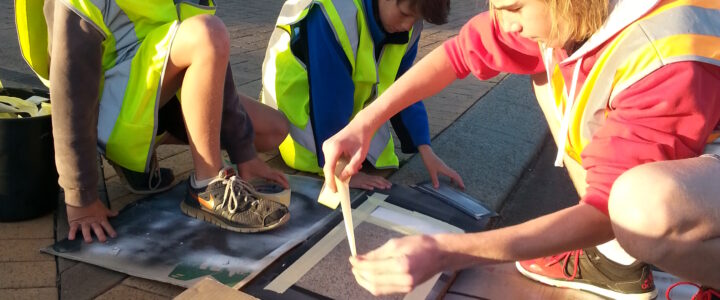
Kids business ideas in action with Flynn and Amber kerb painting
Flynn and Amber kerb painting as part of the Kids Biz Program.

Kids Business Ideas in Action

We are currently involved in a Kids Biz Program. The program teaches young people, and their parents, about the traits of successful entrepreneurs. It also helps children understand the practical methods and the mindset needed to become more successful, more confident and more open to new ideas.

This is exactly the kind of real-world learning we love at Enterprise for Kids. Children learn so much when they are given the chance to test ideas, solve problems, speak to people, handle money and take responsibility for a project.

A wise man once said:

“The most successful people in life are the ones who ask questions. They’re always learning. They are always growing. They are always pushing.”

This quote from Robert Kiyosaki, author of Rich Dad Poor Dad, best sums up what my family and I have been doing through the Kids Biz Program. You can learn more about his work through Rich Dad.

Kids Business Ideas Monthly Challenge

Every month, the program sets a challenge that encourages us to take the skills we have learnt and apply them to real-life situations.

In August, our challenge was to take $20 and create a business that would earn a profit. To win the challenge, we had to make the most money from our $20.

This made the challenge much more than a classroom activity. It became a real test of creativity, planning, teamwork and courage.

Our Kerb Painting Kids Business Idea

Kit painting a kerb number as part of a kids business idea
Kit putting the final touches on a kerb number.

Naturally, my family was slow to get started. We kept circulating ideas but not actually taking action. Eventually, we came up with one idea that stuck — and from there, it exploded.

Our idea was to paint house numbers on kerbs. This would help visitors, family members and even emergency services find homes more easily.

It was a simple idea, but that is often what makes the best kids business ideas work. The business solved a real problem, was affordable to start, and could be explained clearly to customers.

From a $20 Challenge to Real Profit

We did our fair share of research and planning, and then we took action.

In just five days, we presold over 60 kerb paintings, giving us a profit of about $1000.

Amazingly, we won the challenge for the month. We then spent September painting kerbs and completing the jobs we had sold.

It has been an awesome experience so far, and I swear my artistic ability has improved!

What Kids Can Learn from Business Ideas Like This

This kerb painting challenge taught us much more than how to make money. It helped us learn real enterprise skills, including:

  • coming up with a practical business idea
  • starting with a small amount of money
  • researching and planning before taking action
  • talking to customers
  • preselling a service
  • working as a team
  • following through and completing the job
  • building confidence through real experience

These are the kinds of lessons that help children grow into capable, resourceful and confident young people.

Why Real Kids Business Ideas Matter

When children are given the chance to run small businesses, they learn in a way that feels exciting and meaningful. They are not just reading about entrepreneurship — they are experiencing it.

Also, they learn that ideas need action. They learn that money is connected to service, value and effort. They learn that confidence grows when they step outside their comfort zone and try something real.

This is why family enterprise stories are such an important part of our website. They show how ordinary moments can become powerful lessons in initiative, responsibility and resilience.

You may also enjoy reading Honey Pot of Gold, another real family enterprise story about Flynn’s honey business, or Financial Education for Kids: Teaching Assets and Liabilities, which explores how children can learn about money through real-life experience.

More Kids Biz Program Adventures Coming Soon

I’m really excited to share our Kids Biz Program September challenge with you. I’ll tell you all about that in my next post.

We also invite you to like our Enterprise for Kids Facebook page.

Key takeaway: Kids business ideas do not need to be complicated. With a small amount of money, a practical idea and the courage to take action, children can learn powerful lessons about entrepreneurship, confidence and real-world responsibility.

Where to Next?

If you enjoyed this family enterprise story, you may also like:

What Can I Sell to Make Money as a Student? Amber’s Resale Enterprise

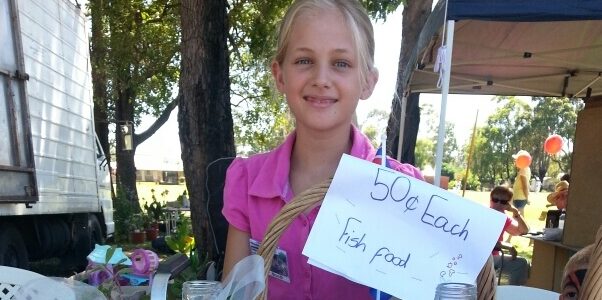
what can i sell to make money as a student Amber holding price sign

What can I sell to make money as a student? Amber’s “New From Old” enterprise is a real family example of how a young person can buy, clean, advertise and resell second-hand items for profit.

Instead of waiting for the perfect idea, Amber looked for useful items, solved simple problems for buyers and learned valuable business skills along the way.

what can i sell to make money as a student brainstorming resale ideas
Brainstorming ideas for a kids resale enterprise.

What Can I Sell to Make Money as a Student?

What can I sell to make money as a student? That is a question many kids and parents ask when they want a simple, practical business idea.

There are hundreds of possibilities. Yet when chatting to parents, they often tell me they would really like their kids to have a little business enterprise of their own, but they just can’t think of a good idea.

Here’s the tip: think about the problems or needs your local community has. Then ask whether a kids’ enterprise could be built around solving one of those problems.

Another angle is to consider what skill your child already has and how they could put that skill to good use.

Brainstorming What Students Can Sell

If your child is wondering, what can I sell to make money as a student?, start by brainstorming ideas on paper. Keep going until you have exhausted all possible ideas, whether or not you intend to use them.

Try asking neighbours what issues or problems they have and add these to your list.

Generally, people have time issues. That is where a business idea can begin. Not enough time to mow the lawn, clean large rubbish bins, chop wood, tend to the kids’ homework, clean windows, rake leaves, tutor younger children, pull weeds or clean the car — you get the picture.

If you are still stumped, this blog is full of real family enterprise stories and practical kids business ideas.

Amber’s “New From Old” Resale Enterprise

Amber’s “New From Old” enterprise has been going great guns right from the beginning. Her money jars are filling up, and really she hasn’t had to do much work at all.

She reached the goal she set a while back and is now preparing to take her business to another level. We’ll talk more about that in a later blog.

If you are new to our blog and haven’t yet followed Amber’s enterprise journey, you may like to start with Kids Business Ideas: Amber’s Kids Biz Program.

Amber’s resale enterprise in action:

what can i sell to make money as a student Amber resale enterprise sign
Recycling for profit
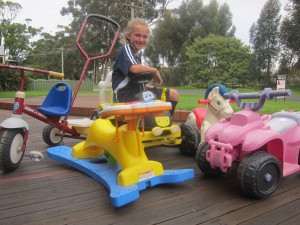
student resale business idea selling toddler ride-on toys
Toddler ride-on toys

Finding Things to Sell for Profit

Amber makes the fortnightly trip to the local Recycling and Waste Recovery Centre. It sells anything salvageable.

The guy who runs the place now knows Amber and understands that she is running her own business. Through this process, Amber has developed important skills in negotiating and connecting with a network.

When she identifies an opportunity, she confidently strikes up a deal with the Recycle Man.

Much of the stuff for sale is really not worth the effort to resell. It is a bit like looking for a gold nugget among the boulders. Over the months, Amber’s ability to pick profitable items has improved and she now has an eye for a bargain.

This is one reason the question, what can I sell to make money as a student?, is so useful. It teaches children to think carefully about value, demand and effort before spending their money.

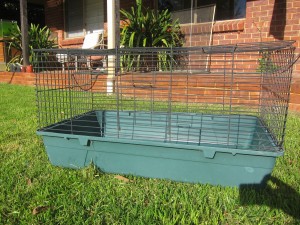
student resale idea pet cage cleaned and sold for profit
Pet cage

Learning What Is Worth Buying

The items that can be resold are generally the ones that solve people’s problems. Pet cages, baby toys, storage items and exercise equipment are good examples.

These items need to be well presented and in good condition. Amber looks for opportunities that don’t require spending lots of time and money fixing them up.

Ideally, she buys things that just need a good clean, a lick of paint or a new set of batteries.

Amber has also learnt from her mistakes. She once bought a perfect condition four-man tent still in its new box for $10, only to discover later that it had no pegs or poles. Buying pegs and poles new would blow her costs out and leave her running at a loss.

That one was put down to experience. Does anyone have free pegs and poles?

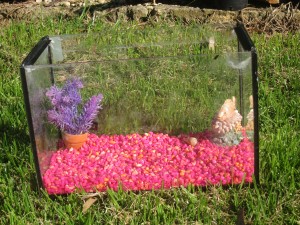
what can i sell to make money as a student aquarium resale idea
Fish aquarium

What Can I Sell to Make Money as a Student? Research First

Sometimes Amber sees a possible opportunity but holds off buying it until she has done her research.

She works out what it will cost to repair or tidy up the item. Paint brushes, varnish, batteries, sandpaper and labour all need to be considered.

Then she looks at what others are selling similar items for online. By doing her research, Amber has a better idea of how much she can pay in order to make a reasonable profit.

For older students ready to take a business idea further, Business.gov.au has helpful information on starting a business when you’re under 18.

Writing Ads and Making Sales

Amber sells almost all her items on Buy and Sell Bunbury Facebook. She set up her own Facebook page for the sole purpose of participating in the buy-and-sell market.

She writes her own ads, uploads her own pictures and converses with customers online and on the telephone.

When a buyer arrives, Amber presents her goods and collects payment.

student selling online writing ads for resale items
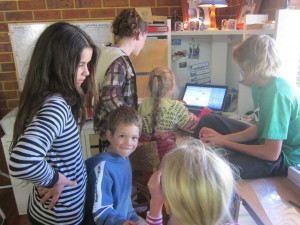
Amber placing her adverts onto Buy & Sell Facebook with the gang watching on!

Real Examples of What Amber Sold

We’ve watched Amber continuously grow in confidence with her enterprise. She has found and built her own business around solving problems, using creativity and communicating with people.

Some of the items Amber acquired and on-sold for profit can be seen in the pictures on this blog.

The five outdoor toddler toys were bought for a good price. She scrubbed them, put new batteries in one, charged the battery in another and sold them all for $60.

The aquarium and pet cages just needed a clean, and she made a profit of $25.

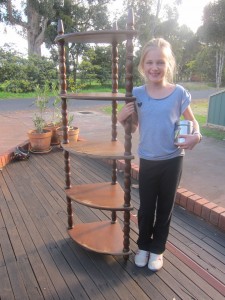
student resale enterprise display shelves sold for profit
Display shelves

Her corner display required screwing together, and she made a profit of $20.

Her current project is a very large timber outdoor table. She paid $10 and hopes to sell it for a profit after sanding it back and varnishing it.

Amber has also been collecting succulent plants from friends. Her plan is to paint decorative ceramic pots and plant hardy succulents in them, then sell them at a market day.

What Students Can Learn from Amber’s Enterprise

This story is a practical answer to the question, what can I sell to make money as a student?

Amber’s answer was simple: find items people need, buy carefully, improve presentation, advertise clearly and communicate well with buyers.

She also talks about her goals, buying assets and gifting money in the original video clip. You can view it here: Amber reflecting on her business and goals.

Amber making a sale in her student resale enterprise
Amber making a sale!

It will be very interesting to see where her entrepreneurial journey takes her as she grows older. She loves writing, so maybe she will write a book about her journey one day.

Key takeaway: If your child is asking, “what can I sell to make money as a student?”, start with simple resale opportunities. Look for useful items, check the costs, solve a buyer’s problem and learn from each sale.

Where to Next?

If you enjoyed this family enterprise story, you may also like:

We would love to hear from you, so please leave a comment.

An Entrepreneur’s Conscience!

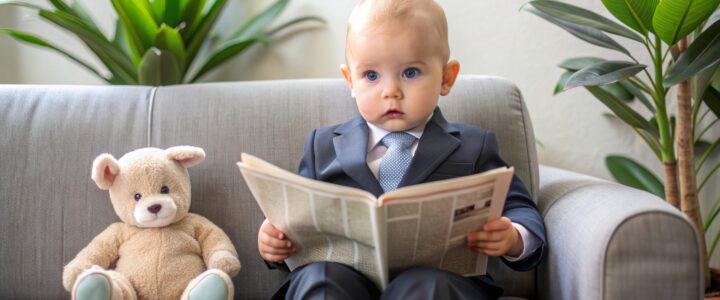
Toddler dressed like a businessman representing Kidpreneurs learning enterprise and generosity

Kidpreneurs can learn far more than how to make money. When children start small enterprises, they can also learn generosity, responsibility, confidence, persistence and the importance of using money wisely.

“`

This article began with a conversation I had with a dear friend. Her children were inspired by our Enterprise for Kids stories, but she raised a thoughtful question: should children be encouraged to make money for themselves, or should enterprise always be connected to giving?

“`

Child celebrating a Kidpreneurs enterprise lesson about making money and giving generously
Enterprise for Kids was created to inspire children to think bigger, take action and learn real-world money lessons.

Kidpreneurs: Can Kids Make Money and Still Be Charitable?

I was talking with a dear friend and asked what she thought of our Enterprise for Kids blog. She said it was very well done and that her kids were inspired by our children’s enterprise experiences.

Her children had read every blog post and watched every video. Then her nine-year-old daughter sat down and planned an enterprise of her own, following many of the lessons we had shared on the blog.

Wow!

That is exactly the kind of inspiration we hoped to encourage, especially with kids. We wanted children to see other children having ideas, taking action, learning from real experiences and discovering that they could create something of their own.

What Happened Next Surprised Me

Child frustrated while learning a Kidpreneurs money lesson about enterprise and generosity
Children can feel confused when adults send mixed messages about money, enterprise and giving.

My friend explained that she liked the idea of enterprise, but she was not comfortable with children having an enterprise where they make money for themselves.

I was a little taken aback when she said this. I had never really thought that some people might believe children should not make money from their own efforts unless it was all being given away.

I was also grateful that my friend was honest enough to share her belief. It helped me better understand her thinking, but it also helped me clarify my own.

Firstly, there is no right or wrong in what people believe or do. Everyone is entitled to their views, and I respect my friend’s view.

After this enlightening conversation, I came to realise how far our own mindset around money had changed since we started searching for economic and personal freedom. It also made me think deeply about something I now call the entrepreneur’s conscience.

Kidpreneurs Need a Healthy Money Mindset

If children are going to become confident, capable and generous, they need a healthy money mindset. That means they need to learn that money is not bad, enterprise is not selfish, and making money does not automatically make someone greedy.

Money is a tool. Like any tool, it can be used well or poorly.

A child who learns to earn money can also learn to save, give, invest, spend wisely and support causes they care about. In fact, earning their own money may give children a stronger understanding of generosity because they know the effort that went into creating it.

That is an important lesson for Kidpreneurs.

Money mindset quote for Kidpreneurs learning about enterprise and generosity

Wealthy entrepreneurs often think differently about money. Generally, I would also say that many are not selfish. Of course, some wealthy people are selfish, just as some people without wealth are selfish too.

But many successful entrepreneurial people have persisted with their goals, taken risks, created value, employed people and then used their wealth to support causes they believe in.

It is much easier to be charitable when you have resources. Many people who are struggling to make ends meet simply do not have the time, energy or money to make larger contributions to the world, even if they have a generous heart.

Entrepreneurs and Charitable Giving

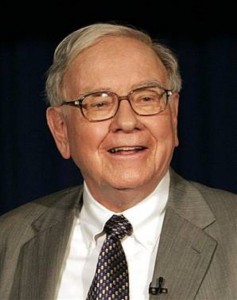
Warren Buffett is one example of an entrepreneur and investor who has made philanthropy a major part of his life. On his Giving Pledge page, he states that more than 99% of his wealth will go to philanthropy during his lifetime or at death.

Sir John Templeton is another example. He created the John Templeton Foundation, which supports research and conversations around big questions connected to science, philosophy, theology, character, freedom and human purpose.

Warren Buffett as an example of charitable giving and entrepreneur conscience
Warren Buffett.
John Templeton as an example of philanthropy and values-based entrepreneurship
John Templeton.

These examples matter because they challenge the idea that enterprise and generosity are opposites.

In many cases, enterprise can actually make generosity possible on a much larger scale.

Can Making Money Help Children Become More Generous?

Only last week I was speaking with a new entrepreneur friend who lives in Perth. He had created tremendous wealth developing property, mostly in the Western Australian mining town of Port Hedland.

He explained that he no longer needed to work in the same way and could now channel his energy into his passion. He was planning to take his young family to America, where he had enrolled in a Theology university course. From there, he hoped to do mission work in Africa.

Being a successful entrepreneur was allowing him to follow his charitable dream.

That really stayed with me.

If we teach children that making money is selfish, we may unintentionally close their minds to the possibility that wealth can be used to serve, support, create and give.

However, if we teach Kidpreneurs that enterprise comes with responsibility, we can help them develop both capability and conscience.

The Entrepreneur’s Conscience

Entrepreneur conscience quote for Kidpreneurs learning about money and giving

It could be argued that entrepreneurs may have more freedom, more time, less stress, better health, more travel and more opportunities for their families than those of us tied tightly to a job and debt.

That is not always true, of course. Many entrepreneurs work extremely hard, especially in the early stages.

But successful enterprise can create options. It can create space. It can create time. It can create resources. And when people have more options, they are often in a better position to make a difference.

So, do successful entrepreneurs have an entrepreneur’s conscience?

Some do, and some do not. But the point for children is this: conscience can be taught alongside enterprise.

We can teach kids how to make money and how to think about others. Those two lessons belong together.

Teaching Kidpreneurs to Give

I would like to thank my friend for helping me consider my views on the entrepreneur’s conscience. I certainly value the importance of teaching kids enterprise, and I also strongly support the idea that enterprising kids should be taught to be charitable.

Our view is that children need to walk before they can run.

For us, it is okay for our kids to begin with a “selfish” goal, because that is often what motivates them at the time to take action and learn the entrepreneurial skills necessary to succeed.

A young child may first want to make money for a toy, a game, a bike, a computer or something else that excites them. That motivation gets them moving.

Then, once they begin learning the skill of earning money, we can help them think about where some of that money could go.

That is exactly the process we taught Chayse, who was four, and Kit, who was seven, when they reset their goals. Their enterprise journey became not only about making money, but also about learning to give.

A Simple Giving Plan for Kidpreneurs

One practical way to teach kids generosity is to create a simple money plan. This does not need to be complicated.

Children can divide their money into a few clear purposes:

  • Spend: money for something they want now.
  • Save: money for a bigger goal.
  • Grow: money for an asset, tool or future enterprise idea.
  • Give: money for charity, tithing, community support or someone in need.

This kind of plan teaches children that money has purpose. It is not just something to grab, spend or hoard.

It can be used to enjoy life, build future options and help others.

For Australian families, it can also be useful to talk to children about choosing causes carefully. The Australian Charities and Not-for-profits Commission provides a public charity register families can use when checking registered charities.

The More Values-Based Kidpreneurs We Create, the Better

The more values-based Kidpreneurs we create, the better our world can become.

As we revisit our own children’s entrepreneurial journeys on this blog, we will continue to share the lessons around their entrepreneur’s consciences and how we are teaching them to be charitable.

We do not want children to grow up thinking money is bad. We also do not want them to grow up thinking money is everything.

We want them to understand that enterprise can build confidence, creativity, responsibility and choice. We also want them to understand that with those opportunities comes the chance to contribute.

Key Takeaway: Kidpreneurs Can Earn and Give

Key takeaway: Kidpreneurs can learn to make money and still develop generosity. Enterprise does not have to replace charity. When taught well, it can help children become more capable, responsible and giving.

Where to Next?

What do you think? Should children be encouraged to make money for themselves, give some away, or both? We would love to hear your thoughts in the comments.

Flynn’s Honey Investment Continued……

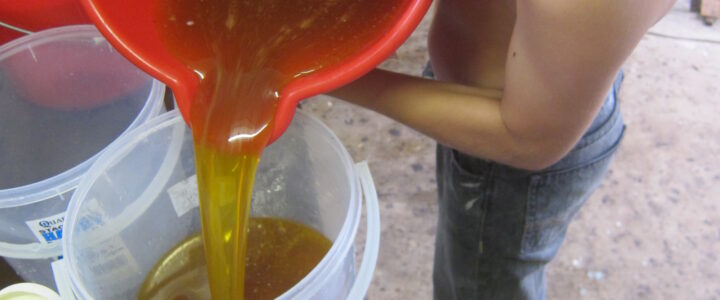
Money lessons for kids shown through Flynn pouring honey for his business

Money lessons for kids become much more powerful when children experience them in real life. For Flynn, that meant negotiating with his Grandad, harvesting raw honey, making an investment and learning what it really takes to grow a small business.

This is Part 2 of Flynn’s honey business story, where his idea moved from plan to action — complete with bee suits, honey frames, sticky hands and a very serious investment for a twelve-year-old.

Money lessons for kids with Flynn and Grandad collecting honey frames for a business project
Flynn with Grandad collecting honey frames for his honey business.

Money Lessons for Kids: Flynn’s Honey Investment Continued

You may remember from a previous blog that Flynn’s Enterprise for Kids plan was to buy honey at wholesale and sell it at retail. All he needed was a good source of cheap, quality honey that he could buy in bulk.

If you missed the beginning of the story, you can read Part 1: Honey Pot of Gold, where Flynn first explained his honey business idea.

Finding a Product for Flynn’s Honey Business

Flynn’s Grandad has kept bees for over twenty years and had a number of hives which he regularly harvested honey from. The honey produced from his bees is very light in colour and tasty, as the bees forage over the Mid West fields of Paterson’s Curse and coastal gums.

Flynn knew that he had a good quality product.

His plan was to pay a visit and strike up a deal with his Grandad.

Flynn’s Grandad saw that Flynn had thought through his plan. He was more than willing to support Flynn with his new honey enterprise. Flynn negotiated a good price per kilogram, however, the deal included Flynn having to help his Grandad rob the honey from the hives.

You can listen to Flynn explaining the deal he made with his Grandad in his own words.

Money Lessons for Kids Through Real Work

Flynn putting on bee protective gear for money lessons for kids through real work
Flynn donning his gear.

Flynn was up for the challenge. He donned a pair of overalls, gloves, boots and bee veil. Then he and his Grandad disappeared for the morning, returning later in the day with a heavy load of honey supers in the back of the ute.

They were carted around to the rear of the house and quickly stacked in the garage. Already the local bees were honing in on the honey, hoping to pinch it for their own hives. The garage door was closed to keep the bees out.

This is where money lessons for kids become very real. Flynn was not just talking about business. He was helping collect the product, understanding the effort behind it and learning that profit starts long before anything is sold.

For families in Western Australia interested in bees and beekeeping, the Department of Primary Industries and Regional Development has useful information about beekeeping in Western Australia.

Extracting the Raw Honey

Flynn slotting honey combs into the extractor for his honey business
Flynn slotting the honey combs into the honey extractor.
Extracting honey from the honey combs for Flynn's honey business
Extracting the honey from the honey combs.

Grandad sliced the caps off the honey combs with a hot, special-purpose electric knife and Flynn slotted them into a honey extractor.

The extractor uses centrifugal force to extract the honey from the combs. It was Flynn’s job to spin the extractor, which proved to be a lot of fun. Although everything nearby became sticky with escaping honey, including Flynn!

Preparing the Honey for Sale

Checking the temperature of raw honey for Flynn's business project
Checking the temperature of the honey.
Raw honey prepared for Flynn's honey enterprise and money lessons for kids
Yummy raw honey — a great enterprise venture.

Flynn’s brother Jai, and a family friend Jack, stopped by to lend a hand. Many hands made light work and before long, after warming and sieving the honey, it was sealed into 10kg buckets.

Angry bees do not take too kindly to people robbing their hives. It was pretty amazing that Flynn managed to do all this work without getting stung. His Grandad and Dad were not so fortunate though!

A Big Investment and Money Lessons for Kids

Enterprising Flynn paid cash for 80kg of honey from his Grandad. He loaded it all up in our car to take it back to his home.

It was a large investment for a twelve-year-old and Flynn, knowing its value, took great care to ensure that the honey was well sealed and cushioned for the long trip home. He did not want it spilling, nor did he want any ants finding their way into his containers.

This was one of the most important money lessons for kids in the whole project. Flynn had to understand cost, risk, value and responsibility before he even made his first sale.

Flynn filling honey tubs with Grandad as part of money lessons for kids
Filling tubs with Grandad.

Flynn wanted to sell his honey at retail. He had done his research and found that honey generally sold in shops for around $12 or $13 a kilogram.

He had a unique product. It was tasty, raw and full of enzymes, which are generally destroyed during commercial pasteurisation processes.

Learning About Presentation and Retail Value

Flynn had also searched online for plastic honey pots. We discussed with him that people would pay a premium for his product if it looked professionally bottled and was not sold in recycled jam jars.

New plastic honey pots were not cheap. The larger the order, the better the price.

Flynn made his order over the phone and bought five hundred 500ml pots. These were delivered by mail within a few days, arriving in a massive cardboard box.

Flynn ordered honey jars and lids for his honey business
Flynn ordered honey jars and lids.
Honey jars ready to be filled for Flynn's honey enterprise
…ready to be filled.

So now he was all set to go with his Enterprise for Kids project. He had his honey and honey pots and had spent every cent that he had.

It was a huge investment and Flynn had no choice but to make it work. He had overcome fear and had taken a calculated risk with his business. All he had to do now was bottle, market and sell his honey.

And this will all be revealed in a later blog!

Flynn’s Honey Business Series

This article is Part 2 in Flynn’s honey business series, a family enterprise story about money lessons for kids, family business ideas, product value and learning by doing.

These posts show how family enterprise stories can teach children lessons that are hard to learn from theory alone.

Key Takeaway: Money Lessons for Kids Need Real Experience

Key takeaway: Money lessons for kids become much more meaningful when children handle real products, make real decisions and take real responsibility. Flynn’s honey investment gave him practical experience with cost, risk, quality, presentation and enterprise.

Where to Next?

If you enjoyed this part of Flynn’s honey business story, you may also like:

In our next Enterprise for Kids blog, we check back with Candy Man Chayse and see how his enterprise has been progressing.