Green School Bali Leading The Way!

Green School Bali real-world learning environment for kids

Green School Bali is an inspiring example of what education can look like when children are surrounded by nature, creativity, real-world learning and a strong sense of purpose.

Built from bamboo in the forest of Bali, this remarkable school challenges traditional thinking about education and invites us to ask an important question: are our schools truly preparing children for the modern world?

Green School Bali bamboo school building
Green School Bali is built from bamboo in a natural learning environment.

Green School Bali: A Different Vision for Education

Imagine a school with a natural, holistic, student-centred learning environment that empowers and inspires young people to be creative, innovative, green leaders.

There are many schools that aspire to a vision such as this, but very few achieve it. In all my years as a teacher, I know of only one school that has gained the genuine attention of educators and parents from around the world in quite this way.

This unique school is located in a forest on the island of Bali in Indonesia, and it is constructed largely from bamboo. You can learn more through the official Green School Bali website.

Green School Bali is an innovative school that is different in just about every aspect from regular Australian schools. It is different in its construction, the way it is run, its philosophy on raising and teaching children, and the way its curriculum is brought to life.

A Presentation That Challenged Our Thinking

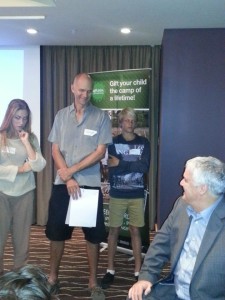
Alan Wagstaff speaking about Green School Bali
Alan Wagstaff shared the Green School Bali philosophy.

Cathy, myself and our kids had the opportunity to attend an excellent presentation in Perth on Green School Bali. The principal, Mr Alan Wagstaff, showcased his school and shared their philosophy on education. He spoke with passion and with tremendous pride.

Rightly so. Green School Bali was turning many heads.

The founders of the school think way outside the box and have created a harmonious learning environment that children can excel in. They, and a growing group of others, believe this school offers a glimpse of what education could become in the future.

Perhaps the policy makers, politicians and leaders of our outdated education system should take a serious look at Green School Bali.

Why Green School Bali Matters for Entrepreneurial Kids

In previous articles, we have challenged the pedagogical practices of our current schooling system here in Australia. We have the view that it provides a good literacy education. However, the design of the system often conditions young people to be obedient, hard-working and compliant.

Now, that does not sound entirely bad. The world does need workers who can fill jobs and contribute well. However, what happens if a child wants to become an entrepreneur, innovator, creator or change-maker?

Many schools do not strongly foster true leadership, innovation or enterprise. Many schools also do not provide a strong financial education for kids, nor do they intentionally teach children to develop the habits and thinking of an entrepreneur.

This is why we care so deeply about raising entrepreneurial kids. Children need opportunities to think, question, create, solve problems and connect their learning to real life.

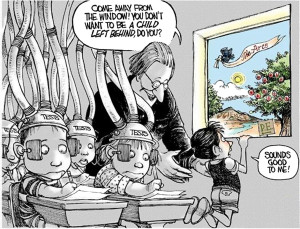
Cartoon about national testing and traditional schooling

Disengaged students in a traditional classroom
Disengaged students

Alan Wagstaff was also very direct about his views on the archaic education system currently running in Australia and other western societies. He pointed out many issues that should not be dismissed, and he backed his views with facts, figures and research conducted by qualified experts in education.

He cited the work of respected thinkers and authors such as Alfie Kohn and Stephen Covey.

What Makes Green School Bali So Special?

This quote by Michael Franti begins to paint a picture:

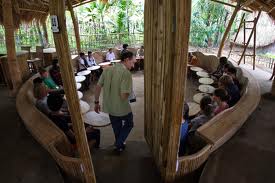
Green School Bali classroom made from bamboo
A Green School Bali classroom

“For anybody that’s considering sending your kid to school here, it’s different than other schools where your kid’s going to be assigned a number and a desk and you show up and you do exactly what you’re told. Here if you have an idea to do something that’s outside of the box, that idea is going to be fostered and nurtured rather than pushed down.”

– Michael Franti, poet, musician and activist

That is the kind of educational philosophy that speaks strongly to families who want children to grow as confident, creative and capable young people.

Student Engagement and Real-World Learning

Alan Wagstaff shared an interesting statistic about students in regular schools. He explained that many students over 11 years old are not fully engaged in their learning and do not really like school.

Many of these students feel they are learning irrelevant things that will not be useful when they leave school. We have heard similar comments from our own teenage children at times. I can also think back to much of the mundane content I had to master and be tested on as a high school student and then again at Teachers College. Much of it was of little use to me in what I do today.

Cartoon about testing and conditioning children

Alan said we need to change the structure of timetabling. We need to move from purely subject-based teaching to student-centred learning.

In many schools, the timetable revolves heavily around literacy and numeracy, with subjects such as the arts being pushed into the afternoon gaps. We push students in literacy and numeracy to uphold the education brand and satisfy national testing. The curriculum can become prescribed, inflexible and overly focused on measurement.

With all that emphasis on literacy and numeracy, why do we still have so many children not meeting the grade?

What Creates Life Success?

What is it about schooling that creates life success? The short answer is simple: have children turn up at school fully engaged, and you will get there.

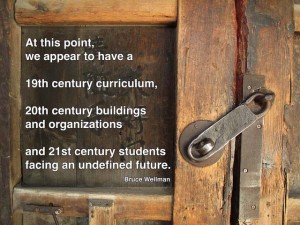
Quote about outdated education systems

Therefore, we need children to be satisfied and engaged. Schools need to link students into life. Their learning needs to be realistic and relevant to each of them individually.

Every day, we should be academically upskilling children, but not simply comparing them with other children.

Parents should ask not only how their child compares with others, but what their child is actually learning.

How Green School Bali Teaches Children

Alan explained how they educate children at Green School Bali.

The programs are structured around themes. These are collaboratively planned by the teacher team leaders. Teachers then run proficiency lessons within these short-term themes.

Each student is shown the continuum of what they need to learn in different areas of the curriculum. From there, they work towards learning what they need at their own level. Over time, this helps children take responsibility for their own learning.

Green School Bali students learning in class
Green School Bali students learning through themes and real-world inquiry.

Within the broader themes, students follow their own individual interests. They develop ideas, and those ideas are fostered and expanded. They identify what they need to learn and then conduct investigations and study groups to understand and practise skills.

Every day, the children are engaged in practical lessons that challenge the Big Four: physical, emotional, intellectual and interpersonal learning.

For example, if the general theme was “Waves”, the Big Four might look like this:

  • Physical: Go and experience waves by surfing.
  • Emotional: Paint a wave or sing a wave melody.
  • Intellectual: Study wave formations.
  • Interpersonal: Sit by the waves and meditate.

At Green School Bali, there are no rigid timetables in the traditional sense. This allows themes to develop through what Alan described as dynamic chaos. Specialist teachers decide what will be done, teachers research the theme and subject areas, and students engage in proficiency lessons.

Authentic Learning Beyond the Classroom

Alan said that in order for students to learn something deeply, they must “hit it three times in three different ways during the week”. Mini themes develop within the bigger themes, and teachers help children self-manage their way through learning.

This leads to engagement and lifelong learning.

Opportunities are seized as they arise to provide practical real-life lessons in areas such as:

  • connecting to the real world
  • environmental education
  • health and wellbeing
  • performing arts
  • enterprise education
  • visual arts

These lessons are timed, sustainable, flexible and authentic. They happen by venturing beyond the school and accessing adults and resources in the enterprising world.

This connects strongly with the kind of family adventure and real-world learning that we value at Enterprise for Kids.

A School Designed for Engagement

Green School Bali’s aim is for children to want to go to school and to be fully engaged. The emphasis is on relevance to learning and valuing students, not on testing and comparing students as we often do in our current schooling system.

That comparison can put unnecessary pressure on children. A more meaningful goal is to help children discover what they are capable of and how their learning connects to life.

Green School Bali’s Bamboo Campus

Green School Bali bamboo architecture and campus
Green School Bali is known for its bamboo architecture and natural campus.

Green School Bali is an architectural masterpiece. It is a masterwork built of bamboo and mud brick. There are no traditional classroom walls and very little impact on the environment.

The school is designed to be sustainable, with power sourced from solar panels and hydro power from the river. Students also assist with growing food in the large permaculture garden where animals are kept.

Green School Bali gardens and campus fields
Gardens and campus fields at Green School Bali.

Surrounding the school are bamboo homes built by local and international families who choose to live in Bali so their children can attend the school.

At the time of this original article, there were also studios under construction to be leased cheaply to entrepreneurs, with the idea that students could be involved with these businesses. This would allow students to develop enterprise skills and ultimately learn how entrepreneurship works in the real world.

Green School Bali as an Example for the Future

Green School Bali is a real-life example of an exemplary school. Students attending the school were reported to be achieving outstanding results in many aspects of their development, including academics.

Although the school had only been running for a relatively short time when this original post was written, its first graduates were already graduating, and those choosing to do so were being accepted into universities around the world.

Green School Bali students learning in a natural environment
Green School Bali students learning in a natural environment.

Alan Wagstaff and the founders of the school had a vision to create change in how schools educate. They knew they would be challenged if they targeted the top of the education hierarchy in Australia, so they were working to make change from the bottom up.

One way they were doing this was by being an exemplary school and by being noticed. At the same time, Green School Bali was also training teachers on mainland Australia with Green School ideologies, with the hope that those teachers would make gradual changes in their own schools.

Green SuperCamp and Our Family’s Experience

Green SuperCamp Bali experience for kids
Green SuperCamp Bali gave our children a powerful learning experience.

Another way to have your children experience the Green School Bali philosophy is through Green SuperCamp.

Kaitlin, Jai and Flynn attended Green SuperCamp, and they came back transformed. At the time of this original post, we were working towards them attending again, along with our eleven-year-old daughter Amber.

You may like to read our earlier post about Green SuperCamp and our kids’ experiences there.

Flynn’s Green SuperCamp Reflection

Check out what Flynn had to say about Green SuperCamp:

John Hardy, Founder of Green School Bali

John Hardy, founder of Green School Bali, also spoke about the school at TED:

Key takeaway: Green School Bali shows what can happen when education becomes connected to nature, creativity, enterprise, sustainability and real-world learning. It challenges us to think more deeply about what children truly need in order to thrive.

Where to Next?

If you enjoyed this article about Green School Bali and real-world learning, you may also like:

Michael Clouse: How to Balance Money and Time

Cathy and Trevor with Michael Clouse after learning leadership lessons about money and time

Michael Clouse gave us a powerful reminder that most people are busy etching out a living, while only a handful of people are intentionally designing a life.

That idea stayed with us because it is exactly the kind of thinking we want our children to see. If we can learn to think differently about time, money, leadership and choices, then our children have another model for designing their own pathway in life.

Michael Clouse as an inspiration for leadership lessons for kids
Michael Clouse shared powerful ideas about leadership, time, money and designing a life.

Michael Clouse and the Choice to Design a Life

“Most people are etching out a living and only a handful of people are designing a life.”

This is such a powerful statement, and one we often do not take the time to consider carefully. After many years of etching out a living, we are finally ready to design a life for ourselves and our children.

When we can do that, our children have another example in front of them. They can begin to see that life does not have to be only about earning money, paying bills and following the same pathway as everyone else. They can begin to make more informed choices about their own future.

We were fortunate to hear Michael Clouse speak at the annual Isagenix Convention on the Gold Coast. Michael gave an excellent talk about leadership, time, money and the thinking behind success.

Cathy and Trevor with Michael Clouse after learning leadership lessons about money and time
Here we are with Michael Clouse after hearing his leadership message.

Who Is Michael Clouse?

Michael Clouse is a professional network marketer, author, trainer and speaker. His official website describes his long career in network marketing, along with his books, articles, videos and audio training programs. You can learn more through Michael Clouse’s official website.

Before I share the message we took from his talk, I want to introduce why Michael made such an impression on us.

Michael came from a disadvantaged home, yet managed to become highly successful. Early in his career, he studied successful network marketers around the world and modelled himself on their habits, thinking and leadership principles.

That alone is a valuable lesson for our children. Success often leaves clues. If children can learn to observe people who are already achieving something worthwhile, they can begin to notice the habits, values and decisions behind that success.

Michael Clouse on Balancing Money and Time

One of the strongest ideas Michael Clouse shared was the importance of balancing money and time.

Most people give up time in order to earn money. Throughout their lives, they work hard in a job or small business to bring home the bacon. As a result, they may slowly increase their money, but they often become time poor. Later in life, they may finally have more time, but their income can drop.

People will argue that they have little choice. They have families to raise, mortgages to pay and expenses to cover. They need to work. In many ways, this is true.

But from an entrepreneurial point of view, it is still worth asking a bigger question:

How can we create more freedom with both time and money?

Wealthy people often create or buy back time. This might mean paying someone to clean the house, do the accounts, cook meals or help with tasks that free them to spend more time with the people they love and the experiences they value.

This is not just a money lesson. It is a life lesson.

Leadership Lessons for Kids from Michael Clouse

The reason this message matters for Enterprise for Kids is not because every child should become a network marketer. It matters because children need to know there are many possible pathways in life.

They can choose a job. They can build a business. They can create a product. They can offer a service. They can invest. They can become leaders. They can learn from mentors. They can think carefully about the kind of life they want to design.

Michael Clouse challenged us to think about leadership, not just income. Leadership is about responsibility, commitment, communication, consistency and helping others grow.

These are lessons children can begin learning long before they become adults.

Network Marketing Success Principles

Michael Clouse Future Choice book about network marketing and career options
Future Choice by Michael Clouse explores network marketing as one possible career path.

According to Michael, network marketing was one possible solution to the time-money balance because it allowed people to build a business through systems, tools, relationships and leadership.

For us, the bigger lesson was not just about one business model. It was about studying success principles and then asking which of those principles our children could learn from.

Michael reminded us of a simple idea:

Success leaves clues.

Here are some of the success principles we took from his talk.

Get Into the Game and Stay in the Game

Figure out what is in it for you, and then commit. You will meet challenges and have to overcome barriers. Being fully committed helps carry you through the difficult parts.

This applies to children as much as adults. Whether they are learning an instrument, building a small enterprise, playing sport or developing a new skill, they need to learn that success usually requires staying in the game long enough to improve.

Focus on the Fundamentals

With a networking business, Michael explained that the fundamentals include connecting with people, presenting to people, and teaching others how to run their business when they say yes.

For children, we can translate this into simple leadership lessons:

  • Learn how to talk with people.
  • Learn how to explain your idea clearly.
  • Learn how to help others understand what to do next.
  • Learn how to keep improving your skills.

Keep the Main Thing the Main Thing

Michael’s phrase “Keep the main thing the main thing” is a good one for adults and children alike.

It means sticking to the system that works. It means not being distracted by every new idea. It means asking, “What is the most important thing I need to do today?”

In business, that might mean telling your story, using the tools provided, connecting with people and becoming better tomorrow than you were yesterday.

For children, it might mean finishing the project, practising the skill, serving the customer, asking for feedback, or following through on the plan they started.

Recognise Effort and Progress

Lynn Hagedorn as an example of network marketing success mentioned in Michael Clouse leadership lessons
Lynn Hagedorn was shared as an example of what can happen when strong systems, leadership and commitment come together.

Recognition was another important part of Michael’s leadership message.

Be sincere and recognise every accomplishment, both publicly and privately. Recognise yourself, the company and your team.

One of the lines that stood out was:

“Babies cry for it and men die from it.”

Praise and recognition matter. Children need to know that their effort has been seen. They need to experience the confidence that comes from being encouraged, acknowledged and supported.

Michael Clouse teaches and uses these simple principles. He built successful networking businesses and mentored others who went on to create strong results of their own. The example of Lynn Hagedorn shows what can happen when commitment, systems, belief and leadership come together.

Michael Clouse and Career Choices for Teenagers

Kaitlin, our eldest daughter, came along to hear Michael speak as well. We figured it was a tremendous opportunity for her to learn about success from a successful person.

Network marketing may or may not become part of her future. That is not really the point.

The point is that young people benefit from seeing different possibilities. They need to know about jobs, business, leadership, enterprise, investment, creativity and service. They need to understand that their future can include more than one pathway.

It simply broadens the choices a young person has.

This is why we believe exposing children and teenagers to strong leadership ideas is so valuable. It helps them think. It helps them question. It helps them notice the difference between simply earning a living and designing a life.

Michael Clouse, Time Freedom and Money Lessons for Kids

For us, the lasting lesson from Michael Clouse was not just about network marketing. It was about time freedom, leadership, contribution and being intentional.

Our children are watching how we live. They are watching how we work. They are watching whether we are exhausted, inspired, trapped, free, generous, stressed or purposeful.

If we want them to make strong choices later in life, we need to let them see different possibilities now.

That is why this message belongs on Enterprise for Kids. It is part of the wider conversation about raising entrepreneurial kids who can think clearly about money, time, leadership and the kind of life they want to create.

Key Takeaway: Help Children Think Beyond Earning a Living

Key takeaway: Michael Clouse challenged us to think about designing a life, not just earning a living. For children and teenagers, that message can open up powerful conversations about leadership, money, time freedom, career choices and entrepreneurial thinking.

Where to Next?

What do you think? Are we teaching children only how to earn a living, or are we helping them imagine how to design a life?

Money Mastery: Lessons from Paul Counsel’s Program

Paul Counsel teaching in the Money Mastery Program about financial freedom and money mindset

Money Mastery became much more than a financial education program for us. It became a deep journey into mindset, values, financial freedom and the kind of life we wanted to model for our children.

Have you ever had that inner desire to make a difference in the world, but felt frustrated that so much of your time and energy was being poured into simply earning enough money to keep up with life, bills and raising a family?

Money Mastery quote about changing the world from within
The world can only change from within — a powerful idea behind our Money Mastery journey.

Money Mastery and the Desire to Make a Difference

Have you wondered what you could do if you had the resources of time, knowledge and money to be that difference?

Children grow up full of potential and excitement about their lives and what they wish to accomplish. Ideally, we as parents want to be an inspiration to them. We want to show by example that they too can achieve what they put their minds to.

Do you ever wonder what worldly achievements and contributions your children will end up making?

Cath and I have huge dreams. We are aiming for the stars. We aspire to achieve, experience and contribute in a grand way. We want to lead our own children to think big, experience life deeply and make a significant difference to the lives of others while they are here on Earth.

Money Mastery quote about thinking big and aiming for the stars
Money Mastery helped us think bigger about life, contribution and financial freedom.

This is our “Why”, and it is why we began the journey seeking the understanding and mindset shifts required to achieve financial freedom.

Paul Counsel and the Money Mastery Mentoring Program

This past year has been, by far, the biggest year for us in terms of shifting our mindset around success.

In March, we embarked on a year-long Money Mastery Mentoring Program led by Dr Paul Counsel. Paul opened our eyes to possibility, gave us tools to make the inner shifts required to achieve financial freedom, and helped us look more closely at the subconscious thinking and conditioning that can shape our results.

You can learn more about Paul Counsel’s current work through Money Mastery Academy.

Our year felt like a roller-coaster ride. There were ups, downs and plenty of bumps along the way. It was full-on trying to sort out the logistics of children, family life and busy schedules while still maintaining momentum.

Without our beautiful friends and family supporting us throughout the year, I am certain we would not have made it this far.

Stephen Covey quote connected to Money Mastery and personal change
Lasting change begins with the way we think, choose and act.

Money Mastery, Financial Freedom and Self Discovery

The Money Mastery program was largely about achieving financial freedom. But for us, it was also a self-discovery mentoring program.

Through the process, we revealed so much about ourselves: our deep-rooted values, our subconscious thinking, our conditioning and our future realities.

That matters because financial freedom is not only about numbers. It is also about beliefs, choices, habits, values and identity.

We came to understand that if our inner thinking does not shift, our outer financial results are unlikely to shift in a lasting way.

This is one of the lessons we want our children to absorb. Money is not just something to earn and spend. It is connected to choices, freedom, contribution and the way we design our lives.

Money Mastery and the Mindset We Model for Our Children

As parents, we can talk to our children about money, success and contribution. But what they watch matters even more.

They watch whether we think big or small. They watch whether we believe we can change. They watch whether we stay stuck in old patterns or choose to grow. They watch whether we simply talk about financial freedom or actually take steps toward it.

That is why Money Mastery was so important for us. It challenged us to look at the patterns we were living from and the example we were setting.

If we want our children to become confident, capable and entrepreneurial, then they need to see us learning, stretching and taking responsibility for our own growth as well.

Paul Counsel Money Mastery Mentoring Program quote about financial freedom and mindset
The Money Mastery Mentoring Program helped us reflect deeply on mindset, values and financial freedom.

Financial Freedom, Family Values and Big Dreams

One of the big distinctions for us was understanding the link between business, money and our highest values.

Our children have always been our highest value. That is beautiful, but it also meant that family life naturally took our time, focus and energy. We had to learn how to align our desire for business, contribution and financial freedom with our value of family, rather than feeling as if they were competing against each other.

That is one of the reasons Enterprise for Kids became so meaningful to us.

It allowed us to connect family, learning, enterprise and money lessons together. It gave us a way to grow our own entrepreneurial mindset while helping our children understand confidence, creativity, responsibility and opportunity.

Money Mastery helped us see that financial freedom is not separate from family. Done well, it can support family, strengthen choices and open up more possibilities for the future.

Our Money Mastery Review

As we reached the final weekend of our year-long Money Mastery Mentoring Program, we found ourselves reflecting on how much had changed.

There were many things to weigh up about what came next, but one thing was certain: our future felt as though it was opening wide before us.

We decided to write a full review of our Money Mastery Mentoring Program. In that review, we shared why we chose to take on such a mentoring program, what the year was like, and some of the massive distinctions that changed our lives.

We invite you to read about our journey and experiences, and to pass it on to interested friends.

Leo Tolstoy quote connected to Money Mastery and changing ourselves
Real change often begins when we are willing to look honestly at ourselves.

We are hopeful that when you read it, you gain inspiration and perhaps some real insight into your own life. We reflected on some of the reasons why things happen the way they do, and why they sometimes do not.

So go make yourself a cuppa, sit down in a comfy chair and take the time to read our full Money Mastery Mentoring Program review.

Read the full review here: Money Mastery Mentoring Program Reviewed

Key Takeaway: Money Mastery Starts From Within

Key takeaway: Money Mastery is not only about financial strategies. For us, it was about mindset, family values, financial freedom and the inner shifts needed to create a bigger future for ourselves and our children.

Where to Next?

Have you ever taken on a program, mentor or experience that changed the way you think about money, family and the future? We would love to hear your thoughts in the comments.

Business Plan Ideas for Students: A Success Formula Kids Can Learn

Chayse giving thumbs up for business plan ideas for students

Business plan ideas for students do not need to begin with a complicated document, a bank loan or a grown-up business plan. Sometimes they can begin with a simple formula children can understand and apply to a real enterprise project.

In our previous post, we shared Sean Rasmussen’s teachings around developing a healthy self-image. This article follows on from that discussion as we look at one of his valuable lessons about success in business: a simple formula that can help children understand training, tools, teamwork, time and results.

Business plan ideas for students shown with a success baby image
A simple success formula can help children understand business planning, action and results.

Business Plan Ideas for Students: A Simple Success Formula

How would you like to know Sean Rasmussen’s business success formula?

Teaching these understandings to your children can help set them on the path to becoming successful, confident and practical young entrepreneurs. The point is not to make business complicated. The point is to give children a way to understand how effort, systems and support work together.

Sean introduced a simple formula that can help produce results in business:

(Training + Tools + Team) × Time = Results

Business success formula for students learning training tools team time and results
Sean Rasmussen’s simple formula: Training + Tools + Team × Time = Results.

For us, this became one of the clearest business plan ideas for students because it turned business planning into something practical: learn the system, use the right tools, build a team, give it time and then measure the results.

This formula can fit many business models, whether it is a conventional business, an internet-based business, a family enterprise project or a small student business idea. It also fits with what we have read about Robert Kiyosaki and his “business builder” model, where the aim is to build a business system rather than simply create another job for yourself.

In our blog about David Wood, we discovered that he also used this kind of formula for business success and taught how it could apply to network marketing.

For Enterprise for Kids, the real value is this: children can use the same basic thinking when they start small. A child’s enterprise might be honey, lolly bags, artwork, dog walking, plant sales or a market stall. The business may be small, but the planning lessons can be very real.

Why Business Plan Ideas for Students Need a Formula

Students often hear the word “business plan” and imagine something long, formal and boring. But business plan ideas for students can be much simpler than that.

A good plan helps answer practical questions:

  • What am I trying to create or sell?
  • What training or knowledge do I need?
  • What tools will help me do it properly?
  • Who can be part of my team?
  • How much time will I need to put in?
  • What result am I aiming for?

The Australian Government’s business.gov.au guidance explains that a business plan can help give direction, define objectives, map out goals and identify risks. That is a useful idea for students too, even if their first “business plan” is simple and practical. Read more about developing a business plan here.

When children learn to think this way, they are not just playing business. They are learning how ideas become action.

Business builder formula connected to student enterprise and business planning
A business system becomes stronger when training, tools, team and time work together.

Business Plan Ideas for Students: The Success Formula Explained

Here is how Sean Rasmussen’s formula can be explained in a way children and teenagers can understand.

Training

Training means learning what you need to know. That might mean attending a boot camp, joining a program, finding a mentor, watching someone with experience, asking questions, reading books or studying how a business system works.

For students, training might be as simple as learning how to make a product properly, how to speak to customers, how to calculate costs, or how to display a stall so people notice it.

Tools

Tools are the things that help the business work better. In some businesses, the tools might be websites, templates, software, equipment, signs, packaging or scripts. In a child’s enterprise, the tools might be jars, labels, an extractor, a notebook, a calculator, a table, a sign or a money tin.

Sean and David Wood both made the same point in different ways: use the tools that work. Don’t waste all your energy trying to reinvent everything from scratch.

Team

Team means the people who help the business work. In internet marketing, that might include virtual assistants, writers, marketers and technical people. In network marketing, it might include mentors, upline support and business partners.

For children, a team may be much simpler. It might be a grandparent with expertise, a parent who can supervise, a sibling who can help, a friend who can bottle honey, or someone willing to sell the product on consignment.

Time

Time means giving the business enough focused effort to get results.

Many businesses require a lot of effort in the beginning before the rewards appear. This is a very important lesson for children. They need to understand that success is not usually instant. They may need to practise, prepare, improve, sell, try again and keep going.

Results

Results are what come from the combination of training, tools, team and time. In a child’s enterprise, results might include profit, confidence, better communication, practical money lessons, self-belief or a stronger understanding of how business works.

When students can see the connection between effort and results, business becomes much easier to understand.

Teaching Entrepreneurship to Kids With Business Plan Ideas for Students

The business success formula can easily be taught to kids. Firstly, help them get started with an enterprise so they can learn from experience.

For example, our son Flynn learned a huge amount about beekeeping, harvesting and processing honey, bottling it, marketing it and selling it.

Flynn extracting honey as an example of business plan ideas for students
Flynn’s honey enterprise helped him learn how a business formula works in real life.
Flynn with his honey product as a student business idea
Flynn with his honey product after putting training, tools, team and time into action.

Next, teach children how they can make their business easier by using the right tools. In Flynn’s case, this meant borrowing the right extractor equipment and using expert advice from his Grandad. That saved him time and helped him do the job properly.

Then investigate ways of putting a team together to make the process less work and more profitable. Flynn used friends to help bottle the honey. He had people selling his honey on consignment, and he found people who could take his honey to market.

He was not doing all the work himself, and that is one of the important lessons inside this business plan idea for students: a business is stronger when the right people and tools are involved.

Business Plan Ideas for Students and Delayed Gratification

One of the biggest lessons children can learn from enterprise is delayed gratification.

Delayed gratification means putting in the hard yards now for a financial reward later. Once children see a result in their wallet or purse, they begin to understand the formula in a real way.

Flynn realised this through his honey business. He used his own money to buy honey and paid for what he needed to bottle and market it. He understood that he needed to make the business work if he wanted to get his money back with profit.

Once he experienced a result with his first batch of honey, he became much more focused and determined with his second batch. In fact, he invested twice the capital.

That is a powerful money lesson for kids. It teaches them that business involves risk, effort, patience and responsibility.

Three Reasons People Are Not Making Money

Sean Rasmussen also pointed out three reasons why people may not be making money in their chosen enterprise. He emphasised the importance of action, intention and value.

When students use the business success formula and are also clear on action, intention and value, they are much better set up to make progress in a business or enterprise project.

Action

Action is obvious, but it is often where people get stuck.

Take action straight away whenever an idea or opportunity presents itself. As soon as an idea appears, build upon it. Avoid killing the idea with too many “what ifs” before it has even had a chance to grow.

For children, this might mean making the first batch, creating the sign, asking the first customer, setting up the stall, writing down the costs or testing the idea with family and friends.

Intention

To illustrate the point about intention, Sean had us write on a small card what our intent was for the three days at boot camp, then carry the card with us in our pocket.

The idea was to think about our intent and hold it clearly without trying to force the answer or outcome. Amazingly, by the end of the three days, many of the answers to our intentions had appeared.

Intention can also be aligned with having a plan. For students, it might sound like:

  • I intend to sell ten jars of honey this weekend.
  • I intend to learn how to speak confidently to customers.
  • I intend to make enough profit to pay back my costs.
  • I intend to learn from this project, even if everything does not go perfectly.

Value

Sean referred to value as being connected to your highest values. He explained that your highest values dictate what you focus on.

So it is crucial to ensure that what you want — whether it is health, money, family, contribution, freedom or creativity — is high enough on your value list, otherwise it is unlikely to receive your best energy.

Our Money Mastery mentor, Paul Counsel, also helped us understand this distinction. For us, we struggled with putting business ahead of family as our highest value. Our kids have always been our highest value, and consequently they take up our time and energy.

So what we learned was that we needed to align business with our highest value of family. That is part of why this blog exists. Enterprise for Kids allows us to grow our own entrepreneurial mindset while also helping our children learn about business, money, confidence and opportunity.

Business Plan Ideas for Students Should Connect to Values

This is an important point for parents and teachers.

Business plan ideas for students should not only be about making money. They should also connect to what children value. A child who loves animals might enjoy a pet-sitting idea. A child who loves art might create portraits or handmade cards. A child who loves cooking might sell biscuits or preserves with family support. A child who loves nature might grow plants or make garden products.

When business connects to values, children are more likely to stay interested, take ownership and learn deeply from the experience.

That is the heart of teaching entrepreneurship to kids. We are not just teaching them to sell things. We are teaching them to think, plan, act, serve, learn and grow.

Flynn celebrating his business success after applying a business success formula
Flynn celebrating the results of his honey enterprise.

Key Takeaway: Business Plan Ideas for Students Can Start Simple

Key takeaway: Business plan ideas for students can begin with a simple formula: training, tools, team and time lead to results. When children apply this to real enterprise projects, they learn business planning, delayed gratification, action, intention, value and money lessons in a practical way.

Where to Next?

What business plan ideas for students have you tried with your children, class or family enterprise project? We would love to hear how young people are learning through real enterprise.

Positive Self Image: Lessons for Entrepreneurial Kids

Sean Rasmussen and family connected to positive self image lessons for entrepreneurial kids

Positive self image is one of the most powerful foundations children can develop if we want them to grow into confident, capable and entrepreneurial people.

Our family’s entrepreneurial journey so far has been exhilarating. The more we learn about successful people and what makes them different, the more we understand our own subconscious beliefs, values, habits and mindset — and the more aware we become of what our children may be learning from us.

Sean Rasmussen and Cherie with Cathy and Trevor learning about positive self image at Boot Camp
Sean, Cherie and us at Boot Camp — a weekend that helped us think deeply about self-image, success and mindset.

Positive Self Image and Our Entrepreneurial Journey

Our journey of self-discovery has allowed us to look deeply into our own habits, thoughts and belief systems, as well as the beliefs and behaviours our children may be developing.

What has really inspired us along the way are the people we are becoming friends with. Positive people with energy, motivation, connectedness and drive. These people are becoming part of our reference group, and simply being around them helps us absorb their energy and possibility.

We flew to Surfers Paradise on the Queensland Gold Coast to attend a three-day intensive Internet Marketing Boot Camp run by Sean Rasmussen. Sean’s rags-to-riches story was an inspiration. From working as an electrician on a mine site near Karratha in Western Australia, carrying a large debt and working very long hours, he became a wealthy and successful self-taught internet marketer.

He would spend long days working on the mine site, then teach himself internet marketing during the few waking hours he had at home. He made it his highest value to change his family’s economic situation by finding a way to build an online business.

Sean’s focus, persistence and family support paid off. Within a couple of years, he had built a successful business that replaced his income from his job and continued to grow from there.

Sean Rasmussen, Success and Positive Self Image

Our experience over the three-day weekend was mind-blowing. Sean’s knowledge, enthusiasm and sense of humour kept us captivated throughout the event.

We met many fantastic people who inspired us with their commitment, passion and the variety of topics they were blogging about.

Sean Rasmussen and David Wood teaching mindset for success at Boot Camp
Sean and David at our Boot Camp.

Many people had major hurdles to overcome while pursuing their passions. There was Dave, who was 21 and had cerebral palsy. His supportive mum, Lynda, had four other children at home and still took the time to bring Dave to Sean’s Boot Camps because she wanted to expose him to the possibilities available.

There was Dr William — or Dr Bill as he was affectionately known — who was a spritely 80-plus years young. There was Catherine, who dreamed of working from home so she could spend more time with her baby girl. There was Helen, who came along with her husband Alex, and we worked out that Trev had taught her in Year 5 in Geraldton. There was Dale, who was passionate about natural health.

These were just some of the incredible people we met. Being around them reminded us how important environment, reference groups and self-belief are when building a positive self image and a mindset for success.

Connecting With People and Helping Them Find Answers

What we liked about Sean was his down-to-earth approach to life. He carried no airs or graces. He and his family enjoyed many of the same things our family does: a hobby farm, animals, weekend sport, family life and the simple everyday things.

Sean genuinely wanted to help people succeed. He gave value far beyond what you would expect from his training and programs, and he made genuine connections with people.

Sean explained that business is about finding out people’s problems and then providing answers.

This was not the first time we had heard this idea. Many successful people and mentors we have learned from have said the same thing:

Connect with people and help provide them the answers.

Connecting with people at Boot Camp while learning about positive self image and success
Connecting with people at the Boot Camp.

Sean pointed out that everybody is an expert in something. Find what you are passionate about, become that expert, discover what people want to know, and then build a business around your area of expertise.

For our children, this is a powerful lesson. A child does not have to wait until adulthood to notice their interests, practise their skills and begin seeing themselves as someone who can contribute value.

Why Positive Self Image Matters for Children

Self-esteem and self-image are important contributors to success. People must learn to take responsibility for their results in life rather than always looking for fault or blame in others.

Sean pointed out something powerful:

Your dreams already do come true. Make your dreams good ones.

This is where the idea of a positive self image becomes so important. Children tend to act in alignment with how they see themselves. If they see themselves as capable, creative, helpful and resilient, they are more likely to act that way. If they see themselves as failures, troublemakers or not good at anything, they may begin to live from that story too.

That is a heavy responsibility for parents, teachers and mentors.

Maxwell Maltz and Positive Self Image

Maxwell Maltz and positive self image ideas from Psycho-Cybernetics
Maxwell Maltz helped popularise the idea that self-image shapes behaviour and success.

Maxwell Maltz wrote Psycho-Cybernetics, a self-help classic that influenced many later teachers of success and mindset. His work explored the idea that self-image is central to human personality and behaviour. You can read more about Maxwell Maltz here.

Many success teachers, including Tony Robbins, Dr John Demartini, David Wood, Paul Counsel and Sean Rasmussen, have referred to similar ideas about self-image, belief and behaviour.

The idea is simple but powerful:

Change your self-image and you change the person.

Action, results and perception tend to stay consistent with self-image. We often act like the person we perceive ourselves to be, and our experiences often reinforce the way we already see ourselves.

Building a Positive Self Image in Children

We see examples of this every day. People act according to the way they perceive themselves, and these perceptions are often shaped at a young age.

To put it into context, students may fail because they are repeatedly told they are failures by parents, teachers or peers. Babies are born “clean”, and then the world begins shaping their self-image through words, reactions, expectations and experiences.

Success runs in the family — in the mind.

Maxwell Maltz quote about positive self image and success
Success runs in the family — in the mind.

Maltz pointed out that success and defeat can travel through families because patterns of thought and behaviour are carried in the mind. If a person accepts defeat as part of their identity, they are more likely to behave from that place.

Sean explained that you are better off moving in the wrong direction than not moving at all. At least when you are going in the wrong direction, you can alter course and start heading in the right one.

It is important to set goals and move forward rather than live in the past. Negative feedback should not be seen as failure. It can be useful because it helps us correct errors and stay on track.

How to Develop a Healthy Self Image

A healthy self image allows children to search for answers rather than collapse in the face of difficulty. It helps them believe that even if they do not know the answer yet, an answer can be found.

These are some of the ideas we took from Sean Rasmussen’s Boot Camp and the teachings around self-image:

  1. Have a goal that already exists in actual or potential form. Choose something that feels achievable, while still encouraging children to aim high.
  2. Have the end result in mind. The “how” does not always need to be clear at the beginning. Sometimes the path appears once the intention is strong enough.
  3. Do not fear mistakes. Negative feedback is a vital part of learning. It helps children self-correct and stay on course.
  4. Dwell on successes. Children need to remember what worked, not only what went wrong. Success patterns can be strengthened through repetition.
  5. Trust the process. Worry can jam up progress. A clear intention and a healthy self image help children keep looking for solutions.

Rational Thinking and Self-Image

Sean Rasmussen and family connected to healthy self image and family success lessons
Sean and his family showed us that success can still be grounded in everyday family life.

Your subconscious mind has no “will” of its own. It obeys your conscious demands, which are often based around your self-image thoughts.

Through conscious thinking, children can begin to challenge self-imposed limits. They can learn to question the stories they tell themselves, such as “I can’t do this,” “I always fail,” or “I’m not good at anything.”

Instead, we can help them practise more useful thoughts:

  • I can learn this.
  • I can try again.
  • I can ask for help.
  • I can improve with practise.
  • I can solve problems.

This kind of thinking supports a positive self image and builds confidence over time.

Habits and Positive Self Image

It is often said that it takes about twenty-one days for something new to become familiar. Whether or not the exact number is always true, the principle is useful: repeated action begins to create comfort, familiarity and habit.

A simple exercise to test changing a habit is brushing your teeth for twenty-one days using your opposite hand. At first it feels awkward, but gradually it becomes more comfortable.

Children can use this same idea by copying the habits of people they admire. If they want better results, they can observe people who are already achieving those results and practise similar habits.

Napoleon Hill also referred to the importance of studying and developing the habits of successful people in Think and Grow Rich. For entrepreneurial kids, this is a practical way to build a stronger self-image: act like someone who learns, contributes, serves and keeps going.

Tips for Parents of Entrepreneurial Children

Cath and Trevor in Surfers Paradise during their entrepreneurial learning journey
Cath and Trev in Surfers Paradise during our entrepreneurial learning journey.

Why not teach your entrepreneurial kids to develop the habits of successful people?

Start by noticing everyday habits of people around them. Discuss how those habits may have contributed to the results they now have. Encourage your children to read or listen to biographies of successful people. Build your children’s self-image. Encourage them to lead, speak publicly, help with enterprise projects and celebrate their successes.

You can also challenge them with simple exercises that change the way they do things. These small changes help children realise that habits are not fixed. They can be changed, strengthened and improved.

A positive self image is not built through empty praise. It is built through repeated experiences of effort, responsibility, encouragement, courage and growth.

Key Takeaway: A Positive Self Image Shapes Success

Key takeaway: A positive self image helps children see themselves as capable, creative and able to grow. When parents model strong habits, encourage effort and help children reframe mistakes, they give entrepreneurial kids a stronger foundation for success.

Where to Next?

How do you help your children build a positive self image? We would love to hear what has helped your family develop confidence, habits and a stronger mindset for success.

Business Ideas for 6 Year Olds That Build Self Efficacy

Young children confidently performing together, representing self efficacy and business ideas for 6 year olds

Business ideas for 6 year olds can be simple, practical and incredibly powerful when they help children build self efficacy, confidence and generosity.

This family enterprise story follows Kit and little Chayse as they teamed up to grow their lolly bag business, give to a meaningful cause, and slowly become more confident young entrepreneurs. It also links strongly with our Candyman series, where Chayse first began learning how to make money through enterprise.

Two young entrepreneurs showing how business ideas for 6 year olds can build self efficacy
Two young entrepreneurs learning confidence, generosity and self efficacy through their lolly business.

Business Ideas for 6 Year Olds That Build Self Efficacy

Kit decided to form a partnership with Chayse in his lolly bag Enterprise for Kids business. He could see how well Chayse’s earlier lolly-selling adventures were going, and he realised that this was one of those business ideas for 6 year olds that was simple enough to begin, but rich enough to teach real-life lessons.

Together they visited the local supermarket and spent their capital on buying large bags of confectionery. This time they were very serious and bought around $230 worth of lollies.

Business ideas for 6 year olds shown through Kit and Chayse’s lolly production line
The production line begins.

Once again, the family pitched in around the dining table to sort and bag all the lollies. Before long, Kit and Chayse were ready to head out to the sporting grounds and sell their product. If you would like to see their production line in action, here is the original video link: Kit and Chayse’s production line.

Business Ideas for 6 Year Olds and the Power of Giving

This round of selling was a little different. Our children had already begun learning that enterprise is not only about making money. It is also about giving, gratitude and growing a generous mindset.

Kit and Chayse chose to donate a small portion of their profits to the Royal Flying Doctor Service. This cause felt meaningful to our family because the Flying Doctor had been such a great help to us when Kaitlin was born in the remote Kimberley town of Kalumburu.

Through this small act of giving, the boys were learning that business can be about contribution as well as reward. For children, this is a beautiful way to connect enterprise with compassion and build self efficacy through something bigger than themselves.

Children designing a sign for their lolly business and supporting the Royal Flying Doctor Service
Designing the for-sale sign with RFDS as the beneficiary.
Kids business ideas in action as Kit and Chayse sell lollies at the soccer grounds
All the soccer lads checking out their lollies.

Business Ideas for 6 Year Olds at the Sporting Grounds

The boys did the rounds of the sporting grounds and sold box after box of lollies. They were magnetic — attracting people from all over the place, a bit like a Mr Whippy van at a summer event.

At first, they needed some prompting to approach groups, speak clearly and say thank you. But after a while their confidence began to grow. They became more comfortable speaking with customers, answering questions and explaining that the lolly business was their own, and that some of the money was being donated to the Flying Doctor.

People were more than happy to support them. Some even bought lollies just to stop and chat with the boys. This is why small, supported business ideas for 6 year olds can create such strong learning moments.

Family enterprise story at the soccer fields where the boys sold their lolly bags
Watching Jai in action at the soccer fields.
Self efficacy for kids grows as the boys sell their wares confidently
…whilst the boys sold their wares.

How This Business Idea Built Self Efficacy

One later trip to the sporting fields gave me a big surprise. I suddenly noticed that the box of lollies had disappeared from under my feet and Chayse was nowhere to be seen. I looked around in alarm and spotted some commotion about fifty metres away. There was young Chayse, surrounded by a crowd of people buying his lollies.

I was very proud of the little fella. Through many weeks of shyly putting himself out there with customers, he had gradually built the confidence to go it alone. That was a real sign that he was developing self efficacy.

Self efficacy for kids grows through repeated real-world success
Self efficacy grows when children repeatedly stretch beyond their comfort zone.

If he keeps this up, he will be an awesome young entrepreneur when he grows up.

Cathy and I have been learning the importance of self efficacy in our own lives as well, especially through the teachings of Paul Counsel in our Money Mastery course. He explains that it is very difficult to simply switch and suddenly become an entrepreneur. Instead, we build up to it by stretching our upper limit again and again.

That means doing things that take us beyond our comfort zone, celebrating the success, and then doing it again. Eventually, we become comfortable with being uncomfortable. That, in turn, opens up new possibilities and attracts new opportunities. This is exactly what was happening with Chayse — and in truth, with all of us.

Building self efficacy in children through enterprise and confidence-building experiences
Confidence builds when children try, succeed and repeat.

Business Ideas for 6 Year Olds Can Build Real Confidence

Kit demonstrated his growing confidence only a few days later. He asked if he could take his lolly business down to the local skate park all by himself. We agreed, and Flynn quietly followed at a distance just to make sure everything was alright.

Kit sold a bunch of lolly bags and came back with a big grin, announcing, “A Granny gave me a big cuddle and kiss!” When we asked him what he meant, he explained that she was so happy to see him doing his business that she bought some lollies and then gave him a cuddle.

Moments like this are so powerful. A child does not just remember the sale. They remember the encouragement, the positive response and the feeling that they can do something brave and meaningful in the world. This is the real strength of business ideas for 6 year olds when parents provide safe support and encouragement.

Developing self efficacy through enterprise for young children
Self Efficacy!

Young Entrepreneurs Sharing Their Rewards

Another beautiful part of this family enterprise story was seeing the boys share some of their rewards and give back through the RFDS. Enterprise was not just helping them make money. It was helping them build character.

Young entrepreneurs sharing their rewards and giving back through their business
…share their rewards.

We believe our enterprising children are experiencing mindset shifts that are helping them think more and more like entrepreneurs. It all takes practice, confidence and repetition. And at the heart of it is self efficacy — the growing belief that, “I can do this.”

Candyman Series Links

This post links strongly with our Candyman series. Kit and Chayse’s lolly bag partnership grew from Chayse’s original Candy Man enterprise and shows how one small business idea can build money skills, confidence and self efficacy.

Key Takeaway: Business Ideas for 6 Year Olds Can Start Small

Key takeaway: One of the best business ideas for 6 year olds is a simple, supported enterprise that gives children the chance to practise courage, communication, generosity and persistence. That is how self efficacy grows.

Where to Next?

Have you seen a child’s confidence grow when they sell, create or contribute something of their own? We would love to hear your story in the comments.