
How Bad Do You Want It?

Kids jumping off a sand dune on a USA family trip with the words How Bad Do You Want It

How bad do you want it? That question became a powerful student motivation lesson in our family after Kaitlin shared a short video about success, focus and wanting something badly enough to keep going.

“`

We were originally going to write about Kit and Chayse’s enterprise goals, but this video made us pause. It challenged us to think about what real commitment looks like — not just for business, but for study, sport, family, financial freedom and life.

“`

How Bad Do You Want It video clip used as a student motivation lesson about focus and goals
How Bad Do You Want It? Click the image to watch the video that sparked this lesson on focus, goals and success.

How Bad Do You Want It? A Student Motivation Lesson

Our daughter Kaitlin saw the How Bad Do You Want It? video on YouTube and sent us the link. We thought it was awesome. It does not go for very long, but the message is strong enough to stay with you.

The video tells the story of a young man who wanted to be successful. He went to a guru and said he wanted to be on the same level. The guru took him into the water and eventually held his head under until the young man desperately wanted air.

“When you want to succeed as bad as you want to breathe, then you’ll be successful.”

That is a confronting image, but it makes the point. Many of us say we want success, but we also want comfort, convenience, distraction and easy results at the same time.

After watching the video, it made us ask ourselves honestly: do we really want it, or do we only kind of want it?
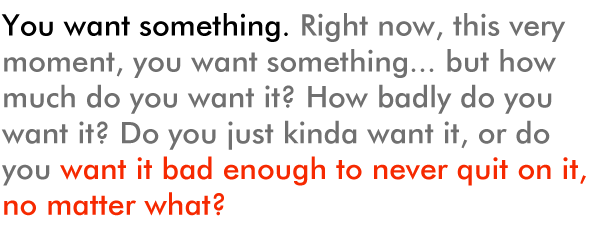
Intense desire quote from How Bad Do You Want It student motivation lesson

How Bad Do You Want It When Life Gets Busy?

Want what, you may ask?

Well, anything really.

How much do we want our fitness levels to be at their best? How much do we want to be financially free? How much do we want a happy and loving family life? How much do we want time with friends, unique experiences and a life that feels meaningful?

For us, it is a little bit of everything.

But one of the things we realised while completing Paul Counsel’s Money Mastery course was this: when we split our attention between everything, we often get a medium result from everything.

There is nothing wrong with that. It can make life comfortable, and that is fine for many people.

But for us, we were ready to challenge ourselves. We were ready to step up and make a difference in those areas in a big way, not an average way.
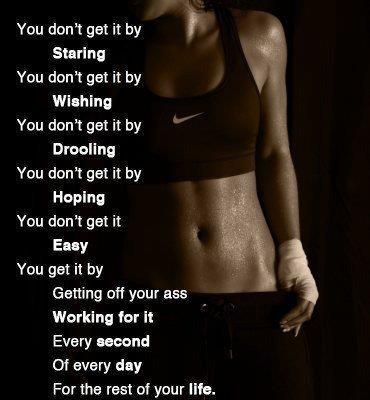
How Bad Do You Want It quote about wanting success and staying committed
Wanting success is easy. Staying focused long enough to earn it is the challenge.

Student Motivation Starts With Focus

This is where the video becomes such a useful student motivation lesson.

Students often say they want strong results. They want good marks, sporting success, creative achievement, friendships, confidence or future opportunities. But the real question is whether their daily actions match what they say they want.

That is not a criticism. It is a life lesson.

Focus is difficult. Life is noisy. Friends, phones, family, sport, school, work, hobbies and distractions all pull at our attention. Even adults struggle with this.

But if a teenager wants a result badly enough, they need to learn how to protect their focus. That might mean:

  • doing the study before the distraction,
  • finishing the task before moving on,
  • training when they do not feel like training,
  • asking for help instead of giving up,
  • and remembering why the goal matters.

This is not only about school. The same lesson applies to young entrepreneurs, young athletes, musicians, writers and children with business ideas.

How Bad Do You Want It as a Family?

As parents, we also had to ask ourselves the same question.

So, while we may not exist on three hours of sleep a night — although that has been debatable at times with an eighteen-month-old in the house — we do put in long hours.

We stay up late, long after the kids have gone to bed, working on our internet business, studies, trading and health and wellbeing business. We are not doing this because we want to be busy for the sake of being busy. We are doing it because we are trying to build a future with more freedom, more choice and more meaningful experiences for our family.

Focus your mind and energy on what you want as a student motivation lesson
Where your attention goes, your results often follow.

We know we are already successful in some parts of our lives. We have a wonderful family and supportive friends, and we know that came through dedication and focus.

Now we are working to transfer that same focus into other areas of life.

Financial Freedom and Determined Focus

Financial freedom has always been one of the bigger goals behind Enterprise for Kids. Not because money is the only measure of success, but because freedom gives families options.

When we are financially free, we can create more time with our kids. We can hire help for some of the mundane things in life. We can create awesome experiences beyond what we have already had. We can take time to enrich our relationships without constantly worrying about the next bill.

That takes determined focus.

It may take us longer to achieve our goals than it will for Giavanni Ruffin, the athlete in the video. He has major, unstoppable focus and he will achieve. It is not a matter of if. It is a matter of when.

But even if we used just a tenth of that energy and commitment, it would still be better than having no focus at all.

Commitment quote about focus and how bad do you want it
Clear intention and determined focus help turn goals into action.

How to Stay Focused on Your Goals

One of the strongest lessons from this video is that attention matters.

Where your attention is held is what tends to show up in your life. You need to attend to your intention. A clear intention, backed by determined focus, can set you on the right path to success.

For children and teenagers, this can be made very practical.

1. Name the goal clearly

A vague goal is easy to ignore. A clear goal gives the mind something to aim at.

2. Ask why it matters

Children need to know why the goal matters to them, not just why it matters to the adults around them.

3. Remove one distraction

Focus does not always require a complete life overhaul. Sometimes it starts by removing one distraction for one hour.

4. Take one action today

The best motivation for students often comes after action, not before it. Start small, then build momentum.

5. Review the result

After the action, ask: what worked, what did not work, and what is the next step?

Goal Setting for Teenagers and Enterprising Kids

This lesson on focus can be applied by anyone. It applies to teenagers studying at high school, kids with big sporting ambitions, parents developing a business, and young people building an enterprise.

Kaitlin was challenged with maintaining focus in her studies. We were glad she discovered this video, thought about its excellent message, and decided to share it with us.

That is exactly what we want for our children. We want them to notice ideas that challenge them. We want them to question themselves. We want them to think about what they want and whether their habits are helping them get there.

For enterprising kids, this is especially important. Business ideas are exciting at the start, but results usually come after the boring, repetitive, uncomfortable parts: following up, finishing the job, practising the skill, serving the customer, improving the offer and trying again after disappointment.

How Bad Do You Want It? Part 2

If you enjoyed the first video clip and thought that was all there was, you may also like the second part.

How Bad Do You Want It Part 2 video for student motivation and focus
How Bad Do You Want It? Part 2 — click the image to view.

Key Takeaway: How Bad Do You Want It?

Key takeaway: How bad do you want it? Success is not only about wanting a result. It is about focus, commitment and taking repeated action when the goal matters enough.

Where to Next?

How badly do you want the goal you say matters to you? And what is one action you can take today to move closer to it?


Belief in Yourself: Jay Bennett’s Steps to Success

Energetic teens showing belief in yourself and confidence for success

Belief in yourself is one of the most important ingredients in success. Skills matter, goals matter and opportunities matter, but if a young person does not believe they are capable of growing, learning and following through, it becomes much harder to take action.

“`

That was one of the lessons we took from Jay Bennett’s “Steps to Success” talk. His message about dreams, attitude, belief and commitment applies not only to adults in business, but also to students, enterprising kids and young people learning how to build confidence.

“`

Jay Bennett teaching belief in yourself and steps to success
Jay Bennett’s Steps to Success message focused on dreams, attitude, belief and commitment.

Belief in Yourself: Jay Bennett’s Steps to Success

On our journey, we are finding many opportunities coming our way. Some of these opportunities involve speakers who have achieved enormous success in their chosen fields of endeavour.

What makes many of these speakers so inspiring is that, whatever company they represent or whatever industry they work in, the deeper principles of success are often the same.

One such speaker was an inspiring Californian man named Jay Bennett. Jay had achieved great success in network marketing and spoke with energy, humour, confidence and a genuine passion for helping others succeed.

He was also a very fit and healthy man, and his appearance could easily fool you into thinking he was many years younger than he actually was. He was a walking billboard for the health and wellbeing industry.

Jay spoke for two hours and had us captivated by his insights. His talk was titled “Steps to Success”, and I thought his message was powerful enough to share with our readers.

Step 1: Start With a Dream

If you have not really thought about what your dream is, Jay suggests that is where you should start.

Identify your real dreams and what you want in your life.

Where do you want to be in ninety days?

Where do you want to be in one year?

Where do you want to be in three years?

That simple act of looking ahead can be powerful for students and enterprising kids. Young people need to learn that goals do not have to stay vague. They can be named, pictured, written down and worked towards.

“You have to have a dream to make a dream come true.”

For children and teenagers, a dream might be connected to school, sport, creativity, enterprise, confidence, travel, friendships, money or contribution. The specific dream matters less than the process of learning how to imagine a future and then take steps towards it.

Step 2: Build the ABCs of Success

Jay Bennett explained the foundation for success using three simple ideas: Attitude, Belief and Commitment.

These are easy words to say, but they are powerful life skills to practise.

For enterprising kids, these three ideas connect directly to real-world learning. A child starting a small enterprise, learning a new skill or working towards a personal goal will need all three.

Attitude: Focus on the Solution

Jay’s first success principle was attitude.

He made the point that a great attitude often leads to better results. That does not mean life is always easy or that problems disappear. It means choosing to focus on the solution rather than becoming stuck in the problem.

Some of Jay’s key ideas around attitude included:

  • Having a great attitude leads to better results.
  • Focus on the solution, not only the problem.
  • Associate with positive people.
  • Attitude can influence success in every area of life.

This is such an important message for students.

A child with a poor attitude may see every challenge as proof that they cannot succeed. A child with a stronger attitude can begin to ask, “What can I try next?”

That shift matters.

Belief in Yourself: The Core Success Principle

The second principle was belief, and this is where the phrase belief in yourself becomes so important.

Jay spoke about believing in the industry, the company, the products and the opportunity. But he made it clear that the most important belief is the belief a person has in themselves.

For students and young people, this is a huge lesson.

Belief in yourself does not mean pretending you already know everything. It means believing that you are capable of learning, improving, asking for help, recovering from setbacks and becoming stronger through experience.

Jay’s key ideas around belief included:

  • Believe in the opportunity in front of you.
  • Most importantly, believe in yourself.
  • Believe that you are capable of success.
  • Believe that you deserve the chance to grow.
  • Build belief through positive learning, books, audios, events and mentors.

This is why personal development matters for children and teenagers. The books they read, the people they listen to, the events they attend and the conversations around them can all help shape what they believe is possible.

Commitment: Stay With the Journey

The third principle was commitment.

Jay reminded us that success is usually one step at a time. It is not a single moment. It is a journey.

Commitment means following through on your dreams, even when the first burst of excitement has worn off.

Some of Jay’s key ideas around commitment included:

  • Success is one step at a time.
  • Follow through on your dreams.
  • Success is a journey, not only a destination.
  • Commit to the journey.
  • Success often means hanging on when others have let go.

This is a powerful message for enterprising kids.

Many children have ideas. Fewer children follow those ideas long enough to learn from them. Commitment teaches young people to keep going, adjust, improve and continue after the easy part is over.

Positive Association and Success

Jay Bennett and family showing success principles built around belief attitude and commitment
Jay Bennett and family.

Jay Bennett made a big point about mixing with the right people and keeping yourself focused and motivated.

The best way to do that, he suggested, is to regularly place yourself in environments where you can learn from people who are positive, motivated and moving in the direction you want to go.

That might include seminars, talks, training events, books, audios, mentors, coaches or simply spending more time with people who lift your thinking.

For students, this does not have to mean attending business seminars. It might mean choosing friends carefully, joining a positive team, listening to encouraging podcasts, reading books that stretch them or spending time around adults who model persistence and confidence.

Belief in yourself is easier to build when you are surrounded by people who also believe growth is possible.

Jay Bennett’s Message for Enterprising Kids

Although Jay’s talk was aimed at adults pursuing success, the principles apply beautifully to young people.

Students need dreams.

They need a positive attitude.

They need belief in themselves.

They need commitment.

They also need positive people around them who help them stay motivated and focused.

These are the same qualities that help children develop an entrepreneurial mindset. Whether a child is starting a small business, improving at school, building confidence, learning a sport or working towards a personal goal, the principles remain the same.

You can learn more about Jay Bennett’s training background through his Jay Bennett trainer profile.

How Students Can Practise the Steps to Success

Here is a simple way to turn Jay Bennett’s message into a practical student activity.

1. Name the dream

Ask the student to write down one dream or goal they genuinely care about.

2. Choose the attitude

Ask them to write one problem they might face, then one solution-focused response they could practise.

3. Strengthen belief in yourself

Ask them to write three pieces of evidence that show they are capable of learning, growing or improving.

4. Commit to one step

Ask them to choose one small action they can take this week.

5. Find positive association

Ask them to identify one person, book, video, team or environment that helps them feel encouraged and motivated.

This turns success from a motivational idea into something students can actually practise.

Key Takeaway: Belief in Yourself Builds Success

Key takeaway: belief in yourself is one of the foundations of success. Jay Bennett’s Steps to Success message reminds us that dreams, attitude, belief, commitment and positive association can help students and enterprising kids build confidence and keep moving towards their goals.

Where to Next?

Which part of Jay Bennett’s Steps to Success would help your child most right now: dream, attitude, belief or commitment?