Business Ideas for 6 Year Olds That Build Self Efficacy

Young children confidently performing together, representing self efficacy and business ideas for 6 year olds

Business ideas for 6 year olds can be simple, practical and incredibly powerful when they help children build self efficacy, confidence and generosity.

This family enterprise story follows Kit and little Chayse as they teamed up to grow their lolly bag business, give to a meaningful cause, and slowly become more confident young entrepreneurs. It also links strongly with our Candyman series, where Chayse first began learning how to make money through enterprise.

Two young entrepreneurs showing how business ideas for 6 year olds can build self efficacy
Two young entrepreneurs learning confidence, generosity and self efficacy through their lolly business.

Business Ideas for 6 Year Olds That Build Self Efficacy

Kit decided to form a partnership with Chayse in his lolly bag Enterprise for Kids business. He could see how well Chayse’s earlier lolly-selling adventures were going, and he realised that this was one of those business ideas for 6 year olds that was simple enough to begin, but rich enough to teach real-life lessons.

Together they visited the local supermarket and spent their capital on buying large bags of confectionery. This time they were very serious and bought around $230 worth of lollies.

Business ideas for 6 year olds shown through Kit and Chayse’s lolly production line
The production line begins.

Once again, the family pitched in around the dining table to sort and bag all the lollies. Before long, Kit and Chayse were ready to head out to the sporting grounds and sell their product. If you would like to see their production line in action, here is the original video link: Kit and Chayse’s production line.

Business Ideas for 6 Year Olds and the Power of Giving

This round of selling was a little different. Our children had already begun learning that enterprise is not only about making money. It is also about giving, gratitude and growing a generous mindset.

Kit and Chayse chose to donate a small portion of their profits to the Royal Flying Doctor Service. This cause felt meaningful to our family because the Flying Doctor had been such a great help to us when Kaitlin was born in the remote Kimberley town of Kalumburu.

Through this small act of giving, the boys were learning that business can be about contribution as well as reward. For children, this is a beautiful way to connect enterprise with compassion and build self efficacy through something bigger than themselves.

Children designing a sign for their lolly business and supporting the Royal Flying Doctor Service
Designing the for-sale sign with RFDS as the beneficiary.
Kids business ideas in action as Kit and Chayse sell lollies at the soccer grounds
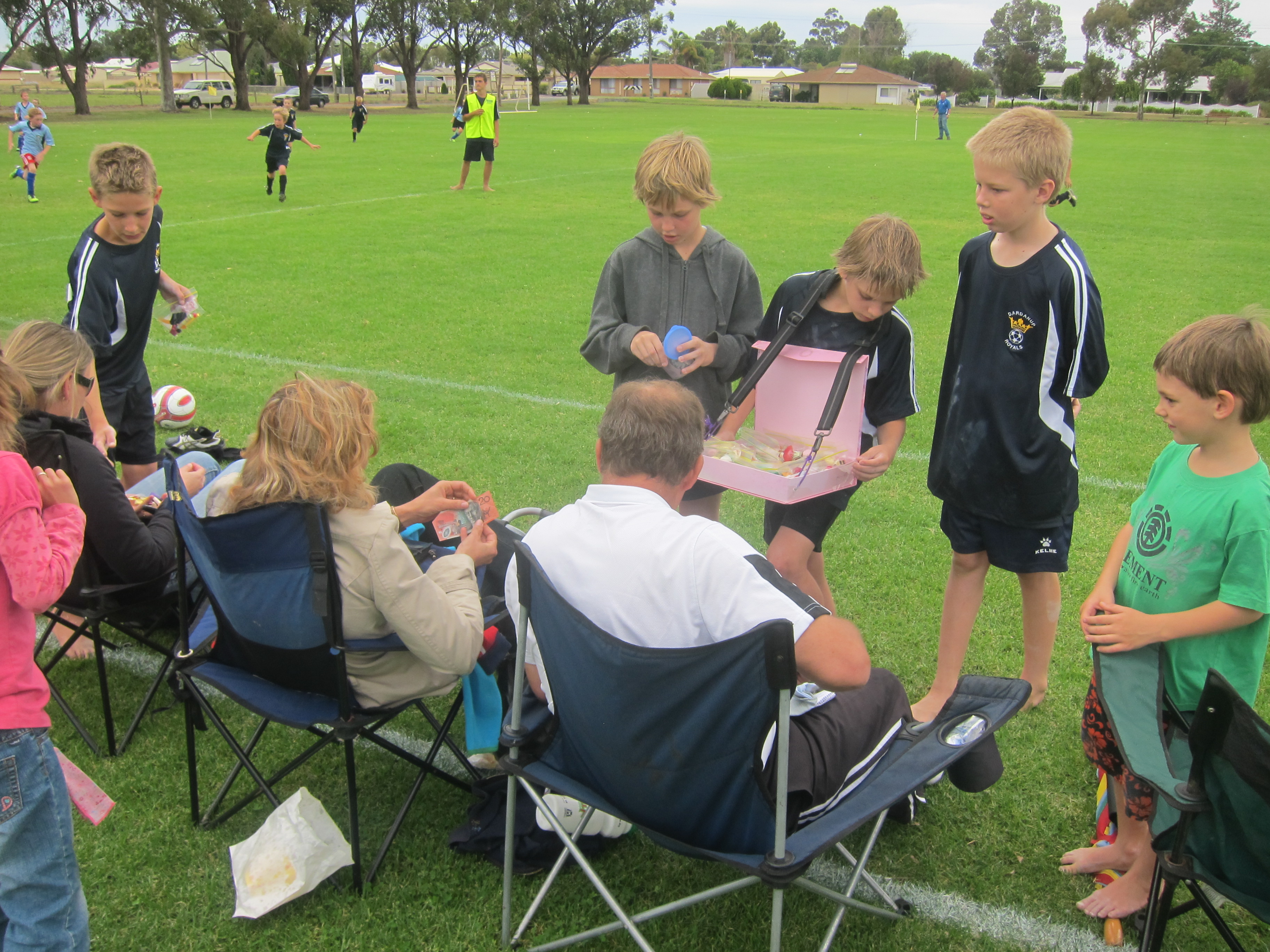
All the soccer lads checking out their lollies.

Business Ideas for 6 Year Olds at the Sporting Grounds

The boys did the rounds of the sporting grounds and sold box after box of lollies. They were magnetic — attracting people from all over the place, a bit like a Mr Whippy van at a summer event.

At first, they needed some prompting to approach groups, speak clearly and say thank you. But after a while their confidence began to grow. They became more comfortable speaking with customers, answering questions and explaining that the lolly business was their own, and that some of the money was being donated to the Flying Doctor.

People were more than happy to support them. Some even bought lollies just to stop and chat with the boys. This is why small, supported business ideas for 6 year olds can create such strong learning moments.

Family enterprise story at the soccer fields where the boys sold their lolly bags
Watching Jai in action at the soccer fields.
Self efficacy for kids grows as the boys sell their wares confidently
…whilst the boys sold their wares.

How This Business Idea Built Self Efficacy

One later trip to the sporting fields gave me a big surprise. I suddenly noticed that the box of lollies had disappeared from under my feet and Chayse was nowhere to be seen. I looked around in alarm and spotted some commotion about fifty metres away. There was young Chayse, surrounded by a crowd of people buying his lollies.

I was very proud of the little fella. Through many weeks of shyly putting himself out there with customers, he had gradually built the confidence to go it alone. That was a real sign that he was developing self efficacy.

Self efficacy for kids grows through repeated real-world success
Self efficacy grows when children repeatedly stretch beyond their comfort zone.

If he keeps this up, he will be an awesome young entrepreneur when he grows up.

Cathy and I have been learning the importance of self efficacy in our own lives as well, especially through the teachings of Paul Counsel in our Money Mastery course. He explains that it is very difficult to simply switch and suddenly become an entrepreneur. Instead, we build up to it by stretching our upper limit again and again.

That means doing things that take us beyond our comfort zone, celebrating the success, and then doing it again. Eventually, we become comfortable with being uncomfortable. That, in turn, opens up new possibilities and attracts new opportunities. This is exactly what was happening with Chayse — and in truth, with all of us.

Building self efficacy in children through enterprise and confidence-building experiences
Confidence builds when children try, succeed and repeat.

Business Ideas for 6 Year Olds Can Build Real Confidence

Kit demonstrated his growing confidence only a few days later. He asked if he could take his lolly business down to the local skate park all by himself. We agreed, and Flynn quietly followed at a distance just to make sure everything was alright.

Kit sold a bunch of lolly bags and came back with a big grin, announcing, “A Granny gave me a big cuddle and kiss!” When we asked him what he meant, he explained that she was so happy to see him doing his business that she bought some lollies and then gave him a cuddle.

Moments like this are so powerful. A child does not just remember the sale. They remember the encouragement, the positive response and the feeling that they can do something brave and meaningful in the world. This is the real strength of business ideas for 6 year olds when parents provide safe support and encouragement.

Developing self efficacy through enterprise for young children
Self Efficacy!

Young Entrepreneurs Sharing Their Rewards

Another beautiful part of this family enterprise story was seeing the boys share some of their rewards and give back through the RFDS. Enterprise was not just helping them make money. It was helping them build character.

Young entrepreneurs sharing their rewards and giving back through their business
…share their rewards.

We believe our enterprising children are experiencing mindset shifts that are helping them think more and more like entrepreneurs. It all takes practice, confidence and repetition. And at the heart of it is self efficacy — the growing belief that, “I can do this.”

Candyman Series Links

This post links strongly with our Candyman series. Kit and Chayse’s lolly bag partnership grew from Chayse’s original Candy Man enterprise and shows how one small business idea can build money skills, confidence and self efficacy.

Key Takeaway: Business Ideas for 6 Year Olds Can Start Small

Key takeaway: One of the best business ideas for 6 year olds is a simple, supported enterprise that gives children the chance to practise courage, communication, generosity and persistence. That is how self efficacy grows.

Where to Next?

Have you seen a child’s confidence grow when they sell, create or contribute something of their own? We would love to hear your story in the comments.

What Can I Sell to Make Money as a Student? Amber’s Resale Enterprise

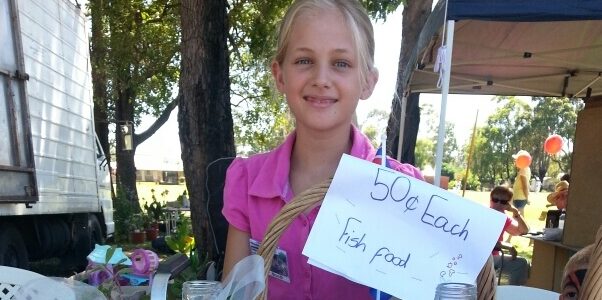
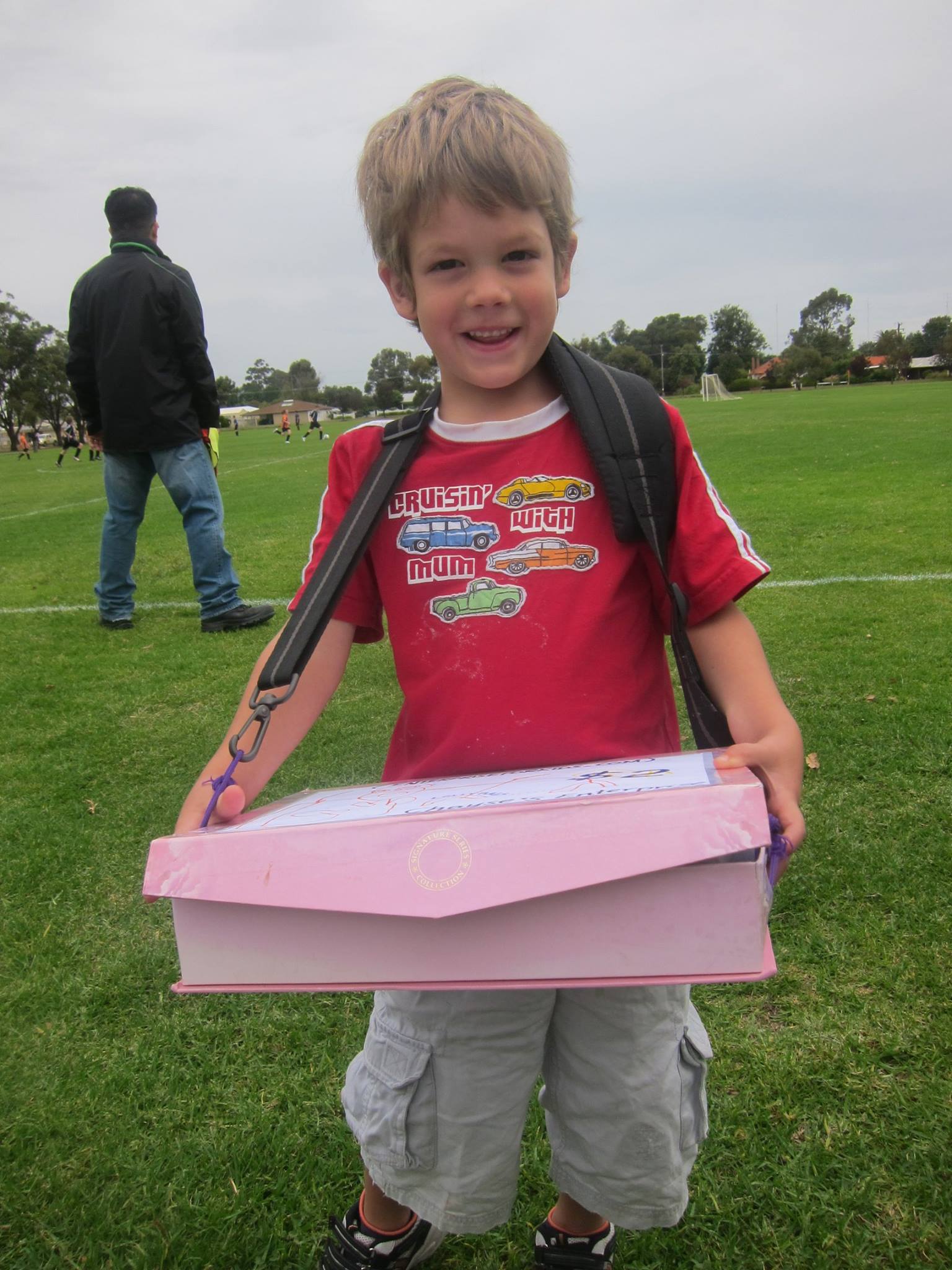
what can i sell to make money as a student Amber holding price sign

What can I sell to make money as a student? Amber’s “New From Old” enterprise is a real family example of how a young person can buy, clean, advertise and resell second-hand items for profit.

Instead of waiting for the perfect idea, Amber looked for useful items, solved simple problems for buyers and learned valuable business skills along the way.

what can i sell to make money as a student brainstorming resale ideas
Brainstorming ideas for a kids resale enterprise.

What Can I Sell to Make Money as a Student?

What can I sell to make money as a student? That is a question many kids and parents ask when they want a simple, practical business idea.

There are hundreds of possibilities. Yet when chatting to parents, they often tell me they would really like their kids to have a little business enterprise of their own, but they just can’t think of a good idea.

Here’s the tip: think about the problems or needs your local community has. Then ask whether a kids’ enterprise could be built around solving one of those problems.

Another angle is to consider what skill your child already has and how they could put that skill to good use.

Brainstorming What Students Can Sell

If your child is wondering, what can I sell to make money as a student?, start by brainstorming ideas on paper. Keep going until you have exhausted all possible ideas, whether or not you intend to use them.

Try asking neighbours what issues or problems they have and add these to your list.

Generally, people have time issues. That is where a business idea can begin. Not enough time to mow the lawn, clean large rubbish bins, chop wood, tend to the kids’ homework, clean windows, rake leaves, tutor younger children, pull weeds or clean the car — you get the picture.

If you are still stumped, this blog is full of real family enterprise stories and practical kids business ideas.

Amber’s “New From Old” Resale Enterprise

Amber’s “New From Old” enterprise has been going great guns right from the beginning. Her money jars are filling up, and really she hasn’t had to do much work at all.

She reached the goal she set a while back and is now preparing to take her business to another level. We’ll talk more about that in a later blog.

If you are new to our blog and haven’t yet followed Amber’s enterprise journey, you may like to start with Kids Business Ideas: Amber’s Kids Biz Program.

Amber’s resale enterprise in action:

what can i sell to make money as a student Amber resale enterprise sign
Recycling for profit
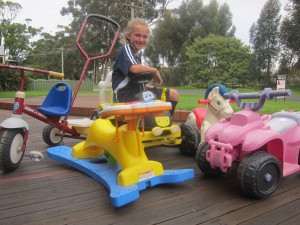
student resale business idea selling toddler ride-on toys
Toddler ride-on toys

Finding Things to Sell for Profit

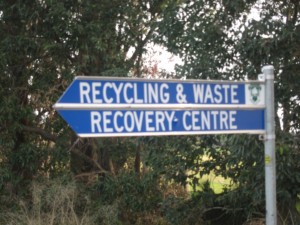
Amber makes the fortnightly trip to the local Recycling and Waste Recovery Centre. It sells anything salvageable.

The guy who runs the place now knows Amber and understands that she is running her own business. Through this process, Amber has developed important skills in negotiating and connecting with a network.

When she identifies an opportunity, she confidently strikes up a deal with the Recycle Man.

Much of the stuff for sale is really not worth the effort to resell. It is a bit like looking for a gold nugget among the boulders. Over the months, Amber’s ability to pick profitable items has improved and she now has an eye for a bargain.

This is one reason the question, what can I sell to make money as a student?, is so useful. It teaches children to think carefully about value, demand and effort before spending their money.

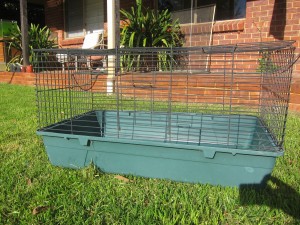
student resale idea pet cage cleaned and sold for profit
Pet cage

Learning What Is Worth Buying

The items that can be resold are generally the ones that solve people’s problems. Pet cages, baby toys, storage items and exercise equipment are good examples.

These items need to be well presented and in good condition. Amber looks for opportunities that don’t require spending lots of time and money fixing them up.

Ideally, she buys things that just need a good clean, a lick of paint or a new set of batteries.

Amber has also learnt from her mistakes. She once bought a perfect condition four-man tent still in its new box for $10, only to discover later that it had no pegs or poles. Buying pegs and poles new would blow her costs out and leave her running at a loss.

That one was put down to experience. Does anyone have free pegs and poles?

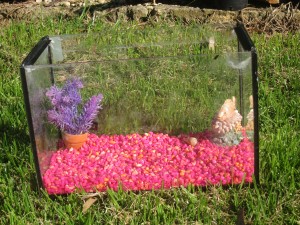
what can i sell to make money as a student aquarium resale idea
Fish aquarium

What Can I Sell to Make Money as a Student? Research First

Sometimes Amber sees a possible opportunity but holds off buying it until she has done her research.

She works out what it will cost to repair or tidy up the item. Paint brushes, varnish, batteries, sandpaper and labour all need to be considered.

Then she looks at what others are selling similar items for online. By doing her research, Amber has a better idea of how much she can pay in order to make a reasonable profit.

For older students ready to take a business idea further, Business.gov.au has helpful information on starting a business when you’re under 18.

Writing Ads and Making Sales

Amber sells almost all her items on Buy and Sell Bunbury Facebook. She set up her own Facebook page for the sole purpose of participating in the buy-and-sell market.

She writes her own ads, uploads her own pictures and converses with customers online and on the telephone.

When a buyer arrives, Amber presents her goods and collects payment.

student selling online writing ads for resale items
Amber placing her adverts onto Buy & Sell Facebook with the gang watching on!

Real Examples of What Amber Sold

We’ve watched Amber continuously grow in confidence with her enterprise. She has found and built her own business around solving problems, using creativity and communicating with people.

Some of the items Amber acquired and on-sold for profit can be seen in the pictures on this blog.

The five outdoor toddler toys were bought for a good price. She scrubbed them, put new batteries in one, charged the battery in another and sold them all for $60.

The aquarium and pet cages just needed a clean, and she made a profit of $25.

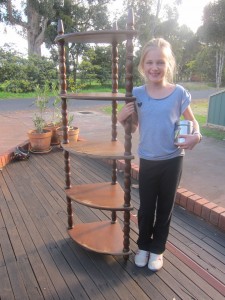
student resale enterprise display shelves sold for profit
Display shelves

Her corner display required screwing together, and she made a profit of $20.

Her current project is a very large timber outdoor table. She paid $10 and hopes to sell it for a profit after sanding it back and varnishing it.

Amber has also been collecting succulent plants from friends. Her plan is to paint decorative ceramic pots and plant hardy succulents in them, then sell them at a market day.

What Students Can Learn from Amber’s Enterprise

This story is a practical answer to the question, what can I sell to make money as a student?

Amber’s answer was simple: find items people need, buy carefully, improve presentation, advertise clearly and communicate well with buyers.

She also talks about her goals, buying assets and gifting money in the original video clip. You can view it here: Amber reflecting on her business and goals.

Amber making a sale in her student resale enterprise
Amber making a sale!

It will be very interesting to see where her entrepreneurial journey takes her as she grows older. She loves writing, so maybe she will write a book about her journey one day.

Key takeaway: If your child is asking, “what can I sell to make money as a student?”, start with simple resale opportunities. Look for useful items, check the costs, solve a buyer’s problem and learn from each sale.

Where to Next?

If you enjoyed this family enterprise story, you may also like:

We would love to hear from you, so please leave a comment.

Financial Literacy for Teens: Jai and Kaitlin’s Enterprise Journey

Jai and Kaitlin as young teens learning financial literacy through enterprise goals

Financial literacy for teens often becomes most powerful when it is connected to a real goal. For Jai, that goal was finding the money he needed for Country Week Soccer. For Kaitlin, it was learning how to manage her creative enterprise alongside study, sport, friends and teenage life.

“`

In this part of our family enterprise journey, Jai and Kaitlin remind us that teenagers do not always need another lecture about money. Sometimes they need a meaningful reason to take action.

“`

Akaisha as a toddler in a dog walking photo introducing financial literacy for teens through family enterprise stories
Enterprise lessons begin early in family life, but teenagers often need real goals before financial literacy truly comes alive.

Financial Literacy for Teens: Jai and Kaitlin’s Enterprise Journey

So far in our family enterprise journey, we have seen Flynn build a great honey enterprise and actually achieve his goal. Kit had a go at dog walking, but quickly realised that Chayse was making more money selling lollies at the local soccer fields, so he began pursuing that with his brother.

Kit and Chayse made quite a team, and we will revisit them again in another blog post. Amber also reached her goal with her “New from Old” endeavours, and we will celebrate her achievement separately too.

That leaves our creative artist, Kaitlin, and our budding app developer, Jai.

What has been interesting to notice on the children’s journeys is that it can be easier to introduce a different mindset around money to younger children than it is to teenagers or older children.

Why would financial literacy for teens be more challenging?

In our case, Kaitlin and Jai had already been around longer with us as their major source of education. That meant our own money thoughts, objections and subconscious beliefs had been absorbed by them for longer. It was now more of a process to help them question and reshape those beliefs.

Teenagers, Money Beliefs and Real-Life Goals

Kaitlin and Jai learning financial literacy for teens through youth enterprise goals
Kaitlin and Jai were learning that money goals need time, action and follow-through.

Luckily for us, Kaitlin and Jai are both quick learners and they understood the concepts we were trying to teach.

The main obstacle was finding the time to put this new knowledge into action.

Being teenagers, their lives were already full of homework, study, sporting commitments, social life and social media. All of these are things we wanted to encourage in our children, so our challenge was finding a way to include financial education without making it feel like one more burden.

In the end, as with many things, life became the best teacher of all.

Jai’s Teen Money Goal for Country Week Soccer

Jai setting teen money goals as part of financial literacy for teens
Jai’s focus changed when he had a real money goal to reach.

Jai had not had much urgency to pursue his app development because there was no clear timeline attached to his goal. His app idea was exciting, but it was also a long-term project.

Then his goal changed.

Jai was accepted into the Country Week Soccer team and would be competing in Perth during the holidays. He had to pay for a good portion of the trip himself.

Suddenly, he had a renewed vision and a very real money goal to aim for.

He spent countless hours researching ways to make the money in a short amount of time. This is where his youth enterprise thinking kicked into action.

Jai using enterprise ideas to help pay for his Country Week Soccer goal
Jai loves being active, and Country Week gave him a goal worth working for.

He came up with different ways to make the money, including some ideas he had not been interested in before.

The opportunities Jai looked at included:

  • mowing lawns in the neighbourhood,
  • finding good-quality items to sell,
  • hiring out exercise equipment,
  • negotiating paid jobs around the house that were above and beyond normal chores.

Together, Jai and Trevor worked out that he needed to find about $10 a day to afford his portion of the trip. That made the goal feel clearer and more achievable.

He began negotiating with us over jobs that needed doing around the house, and then he got on with them.

He also went through many of his good-quality items that had once been “must haves” when he bought them. He realised that perhaps he did not need them as much as he first thought, so he posted them on Facebook to sell.

What Jai Learnt About Financial Literacy for Teens

Jai’s Country Week goal became a practical financial literacy lesson. Instead of simply asking for money, he had to think about earning, selling, negotiating, time, effort and priorities.

He also had to work out the difference between a long-term enterprise idea and a short-term money need.

Although Jai’s app development journey had taken a back seat, it had not been forgotten. He simply recognised that app development was a longer-term project, while his Country Week Soccer goal needed faster action.

That is an important financial literacy lesson for teenagers. Not every money-making idea suits every goal. Sometimes a teen needs quick cash flow. Other times, they need patience, skill-building and a longer timeline.

We were proud of Jai’s efforts and were confident he would reach his goal in time.

Kaitlin’s Creative Enterprise and Time Management

Kaitlin painting as part of her creative enterprise and financial literacy for teens journey
Kaitlin doing what she loves — using her creative skill as a possible enterprise.

Kaitlin, our artist in residence, was also learning an important financial literacy lesson.

Her lesson was not only about how to make money. It was about how to manage her energy, time and priorities around study, social life, sport and her youth enterprise ventures.

Kaitlin had already explored the idea of turning her artistic skill into a student enterprise. You can read more about that earlier stage in Kaitlin’s portrait drawing enterprise.

Now she had a timeline in place and was receiving more requests for artwork. That meant she had to begin each piece early enough to finish it before Christmas for some customers, and earlier for others.

This was a different kind of money lesson. Kaitlin had to connect creativity with responsibility. If people were asking her to create artwork, she needed to protect the time and energy required to deliver it properly.

Teenage Distractions and Self-Efficacy

Kaitlin learning time management and self efficacy as a teenager with enterprise goals
Kaitlin and Lachlan.

Having a boyfriend actually increased Kaitlin’s self-efficacy because she needed to complete certain things before socialising.

Luckily, Lachlan encouraged Kaitlin to do that, because he actually wanted to have a social life too!

This connects beautifully with the lesson we explored later in Kaitlin’s article about avoiding distractions and following through on her enterprise goals.

For teenagers, financial literacy is not only about budgets and bank accounts. It is also about self-management. It is about learning that if you want to earn money through your skills, you need to manage your time, energy, focus and commitments.

Creative Enterprise with Kaitlin and Georgia

Kaitlin and Georgia exploring creative enterprise and real-world learning as teenagers
Kaitlin and Georgia exploring ideas, creativity and enterprise.

Kaitlin and her friend Georgia were also realising the power of leveraging their time.

They had come up with some great enterprise ideas and had put steps in place to pursue them. These were longer-term goals, but in the end they could reap more rewards than simply working a job.

At the same time, they still saw the need to pursue their jobs in the meantime, so they could have money to put towards their enterprise when it was up and running.

This is another important financial literacy lesson for teens: sometimes a job and an enterprise can work together.

A job can create cash flow. An enterprise can create ownership, learning, creativity and possibility. Both can play a role while a teenager is learning how money, work and opportunity connect.

Financial Literacy for Teens Happens Through Real Life

The journey towards financial freedom is always a rocky one, but it is one worth following regardless of what else is going on in life.

Our kids are teaching us so much along the way. Not all of their efforts are successful, but they are learning from each experience and moving forward.

That is what makes real-world learning so powerful.

Jai’s story shows how a clear money goal can turn a teenager into a problem-solver. Kaitlin’s story shows how creativity, customers and deadlines can teach responsibility and time management.

Neither of those lessons can be fully taught from a worksheet.

They are lived.

Where Jai and Kaitlin Are Today

Looking back 14 years later, it is beautiful to see how these early enterprise lessons continued to show up in Jai and Kaitlin’s lives.

Jai’s early interest in app development, problem-solving and online enterprise has grown into his current business, Art of Mondays. It is a wonderful example of how early exposure to enterprise, technology and financial literacy can keep developing over time.

Kaitlin’s creativity and interest in bringing ideas to life has also continued. You can see a glimpse of what she is creating now through Kaitlin’s Golden Days Club.

At the time, these teenage money goals may have looked like small family lessons. But years later, they remind us that children and teenagers are often building foundations long before we can see the full picture.

Key Takeaway: Financial Literacy for Teens Needs Real Goals

Key takeaway: financial literacy for teens becomes more meaningful when teenagers have real goals. Jai needed money for Country Week Soccer, while Kaitlin needed to manage creative requests and deadlines. Through youth enterprise, they learnt money skills, focus, responsibility and real-world problem-solving.

Where to Next?

What real goal could help your teenager learn more about money, responsibility and enterprise?

Business Ideas for Students: Chayse the Candy Man

Business ideas for students shown through Chayse selling lolly bags with Kit and Amber

Business ideas for students do not have to be complicated. Sometimes they begin with a four-year-old, a box full of lolly bags, a soccer ground full of hungry kids and a very determined little Candy Man.

This is Part 3 of Chayse’s Candy Man story, where his lolly bag idea moved from planning and preparation into real selling, real customers and real profit.

Business ideas for students shown through Chayse selling lolly bags at the soccer grounds
Chayse selling lolly bags at the soccer grounds as part of his Candy Man enterprise.

Business Ideas for Students: Chayse the Candy Man

We thought it was time that we revisited our little Candy Man Chayse. When we last followed his enterprising adventure, he had bought his lollies and bagged them up ready to sell.

If you missed the earlier parts of Chayse’s journey, you can follow the story from the beginning:

Now he has to find a market for his product and learn to be a salesman. Before we share Chayse’s exciting adventure, we thought it would be interesting to consider the benefits of children earning pocket money through enterprise, as opposed to children receiving a weekly allowance.

Why Business Ideas for Students Build a Different Mindset

Robert Kiyosaki quote about wealth and entrepreneurial thinking for children

Children earning pocket money through enterprise will develop the mindset and skills of an entrepreneur. Giving children a weekly allowance can condition them to think like “workers”.

Robert Kiyosaki describes a worker as someone prepared to give their time for money, whilst an entrepreneur builds systems and businesses that produce cash flow. Workers are more often than not time poor and cash poor, whilst entrepreneurs are generally time rich and cash rich.

Why is it then that the vast majority of us leave school and become workers?

A child receiving a weekly pocket money allowance is equivalent to a worker receiving a weekly salary. Relying upon a weekly allowance will not necessarily encourage children to look for opportunities for enterprise.

Their pocket money may or may not be aligned with doing household chores, just as a worker receives payment for doing work. Many kids leave school and slot into jobs for the rest of their lives because they have not been able to explore the entrepreneur within themselves.

Children Earning Pocket Money Through Enterprise

Children earning pocket money through enterprise develop a whole different mindset. Parents of these children will encourage their children to look around to find opportunities.

These kids learn to identify problems that they can solve and they learn the art of negotiation. Enterprising children understand assets, liabilities, cash flow and profit. They will understand markets and customer service and they will develop the confidence to promote themselves.

Business ideas for students can also help children value their profits and spend their money wisely. Weekly allowances are easily received and easily spent, especially when children know that more money will follow. This can condition kids to be reliant on a salary.

Enterprising children become self-motivated to make money, and as they celebrate their successes, they quickly come to understand that they can in fact make a lot more money than their friends receiving weekly allowances.

Entrepreneur Cameron Herold makes a similar point in his TED talk, Let’s raise kids to be entrepreneurs. He encourages parents to help children look for opportunities, negotiate and learn how to create value rather than simply expect a regular allowance.

A Real Student Business Idea at the Soccer Grounds

Chayse selling lolly bags to customers at the soccer grounds
Selling to customers.

Kids may not be motivated to do this at first, especially if they have been used to receiving a weekly allowance. The trick here is to make sure they have a big “Why!” They need to want something badly enough. This then becomes their goal and reason.

So let’s get back to Chayse’s enterprising story. Was he able to earn his pocket money through his lolly bag business?

He had his first opportunity to sell his lolly bags at his big brothers’ soccer games. During the game, the spectators, who were his potential customers, milled around on the sidelines.

So we primed him on what to say to customers. We also enlisted the help of his brothers, Amber and friends. It was all great fun and soon enough the customers came rolling in.

Now who could knock back buying lollies from a cute smiling four-year-old?

Business Ideas for Students Need Real Customers

His lolly bags sold like hot cakes for two dollars each. Chayse could not hold up the box because it was too heavy, so he managed the money jar whilst his helpers held the box.

He had to take his customers’ money and give change.

As word spread that there were lollies for sale, kids came racing in from all directions to buy Chayse’s product. The box became lighter and the money jar heavier, but despite the weight, he was not going to relinquish it.

Chayse looked after his helpers by giving them each a lolly bag. Hopefully they will be willing helpers the next time he sells something.

Chayse also paid back the money his Dad lent him as capital to buy the lollies and plastic bags from the supermarket.

Profit, Confidence and a Very Heavy Money Jar

Chayse holding money earned from his lolly bag business
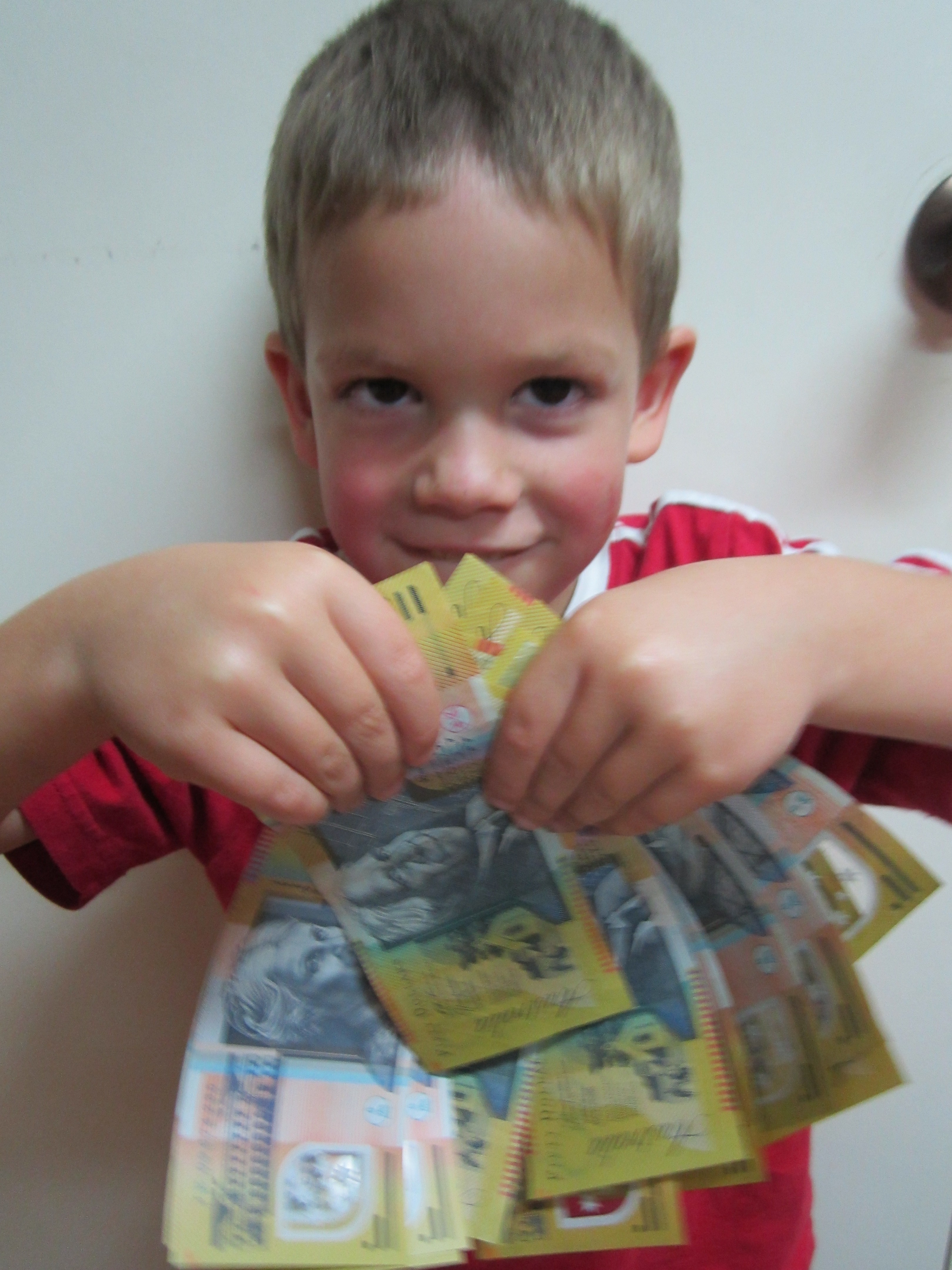
Chayse was delighted with his profit.

All up, he was delighted with his fifty dollars net profit. He is now well on his way to reaching his goal to buy toy Nerf Guns.

In fact, his business was so successful that Kit has recently decided to partner with him for his next endeavour. Under their mother’s guidance, they will research and decide on a charity that could benefit from some of their profits.

So, stay tuned for that one!

Chayse is one of those children earning pocket money through enterprise. It would have taken him five weeks, with a weekly allowance of $5 a week, to save the equivalent of what he profited at the soccer grounds during one soccer game.

That is why simple business ideas for students can be so powerful. They give children a real reason to be brave, talk to people, handle money, serve customers and learn that effort can create opportunity.

The Candy Man Business Series

This post is Part 3 of Chayse’s Candy Man journey. You can follow the full series here:

  • Part 1: The Candy Man Planning an Enterprise — Chayse plans his lolly bag business and receives $50 start-up capital.
  • Part 2: The Candy Man Entrepreneur — Chayse buys the lollies, prepares the bags and gets ready to sell.
  • Part 3: Chayse the Candy Man — Chayse sells his lolly bags at the soccer grounds and makes a profit.

Key Takeaway: Business Ideas for Students Can Start Small

Key takeaway: Business ideas for students do not need to be complicated. Chayse’s lolly bag business helped him learn about customers, selling, profit, confidence, helpers, start-up money and responsibility — all through one simple project at the soccer grounds.

In our next Enterprise For Kids blog, we’ll introduce you to a self-made millionaire who has some excellent tips for parents wanting to raise entrepreneurial kids. Don’t miss this article!

We would love to hear from you, so please leave a comment.

Youth Entrepreneurship: Why Our Kids Wanted to Attend Green SuperCamp

Jai and Kaitlin with students at Green SuperCamp Bali learning leadership and youth entrepreneurship skills

Youth entrepreneurship often begins with confidence, leadership and real-world learning experiences. We were delighted that our three eldest children were able to attend Green SuperCamp Bali, where they had life-changing experiences that gave them new understandings and beliefs about themselves.

These experiences will stay with them forever. For Kaitlin, Jai and Flynn, Green SuperCamp was a chance to step outside their comfort zones, meet new people and begin thinking differently about their future.

youth entrepreneurship at Green SuperCamp Bali with Kaitlin in a crowd
Kaitlin attending Green SuperCamp Bali.

Youth Entrepreneurship and Green SuperCamp Bali

Each of our kids applied for a Green SuperCamp scholarship. The scholarships would help us cover the cost of the camp. Kaitlin, Jai and Flynn each wrote why they wanted to attend.

We were very inspired by the passionate words they wrote in their applications. Their writing showed us how much they wanted to grow, learn and take hold of new opportunities.

Below we have some words from Kaitlin. We are very proud of her passion and talent in getting her message across to the organisers of the SuperCamp.

You may also enjoy reading Amber’s Green SuperCamp reflection, where she shares what she learnt from her own camp experience.

Kaitlin’s Green SuperCamp Scholarship Application

Here’s what Kaitlin wrote:

“I am the eldest of seven children in my family. We have been brought up to strive for excellence and to aim as high as we can. My parents have always been determined to give us kids the best opportunities possible to get the best out of life.

This year I have started year 11, and have found it quite difficult. I have been held up by limitations of my time and motivation. I would love to attend the “Green Super Camp” in order to break these barriers. I want a life where I can be a role model and inspiration for my siblings and others. I want to be able to contribute to the world and show so many people a way to be free, but I’m still trying to work out how to get there.

youth entrepreneurship and confidence building at Green SuperCamp Bali
Kaitlin taking part in confidence-building activities at Green SuperCamp Bali.

I’m so keen to develop a mindset for success. I want to meet new people from around the world, and absorb their confidence and energy. My goal is to become a school prefect or Head Girl and to be accepted into University.

To do this I need to understand and learn about myself. I want to know what it takes to be a leader and to be confident in myself to be one.

If I receive this Scholarship, I would be determined, open and ready, to absorb all the information possible for me to be the best person I can and to motivate others to be the same. This is an experience of a lifetime, and I’m ready for it now.”

Why Youth Entrepreneurship Starts with Confidence

Kaitlin’s words show that youth entrepreneurship is not only about starting a business. It is also about confidence, leadership, courage and the willingness to grow.

Before children can step into real-world opportunities, they often need to believe they are capable. Experiences like Green SuperCamp can help young people see themselves differently.

For Kaitlin, the camp offered a chance to break through barriers, meet inspiring people and learn tools that could help her become a stronger leader.

Real-World Learning for Young Entrepreneurs

Green SuperCamp gave our kids the opportunity to learn outside the normal classroom. They were challenged physically, emotionally and socially.

These kinds of experiences matter because young entrepreneurs need more than ideas. They need confidence, communication skills, resilience and the ability to take action.

For more information about the broader Green School Bali philosophy, you can read our earlier post on Green School Bali Leading the Way.

You can also visit Green School Bali to learn more about their approach to education and sustainability.

Youth Entrepreneurship Through Leadership and Action

When children attend camps, join projects, speak up, set goals and work with others, they are building many of the same skills needed for youth entrepreneurship.

They learn to take responsibility. They practise courage. Most importantly, they begin to see that their actions can make a difference.

Kaitlin wanted to be a role model for her siblings and others. That desire to contribute, lead and grow is a powerful foundation for future enterprise.

Key takeaway: Youth entrepreneurship begins long before a child starts a business. Confidence, leadership, goal setting and real-world learning all help children believe they can create opportunities and contribute to the world around them.

Green SuperCamp gave our children a glimpse of the kind of learning philosophy we later reflected on in our article about Green School Bali and future-focused education.

Where to Next?

If you enjoyed this post about youth entrepreneurship and Green SuperCamp Bali, you may also like:

You will have to wait for the next blog to discover what each of them learnt from their camp experience! Until then…


Young Entrepreneurs: Flynn’s Honey Turns to Gold

Flynn extracting honey for his kids business story

Young entrepreneurs often learn best through real projects, real products and real customers. Flynn’s honey business became one of those practical childhood ventures that taught far more than we expected.

This is Part 3 of Flynn’s honey business story, where the raw honey was poured, labelled, priced, sold and finally turned into real profit.

Young entrepreneurs learning through Flynn selling honey in his family business
Flynn’s honey business became a real lesson in enterprise.

Young Entrepreneurs: Flynn’s Honey Turns to Gold

This family enterprise story shares how Flynn turned 90kg of raw honey into his first small enterprise. From filling jars and creating labels to pricing, selling and solving problems, his honey business became a real-life lesson in initiative, confidence, money, marketing and responsibility.

For young entrepreneurs, these are the lessons that often matter most. They are not just reading about business or talking about ideas. They are doing the work, making decisions, dealing with problems and seeing what happens when an idea becomes real.

A Real Business Project for Young Entrepreneurs

Flynn’s honey enterprise became one of those practical childhood projects that taught far more than we expected. It gave him the chance to handle a real product, work with others, think about presentation, understand pricing, serve customers and solve problems along the way.

If you have been following the honey story, you will know this was not the beginning. Flynn’s honey venture started with Honey Pot of Gold, where he first shared his family business idea, and continued in Flynn’s Honey Investment Continued, where he harvested honey with his Grandad and made his first serious investment.

The Opportunity: 90kg of Raw Honey

When we last visited Flynn and his honey enterprise, he had just acquired 90kg of quality raw honey from his Grandad’s beehives in Geraldton. Flynn had also placed a bulk order for plastic honey pots.

He was now ready to fill them up and make his first sale.


Warming raw honey for Flynn’s young entrepreneurs business story
Warming the honey.

Honey pots ready to fill for Flynn’s honey business
Honey pots ready to fill.

Preparing the Honey for Pouring

His honey was held in buckets that weighed over 10kg. Getting the honey from the buckets into the 400g honey pots was not going to be easy.

Firstly, the honey was very thick, making it tedious to decant into the pots. Secondly, it required strength to hold the honey bucket while pouring.

Flynn called on his mates to help. He poured the buckets into a large pot and heated the honey to 50 degrees Celsius. This temperature was not high enough to destroy the enzymes that make raw honey so beneficial, but it was high enough to make the honey more fluid and easier to pour.


Flynn filling jars of honey for his young entrepreneurs business project
The production line.

Flynn and friends filling honey pots for a childhood business
Quick! Gimme another pot!

Setting Up the Production Line

The kitchen table was wiped down and set up for the honey pot production line. The team were excited about finally seeing the product in the pots. I helped pour, while Flynn and his gang filled and capped jars.

The jars were washed on the outside to ensure there was no stickiness, then labelled with Flynn’s “Howitt’s Honey” labels.

This was one of the first times Flynn could see how much work sits behind a product before it is ready for customers. It is one of the practical lessons young entrepreneurs only really understand when they have to prepare a product themselves.


Flynn’s honey business production line at the kitchen table
Mmmm… smells good!

Rinsing honey pots before labelling Flynn’s honey jars
Giving each pot a rinse in fresh water.

Packaging and Branding the Honey

Flynn’s product looked clean, pure and professional. He understood that to get a market edge and sell his honey for a premium, his first-class product needed to be well packaged and hygienic.

Flynn carefully drew up a poster pointing out the benefits of his product. This was attached to the boxes containing the honey pots.

He was not just selling honey; he was learning about presentation, trust, product quality and brand identity. These are powerful money lessons for kids, especially when they are connected to a real product and real customers.


Jars of honey prepared for Flynn’s childhood business
First batch stacked and ready to label.

Honey jars labelled and ready for sale in Flynn’s small business
The labels!

Selling the Honey: Young Entrepreneurs Learn by Doing

Flynn researched what honey was selling for in shops and online. He worked out what he could sell his honey for and still make a decent return. To provide an incentive to customers, he offered a special price if they bought more than one pot at a time.

Marketing his honey required little effort at first. Visitors to our home took an interest in his honey, and his honey began to sell.

He gained permission from his school principal and left a box in the staffroom. He organised with a teacher friend of ours from another school to place a box in their staffroom, and he approached the local general store, where he was allowed to sell his pots of honey for a small commission.

This is where kids business ideas become more than ideas. Flynn had to think about pricing, placement, presentation, customer trust and repeat sales.


Developing the Howitt’s Honey brand for Flynn’s small business
Developing the brand “Howitt’s Honey”.

A Real Business Problem for Young Entrepreneurs

His honey was selling well, and it was not long before he needed to restock all his boxes. As word got out about his product, people even began placing small orders by telephone.

Flynn’s “Howitt’s Honey” business went very well, except for one problem.

Raw honey has many benefits that you would be hard pressed to find with heavily processed honey. However, a downside with raw honey is that, over time, it can candy, or begin to solidify. This occurs especially when the room temperature drops, such as during winter.

Flynn’s honey that had been waiting to be sold began to candy in the honey pots. People do not generally want to buy honey that has hardened, which is why commercial honey producers often process honey using heat to reduce crystallisation.

Luckily, this problem only happened to the last remaining pots that had been waiting for sale. He brought these home, opened them up, scraped the honey into a pot and heated it back to 50 degrees Celsius. This liquefied the honey again, and he returned it to the pots. We bought those last pots for our family.

The lesson learned was that Flynn needed to sell his raw honey product before it showed signs of candying. He also needed to inform customers about what to do if their honey began to crystallise.

That is the sort of problem-solving young entrepreneurs remember, because the lesson comes from experience rather than a worksheet.

Profit, Pride and What Flynn Learned


Profits from Flynn’s honey enterprise and young entrepreneurs story
Profits from Flynn’s Honey Enterprise.

Flynn’s net profit from his honey enterprise was outstanding. He achieved the goal he set before he began, plus much more. He learned many lessons along the way and recognised that it was a lot of work, but satisfying work.

Flynn became an expert in his own honey business and gained enormous skills and understandings of how to run an enterprise.

This is one of the real family enterprise stories that helped shape how we think about raising entrepreneurial kids through everyday experience.

Flynn may now be ready to take his honey enterprise to another level. We hope to guide Flynn to move from being a small business owner to thinking more like an entrepreneur. How we do that will be shared in another Enterprise for Kids blog.

As a story about young entrepreneurs, Flynn’s honey enterprise shows how a simple family opportunity can become a real lesson in money, initiative, marketing and responsibility.

Flynn’s honey business also led to a deeper money lesson about assets and liabilities, which we explore in Financial Education for Kids.

Flynn’s Honey Business Series

This article is Part 3 in Flynn’s honey business series, a family enterprise story about young entrepreneurs, family business ideas, money lessons for kids and learning by doing.

These posts show how children can learn by doing, rather than just being told about business, money and opportunity.

For Families Interested in Honey Enterprise

For those interested in having your own honey enterprise, or keeping a beehive for a regular supply of raw honey for family and friends, you could seek out an expert, such as Flynn or his Grandad, or do a course.

For readers interested in honey handling and food safety, the Australian Honey Bee Industry Council provides information about Australian honey and beekeeping.

Key Takeaway: Young Entrepreneurs Learn by Doing

Key takeaway: Young entrepreneurs do not need perfect conditions to begin. Flynn’s honey business started with a family opportunity, a quality product and the courage to take action. Through the process, he learned about pricing, branding, selling, customer trust, problem-solving and profit.

We would love to hear from you, so please leave a comment.