Business Ideas for Teens: Jai’s App Developer Enterprise

Business ideas for teens shown through Jai planning his app developer enterprise

Business ideas for teens often grow from the things they are already interested in. For Jai, that interest was technology, gaming and the idea of designing, making and selling an app.

At 13 years old, Jai was full of energy for his new enterprise idea. But as he quickly discovered, turning a tech idea into a real business can come with plenty of roadblocks.

Business ideas for teens with Jai thinking through his app development enterprise
What will Jai’s next move be?

Business Ideas for Teens: Jai’s App Developer Enterprise

Jai was super motivated and was like a bull at a gate with his new enterprising idea, which was to design, make and sell an app.

For those of you who are not geeks and are unfamiliar with the terminology, an app basically means application software for a device such as an iPhone, iPad or computer.

Jai’s idea was exciting because it connected directly with something he already loved — technology and gaming. At 13 years old, he could see that apps were becoming a huge part of the world, and he wanted to learn how to create one himself.

Turning a Tech Interest into a Teen Business Idea

Jai bought an Apple App developer licence under his Mum’s name and downloaded all the software onto his school’s Apple computer. This was a computer he was able to loan on a permanent basis until he left school. Lucky boy!

He then poured through the various emails and instructions and did whatever was required to get himself underway.

This is one of the exciting things about business ideas for teens. As children get older, their ideas often become more complex. Instead of selling a simple product or offering a basic service, they may begin exploring technology, design, online tools, digital products and more advanced enterprise ideas.

Apple’s own Developer Program gives developers access to tools and resources for creating and distributing apps and games, so Jai was stepping into a very real-world learning space.

There Are Ups and Downs

Jai experiencing ups and downs while developing his app business idea
There are ups… and downs!

The process proved to be very challenging and it wasn’t long before Jai was faced with a huge roadblock.

He was stumped!

The information and requirements were very complicated and technical, and Jai really needed professional help to get him through it.

I could see his spirits dropping fast, so we sat down for a chat about roadblocks.

Business Ideas for Teens Need Roadblock Thinking

Jai learning about apps and games for his teen business idea
To know about apps, you have to play the games!!

When you are building up an enterprise idea, it is important not to get bogged down by all the “what ifs”. If we all did that, we wouldn’t get past first base.

Whatever enterprise you choose to do will have roadblocks, and you will need to troubleshoot a way to get around them.

Firstly, it is important to come up with an idea and build it up. Then the next step is to work out a general plan for developing the idea into an enterprise. This means identifying each of the development stages.

From there, you can think about the detail and consider the roadblocks for Stage One.

Jai’s Stage One App Developer Plan

So Jai and I considered his Stage One plan.

The plan was to become registered as an app developer, download the software, then become familiar with the software.

Jai’s roadblocks were:

  • the software was not loading correctly onto his computer;
  • the software was difficult to understand;
  • he didn’t know how to get started with using it.

So we planned a simple strategy to deal with these roadblocks.

We were going to be in Geraldton for a holiday in a few days. Jai’s strategy was to pay a visit to our successful app developer friend and ask him to help him get started.

Finding a Mentor

Jai climbing to new heights while learning from a mentor for his app idea
It’s exciting to climb to new heights…

That he did, and when I saw Jai next I could see the spring back in his step.

He now had new understanding and some direction. He had also opened a line of communication with an expert, who could possibly become a mentor down the track.

Having a mentor is one of the proven best ways to a successful business.

This is an important lesson for raising entrepreneurial kids. Children and teens do not need to know everything before they begin. But they do need to learn how to ask for help, find people who know more than they do, and keep going when the first roadblock appears.

When One Problem Creates Another Problem

What Jai learnt was that, for the software to work properly, he needed to download another program onto his Apple computer.

So when he arrived back to Burekup, he downloaded the program, which seemed to sort the software issues. It looked like he was now finally ready to get going with it all.

He headed off to school that Monday, only to arrive home later that day without his computer and looking very frustrated.

Apparently, when he went about his online school work, he found that all the school programs he used were no longer compatible with his computer.

He paid a visit to the school’s computer tech, who identified what had caused the problem: Jai downloading this new program!

He wasn’t very happy with Jai.

He said that the computer would need to be wiped clean and completely reconfigured, then reloaded with all the school’s programs again. To top it off, Jai was told that it might take a few days to get it sorted.

Not good news at all!

More roadblocks!

What Jai’s App Idea Teaches About Teen Enterprise

Jai’s app developer idea is a great example of how business ideas for teens can stretch them into real-world problem-solving.

He had to deal with:

  • technical language;
  • software requirements;
  • computer compatibility problems;
  • needing expert help;
  • frustration and disappointment;
  • the reality that a good idea is only the beginning.

That is the real value of these experiences. Teen enterprise is not just about the end product. It is about the thinking, troubleshooting, persistence and maturity that develop along the way.

Those are powerful mindset, confidence and leadership lessons.

Key Takeaway: Business Ideas for Teens Need Persistence

Key takeaway: Business ideas for teens can be more complex than simple childhood enterprises, but they also teach deeper lessons. Jai’s app developer journey shows that roadblocks, mentors, technical problems and persistence are all part of turning an idea into something real.

What will Jai do next with his enterprising idea? We will revisit his journey as an app developer in a later blog. It will make interesting reading with some hard lessons learnt!

Next up, we will touch base with Kaitlin and see how she is progressing with her enterprising idea.

We would love to hear from you, so please leave a comment.
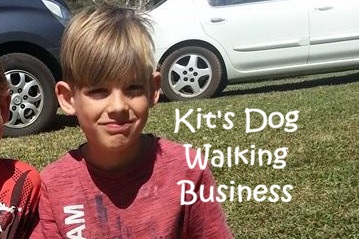
Pocket Money Ideas: Kit Starts His Dog Walking Business

Kit’s dog walking business showing pocket money ideas for kids

Pocket money ideas can become much more than a way for children to earn a few dollars. When a child has to plan, speak to a customer, negotiate a price and deliver a service, they are learning real enterprise skills.

“`

In this post, we revisit Kit and his enterprising dog walking business. This is part of our Dog Whisperer series, where Kit moved from having an idea to actually getting started.

“`

Kit with Pam's dog Elly starting his pocket money idea
Kit with Pam’s dog, Elly, before his first paid dog walking job.

Pocket Money Ideas: Kit Starts His Dog Walking Business

Our kids are becoming enterprising children!

In this post, we revisit Kit and his enterprising dog walking business. He was now ready to implement his carefully thought out dog walking enterprise plan.

It was the school holidays and we were all staying with Kit’s Gran and Grandad in Geraldton.

His first client was a family friend, Pam, who owned a small scruffy dog called Elly. Pam had been prepped with a phone call that Kit would be arriving with his Grandad to ask if she would be interested in hiring his services.

She was delighted to support Kit with his new enterprise and awaited their arrival.

Kit’s First Customer

Kit explained to Pam what his business entailed and the benefits that she and her dog would get if she hired his services.

Pam agreed that his service looked to be very good, and then she asked what his rate was.

Kit said five dollars.

Pam negotiated with him, and they agreed on four dollars for the half-hour walk.

Kit preparing to walk Elly as part of his pocket money idea
Kit preparing for his walk with Elly.
Kit walking Elly in Geraldton as part of his pocket money idea
A beautiful afternoon for a walk.

What Kit Learnt from Negotiating

This simple conversation with Pam became a very real business lesson.

Kit had to explain his service, talk about the benefits, name his price and then handle a small negotiation. For a young child, that is a big step.

This is why practical pocket money ideas are so useful. Children are not only earning money. They are learning how to communicate, listen, solve problems and build confidence.

Kit was pleased, but he was not completely sure how he was going to handle Pam’s little energetic dog.

Grandad was an excellent coach. He helped Kit attach the lead, offer Elly a treat and practise giving commands to the dog.

We also believe that children need adult support and supervision when working with animals. The RSPCA WA safety around dogs information is a useful reminder that children should be supervised around dogs and should learn how to behave calmly and safely.

A Pocket Money Idea That Became Real

Kit walking Elly and learning responsibility during a dog walking service
All dogs need a pit stop.
Kit finishing his dog walking job with Elly
Ending the walk.

The walk went very well with no dramas.

Kit returned Pam’s dog and then arrived back at his Gran and Grandad’s house very keen to tell his family all about his business.

That excitement matters.

It is one thing for a child to talk about a business idea. It is another thing entirely for that child to walk up to a real customer, offer a real service, do the job and come back with a story to tell.

Kit Gets Paid for a Job Well Done

Kit being paid for his dog walking pocket money idea
Kit being paid for a job well done.

Kit continued his dog walking enterprise for the next two days while we were on holidays in Geraldton.

He managed to make twelve dollars!

Kit was now on his way to attaining his goal.

As parents, we felt that more important than attaining his goal was the fact that Kit got started on his idea.

The Biggest Lesson: Getting Started

What holds many people back from achieving their dreams is the inability to actually start.

And of course, there will always be a myriad of reasons why not to start.

The time isn’t right.

There isn’t enough money.

There isn’t enough time.

My family won’t approve.

Not all conditions are right yet.

The list goes on.

These are the “buts” that stop people attaining their goals all the time, so it was refreshing to see one so young as Kit just do it.

That is why this story belongs in more than just a cute family memory. Kit’s dog walking job became one of those practical pocket money ideas that taught him about service, action, confidence, negotiation and follow-through.

Dog Whisperer Series: From Planning to Action

This article is part of Kit’s Dog Whisperer series.

  • Part 1: Kit Plans His Dog Walking Enterprise — Kit thinks through the idea, roadblocks, safety and value of his dog walking service.
  • Part 2: Kit Starts His Dog Walking Business — Kit gets his first client, negotiates a price, completes the job and earns his first money.

Small enterprises like this can teach children lessons that are difficult to learn from theory alone. Kit learnt by doing.

What Pocket Money Ideas Can Teach Children

When children are given the chance to explore safe and realistic pocket money ideas, they can learn much more than how to make a few dollars.

They can learn:

  • how to spot a need,
  • how to offer a service,
  • how to speak with a customer,
  • how to negotiate a price,
  • how to follow through,
  • how to handle responsibility,
  • and how good it feels to earn money from their own effort.

Our enterprising children are now all busy with their individual kid’s enterprises.

It will be time to check in with Jai and see whether his enterprise plan eventuated.

Until then……….

Key Takeaway: Pocket Money Ideas Build Confidence

Key takeaway: pocket money ideas can become powerful real-world learning experiences. Kit’s dog walking business taught him to speak to a customer, negotiate a price, work safely with support, complete the job and get started on his goal.

Where to Next?

What simple pocket money idea could help your child build confidence and get started?

Entrepreneurship Ideas for Students: The Candy Man Entrepreneur

Entrepreneurship ideas for students shown through Chayse bringing home lollies for his business

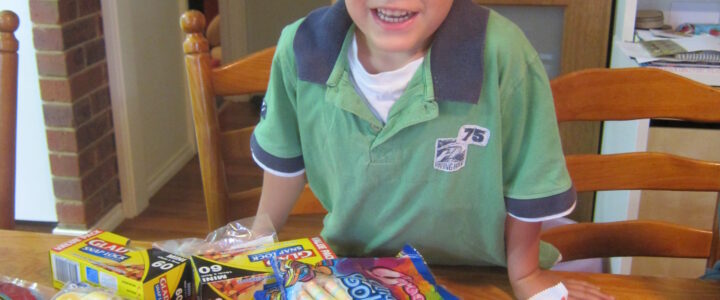
Entrepreneurship ideas for students can start with something as simple as a four-year-old, fifty dollars, a supermarket trip and a mountain of lollies.

This is Part 2 of Chayse’s Candy Man story. His business idea had been planned. Now it was time to buy the product, package it properly and get ready to sell.

Entrepreneurship ideas for students with Chayse taking fifty dollars to buy lollies
The Candy Man with his $50.
Chayse outside the supermarket buying lollies for his student business idea
…outside the supermarket!

Entrepreneurship Ideas for Students: The Candy Man Entrepreneur

Enterprise for children can be a lot of fun, especially if it involves a four-year-old and a mountain of lollies! After you read this blog, you’ll understand why Hansel and Gretel gave in to temptation to eat the witch’s candy house.

This post follows on from The Candy Man Planning an Enterprise, where Chayse first planned his lolly bag business and received $50 in start-up capital.

In this part of the journey, Chayse takes his plan to the supermarket and begins turning a simple idea into a real product.

From Planning to Action

Chayse and I headed off to the supermarket with his $50, just as he had planned.

We walked the candy aisle and Chayse picked out the lollies he thought would be the yummiest. He bought everything from snakes and milk bottles to musks, liquorice and lollipops.

Next he added 50 plastic sandwich bags and some packets of brightly coloured balloons to the shopping trolley. His whole investment of $50 was spent in no time.

The checkout lady asked him if it was his birthday. Chayse nodded.

Well, why complicate things when you are four?

Entrepreneurship Ideas for Students Need Real Products

Chayse setting up a lolly bag production line for his entrepreneurship idea
The production line!

Chayse’s brothers and sisters were at the car ready and waiting to escort him into the house and feast their eyes on all his lollies.

Chayse was really enjoying all the attention. He bossed his brothers and sisters around as they bugged him for a lolly and offered to carry his bags.

This is one of the reasons entrepreneurship ideas for students can be so powerful. A child suddenly has a real reason to make decisions, manage resources and take responsibility for something that belongs to them.

The Candy Man Production Line

Lollies being sorted into bags for Chayse's Candy Man business
Sorting the lollies into bags.

It was all hands on deck. Jaxon and Mitchy from next door came over to help out and a production line was organised around the kitchen table.

The lollies and balloons were placed into fifty piles and bagged up.

Chayse’s intention was to sell each bag for $2. So if all went to plan, he should make 100% on his investment.

That is not a bad return for a four-year-old Candy Man!

Learning About Price, Profit and Helpers

Chayse's production line team helping make lolly bags
The production line team!

Cathy and I helped him with a sturdy box to display his product. We attached a strap to the box to help him hold it up and then made up a sign.

Mitchy and Jackson ran off home and immediately returned with money to buy a bag each.

Chayse’s first customers!

98 candy bags to go!

Chayse’s brothers and sisters also wanted to buy a bag each with their pocket money. We had to put a halt to that as it was going to create troubles, especially as Chayse wanted to buy his own lollies too.

So the compromise was that they were able to polish off the leftover lollies. Of course, Chayse was in charge of sharing them out to his drooling family.

Entrepreneurship Ideas for Students Build Confidence

Chayse's first customer buying a lolly bag from his Candy Man business
Chayse’s first customer, Mitchy.

Chayse’s enterprise for children business was now all set to go. His next job was to market and sell his product.

Simple projects like this can become powerful kids business ideas, because children are not just pretending to run a business. They are learning about customers, product value, helpers, pricing, profit and confidence through real experience.

They are also learning the sort of practical money lessons for kids that are hard to teach from a worksheet.

Entrepreneur Cameron Herold makes a similar point in his TED talk, Let’s raise kids to be entrepreneurs. Children often learn entrepreneurial thinking best when they are encouraged to look for opportunities and create value.

The Candy Man Business Series

This post is Part 2 of Chayse’s Candy Man journey. You can follow the full series here:

Key Takeaway: Entrepreneurship Ideas for Students Can Start Small

Key takeaway: Entrepreneurship ideas for students do not need to be big, polished or complicated. Chayse’s Candy Man business started with $50, a trip to the supermarket and a family production line around the kitchen table.

Next up, we’ll tune in with Kit the Dog Whisperer and see whether his enterprising idea has evolved.

We would love to hear from you, so please leave a comment.

Flynn’s Honey Investment Continued……

Money lessons for kids shown through Flynn pouring honey for his business

Money lessons for kids become much more powerful when children experience them in real life. For Flynn, that meant negotiating with his Grandad, harvesting raw honey, making an investment and learning what it really takes to grow a small business.

This is Part 2 of Flynn’s honey business story, where his idea moved from plan to action — complete with bee suits, honey frames, sticky hands and a very serious investment for a twelve-year-old.

Money lessons for kids with Flynn and Grandad collecting honey frames for a business project
Flynn with Grandad collecting honey frames for his honey business.

Money Lessons for Kids: Flynn’s Honey Investment Continued

You may remember from a previous blog that Flynn’s Enterprise for Kids plan was to buy honey at wholesale and sell it at retail. All he needed was a good source of cheap, quality honey that he could buy in bulk.

If you missed the beginning of the story, you can read Part 1: Honey Pot of Gold, where Flynn first explained his honey business idea.

Finding a Product for Flynn’s Honey Business

Flynn’s Grandad has kept bees for over twenty years and had a number of hives which he regularly harvested honey from. The honey produced from his bees is very light in colour and tasty, as the bees forage over the Mid West fields of Paterson’s Curse and coastal gums.

Flynn knew that he had a good quality product.

His plan was to pay a visit and strike up a deal with his Grandad.

Flynn’s Grandad saw that Flynn had thought through his plan. He was more than willing to support Flynn with his new honey enterprise. Flynn negotiated a good price per kilogram, however, the deal included Flynn having to help his Grandad rob the honey from the hives.

You can listen to Flynn explaining the deal he made with his Grandad in his own words.

Money Lessons for Kids Through Real Work

Flynn putting on bee protective gear for money lessons for kids through real work
Flynn donning his gear.

Flynn was up for the challenge. He donned a pair of overalls, gloves, boots and bee veil. Then he and his Grandad disappeared for the morning, returning later in the day with a heavy load of honey supers in the back of the ute.

They were carted around to the rear of the house and quickly stacked in the garage. Already the local bees were honing in on the honey, hoping to pinch it for their own hives. The garage door was closed to keep the bees out.

This is where money lessons for kids become very real. Flynn was not just talking about business. He was helping collect the product, understanding the effort behind it and learning that profit starts long before anything is sold.

For families in Western Australia interested in bees and beekeeping, the Department of Primary Industries and Regional Development has useful information about beekeeping in Western Australia.

Extracting the Raw Honey

Flynn slotting honey combs into the extractor for his honey business
Flynn slotting the honey combs into the honey extractor.
Extracting honey from the honey combs for Flynn's honey business
Extracting the honey from the honey combs.

Grandad sliced the caps off the honey combs with a hot, special-purpose electric knife and Flynn slotted them into a honey extractor.

The extractor uses centrifugal force to extract the honey from the combs. It was Flynn’s job to spin the extractor, which proved to be a lot of fun. Although everything nearby became sticky with escaping honey, including Flynn!

Preparing the Honey for Sale

Checking the temperature of raw honey for Flynn's business project
Checking the temperature of the honey.
Raw honey prepared for Flynn's honey enterprise and money lessons for kids
Yummy raw honey — a great enterprise venture.

Flynn’s brother Jai, and a family friend Jack, stopped by to lend a hand. Many hands made light work and before long, after warming and sieving the honey, it was sealed into 10kg buckets.

Angry bees do not take too kindly to people robbing their hives. It was pretty amazing that Flynn managed to do all this work without getting stung. His Grandad and Dad were not so fortunate though!

A Big Investment and Money Lessons for Kids

Enterprising Flynn paid cash for 80kg of honey from his Grandad. He loaded it all up in our car to take it back to his home.

It was a large investment for a twelve-year-old and Flynn, knowing its value, took great care to ensure that the honey was well sealed and cushioned for the long trip home. He did not want it spilling, nor did he want any ants finding their way into his containers.

This was one of the most important money lessons for kids in the whole project. Flynn had to understand cost, risk, value and responsibility before he even made his first sale.

Flynn filling honey tubs with Grandad as part of money lessons for kids
Filling tubs with Grandad.

Flynn wanted to sell his honey at retail. He had done his research and found that honey generally sold in shops for around $12 or $13 a kilogram.

He had a unique product. It was tasty, raw and full of enzymes, which are generally destroyed during commercial pasteurisation processes.

Learning About Presentation and Retail Value

Flynn had also searched online for plastic honey pots. We discussed with him that people would pay a premium for his product if it looked professionally bottled and was not sold in recycled jam jars.

New plastic honey pots were not cheap. The larger the order, the better the price.

Flynn made his order over the phone and bought five hundred 500ml pots. These were delivered by mail within a few days, arriving in a massive cardboard box.

Flynn ordered honey jars and lids for his honey business
Flynn ordered honey jars and lids.
Honey jars ready to be filled for Flynn's honey enterprise
…ready to be filled.

So now he was all set to go with his Enterprise for Kids project. He had his honey and honey pots and had spent every cent that he had.

It was a huge investment and Flynn had no choice but to make it work. He had overcome fear and had taken a calculated risk with his business. All he had to do now was bottle, market and sell his honey.

And this will all be revealed in a later blog!

Flynn’s Honey Business Series

This article is Part 2 in Flynn’s honey business series, a family enterprise story about money lessons for kids, family business ideas, product value and learning by doing.

These posts show how family enterprise stories can teach children lessons that are hard to learn from theory alone.

Key Takeaway: Money Lessons for Kids Need Real Experience

Key takeaway: Money lessons for kids become much more meaningful when children handle real products, make real decisions and take real responsibility. Flynn’s honey investment gave him practical experience with cost, risk, quality, presentation and enterprise.

Where to Next?

If you enjoyed this part of Flynn’s honey business story, you may also like:

In our next Enterprise for Kids blog, we check back with Candy Man Chayse and see how his enterprise has been progressing.

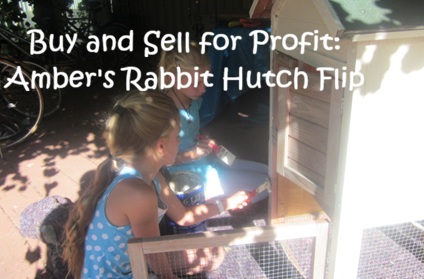
Buy and Sell for Profit: Amber’s Rabbit Hutch Flip

Buy and sell for profit with Amber's rabbit hutch flip

Buy and sell for profit sounds simple, but it teaches children a lot. They have to spot an opportunity, understand value, negotiate a price, improve the item, advertise it well and then complete the sale.

“`

This is the second article in Amber’s New From Old series. After planning her enterprise idea, Amber wasted no time putting it into action — and her rabbit hutch flip became a wonderful first success.

“`

Amber contemplating how to buy and sell for profit through her New From Old enterprise
Amber contemplating her next New From Old enterprise opportunity.

Buy and Sell for Profit: Amber’s Rabbit Hutch Flip

Amber didn’t waste any time jumping into her New From Old money-making enterprise.

She bugged me to take her to the Dardanup Tip to see what she could find. So, after her Saturday soccer game, we paid a visit.

At the tip there was a salvage area where anything that could be recycled was put aside and sold. The current Shire of Dardanup Waste Transfer Station and Recycling Centre information still shows how recycling and Tip Shop-style reuse can be part of local waste recovery.

Almost immediately, Amber spotted an opportunity.

She saw a damaged rabbit hutch. We looked over it and could see that it was generally in good structural condition and could easily be repaired. However, it did need a paint job.

So Amber went up to the tip man and struck up a deal.

She bought the cage for $10.

Ten dollars was a real bargain! We looked up the exact same cage sold online in kit form and saw that people were paying around $180 for them.

Amber’s New From Old Series

This post belongs in Amber’s New From Old series, where she learns how to find second-hand items, improve them and sell them for profit.

Repairing the Rabbit Hutch

Arriving home, there was a buzz of interest as the neighbouring kids headed around to see Amber’s rabbit hutch. They were really curious to see what she was up to.

Amber bought a couple of paint brushes for $5. Then, using some old house paint she found in the shed, she and her friends set to work painting.

She also employed her brother Flynn and his mate Dan for $2 each to fix the broken part of the cage.

They thought that would be awesome!

Enterprise for Kids was now becoming infectious in the neighbourhood.

Chayse helping Amber repair the rabbit hutch for a buy and sell for profit project
Chayse helping Amber repair the rabbit hutch.
Amber fixing the door latch on a rabbit hutch to sell for profit
Amber fixing the door latch.

Learning to Add Value

This was a wonderful real-world money lesson.

Amber had not simply found something to sell. She had found something that needed attention, repair, paint and presentation before someone else would see its value.

That is one of the big lessons in learning to buy and sell for profit.

Profit often comes from seeing value that other people miss.

Amber was learning how to:

  • spot a bargain,
  • research the value,
  • negotiate the purchase price,
  • make repairs,
  • use help wisely,
  • advertise the item,
  • and sell for a profit.
Amber employing Flynn to help repair her rabbit hutch for a resale project
Amber employing Flynn to help her fix the rabbit hutch.

Pricing and Advertising the Rabbit Hutch

It was all great fun and, in no time at all, the cage was ready to be sold.

Amber continued her research into what to sell the cage for. She spoke with Darcy’s Mum about cages and also to Nicolette from next door. Both had owned rabbit cages and understood their value.

Finally, Amber decided that she would ask $90 for the bunny hutch.

Her next job was to put a free advert on the local Buy and Sell Bunbury Facebook page.

She put her ad up with a photo and waited for a response.

Amber photographing her rabbit hutch before advertising it to sell for profit
Now for the picture for Amber’s Facebook advert.
Amber's finished rabbit hutch ready to sell for profit
Amber’s finished enterprise idea.

Sold for $90!

You wouldn’t believe it!

Within ten minutes, the cage was sold for the full $90.

In fact, two other people had their hand up to buy the cage if the first deal fell through.

Amber met and thanked the man who came around to pick the cage up and eagerly took the cash payment.

She really did pull the money bunny out of the hat!

Amber’s Profit

All up, it was an outstanding result.

In only a few days, Amber’s profit was $71 after costs.

She was well on the way to attaining her goal.

With her money jar now looking very full, she was rearing to go for another visit to the tip!

She had already begun developing an enterprise mindset around business and money, and her financial IQ was growing.

What Amber Learnt About Buying and Selling

Amber’s rabbit hutch flip was not just about making $71.

It taught her that she could take an idea, act on it, solve problems, ask for help, make decisions and sell something successfully.

That kind of learning is powerful.

She also learnt that buying and selling for profit is not only about finding something cheap. It is about understanding value.

She had to ask:

  • Is this item worth fixing?
  • Can it be repaired easily?
  • What will the costs be?
  • What are similar items selling for?
  • Who might want to buy it?
  • How should I photograph and advertise it?
  • What price should I ask?

These are real business questions.

Buy and Sell for Profit: The Bigger Lesson

For children, a simple resale project can teach lessons that are difficult to learn from a worksheet.

Amber learnt through action.

She learnt that opportunity can sometimes be sitting at the tip, waiting for someone with imagination to notice it.

She learnt that old things can become valuable again.

She learnt that money can be created through effort, creativity and follow-through.

Most importantly, she learnt that she could do it.

That belief is one of the most valuable outcomes of all.

Key Takeaway: Buy and Sell for Profit Starts With Spotting Value

Key takeaway: buy and sell for profit projects can teach children how to spot value, negotiate, repair, research prices, advertise and complete a sale. Amber’s rabbit hutch flip showed that one small second-hand item can become a powerful real-world money lesson.

Where to Next?

What second-hand item could your child buy, improve and sell for profit?

Coding for Kids: Jai’s Apple App Enterprise Idea

Coding for kids with Jai’s Apple app enterprise idea

Coding for kids can be more than screen time. For a child who loves technology, gaming, social media and the internet, coding can become a way to create, solve problems and even explore enterprise ideas.

“`

Jai’s interest in technology became the starting point for his Apple app enterprise idea. Rather than only seeing his screen time as a problem, we wanted to help him channel that passion into something creative and entrepreneurial.

“`

Jai using technology as part of coding for kids and his Apple app enterprise idea
Jai loved technology, gaming and the internet — and we wanted to help him channel that interest into enterprise.

Coding for Kids: Jai’s Apple App Enterprise Idea

Jai, like many teenage kids, is fascinated by the internet, social media and gaming.

If you allowed him, he would spend day and night on his computer, iPod or mobile phone chatting to his friends, playing games or searching the net.

We are careful that he is well-rounded, with a balance of activities such as kicking the footy and playing with his family, while at the same time allowing him the opportunity to immerse himself in his passion.

Jai balancing exercise and technology while exploring coding for kids
Jai leads a balanced life.

That balance matters.

Technology can easily become passive entertainment, but it can also become a pathway into creativity, learning and enterprise. This is where coding for kids becomes so interesting.

A child who loves screens may also love designing, building, experimenting, creating games, solving problems or developing apps.

Turning Screen Time Into Enterprise

When we introduced the Family Project to Jai, he knew exactly what he wanted to do.

His very grand idea was inspired by a family friend who had developed a hugely successful company based around building iPhone apps.

Let me tell you, in a nutshell, his inspiring self-taught success story.

A friend of ours was originally from Switzerland and had worked most of his life in a newsagency. He also had a passion for windsurfing and would take every opportunity to visit the West Coast of Australia in pursuit of the consistent strong summer winds that make the WA coastline a windsurfer’s heaven.

In Perth, the capital city of Western Australia, the wind is named the Fremantle Doctor because it appears to come from the nearby coastal city of Fremantle and brings welcome relief from the summertime high temperatures.

Our friend then decided to leave his Switzerland home to follow his passion, and the Fremantle Doctor, and set up home permanently in Geraldton, a small coastal city north of Perth.

He literally became a beach bum who spent his afternoons windsurfing and kite surfing. In his spare time, he would play around on his computer.

A Self-Taught App Developer Story

He taught himself how to program apps for Apple iPhones and was able to make a few simple applications which he tried to sell online.

This is where his enterprise kicked off.

From the comfort of his backyard hammock, one of his apps began selling. Sales exploded, and millions of people from all around the world downloaded it. For each download, he received a payment.

His success seemed to happen almost overnight.

This entrepreneur went on to build a multi-million-dollar company with three other partners, all from Switzerland, who incidentally had also followed the Fremantle Doctor to Geraldton.

What this man, with no formal qualifications in the beginning, managed to do in only a few years was mind-blowing.

His story inspired my fourteen-year-old son.

Jai’s Apple App Enterprise Idea

Jai’s enterprise plan was to build an Apple app and sell it online.

How he would manage to do that was not known yet.

All he needed at the beginning was a goal and a rough plan. Then he could focus on and tackle each of the steps one by one.

Maybe Jai too would become an overnight success like our friend!

Jai with hair-raising ideas while exploring coding for kids and app development
Jai often has hair-raising ideas.

The wonderful thing about this kind of enterprise idea is that it starts with a child’s natural interest.

Jai already loved technology. The challenge was to help him move from consuming technology to creating with technology.

That is the opportunity parents can look for.

When a child spends hours on a device, the question is not only, “How do we stop this?”

Sometimes the better question is, “How could this passion become useful, creative or enterprising?”

Why Coding for Kids Matters

Coding for kids can teach much more than computer skills.

It can help children learn:

  • problem solving,
  • creative thinking,
  • logic,
  • design,
  • persistence,
  • testing and improving,
  • and how to turn an idea into something real.

For Jai, coding and app development also connected with enterprise.

An app is not just a piece of technology. It can be a product. It can solve a problem. It can be sold. It can reach people far beyond your own town.

That was the part that excited him.

Learning to Code and Build Apps

Today, there are many more resources available for children and teenagers who want to explore coding and app development.

Apple’s Swift Playground is one example of a tool that helps beginners learn to code and build apps using Swift.

Apple’s education resources also show how students can move from their first line of code through to building their first app with Swift Playground.

For families, the key is not necessarily to know exactly how the whole pathway will unfold.

The key is to help a child start.

From Passion to Pathway

This post preludes Jai’s enterprise pathway.

He began with a passion for technology, a story that inspired him and a big idea that felt exciting.

He did not yet know every step.

But he had a direction.

That is often how enterprise begins.

A child sees something, hears a story, connects it with their own interests and thinks, “Maybe I could do that too.”

That moment is worth encouraging.

Jai’s Enterprise Pathway

This article is part of Jai’s enterprise journey.

In our next blog, we revisit Amber and see how she is going with her New From Old enterprise.

Key Takeaway: Coding for Kids Can Build Enterprise Thinking

Key takeaway: coding for kids can turn a child’s interest in technology into creativity, problem solving and enterprise. Jai’s Apple app idea showed us that screen time can become more meaningful when children are encouraged to create, build and follow a pathway from passion to possibility.

Where to Next?

What technology interest could your child turn into a creative or enterprising pathway?