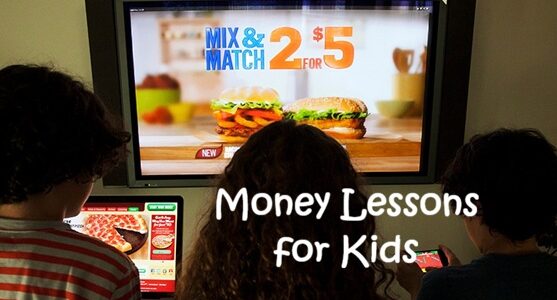
Money lessons are happening all around our children, whether we notice them or not. If you don’t teach your kids about money, then there are plenty of people out there who will. And not all of them will teach your children what they really need to know.
“`
Media, celebrities, advertising, peers, schools, banks and family choices all help shape what children believe about earning, spending, borrowing and wanting more. That is why money lessons for kids need to begin at home, in the everyday moments where children ask for things, make choices and learn how money really works.
“`

Money Lessons for Kids: Who Is Teaching Them About Money?
Our kids are educated financially from many sources, whether we like it or not. Everywhere they go and everything they look at is conditioning them around money.
For example, teenage kids are very influenced by their peers, TV, advertising and social media. They are pressured to want to have all the latest and greatest of everything. AND… they have to have it now!
If you have a teenager in your house, or even a preteen, you will understand this very well. They will tell you that they are the “only” ones in the “whole world” who don’t have one. And if you try to compromise with a cheaper version from Target… well, forget it! Brand name or nothing!
The Money Lessons Children Learn From Wanting More
Many parents fall into the trap of giving in to their kids’ persistent demands. We have… more times than we should have! And the older a child gets, the better they are at arguing their point.
Sometimes parents lend their child the money with the view of having them pay it back when they can afford it. Other times, parents simply pay for the item fully and do not expect their child to pay anything back.
But what is this teaching children?
That is the question we had to ask ourselves when Flynn wanted an iPod for school camp.
Flynn’s iPod Money Lesson
Our son Flynn was preparing to go on a camp with his school. He claimed that ALL the kids would have iPods, and that he wanted to buy one to take on camp.

He counted up his money and found that he was short about $100. He was very persistent in his request, so we decided to sit down and have a conversation with him around the value of money.
Our dilemma was this: if we were to say an outright, “No, we can’t afford it,” then we would be conditioning him with a mindset around lack of money.
On the other hand, if we said, “Yes,” and simply paid for it, then we would be conditioning him with the mindset to borrow, then spend… and he would probably not appreciate it too much.
So…………… we came up with another solution.
Turning a Want Into a Money Lesson
We said, “Yes.” He could buy an iPod. However, we were not able to pay for it.
Instead, we brainstormed ideas with Flynn on how he could raise the $100 himself. Time was of the essence, as he was going on camp in three days.
Together, we came up with several ideas. He could increase the marketing of the honey he was selling through his Honey Enterprise. He could sell some of his unwanted things, such as his surfboard. He could also do a deal with his sister and buy the items she had lined up to sell as part of her New From Old enterprise, then resell them with a mark-up.
The discussion gave him motivation, and we took the punt that if he was really keen for the iPod, then he would make it happen.
The point of all this is that we didn’t automatically say, “No, we can’t afford it,” and we didn’t say, “Yes, and we will pay for it.”
Rather, we put the onus on Flynn to work out a way to achieve his goal without getting himself into debt. We used this opportunity to teach Flynn about money.
Who Is Teaching Your Kids About Money?
In our society, kids are conditioned to earn, spend and borrow from a very early age. This conditioning can carry through to adulthood and tie people to a job, especially when they need that job to pay for the interest payments on their “things”.
That is why money lessons for kids matter so much. If we do not consciously teach children how to think about money, they may simply absorb the messages around them.
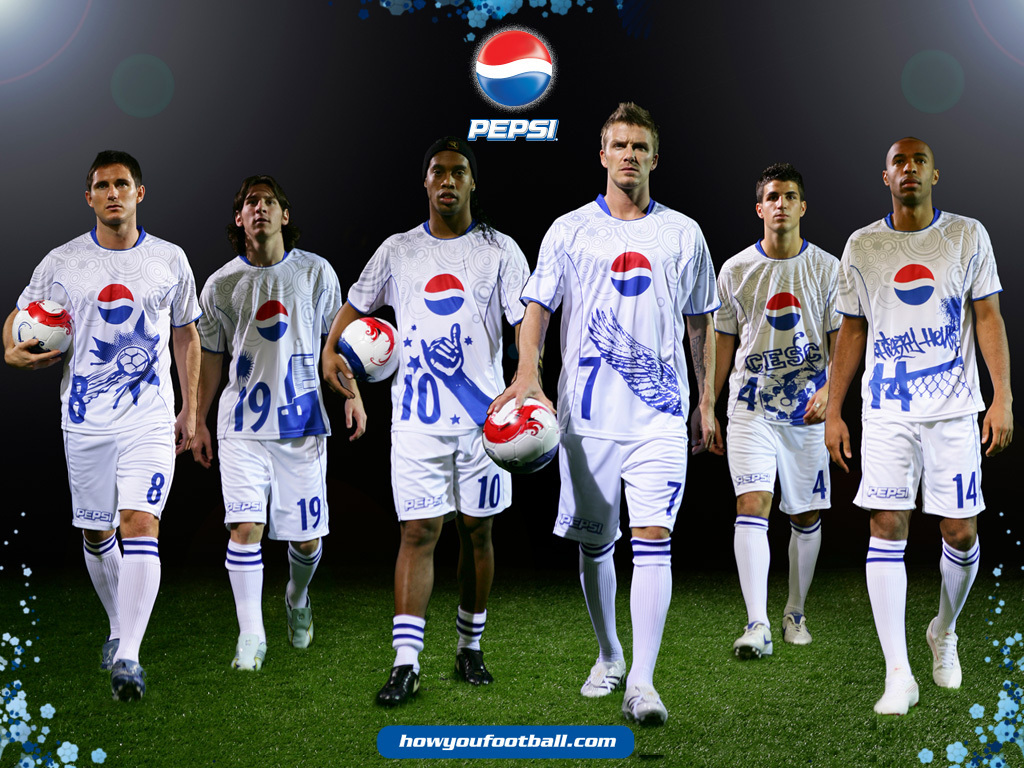
It is hard for our kids to avoid this type of conditioning. Their sporting idols appear on TV advertisements telling them what a great investment they are making if they buy x, y or z… and finish with a trusting wink!
In the same way, celebrities promote all sorts of things, from insurance and jewellery to holidays. Retailers offer low-cost, easy monthly payments for expensive items that people may not really be able to afford.
There goes the “earn, spend and borrow” cycle again.
Advertising Teaches Money Lessons Too
Advertising does not just sell products. It also teaches children what to value, what to want and how quickly they should expect to have things.
For this reason, parents need to be part of the conversation.
When a child says, “Everyone has one,” or “I need it now,” there is an opportunity to slow the conversation down and ask some better questions:
- Do you really want this, or do you feel pressured to want it?
- How much does it cost?
- How could you earn the money?
- What would you need to give up to buy it?
- Could you buy it second-hand?
- Could you create money rather than borrow money?
These simple questions can turn everyday wants into powerful money lessons.
Schools, Debt and Financial Choices
The education system may teach many important things, but practical money education can still be limited. Many young people move towards adulthood without having deeply discussed debt, credit, consumer pressure, business, enterprise, financial freedom or how to make money work for them.
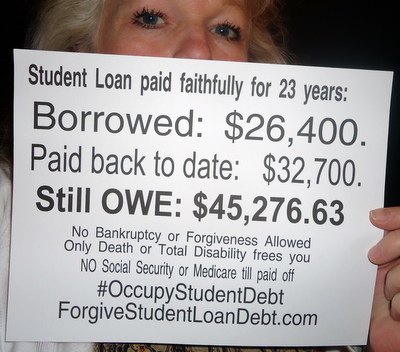
As a result, many young people begin adult life already carrying financial pressure. This might come through study costs, consumer debt, car loans, lifestyle spending or the general cost of getting started.
That is why a financial education for your kids before they leave home matters.
The Australian Government’s MoneySmart guide to teaching kids about money is a helpful reminder that parents can start early and make money part of everyday conversation.
Can These Money Lessons Change?
We can look at life as being a game full of experiences. We are here on earth to play the game.
Yet from an early age, the odds can feel stacked against us achieving personal and financial freedom when we are conditioned to earn, spend and borrow for unproductive things.
Can this change?
Absolutely.
And who is the best person to teach this change to your children?
Well, if you have already achieved financial and personal freedom, then the best teacher is YOU!
And if you haven’t, then find someone who has achieved the type of financial or personal success you would like for your kids. You may even learn something in the process. 🙂
Money Lessons for Kids Begin at Home
The most powerful money lessons for kids often begin in ordinary family moments.
A child wants something.
A parent has a choice.
We can shut the conversation down, pay for everything, lend the money, or turn the moment into a learning opportunity.
Flynn’s iPod story reminded us that teaching kids about money does not always require a formal lesson. Sometimes it simply requires a different conversation.
Instead of saying, “We can’t afford it,” or “Yes, we’ll buy it,” we can ask, “How could you create the money?”
That question changes everything.
Key Takeaway: Money Lessons Are Happening Every Day
Key takeaway: money lessons are happening around children every day. Media, peers, celebrities, advertising and family choices all shape how kids think about money. Parents can use everyday wants, like Flynn’s iPod goal, to teach children how to earn, choose, create value and avoid unnecessary debt.
Where to Next?
- Read MoneySmart’s guide to teaching kids about money
- Read Money Mindset for Kids: Moving Beyond Earn, Spend and Borrow
- Read Flynn’s Honey Turns to Gold
- Read Amber’s New From Old resale enterprise story
- Explore more Money Lessons for Kids
Who is teaching your children their money lessons — and what are they learning?