Pet Business Ideas for Kids: Fish, Plants and Small Enterprise

Colourful aquarium fish representing pet business ideas for kids

Pet business ideas for kids can begin with something as simple as a hobby. For children who love animals, fish, poultry or small pets, a pet-related enterprise can teach responsibility, research, care, pricing and customer relationships.

“`

But any pet business idea must begin with animal welfare. Pets are living creatures, not products. The best lessons come when children learn to care properly, research carefully and put the wellbeing of animals first.

“`

Chayse Howitt feeding poultry as part of pet business ideas for kids
Pet hobbies can teach children care, responsibility and enterprise skills.

Pet Business Ideas for Kids: Fish, Plants and Small Enterprise

As a kid, I loved keeping pets. In fact, many people referred to our suburban home as being the local zoo. Kids from all over the neighbourhood would come by to see the goings-on in our backyard.

I had a huge fish pond which, during the summer, would be teeming with little colourful fish. The fish first started out in my aquarium and, as they multiplied, they ended up in the pond.

By the end of the summer there would be so many fish that, if I did not find homes for them, they would overpopulate the pond and create problems.

So I would catch them by the hundred, put them into big buckets and take them off to the local aquarium shops. The shop owners were happy to get my fish and paid me 50 cents each.

Thirty-five years ago, this amounted to a lot of money.

How a Fish Hobby Became a Small Enterprise

Swordtail fish as an example of pet business ideas for kids interested in aquarium fish
Swordtails are colourful aquarium fish, but any breeding project needs research and responsible care.
Trevor Howitt's aquarium showing how fish keeping can lead to pet business ideas for kids
Trevor’s aquarium hobby became one of his earliest enterprise lessons.

One time, I remember delivering a bucket full of swordtails, which are renowned for jumping.

The aquarium shop owner left the bucket on the ground without a lid while he went about his shop business. He returned later in the day to find nearly all the fish on the ground!

I also divided up the water lilies and pulled out huge amounts of water plants that were thriving in the summer heat in the pond. These were also sold to the aquarium shops.

All up, my pet hobby well and truly paid for itself.

It also taught me some early business lessons:

  • look after your stock well,
  • understand what buyers want,
  • build relationships with local shops,
  • keep quality high,
  • and turn a hobby into something useful.

Pet Business Ideas for Kids Can Start With a Hobby

Today I still keep aquarium fish and breed them in ponds during the summer. Some of my children have taken an interest in them and keep fish as well.

A close friend of the family, Brayden, stopped by our place and showed an interest in my fish. I told him what I was doing and shared the story of how I used to sell fish to aquarium shops.

Guppies as an example of aquarium fish linked to pet business ideas for kids
Guppies helped Brayden see how a pet hobby could become a small enterprise idea.
Brayden exploring a fish enterprise as part of pet business ideas for kids
Brayden’s interest in aquarium fish led him to explore a small fish enterprise.

Fifteen-year-old Brayden also kept fish. He had an aquarium full of guppies.

As a result of our conversation, he took his guppies down to the local pet shop and sold them for $2.50 each.

He was so pleased with his fish sale that he began playing with figures to see whether it would be worth trying to farm aquarium fish as an enterprise.

His figures stacked up.

He told me that he had acquired several large fish tanks, had done his research and had worked out which fish were easy to breed and which were sought after by aquarium shops.

His aquaculture enterprise was just beginning and had the potential to do very well.

Responsible Pet Business Ideas for Kids

Pet business ideas for kids can be exciting, but they also need to be approached carefully.

Any child or teenager interested in a pet-related enterprise should have adult guidance and should understand that animals need consistent, humane and knowledgeable care.

Before breeding, selling or rehoming any animals, families should check:

  • local animal welfare laws and council requirements,
  • pet shop expectations,
  • species-specific care requirements,
  • housing, space, food and cleaning needs,
  • platform rules if advertising online,
  • and whether there is genuine demand before breeding more animals.

The RSPCA’s responsible pet ownership information is a helpful reminder that caring for animals is a long-term commitment.

A pet business should never be built around producing animals quickly without proper care, planning and responsibility.

Choosing the Right Pet Business Idea

Here are some helpful tips if you are considering pet business ideas for kids.

Start with research

Before buying or breeding anything, learn as much as possible about the animal or plant. Some animals can be difficult to keep and may require expensive equipment, specialist food, careful temperature control or veterinary support.

Choose quality and health first

If breeding is involved, start with healthy, well-cared-for animals from responsible sources. The aim should be strong, healthy animals and a good reputation, not simply producing as many as possible.

Ask local shops what they need

Pet shops and aquarium shops may have specific species, colours, sizes or plants they are regularly looking for. This can help a young person understand demand before investing time or money.

Keep excellent care standards

Good food, clean water, suitable housing, safe temperatures and low-stress handling all matter. Animal welfare should always come before profit.

Build a good reputation

If a child sells to a shop or local customer, quality and honesty matter. A good reputation is built by being reliable, knowledgeable and responsible.

Consider pet-related services too

Not every pet business idea needs to involve breeding or selling animals. Some children may be better suited to pet sitting, dog walking with adult supervision, making pet accessories, growing aquarium plants or helping neighbours with safe animal care tasks.

Animal Enterprise Ideas Need Specialist Knowledge

Baby rats showing why small animal pet business ideas for kids require careful welfare and research
Small animal projects require careful research, humane care and family supervision.
White peacock showing that some pet business ideas for kids need specialist knowledge and care
Some animal enterprise ideas need specialist knowledge, space, experience and proper care.

Some animal-based ideas sound simple at first, but they can become complex very quickly.

Small animals, poultry, fish, birds and specialist breeds all have different needs. Some require licences, space, careful housing, disease prevention, temperature control or experienced handling.

That is why a family should always do the research first.

For children, the best enterprise lessons usually come from small, manageable projects where they can learn responsibility without becoming overwhelmed.

What Pet Business Ideas Teach Kids

Pet business ideas for kids can teach much more than how to make money.

They can help children learn:

  • responsibility,
  • research skills,
  • daily care routines,
  • pricing and profit,
  • customer relationships,
  • record keeping,
  • patience,
  • and respect for living things.

These are valuable enterprise lessons.

A child who learns to care properly for animals, understand customer needs and manage a small project is developing skills that can transfer into many other areas of life.

Maybe Your Pet Hobby Can Pay for Itself

Maybe you too can develop a pet enterprise, or at least have your pets help pay for themselves.

But the starting point should always be care, not cash.

If a child already loves fish, poultry, small animals or pets, then a carefully guided enterprise project might help them learn business skills while deepening their responsibility.

If they do not enjoy the care side, then a pet business is probably not the right fit.

The best pet business ideas for kids are the ones where the child learns to respect animals, serve customers and grow slowly and responsibly.

Key Takeaway: Pet Business Ideas for Kids Must Put Care First

Key takeaway: pet business ideas for kids can teach responsibility, research, care, pricing and profit. Trevor’s childhood fish enterprise and Brayden’s guppy project show how a hobby can become a small business lesson, but animal welfare must always come first.

Where to Next?

What pet-related hobby could your child turn into a responsible enterprise lesson?
Coding for Kids: Jai’s Apple App Enterprise Idea

Coding for kids with Jai’s Apple app enterprise idea

Coding for kids can be more than screen time. For a child who loves technology, gaming, social media and the internet, coding can become a way to create, solve problems and even explore enterprise ideas.

“`

Jai’s interest in technology became the starting point for his Apple app enterprise idea. Rather than only seeing his screen time as a problem, we wanted to help him channel that passion into something creative and entrepreneurial.

“`

Jai using technology as part of coding for kids and his Apple app enterprise idea
Jai loved technology, gaming and the internet — and we wanted to help him channel that interest into enterprise.

Coding for Kids: Jai’s Apple App Enterprise Idea

Jai, like many teenage kids, is fascinated by the internet, social media and gaming.

If you allowed him, he would spend day and night on his computer, iPod or mobile phone chatting to his friends, playing games or searching the net.

We are careful that he is well-rounded, with a balance of activities such as kicking the footy and playing with his family, while at the same time allowing him the opportunity to immerse himself in his passion.

Jai balancing exercise and technology while exploring coding for kids
Jai leads a balanced life.

That balance matters.

Technology can easily become passive entertainment, but it can also become a pathway into creativity, learning and enterprise. This is where coding for kids becomes so interesting.

A child who loves screens may also love designing, building, experimenting, creating games, solving problems or developing apps.

Turning Screen Time Into Enterprise

When we introduced the Family Project to Jai, he knew exactly what he wanted to do.

His very grand idea was inspired by a family friend who had developed a hugely successful company based around building iPhone apps.

Let me tell you, in a nutshell, his inspiring self-taught success story.

A friend of ours was originally from Switzerland and had worked most of his life in a newsagency. He also had a passion for windsurfing and would take every opportunity to visit the West Coast of Australia in pursuit of the consistent strong summer winds that make the WA coastline a windsurfer’s heaven.

In Perth, the capital city of Western Australia, the wind is named the Fremantle Doctor because it appears to come from the nearby coastal city of Fremantle and brings welcome relief from the summertime high temperatures.

Our friend then decided to leave his Switzerland home to follow his passion, and the Fremantle Doctor, and set up home permanently in Geraldton, a small coastal city north of Perth.

He literally became a beach bum who spent his afternoons windsurfing and kite surfing. In his spare time, he would play around on his computer.

A Self-Taught App Developer Story

He taught himself how to program apps for Apple iPhones and was able to make a few simple applications which he tried to sell online.

This is where his enterprise kicked off.

From the comfort of his backyard hammock, one of his apps began selling. Sales exploded, and millions of people from all around the world downloaded it. For each download, he received a payment.

His success seemed to happen almost overnight.

This entrepreneur went on to build a multi-million-dollar company with three other partners, all from Switzerland, who incidentally had also followed the Fremantle Doctor to Geraldton.

What this man, with no formal qualifications in the beginning, managed to do in only a few years was mind-blowing.

His story inspired my fourteen-year-old son.

Jai’s Apple App Enterprise Idea

Jai’s enterprise plan was to build an Apple app and sell it online.

How he would manage to do that was not known yet.

All he needed at the beginning was a goal and a rough plan. Then he could focus on and tackle each of the steps one by one.

Maybe Jai too would become an overnight success like our friend!

Jai with hair-raising ideas while exploring coding for kids and app development
Jai often has hair-raising ideas.

The wonderful thing about this kind of enterprise idea is that it starts with a child’s natural interest.

Jai already loved technology. The challenge was to help him move from consuming technology to creating with technology.

That is the opportunity parents can look for.

When a child spends hours on a device, the question is not only, “How do we stop this?”

Sometimes the better question is, “How could this passion become useful, creative or enterprising?”

Why Coding for Kids Matters

Coding for kids can teach much more than computer skills.

It can help children learn:

  • problem solving,
  • creative thinking,
  • logic,
  • design,
  • persistence,
  • testing and improving,
  • and how to turn an idea into something real.

For Jai, coding and app development also connected with enterprise.

An app is not just a piece of technology. It can be a product. It can solve a problem. It can be sold. It can reach people far beyond your own town.

That was the part that excited him.

Learning to Code and Build Apps

Today, there are many more resources available for children and teenagers who want to explore coding and app development.

Apple’s Swift Playground is one example of a tool that helps beginners learn to code and build apps using Swift.

Apple’s education resources also show how students can move from their first line of code through to building their first app with Swift Playground.

For families, the key is not necessarily to know exactly how the whole pathway will unfold.

The key is to help a child start.

From Passion to Pathway

This post preludes Jai’s enterprise pathway.

He began with a passion for technology, a story that inspired him and a big idea that felt exciting.

He did not yet know every step.

But he had a direction.

That is often how enterprise begins.

A child sees something, hears a story, connects it with their own interests and thinks, “Maybe I could do that too.”

That moment is worth encouraging.

Jai’s Enterprise Pathway

This article is part of Jai’s enterprise journey.

In our next blog, we revisit Amber and see how she is going with her New From Old enterprise.

Key Takeaway: Coding for Kids Can Build Enterprise Thinking

Key takeaway: coding for kids can turn a child’s interest in technology into creativity, problem solving and enterprise. Jai’s Apple app idea showed us that screen time can become more meaningful when children are encouraged to create, build and follow a pathway from passion to possibility.

Where to Next?

What technology interest could your child turn into a creative or enterprising pathway?

Vision Board Goals for Kids: Enterprise, Money and Action

Kids writing down goals for a vision board about enterprise money and action

A vision board can help children turn a goal into something they can see, feel and act on. Visualising a goal, evoking the emotional response within, and then taking the necessary action are all important ingredients in achieving something meaningful.

“`

Whether the action involves acquiring knowledge, building skills, doing something physical or creating a small enterprise, children need a goal they can believe in before they are likely to follow through.

“`

Family writing goals in a notebook before creating a vision board
A vision board begins with clear goals, written down and connected to action.

Vision Board Goals for Kids: Enterprise, Money and Action

In fact, many leading sports men and women use visualisation as part of their preparation.

I remember reading about one of Australia’s very best runners, Cathy Freeman, who won gold in the 1994 Canadian Commonwealth Games in both the 200m and 400m races.

Cathy began her preparation for the 200m race two years earlier.

Every day she trained and visualised the race in her mind. Her visualisation included every detail of the race, from what she was wearing, to the lane she was in, and how she would run the race from start to finish.

She even pictured the time she would get and how much it would take to beat the second-place getter.

She was so mentally prepared that she had no doubts at all that she had the gold in the bag.

Cathy Freeman showing the power of visualising a goal
Cathy Freeman showed the power of visualising a goal and preparing with belief.
Cathy Freeman winning gold as an example of goal setting and visualisation
Cathy Freeman winning gold.

She had already won in her mind.

As it turned out, she ran the race beautifully. She is a living legend.

Why a Vision Board Can Help Kids Believe in a Goal

Imagine if our kids were able to muster up that sort of determination and self-belief.

It would make anything possible for them.

So our kids needed to see a real purpose in the kids enterprise project they were embarking on. Without a real purpose they could believe in, they would not have the steam to see it through.

Before we even considered kids enterprise ideas, I asked them to think of something they would like to buy with the profits they were going to make from their enterprise businesses.

It had to be something they really wanted.

It also had to be something they realistically believed they would be able to achieve.

From Dream to Dollar Amount

Coming up with ways to spend the money was easy, even though at this stage they still had no idea what enterprise project they would be doing.

But that didn’t matter.

The important part was that the kids established a realistic goal they could believe in with certainty.

If the kids wanted their goal badly enough, and focused on what they needed to do to get that money, then the enterprise had a much better chance of becoming fruitful.

Once the kids had a visual picture of what they wanted, the next stage was to convert it into a dollar amount.

I made a stipulation that their first enterprise idea may not completely reach the whole monetary target they had set for themselves, but it had to at least be able to pay my $100 back, plus $1.

This we called ROI, or Return On Investment.

Future enterprise ideas could contribute to the children realising the rest of their financial goal.

Finally, they needed to set an end date for the completion of their enterprise.

Vision Boards for Kids and Enterprise Goals

The kids jumped onto the computer to find images of the things they wanted to buy when they had made the money.

These images were printed, and each of the kids constructed a vision board.

I laminated the vision boards to make them special and long-lasting.

The vision boards were then stuck on their bedroom walls, where our little enterprising team could look, dream, think and evoke the visual pictures into their subconscious.

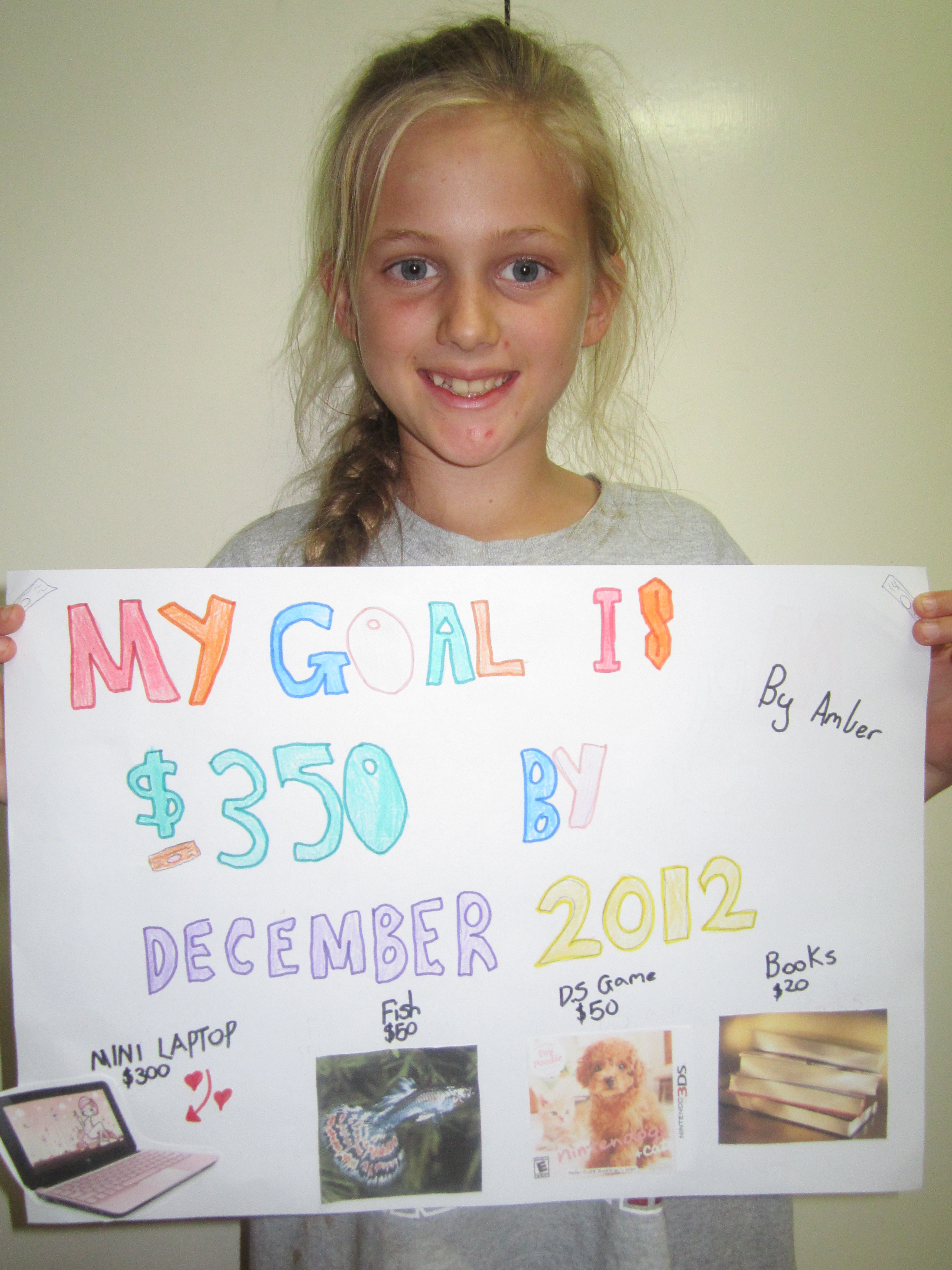
Amber's vision board showing goal setting and enterprise goals for kids
Amber’s vision board helped her picture what she wanted to achieve.
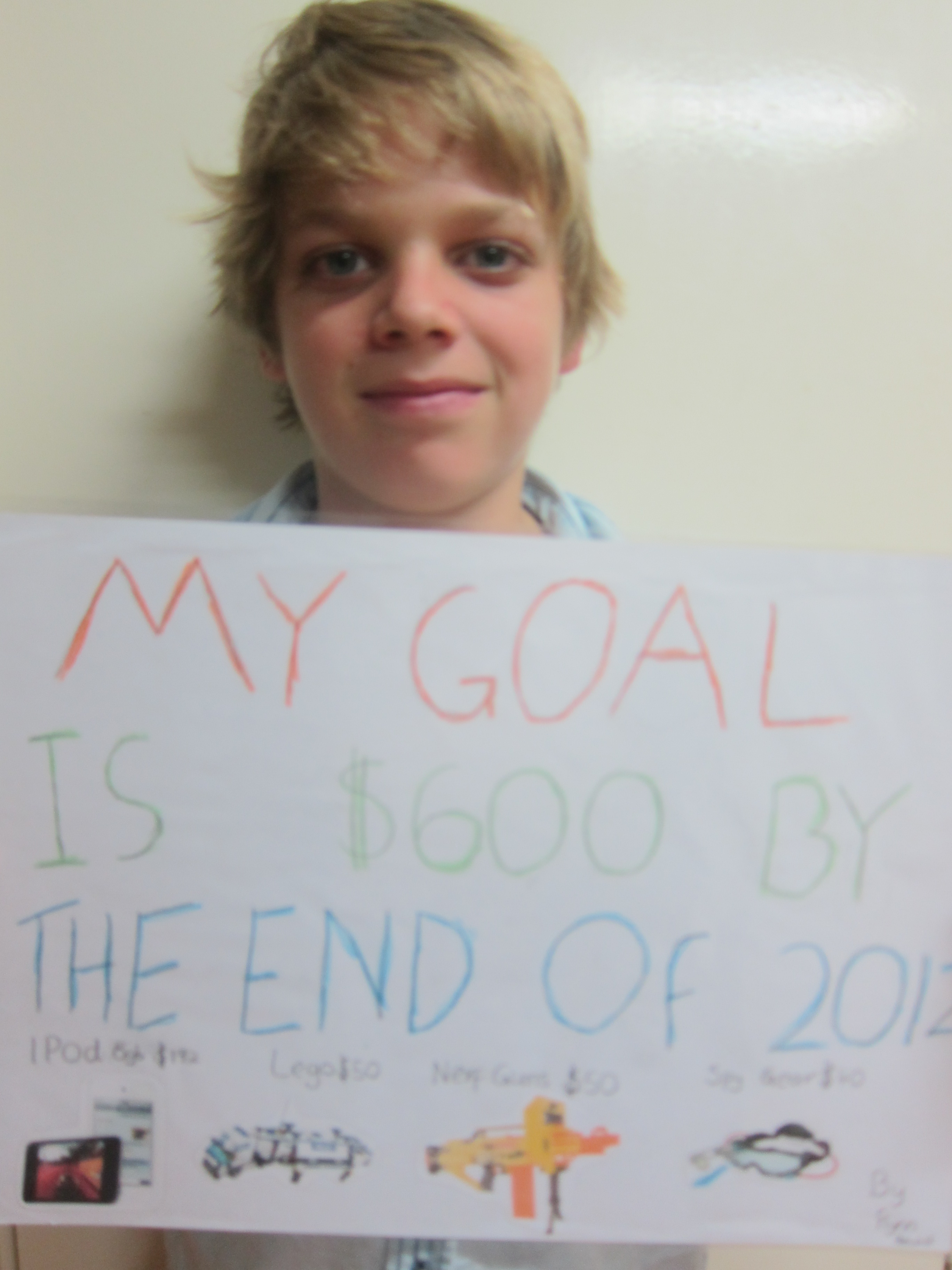
Flynn's vision board showing money goals and enterprise ideas for kids
Flynn’s vision board helped him connect his enterprise idea with a goal he cared about.
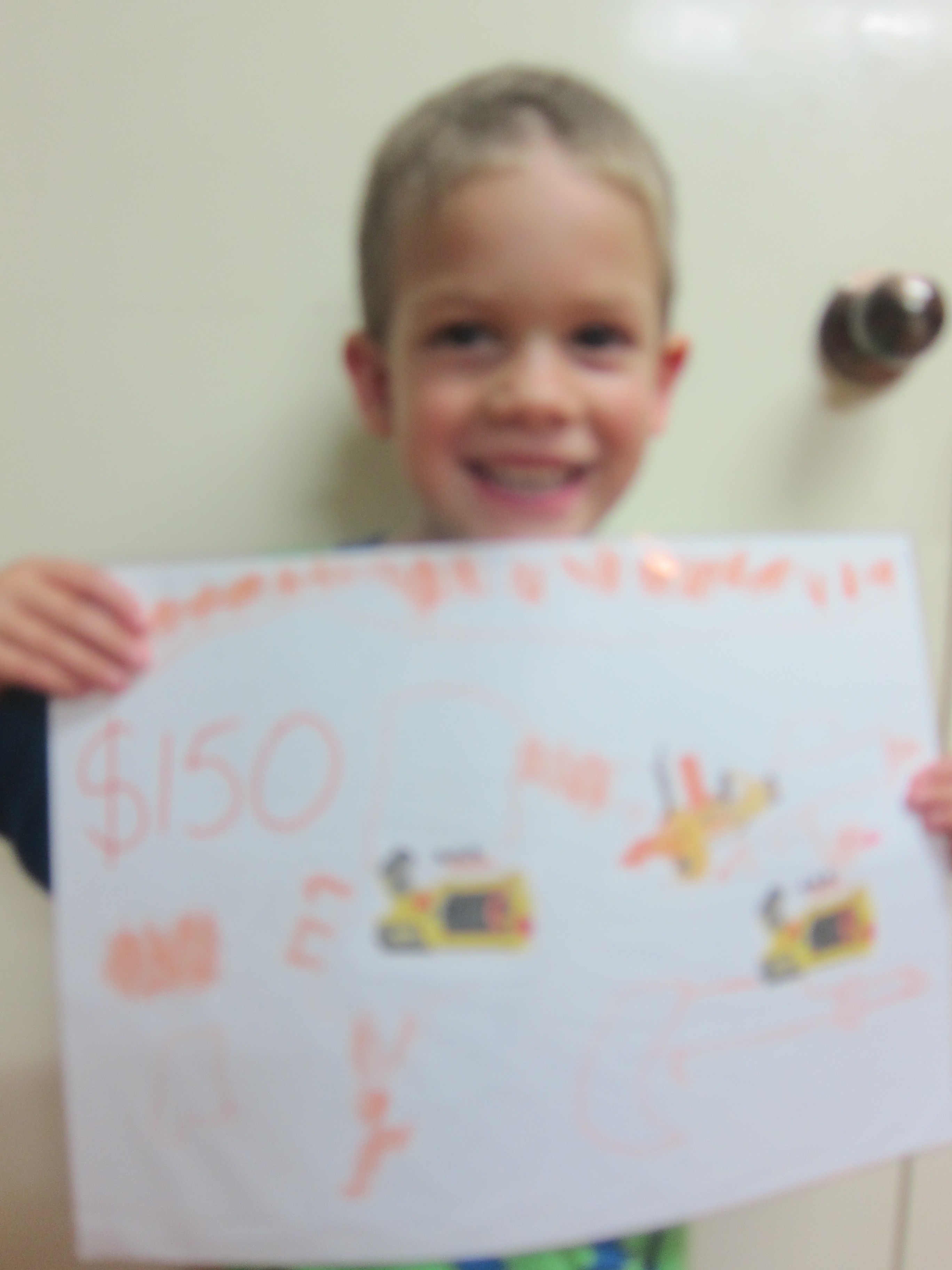
Chayse and Kit using a vision board for enterprise goals
Chayse and Kit used their vision boards to focus on what they wanted to achieve.

Why This Goal-Setting Activity Worked

This simple vision board activity helped our children connect their enterprise ideas to something personal.

It was no longer just about “starting a business”.

It was about creating money for a goal they could see.

That made the project more meaningful.

The process gave the kids:

  • a clear picture of what they wanted,
  • a reason to stay motivated,
  • a dollar amount to work towards,
  • an end date,
  • and a practical reason to create an enterprise idea.

For children, this is powerful.

They can begin to understand that goals are not achieved by wishing alone. They are achieved by combining belief, focus, planning and action.

Vision Boards Need Action

A vision board is not magic on its own.

It works best when it is connected to action.

That is why we linked the children’s vision boards to their enterprise projects.

They could look at the pictures on their walls, but they also had to ask:

  • How much money do I need?
  • What can I do to earn it?
  • What skills do I need to learn?
  • Who can help me?
  • What is my deadline?
  • How will I know if my enterprise idea worked?

This moved the activity from dreaming into doing.

For a broader reflection on vision boards, visualisation and action, you can also read our article on Vision Board Ideas for Students.

Enterprise Goals for Kids

In the next blog, we’ll take you through the process of how the kids came up with each of their kids’ enterprise ideas.

See you then!

Key Takeaway: A Vision Board Helps Kids Focus

Key takeaway: A vision board can help children picture a goal, believe it is possible and connect that goal to action. When children turn a dream into a dollar amount, an end date and an enterprise idea, goal setting becomes real-world learning.

Where to Next?

What goal would your child be excited enough to picture, plan and work towards?