Buy Perth Mint coins may sound like an unusual money lesson for kids, but for our family it became a practical way to talk about planning, saving, assets, liabilities and long-term thinking.
“`
Most people have a plan for how to make money, but not always a plan for what to do with that money once they earn it. This became an important conversation in our family as our children started earning money through their own little enterprises.
“`

Buy Perth Mint Coins: A Money Lesson for Kids
“Failing to plan is planning to fail!” — Robert Kiyosaki
Robert Kiyosaki points out that many people work hard to earn money, but do not have a clear plan for what to do with it. Often, those same people can still end up feeling short of money, even when they earn more.
That idea really made us think. Our own children were busy planning their enterprises and successfully making money. They had plans to buy things they wanted, such as Nerf guns, iPods, computers and other exciting items, but they did not yet have much of a plan to buy assets.
So we decided it was time to have a family conversation about planning what to do with earned money. The idea to buy Perth Mint coins gave us one very practical way to make that conversation real.

Why Kids Need a Money Plan Before They Buy Perth Mint Coins
Kids need an education on how to plan what to do with their money when they earn it. It is not enough to teach children how to make money. They also need to learn how to save, give, spend wisely and think about assets.
Kiyosaki explains the difference between spending money on things that take money away from you and spending money on things that can hold or grow value over time.
The simple lesson for kids is this:
- Liabilities are things we buy that usually lose value or cost us more money.
- Assets are things that may hold value, grow in value, or help create income over time.
We had already written about our family conversations around assets and liabilities. You can read that article here: Financial Education for Kids: Teaching Assets and Liabilities.
Once the idea of assets and liabilities was explained to our kids, they could begin to make a more thoughtful money plan. That plan included money for things they wanted, money for giving, and money for buying assets.
Buy Perth Mint Coins as a Real-World Asset Lesson
When children are learning about assets, it helps if the lesson is concrete. Shares, property and business systems can be a bit abstract for young children, but coins are real. They can be held, seen, weighed and discussed.
That is why the idea to buy Perth Mint coins became such an interesting family money lesson. It gave us a way to talk about gold, silver, assets, inflation and long-term thinking in a way the kids could actually picture.
To be clear, this is not financial advice. Families need to do their own research, understand the risks, and make decisions based on their own circumstances. MoneySmart explains that an investing plan should consider your goals, timeframe and risk tolerance, and that diversification helps reduce risk by spreading money across different investments.
For us, the key lesson was not “everyone should buy gold or silver.” The key lesson was that children can learn to think differently about money.
Gold and Silver as One Example of an Asset
Subscribers to this blog may remember that we hosted a Gold and Silver Seminar in Bunbury. Our presenter, Andrew Smith, was a mining engineer, investor and businessman who had been closely involved with the world of gold and silver mining for many years.
He gave several reasons why gold and silver may be worth considering as long-term assets. More importantly for our kids, he gave us some great conversation starters about money, inflation and planning.
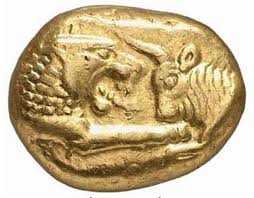

Gold and silver have been recognised around the world as stores of value for a very long time. Unlike paper currencies, which can lose buying power over time through inflation, precious metals are often discussed as a possible hedge against currency devaluation.
That became an interesting discussion point with the kids. We were not trying to turn them into investment experts. We were simply helping them understand that money has buying power, and buying power can change over time.
The Meat Pie Indicator: Inflation for Kids
Andrew explained inflation using what he called the “Meat Pie Indicator”.
Back in 1970, you could buy a meat pie for around 40 cents. Many years later, the same sort of pie might cost several dollars. That simple comparison helped the kids see that the dollar does not always buy the same amount over time.
That is a very practical way to explain inflation for kids. Rather than starting with economics, you start with something simple: a meat pie.
The money lesson is this:
- If prices rise, the same amount of cash buys less.
- If children only save cash and spend on liabilities, they may not build long-term value.
- If children learn to plan, save and buy assets, they begin to think differently.
This was one of the reasons gold and silver became part of our conversation. It was not just about precious metals. It was about teaching the kids to ask, “What happens to my money over time?”
Buy Perth Mint Coins: Why the Perth Mint Made the Lesson Real
The Perth Mint gave this lesson a real-world connection. Instead of only talking about gold and silver in theory, the kids could see the building, look at coins and bullion, and understand that money can be connected to history, value and planning.
The Perth Mint sells gold, silver and platinum bullion coins, minted bars and cast bars in a variety of sizes. That makes it a useful place for families to explore the idea of precious metals as one possible asset class. You can visit the official Perth Mint bullion page to learn more.
For children, silver may be easier to understand than gold because the price point can be more manageable. A child may not be able to buy a gold coin, but they may be able to save toward a small silver coin or bar.
Again, the aim is not to pressure children into buying precious metals. The aim is to teach them to think:
- What am I doing with the money I earn?
- Am I spending everything?
- Am I saving some?
- Am I giving some?
- Am I learning to buy assets?
For our family, the decision to buy Perth Mint coins was really a doorway into better conversations about money, choices and long-term thinking.
Buy Perth Mint Coins, But Teach the Bigger Money Lesson
The keyword may be buy Perth Mint coins, but the bigger lesson is not only about coins. It is about money planning.
Our children needed to understand that earning money through enterprise was only the beginning. Once they had money in their hands, they needed to make decisions. Would they spend it all? Would they save some? Would they give some? Would they set aside money for assets?
This is where a simple three-part money plan can help children.
1. Money for spending
Children still need to enjoy the reward of their work. Buying something they have worked for can be a powerful lesson in effort and reward.
2. Money for assets
This is the part that helps children think long term. Assets might include precious metals, shares, a small business asset, tools for their enterprise, or another age-appropriate example that helps them understand value.
3. Money for giving
Giving helps children connect money with generosity. In our family, this was important because we wanted enterprise to build character, not just cash.
Gold, Silver and Long-Term Thinking
During the seminar, we also discussed why gold and silver can attract long-term interest. People use them for jewellery, coins, bullion, technology and industry. Gold and silver are also often discussed during times when people are concerned about inflation, currencies or financial uncertainty.
These ideas can become quite complex, so for children we kept the lesson simple:
Some things we buy lose value quickly. Some things may hold value for longer.
That distinction is a powerful start.

In countries such as India and China, gold and silver have long been connected with culture, jewellery, celebrations and family wealth. That gave us another way to talk to the kids about how different cultures think about money, value and assets.
We also talked about silver being used in everyday products and technology. That helped the children see that precious metals are not only shiny objects. They can also have practical uses.
Charts, Prices and Why Children Need Context
The original version of this article included old gold and silver price charts from around 2012. They were useful at the time, but prices change constantly, so I would not want the children to focus only on old numbers.
The better lesson is to help children understand that prices move, markets change, and no asset goes up in a straight line forever.


That is why we also talked about diversification. Children do not need to understand the whole investment world at once, but they can begin to understand that putting every dollar into one thing may not be wise.
MoneySmart’s investing plan guidance is a useful Australian resource for families because it encourages people to set goals, understand risk, research options and think carefully before investing.
Buy Perth Mint Coins and Set Family Money Goals
The Perth Mint sells gold, silver and platinum, including coins and bullion. For our kids, the most realistic conversation was probably around silver, because gold was much more expensive.

Our kids now had new goals. Their goals were broken into three parts:
- a part for buying things they wanted,
- a part for buying assets,
- and a part for tithing or giving.
That simple structure helped them see that money does not have to disappear as soon as it is earned. Whether children eventually buy Perth Mint coins, save toward a business tool, or choose another asset later, the important lesson is that they are learning to plan.
A Four-Part Money Box for Kids
One practical tool that can help children is a money box divided into sections. Some families use jars, envelopes or labelled containers. The point is to help children physically separate their money into different purposes.
For example, children might divide their money into:
- Spend — for things they want now.
- Save — for bigger goals.
- Invest — for assets or future opportunities.
- Give — for generosity, tithing or causes they care about.

Buy Perth Mint Coins as Part of a Bigger Financial Education
When we talk about how to buy Perth Mint coins, we are really talking about a much bigger financial education.
We are teaching children to pause before spending everything. We are teaching them to ask better questions. We are teaching them to think about the future. We are teaching them that money can be used for enjoyment, generosity and long-term goals.
The real win is not whether a child buys a silver coin, a gold coin, shares, tools for a small business or another asset later on. The real win is that they begin thinking like someone who plans.
Key Takeaway: Buy Perth Mint Coins to Teach Planning
Key takeaway: Learning how to buy Perth Mint coins can be a practical way to start a bigger family conversation about money planning, assets, liabilities, saving, giving, inflation and long-term thinking.
Have you used coins, jars, money boxes or real-world experiences to teach your children about saving, giving and buying assets? We would love to hear your ideas in the comments.
Enjoyed this article?
Join the Enterprise for Kids community for practical family activities, money lessons, inspiring stories and new resources to help raise confident, capable and entrepreneurial young people.
We respect your privacy. No spam. Unsubscribe at any time.


Very interesting -thanks.
I’ve been lucky to here Andrew Smith talk too, and your summary is really excellent. I’ve managed to talk my daughter into an “investment” account and I’ve been wondering which assets to purchase with it. Bingo! GOLD! Thanks for turning that light on.
I also have a young nephew who likes to buy shares (hes 13!) but it appears impossible to buy him a very small parcel in his name ( the fees alone are $80) BINGO – another light turns on – I know what his XMas present will be this year! Gold or silver for sure.
cheers
Greetings from Florida! I’m bored to tears at work so I decided to browse your blog on my iphone during lunch break. I love the info you present here and can’t wait to take a look when I get home.
I’m shocked at how fast your blog loaded on my cell phone .. I’m not even
using WIFI, just 3G .. Anyways, awesome blog!