Assets and liabilities for kids can sound like complicated financial ideas, but children can understand them surprisingly well when they are connected to real money and real choices.
One of the most useful money lessons we taught our children was simple: before spending money, ask whether what you are buying will help build value or keep costing you money.
That lesson became very real when our son Flynn began earning his own money through his honey business and decided he wanted to buy a motorbike.

Editor’s note: This article was originally written during our early Enterprise for Kids journey and has been refreshed with updated formatting, links and reflections while retaining the original story of Flynn learning about assets, liabilities and money choices.
Assets and Liabilities for Kids: Simple Definitions
If your child asks what an asset or liability means, you do not need to begin with accounting terminology.
A simple explanation is:
Asset meaning for kids: An asset is something that helps you build, keep or grow value. Some assets may also help you earn money.
Liability meaning for kids: A liability is something you owe or something that costs you money to own, use or maintain.
An easy question children can remember is:
“Will this help my money grow, or will it keep taking money away?”
That one question can open up some surprisingly useful conversations about spending, saving, investing and making choices.
Why Financial Education for Kids Matters
Robert Kiyosaki, famously known for his book Rich Dad Poor Dad, has often pointed out that children need a financial education and that they are unlikely to receive a complete financial education from school alone. You can learn more about his approach to money education at Rich Dad.
One of the most helpful starting points in financial education for kids is teaching children how to think about money in terms of assets and liabilities.
It gives them a simple framework for making better money choices as they grow.
A traditional balance sheet has two main sides: assets and liabilities. Children do not need to understand accounting in detail, but they can understand the basic idea that some choices help build financial value while others create ongoing costs.
This is also why practical money lessons for kids are such an important part of raising capable, confident and enterprising children.
Assets and Liabilities Explained for Kids
For adults, assets might include shares, investment property, businesses, precious metals or other things that can hold value or create income.
Liabilities may include debts and things that continually require money to own or maintain.
For children, we can make the idea much more practical.
A toy, bike, motorbike, game console or phone might be something they really want. There is nothing wrong with enjoying those things, but they usually do not put money back into a child’s pocket. Some also create extra costs through repairs, fuel, upgrades, subscriptions or accessories.
An asset, on the other hand, might help a child earn, save or build value over time.
For example:
- supplies for a small enterprise
- tools they can use to make or create something
- equipment that helps them develop an earning skill
- money saved for a future opportunity
- simple investments made with parental guidance
The goal is not to teach children that spending is bad.
It is to help them understand that money gives them choices.
How Assets and Liabilities Change the Way Kids Think About Money

When children only think about money as something to spend, it can disappear very quickly.
They earn it, receive it or save it, then immediately begin thinking about what they can buy.
But once children begin thinking about assets, another possibility appears.
Money can also be used to create opportunities.
They might put some aside for a small business idea.
They might buy materials to make something they can sell.
They might save towards equipment that helps them develop a useful skill.
They might begin learning about savings accounts, shares or other forms of investing with their parents.
This is where financial literacy for students becomes practical.
It is no longer just about worksheets, definitions or classroom activities. It becomes a real decision involving real money.
These kinds of lessons connect closely with our family enterprise stories, because many of the most useful lessons our children learned happened while they were actually earning, selling, creating, saving or deciding what to do with their own money.
A Real-Life Assets and Liabilities Lesson with Flynn
This is where the idea became very real in our own family.
I had a good conversation with Flynn a while back.
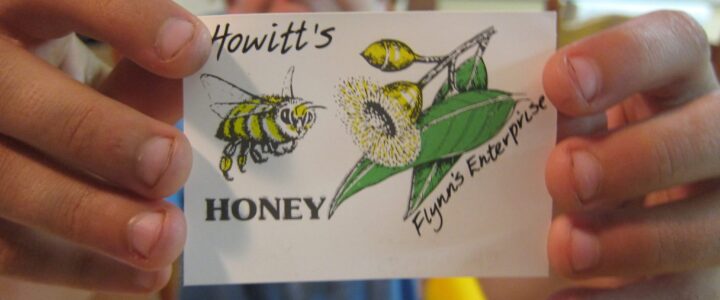
He had made a large sum of money from his honey enterprise and had already spent some of it achieving one of his goals: buying an iPod.
Flynn also had some mates who were mad keen on riding motorbikes.
Before long, he had his sights set on buying one too.
It would have been easy simply to say yes or no.
Instead, we used the decision as a practical money lesson.
I explained that he could choose to buy a motorbike, but first he needed to understand what the purchase would mean financially.
The motorbike itself would cost money, but that was only the beginning.
There would also be:
- devaluation
- fuel
- repairs and maintenance
- safety equipment
- other ongoing costs
In other words, buying the motorbike would not finish when he handed over the purchase price.
It would continue taking money from his pocket.
We then talked about Robert Kiyosaki’s ideas around balance sheets, assets and liabilities.
The Three Money Jars Flynn Started Using
Flynn took the conversation on board.
Rather than abandoning the idea of having things he wanted, he began thinking about how different uses of money could exist alongside each other.
He started keeping three jars:
- one for gifting
- one for the liability — his future motorbike
- one for buying assets
I particularly liked this because the lesson was not:
“Do not buy the motorbike.”
It was:
“Understand what you are choosing, and don’t use all of your money for things that keep taking money away.”
That is a very different lesson.
The simple jar system turned an ordinary childhood purchase into a meaningful financial education experience.
You can read more about Flynn’s early enterprise journey in Honey Pot of Gold.
Simple Assets Kids Can Understand
So what assets can a kid actually have?
Children do not need to begin with complicated investments.
At first, perhaps the most valuable asset they can build is simply the habit of setting some money aside before spending everything.
Depending on their age and with parental guidance, children might learn about:
- savings accounts
- supplies for a small business
- tools or equipment that help them create value
- shares or managed investments explained in simple terms
- collectables or precious metals as examples of storing value
- reinvesting money back into their own enterprise
In Flynn’s case, one possible asset could have been more wholesale honey for his business, or even a beehive of his own.
That is what makes enterprise such a useful financial classroom.
Children can begin seeing that money used to create more products, serve more customers or develop a useful skill is very different from money that disappears through consumption.
At the time, Flynn also became interested in buying silver.
That conversation was useful because it helped him understand that money could be used for more than spending.
It could also be directed towards things that might hold or grow value over time.
This is not about telling children exactly what they should invest in.
It is about helping them develop the habit of thinking before they spend.
Financial Education for Kids: Precious Metals and Investment Lessons

The original version of this post included a discussion about silver prices at the time.
That was part of the real conversation Flynn and I were having back then, so it is worth retaining as part of his financial education journey.
Precious metals such as gold and silver can be useful examples when teaching children about storing value, but prices change, markets change and every family’s financial situation is different.
The Perth Mint is one place families may come across information about gold and silver, but conversations about precious metals, shares or other investments should be treated as learning opportunities rather than financial advice.
For children, the deeper lesson is:
Money can be spent, saved, given, invested or used to build something valuable.
That one idea can shape the way children think about money for the rest of their lives.
How Parents Can Teach Assets and Liabilities at Home
Parents do not need to be financial experts to teach simple money lessons.
Some of the best opportunities happen when a child says:
“I want to buy this.”
Instead of immediately answering yes or no, that moment can become a conversation.
Try asking:
- Will this keep costing money after you buy it?
- Will this help you learn, earn or create something?
- Is this something you really value, or is it just a quick want?
- Could some of your money be kept aside for a future opportunity?
- Could some of the money be used to create more money or value?
- How could you use part of your money to help someone else?
These questions help children become more aware of their choices.
They also show children that financial education is not only about numbers.
Money choices involve values, priorities, responsibility and future possibilities.
That is the heart of financial education for kids.
It is not about making children fearful of spending.
It is about helping them become thoughtful, capable and confident with money.
For another family example, you may also like Kids Biz Program by Amber.
Flynn’s Enterprise Became His Financial Classroom

Flynn’s honey enterprise gave him much more than pocket money.
It gave him a real-world classroom.
Through earning, saving, spending, giving and thinking about assets and liabilities, he began learning lessons that many adults are still trying to master.
That is one reason we became so enthusiastic about enterprise as a learning tool for children.
When the money is real, the customer is real and the decision is theirs, the lesson suddenly matters.
Children running small enterprises, selling products, saving towards goals or deciding what to do with money are not simply learning business skills.
They are learning responsibility, judgement, patience, communication and decision-making.
They are learning life skills.
Discussion Questions: Assets and Liabilities for Kids
Parents and teachers can use these questions to help children think more carefully about money, spending, saving and value.
They work well as a family conversation, classroom discussion or simple financial literacy activity.
- Is this an asset or a liability? Does it help your money grow, or does it cost money to keep?
- Will this purchase create value? Could it help you learn, earn, build, create or solve a problem?
- Will it keep costing money? Will it need repairs, upgrades, fuel, subscriptions, accessories or maintenance?
- Could part of this money be used differently? Could some be saved, given, invested or used for a future opportunity?
- What is one simple asset a child could build or buy? This might be supplies for a small business, tools for a useful skill, or money set aside for a future idea.
These questions are not designed to make children fearful of spending.
They are designed to help children pause, think and make more thoughtful money choices.
Key takeaway: Teaching assets and liabilities for kids does not require complicated financial lessons. For Flynn, it began with money he had earned himself, a motorbike he wanted to buy and one simple question: will this help my money grow, or will it keep taking money away?
That real-life decision became a lesson in earning, spending, giving, saving and building assets that stayed with him far longer than a worksheet ever could.