Marketing Lesson for Kids: Burekup Country Club Heats Up

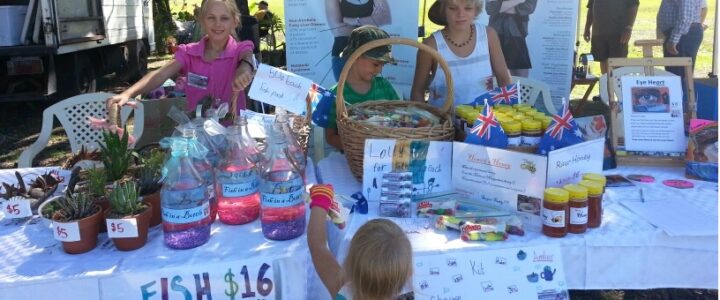
Amber Flynn and Kit running a stall at the Burekup Country Fair as a marketing lesson for kids

Marketing lesson for kids sounds like something that belongs in a classroom, but for our family it came alive through fire, publicity, product preparation and the Burekup Australia Day Fair.

Last week there was both fear and excitement in the small township of Burekup. The Burekup Country Club had been on fire, and for a moment it looked as though the Burekup Australia Day Fair might even be cancelled. Thankfully, the fire crew put the fire out before it caused too much damage or anyone was hurt.

What followed became a very real lesson in marketing, attention and opportunity for our enterprising kids.

Amber showing her product during a marketing lesson for kids at the Burekup Country Fair
Amber showing one of her products ready for the Burekup Country Fair.

A Marketing Lesson for Kids at the Burekup Country Fair

Once a year for Australia Day, Burekup hosts a fun family fair. Everyone in town usually comes along, together with people from the surrounding areas.

This year, the fair had a little more publicity than normal.

The local Burekup Country Club, which helps organise the event, had a fire that threatened to burn down the old wooden clubhouse and town hall. The newspaper heard about the near disaster and ran a story about the fire that almost sabotaged the Burekup Australia Day Fair.

Burekup Country Club hall before the Australia Day Fair marketing lesson for kids
Burekup Country Club Hall.

The story stimulated fear and interest, which in turn created excellent publicity for the Burekup Fair.

Marketing a product, service or brand can be very challenging, especially if you are not naturally marketing savvy. A very good marketing campaign can sell even an ordinary product, while a very good product may not sell easily unless people know about it, understand it and feel interested enough to buy it.

That is why this became such a useful marketing lesson for kids. Our children were not just making products. They were preparing to put those products in front of real people.

What Our Kids Learned About Marketing Their Products

Our enterprising kids have all been challenged with marketing their products and brands. Cathy and I have also been challenged with marketing when promoting events or selling our own products.

The Howitt family booked two stalls for the Burekup Australia Day Fair. One stall was for our enterprising kids to display and sell their products. The other was for Cathy and me to share information about our home business, as well as promote the Enterprise for Kids brand and blog.

Putting ourselves out there in our small community for the first time was a little confronting. Some people knew what we had been up to, but for many it was going to be a surprise.

Despite the challenge, we saw this as a chance to practise in readiness for bigger and better things to come.

Kids Business Ideas Prepared for the Burekup Fair

The fair gave each child a real opportunity to prepare, promote and sell something of their own. That is where a simple family event becomes powerful real-world learning.

Flynn had been preparing his raw, unprocessed honey under his brand, Howitt’s Honey. He had a fresh batch ready to sell, and he had also bought a good set of golf clubs for a very good price, which he intended to resell at the fair.

Flynn showing honey pots for his kids business idea at the Burekup Fair
Flynn showing his honey pots.
Honey jars bottled and ready for labels before the Burekup Country Fair
All bottled awaiting labels!

Kit and Chayse were preparing their lolly bag business. They bought, sorted and bagged lollies to sell. Chayse also had a small fish tank to sell, along with colourful guppies he had bred.

Kit and Chayse sorting lollies for a kids business idea at the Burekup Fair
Kit and Chayse sorting lollies.
Lolly bags ready to sell as part of a kids market stall
Lolly bags all set to be sold!

Amber’s Products and a Creative Marketing Lesson for Kids

Amber had been busy all year collecting succulents from people’s gardens. She artistically potted these up into all kinds of unusual pots, including large seashells, kettles and ceramic plant pots.

Amber watering succulents for her kids business idea at the Burekup Country Fair
Amber watering her succulents ready to be sold.

She and Flynn also planned to sell aquarium fish they had bred. They salvaged and cleaned large glass wine flagons, which made terrific fish bowls. They decided to market this product under the brand name “Fish in a Bottle”.

Fish in a Bottle product prepared for a marketing lesson for kids
Fish in a Bottle.
Fish in a Bottle product showing how kids can create unusual market stall ideas
Can you see the fish?

Amber also planned to sell selected items from her New from Old business, and she was putting together a Lucky Dip.

Jai and Kaitlin Prepare Their Own Enterprise Ideas

Jai was preparing to promote his “Hire a Teenager” service. He already had clients in Burekup who hired him to do work on their properties, such as mowing and window cleaning.

Jai also prepared a batch of frozen juice ice cups on sticks. He came up with some creative ideas to add value to his product. He was also considering promoting “Rent Exercise Equipment”, although this business idea was still in its infancy and may not have been quite ready to run.

Lastly, Kaitlin was preparing to promote her new brand, “Eye heART”. Akaisha was still a little young to have an enterprise of her own, but Kaitlin was ready to share her creative skills.

Being the creative one in the family, Kaitlin planned to sell her skills by painting the eye of clients from a photograph. Around the eye, she would also paint three things dear to them.

Jai showing icy poles prepared for the Burekup Country Fair market stall
Jai showing his icy poles.
Kaitlin's Eye heART creative business idea for kids
Kaitlin’s Eye heART.

This opportunity for us all to market our brands, services and products helped the Howitt clan develop self-efficacy around being entrepreneurial.

What Children Can Learn From a Real Marketing Plan

A good marketing lesson for kids does not need to be complicated. Children can begin by learning that marketing is about understanding who might want your product, why they might want it, and how you can show them its value.

The Australian Government’s business.gov.au marketing planning guidance explains that a marketing plan can help define a target market, choose messages and channels, set goals and evaluate whether marketing activities were successful. That is exactly the kind of thinking children can begin to practise with a simple market stall. Read more about developing a marketing plan here.

For our kids, the Burekup Fair raised practical questions:

  • Who would want to buy this product?
  • How should we display it?
  • What makes it interesting or different?
  • How much should we charge?
  • What story does the product tell?
  • How can we speak confidently to customers?

These questions are useful for any young entrepreneur.

Marketing, Emotion and Real-World Learning

Our mentor, Paul Counsel, had plenty to say about marketing. One of the ideas he shared was that people often respond to emotion before they respond to logic.

In simple terms, customers usually want to move away from a problem and toward a better result. A product, service or experience becomes more interesting when people can clearly see the difference it might make.

For children, this can be taught in a practical and age-appropriate way.

If they are selling honey, they can show that it is fresh, local and real.

If they are selling lolly bags, they can make them colourful, tidy and fun.

If they are selling succulents, they can show how each one has been creatively potted and cared for.

If they are selling a service, they can explain clearly how they can help someone.

This is where marketing becomes much more than advertising. It becomes communication.

A Fire, a Fair and a Marketing Lesson for Kids

Pain Island to Pleasure Island drawing used in a marketing lesson for kids
Just need the right ship to get them there!

Luckily, the fire did not burn down the club or spoil the Burekup Australia Day Fair.

But it certainly woke people up.

The fear that the fair might be cancelled created attention. The newspaper story created discussion. The near disaster gave people another reason to talk about the event. In an unexpected way, it became publicity.

That is not something anyone would wish for, of course. But it did show our kids something important: people pay attention when a story matters to them.

For our family, the fair became more than a day out. It became a real-world lesson in product preparation, branding, confidence, customer communication and marketing.

In our next blog, we will share photos and experiences from the Burekup Australia Day Fair.

Where to Next?

We would love to hear from our readers. What marketing lesson for kids have you seen through a school fair, market stall or family business idea? Share your thoughts in the comment box below.

David Wood – The Master Trainer!

David Wood is the Master of all trainers!!


David Wood

We were spellbound by David Wood and energy, inspiration and mastery when he presented his Break Through Training Program to us last weekend. Everything is possible for anyone despite circumstance. All we have to do is step out and go get what we want without allowing fear to pull us back. We must take 100% responsibility for what we have and what we don’t have, without laying blame or excuse. We are the only ones who can make the shift in mindset and create success for ourselves!

During the three day program we gained tremendous insights about ourselves and how we are with people and how we approach life. David emphasises the importance of connecting with people. His tip is very simple, say “hello” and do it as often as you can, with energy!

This testimonial by Allan Kerr was spot on…

“The content is heavy hitting and invaluable, the delivery by David is strong, sometimes confronting and punchy, but mostly fun. Many of us know what we should be doing, but David has a remarkable gift of being able to make every attendee realize their shortcomings and realize what they need to do if they truly want to achieve their goals and dream with this business model, in fact with life in general. So,…. face the fear, and do it anyway! Just have a go …have a who cares, so what attitude, have fun, and get out there and talk to people, make new friends, and you will be rewarded with whatever it is you seek!!”

Break Through Training Perth 2012

One of the things that stood out for us was that “No doesn’t always mean no forever.”  David Wood reminded us in a fun game how to act when you do get a “no” – do the Happy Dance!  And do it like you mean it.

Don’t let yourself go down that path of “I didn’t present well enough, or I didn’t know my stuff well enough, or I’m not qualified enough…. Whenever you hear a no… instead, think of it that you’re only one step closer to your next “yes” and then celebrate the no.

Many of the distinctions and lessons that David taught us were very much in line with what we’ve been learning with our Money Mastery course with mentor Paul Counsel. One of those is in respect to the importance of a reference group.

“I become the sum of the five people I spend the most time with.”

If we want amazing results in our lives we must aspire to associate and become connected with other people who are getting those results. One way to do that is to attend events and form mentor groups with people with similar aspirations. This allows new friendships with energetic, motivated and successful people.

We also recognise that this is just as important for our kids. That is why we encourage them to mix with positive peer groups and get them involved with sporting teams and enterprise.  As David put it…


“Environment is stronger than will power!”


So rather than deal with your will power, just change your environment and reference group.

We learnt also that “success is not convenient”. It requires getting out of routine and comfort. During the training program David pushed all our boundaries to get us to practice being uncomfortable. He did this by having us talk to strangers on the street, miss our coffee breaks, hug each other, hold hands with people we didn’t know, stay on late way past the planned program times, speak publicly, become vulnerable, and dance and dance and dance! We love his favourite saying…

“Get so uncomfortable about being uncomfortable that you get comfortable!”

David Wood the Master trainer and Us!

This is something we definitely need to encourage in schools!

Here is a great little exercise that David says works… don’t blame, justify, complain for ninety days and your life will completely change.

David truly believes that no dreamer is ever too small, no dream is ever too big!  He says that if you don’t know where you’re going, every road will get you there. All we have to do is make a start and follow a road. He also points out that…


“We will miss 100% of the shots we never take!”


So just believe in yourself and have-a-go.

David points out that everyone was once a disaster, including him! David’s life certainly didn’t start out on the right track. His Dad left the family when he was seven and he grew up angry with his mother. He dropped out of school and was in all kinds of trouble as a teenager living on the streets. David spent ten years travelling around the world, broke and living day to day. He worked as a chimney sweeper, window cleaner and barman. He discovered for himself that “who you were can completely change!” This realization led to a different thinking which brought him massive wealth, success and happiness way beyond all his expectations. His success is a direct result of a change in thinking and attitude.

Paul Counsel also supports the view that we are a product of our thinking. What we think and believe will become our reality.

David points out that your results are telling you what’s going on in your life. If you are unhappy and poor, then you need to consider that what you’ve been doing up until now doesn’t work. And if you don’t find a new way and make changes, then your results will only continue to be the same. His advice is to stop taking advice from broke, unhappy people, and seek out successful mentors and friends who can move you along in the right direction.

Lastly a couple of testimonials from friends who attended the break Through Training with us…

An amazing weekend with David in Perth along with an awesome group of people…all willing to feel the fear and do it anyway! Life is not a dress rehearsal…just do it! Stop justifying, blaming and complaining… Grab happiness with both hands…Thankyou so much!
If you ever have the opportunity to spend time with David – take it!
Tracey

Thanks David for an awesome weekend! If someone had told me I could sit through 3 massive days of training and never once feel like I was falling asleep I would have said impossible. The way you share the information and teach is inspirational. So many laughs and take away lessons – none more so than how to connect and change the warmth in a room. Inspired to say “HELLO” more often.  Melissa

David, this weekend in Perth has left a permanent imprint in my heart and mind. I will take 100% responsibility for what I have and what I don’t have! Your seminar was so well presented and motivational that I have already started applying the strategies to every aspect of my life and have been dancing my “no boogie” quite regularly!! Denise

To Listen to Jack Canfield interviewing David Wood CLICK this image

One of our favourite podcasts I’ve listened to recently from David Wood’s “The Kickass Life” series was his interview with Andrea Owen, Hellraiser (as she calls herself).  She talks about becoming your own biggest fan and becoming a legend in your own mind.  We love that.  Get rid of disempowering thoughts.  And if the thoughts won’t go away, learn to manage them. Take the power away from the gremlins inside your head!  Take advantage of the tremendous inspiration David provides for free on “The Kickass Life” series. CLICK HERE to listen in.

David Wood gave excellent teachings about daily life, relationships and business, (especially about the network marketing or referral business). In this day and age, that is how most businesses operate (whether they think they are or not. Referrals are the number one way that businesses keep loyal customers). There are exciting times ahead for Generation Y as they are fantastic at networking and do so in every day life with all forms of multimedia!

In our next blog article we will talk about the tremendous opportunities for everyday people using this awesome wealth creation vehicle to create residual income and financial freedom. So if you’re curious about this opportunity for yourself or for your entrepreneurial kids, then don’t miss this article!

We will also revisit Chayse and Kit and see how they achieved their financial goal and managed to give some of their money to a worthwhile Charity, the Royal Flying Doctors Service.


A Financial Education for Kids… Asset or Liability?

Financial education for kids using three money jars for giving, spending and growing

Financial education for kids does not need to be complicated. One of the most useful money lessons children can learn early is the difference between an asset and a liability.

When children understand this difference, they begin to see money as something they can manage, grow and use wisely — not just something to spend as soon as they receive it.


Money lessons for kids using give spend and grow jars
A simple jar system can help children understand money choices.

Why Financial Education for Kids Matters

Robert Kiyosaki, famously known for his book Rich Dad Poor Dad, has often pointed out that children need a financial education — and that they are unlikely to receive a complete financial education from school alone. You can learn more about his approach to money education at Rich Dad.

One of the most helpful starting points in financial education for kids is teaching children how to think about money in terms of assets and liabilities. This gives them a simple framework for making better money choices as they grow.

A balance sheet has two main sides: assets and liabilities. When kids understand the difference between the two, they can begin to ask better questions before they spend their money.

This is also why practical money lessons for kids are such an important part of raising capable, confident and enterprising children.

Assets and Liabilities Explained for Kids

A simple way to explain assets and liabilities to children is this:

An asset helps you build or keep value.
A liability costs you money to own, use or maintain.

Robert Kiyosaki’s simple definition is that an asset puts money into your pocket, while a liability takes money out of your pocket.

For adults, assets might include shares, investment property, bonds, businesses, precious metals or other things that can hold value or create income. Liabilities might include cars, boats, expensive holidays, clothes, electronics or anything that costs money without helping your money grow.

For children, this idea can be made much simpler. A toy, bike, motorbike, game console or phone might be exciting to buy, but it usually does not put money back into their pocket. It may also bring extra costs, repairs, upgrades or accessories.

An asset, on the other hand, could be something that helps them earn, save or grow money over time. This might include supplies for a small enterprise, tools they can use to create value, money set aside for a future opportunity, or simple investments made with parental guidance.

The goal of financial education for kids is not to stop children from enjoying their money. The goal is to help them pause and ask:

“Will this help my money grow, or will it simply take money away?”

How Financial Education for Kids Changes Money Thinking

Assets and liabilities for kids explained through a simple money lesson
Helping children ask: will this help my money grow or simply take money away?

When children only think about money as something to spend, it can disappear very quickly. They earn it, receive it or save it — and then look for the next thing to buy.

But when children start thinking about assets, they begin to see another possibility. Money can be used to create more opportunities.

They might put some money aside for a small business idea. They might buy materials to make something they can sell. They might save toward equipment that helps them learn a useful skill. They might even begin to understand shares, savings accounts or other forms of investing with the support of their parents.

This is where financial literacy for students becomes practical. It is not just about worksheets, definitions or classroom activities. It is about helping children make real decisions with real money in real life.

These kinds of real-life lessons also connect closely with family enterprise stories, because children often learn best when money, work and responsibility are connected to something they are actually doing.

A Real-Life Financial Education for Kids Lesson with Flynn

I had a good conversation with Flynn a while back. He had made a large sum of money from his honey enterprise and had already spent some of it on one of his goals — buying an iPod.

Flynn also had some mates who were mad keen on riding motorbikes, and he soon had his sights set on buying one too.

Rather than simply saying yes or no, we used the moment as a practical money lesson.

I explained that he could buy one, but first he needed to understand that a motorbike is a liability. It could take money from his pocket through devaluation, repairs, fuel, safety equipment and maintenance.

We then talked about what Robert Kiyosaki teaches about balance sheets, assets and liabilities.

Flynn took the conversation on board. As a result, he started keeping three jars of money:

  • one for gifting
  • one for the liability — the motorbike
  • one for buying assets

This simple jar system helped turn an ordinary childhood purchase into a meaningful financial education for kids lesson.

You can read more about Flynn’s early enterprise journey in Honey Pot of Gold.

Simple Assets Kids Can Understand

So what assets can a kid buy?

Children do not need to start with complicated investments. At first, the most important asset they can build is the habit of setting money aside before spending everything.

Depending on their age and with parental guidance, children might learn about:

  • savings accounts
  • supplies for a small business
  • tools or equipment that help them create value
  • shares or managed investments explained in simple terms
  • collectables or precious metals as historical examples of storing value
  • reinvesting money back into their own enterprise

In Flynn’s case, one possible asset could have been more wholesale honey for his business, or even a bee hive of his own.

At the time, Flynn became interested in buying silver. That conversation was useful because it helped him understand that money could be used for more than spending. It could also be directed toward things that might hold or grow value over time.

This is not about telling children exactly what to invest in. It is about helping them develop the habit of thinking before they spend.

Financial Education for Kids: Precious Metals and Investment Lessons

Silver coins used as a financial education lesson for kids
Silver coins became part of a real-life conversation about assets, liabilities and money choices.

The original version of this post included a discussion about silver prices at the time. That was part of the real conversation Flynn and I were having back then.

Precious metals such as gold and silver can be useful examples when teaching children about storing value, but prices change, markets change, and every family’s financial situation is different. The Perth Mint is one place families may come across information about gold and silver, but any conversation about precious metals, shares or other investments should be treated as a learning opportunity, not as financial advice.

For children, the deeper lesson is this:

Money can be spent, saved, given, invested or used to build something valuable.

That one idea can shape the way children think about money for the rest of their lives.

How Parents Can Teach Financial Education for Kids at Home

Parents do not need to be financial experts to teach simple money lessons for kids. The best lessons often come from everyday conversations.

Here are some simple questions you can ask when your child wants to buy something:

  • Will this cost you more money after you buy it?
  • Will this help you learn, earn or create something?
  • Is this something you really value, or is it just a quick want?
  • Could some of your money be kept aside for a future opportunity?
  • How could you use part of your money to help someone else?

These questions help children build awareness. They also help children understand that money choices are connected to values, responsibility and future possibilities.

That is the heart of financial education for students and children. It is not about making them fearful of spending. It is about helping them become thoughtful, capable and confident with money.

For another family example, you may also like Kids Biz Program by Amber.

Flynn Is Getting a Financial Education

Flynn holding money earned through his honey enterprise
Flynn’s honey enterprise became a real-world lesson in earning, saving, giving and thinking about assets.

Flynn’s honey enterprise gave him more than pocket money. It gave him a real-world classroom.

Through earning, saving, spending, giving and thinking about assets, he began learning lessons that many adults are still trying to master.

That is why enterprise can be such a powerful teacher for children. It gives them the chance to experience money, responsibility and decision-making in a practical way.

When children run small enterprises, sell products, save toward goals or think carefully about what they do with their money, they are not just learning business skills. They are learning life skills.

Key takeaway: Financial education for kids begins with simple, real-life conversations. When children understand the difference between assets and liabilities, they can start making wiser choices with the money they earn, save and spend.

Where to Next?

If you enjoyed this money lesson, you may also like:

Dale Beaumont – The Next Generation

Part of what we love about this blog is that we get to share the amazing success of young entrepreneurs with not only our readers, but our kids. As we’ve been learning on Paul Counsel’s course, and what Dale Beaumont has reiterated, is that who you “hang with” is who you become like. Now that can be a scary thought or it can be an inspiring thought, depending on your peers and the people you spend the most time with.

Luckily we have wonderful family and friends, but for us, it’s also important to include peers who have achieved success in the areas we are lacking. Some of our family and friends fulfil those needs, but a sure way of increasing self effacy in these areas for us and our kids is to mix with other successful entrepreneurs.

Dale Beaumont is one such inspiring young entrepreneur. He doesn’t see himself as that young anymore, but his success started at the tender age of 19. Prior to developing his entrepreneurial skills, Dale was an accomplished gymnast and probably what you would call an overachiever. When Dale was 19 he co-authored a book called “The World at Your Feet” which was the basis of his successful program “Tomorrow’s Youth”. Here, he taught young kids essential life skills.

Dale started his journey when he was only 19.
Dale Beaumont wrote Secrets Exposed Series.


In 12 short years he has published 15 books in the “Secrets Exposed” series, built amazing relationships with other young successful entrepreneurs, business owners and “thought” leaders and has recently developed the Business Blueprint model which has amazing systems to keep you ahead of your competition in business and free your valuable time where you can concentrate on things other than work 24/7.

Dale with one of his children
Inside the Sistine Chapel


Dale is married and has two gorgeous boys, so his focus is actually on travelling with his young family to all corners of the world. He is only able to do this because he is financially free and has set amazing systems in place within his business so everything ticks along with or without him! So you could imagine how appealing that is to Trev and I!

I won’t talk about the whole workshop that myself and my good friend Sally went to in Perth, but I thought I would share some highlights with you that really stuck with me as he spoke.

Presenting at Business Blueprint

“Empty bank accounts don’t feed the people.”

“The poor can’t help the poor.”

Just these two sayings alone say it all. Some people in this world want money for money’s sake – so they can have nice things and show off to others how well they are doing. Others want money so they can have nice things, enjoy wonderful experiences, but also do good things in this world and make a difference to the lives of others. We fall into that category.

Dale supports “Hands Across the Water” project in Thailand and it was inspiring to see him obviously making a difference to the lives of many boys and girls there. He even takes other entrepreneurs there with him, so they can have more purpose in their lives and help use their money in useful ways.

New Rules of Business Seminar

The internet has changed business forever and if you don’t embrace that change, your business will get left behind. A classic example of this was the Borders Bookstore. They were a wonderful “physical” resource, but chose not to keep up with how fast the internet was growing and actually sold their software of selling books online to their competitor, who did see the potential of the internet. That competitor was Amazon……..and I think most of you will agree that it has gone from strength to strength, whilst Borders, sadly, had to close their doors.

What I loved about Dale’s seminar is that you don’t have to do it all yourself, in fact, you would be crazy to. There are ways of making your business and your life easier and Dale spells these out with the amazing systems he has in place.

Dale shared with us something he learnt when he was just starting out in  business.

The Coffin or the Hourglass.

The Coffin or the Hourglass

Basically many people starting in business spend more time on taking action than they do strategising or planning where they want their business to end up. Now taking action is important, but you don’t want your business to be like a coffin, where little time is spent strategizing, heaps of time is spent taking action (but sometimes not very fruitful) and the results then speak for themselves.

The hourglass on the other hand, is all about putting the time in with the planning, strategising, and “thinking” stage. With well thought out plans in place, the action you take is more focused and the results are more fruitful.

So what would you prefer? A business with the “coffin” model or one with the “hourglass” model?

I think what has made Dale so successful in such a short amount of time is his ability to let go of the things that could be done by someone else (outsourcing), and focus on the things he needs to do to be effective within his business. Dale uses particular software to help systemize his business, so his time is leveraged and far more productive.

Office Autopilot

Office Auto Pilot... an excellent automated system

One such program is called “Office Autopilot” and has an amazing array of uses and ways of streamlining the processes that you must go through to keep your businesses ticking along nicely. I’m sure there are others programs or software, but having just purchased this particular one myself and seeing first hand how Dale uses the software to enhance productivity within his business, I am more than happy to list a few of it’s features below.

Office Autopilot” Software allows you to split test, track and automate emails through their Email Marketing function. Order forms, memberships, subscriptions, refunds and automated card handling are all made easy with it’s Web Payment Processing system.

The Contact Database is all in one place for the history, purchases, referrals, files and notes etc. The Software covers Market Automation, Affiliate tracking, and Direct Mail Postcards (where you can personalise your business).

I love the If-Then Rule System where you can easily write extremely flexible and powerful rules to automate what happens next in your business. So basically, the system will have your rules “if this happens, send this email, if that happens, sent that email. This is such a time saving feature of the Office Autopilot.

The Software has a WordPress Integration system where you can set up a Word Press site in seconds. You can build a totally integrated membership site in minutes and add smart forms or order forms with a click of the button.

The program builds leads with drag’n’drop landing page creator and can split test pages for marketing purposes. Event Management from events, webinars to teleseminars make follow up easy and with Task Management processes and great Customer Service and Training, what more could you need.

As mentioned earlier, there are many programs out there, but this one is a good email marketing system combined with a good CRM system. Many are just one or the other.

So, how does all of this relate to Entrepreneurial Kids, you may ask.  Well, for any business that our kids choose to start, using the internet will be a given, especially when they are young adults. If we want our kids to be competitive in today’s markets, we need to show them the way by taking the time ourselves to invest in “cutting edge” programs. They in turn, will follow our lead and already have the mindset that says “Get savvy! Learn…learn…learn!”

Bed time reading!

Generation Y (anyone born after 1980) are already building and creating things that will improve efficiency in their lives. Why spend time on something that takes 6 hours if you can streamline it and do it in one hour! That’s what our children are going forth into when they build their businesses.

And we agree totally. Life is not meant to be all about work. We want to work to live, not live to work……and we want our kids to get this concept too.

But in the meantime, if you are looking for an inspiring mentor and stimulating bedtime reading why not get stuck into one of Dale Beaumont’s books. Each of his books are either authored or co-authored by Dale and cost less than $10 from Amazon. His Secrets Exposed Series of books are the perfect gift for someone to kick start their entrepreneurial journey.

Young Achievers
Male Entrepreneurs
Small Business Owners
Female Entrepreneurs


Great Success Coaches
Entrepreneurs Under 40
Property Millionaires
Great Public Speakers


Entrepreneurship Games for Students: Flynn’s Green SuperCamp Reflection

entrepreneurship games for students Flynn at Green SuperCamp Bali

Entrepreneurship games for students can help young people develop confidence, leadership, resilience and teamwork through real-world experiences. Twelve-year-old Flynn confidently walked through the international airport departure gate, heading off to Bali for an experience of a lifetime at Green SuperCamp Bali.

Although Flynn was excited, saying goodbye at five in the morning and watching him leave Australia without us for more than a week filled us with both pride and nerves.

Flynn participating in entrepreneurship games for students at Green SuperCamp Bali
Flynn enjoying the activities at Green SuperCamp Bali.

Entrepreneurship Games for Students at Green SuperCamp

Students learning quantum strategies at Green SuperCamp Bali
Learning Quantum learning strategies.
Entrepreneurship games for students including Balinese martial arts activities
Balinese martial arts in the mud pit!

When Cathy and I first learnt about Green SuperCamp, we immediately recognised the tremendous character-building benefits it could provide for our children.

The activities challenged students physically, emotionally and mentally. They also helped the children build confidence, courage and self-belief.

Many activities at camp acted as entrepreneurship games for students. They encouraged teamwork, leadership, perseverance and problem-solving — all important qualities for future entrepreneurs.

Students building focus and discipline at Green SuperCamp Bali
Focus…
Students building confidence through entrepreneurship games for students
… self confidence…
Students learning determination at Green SuperCamp Bali
… determination!

We wanted to share Flynn’s experience on our Enterprise for Kids blog because we strongly believe the values taught at Green SuperCamp help build future leaders and entrepreneurial kids.

Flynn’s Reflection on Green SuperCamp Bali

Below is Flynn’s reflection written in his own words after returning home from camp.

Students participating in cultural activities at Green SuperCamp Bali
The Balinese mud dance!
Fun entrepreneurship games for students at Green SuperCamp Bali
Green SuperCamp was an awesome experience!

“SuperCamp was an absolutely awesome experience!

The biggest challenge that I faced was going to Bali on my own without my parents. I just knew that I wanted to go on the Green SuperCamp, and to do that I had to go on my own.

I loved trying all the fun activities like mud wrestling, the high ropes course, Balinese dancing and seeing all the zoo animals.

Students participating in teamwork activities at Green SuperCamp Bali

I became friends with kids from all over the world. There were kids from America, Australia, Bali, Indonesia, London, India, New Zealand and Japan.

Everyone there was really nice, happy and determined to persevere through challenges. I liked everyone at Green SuperCamp!

One of my favourite activities was the mud fighting because I learnt self-defence and how to throw people over my back. This activity taught me perseverance and the importance of never giving up.

Leadership and Entrepreneurship Games for Students

Students learning leadership and entrepreneurship strategies
Learning…
Key success strategies taught at Green SuperCamp Bali
… the key to success!

We were taught Quantum strategies to think and learn. As a result, my reading became seven times faster.

The Bali Green SuperCamp was a fantastic experience. I think everyone should have a chance to go!”

Watch Flynn sharing his Green SuperCamp experience after returning home.

Positive Changes After Camp

Team-building entrepreneurship games for students
Team building…
Students learning responsibility and teamwork at Green SuperCamp
… responsibility and care!

Since returning home, we have noticed a number of positive changes in Flynn. His teachers commented that he had been making a real effort at school and staying away from mischief.

He even started reading books willingly — something he usually avoided. In fact, Flynn reached his school reading goal within only three weeks.

In addition, he showed greater responsibility with chores, stronger focus in soccer and more confidence in everyday life.

Experiences like these demonstrate how entrepreneurship games for students and leadership activities can positively influence young people long after camp finishes.

To learn more about Green SuperCamp and its programs, visit SuperCamp International.

Key Takeaway: Entrepreneurship Games for Students Build Confidence

Key takeaway: Entrepreneurship games for students help children build confidence, resilience, leadership and teamwork through real-world learning experiences.

Where to Next?

If you enjoyed this Green SuperCamp story, you may also enjoy:

Next up we share Jai’s experience at Green SuperCamp Bali!

We would love to hear your thoughts, so please leave a comment below.

Youth Entrepreneurship: Why Our Kids Wanted to Attend Green SuperCamp

Jai and Kaitlin with students at Green SuperCamp Bali learning leadership and youth entrepreneurship skills

Youth entrepreneurship often begins with confidence, leadership and real-world learning experiences. We were delighted that our three eldest children were able to attend Green SuperCamp Bali, where they had life-changing experiences that gave them new understandings and beliefs about themselves.

These experiences will stay with them forever. For Kaitlin, Jai and Flynn, Green SuperCamp was a chance to step outside their comfort zones, meet new people and begin thinking differently about their future.

youth entrepreneurship at Green SuperCamp Bali with Kaitlin in a crowd
Kaitlin attending Green SuperCamp Bali.

Youth Entrepreneurship and Green SuperCamp Bali

Each of our kids applied for a Green SuperCamp scholarship. The scholarships would help us cover the cost of the camp. Kaitlin, Jai and Flynn each wrote why they wanted to attend.

We were very inspired by the passionate words they wrote in their applications. Their writing showed us how much they wanted to grow, learn and take hold of new opportunities.

Below we have some words from Kaitlin. We are very proud of her passion and talent in getting her message across to the organisers of the SuperCamp.

You may also enjoy reading Amber’s Green SuperCamp reflection, where she shares what she learnt from her own camp experience.

Kaitlin’s Green SuperCamp Scholarship Application

Here’s what Kaitlin wrote:

“I am the eldest of seven children in my family. We have been brought up to strive for excellence and to aim as high as we can. My parents have always been determined to give us kids the best opportunities possible to get the best out of life.

This year I have started year 11, and have found it quite difficult. I have been held up by limitations of my time and motivation. I would love to attend the “Green Super Camp” in order to break these barriers. I want a life where I can be a role model and inspiration for my siblings and others. I want to be able to contribute to the world and show so many people a way to be free, but I’m still trying to work out how to get there.

youth entrepreneurship and confidence building at Green SuperCamp Bali
Kaitlin taking part in confidence-building activities at Green SuperCamp Bali.

I’m so keen to develop a mindset for success. I want to meet new people from around the world, and absorb their confidence and energy. My goal is to become a school prefect or Head Girl and to be accepted into University.

To do this I need to understand and learn about myself. I want to know what it takes to be a leader and to be confident in myself to be one.

If I receive this Scholarship, I would be determined, open and ready, to absorb all the information possible for me to be the best person I can and to motivate others to be the same. This is an experience of a lifetime, and I’m ready for it now.”

Why Youth Entrepreneurship Starts with Confidence

Kaitlin’s words show that youth entrepreneurship is not only about starting a business. It is also about confidence, leadership, courage and the willingness to grow.

Before children can step into real-world opportunities, they often need to believe they are capable. Experiences like Green SuperCamp can help young people see themselves differently.

For Kaitlin, the camp offered a chance to break through barriers, meet inspiring people and learn tools that could help her become a stronger leader.

Real-World Learning for Young Entrepreneurs

Green SuperCamp gave our kids the opportunity to learn outside the normal classroom. They were challenged physically, emotionally and socially.

These kinds of experiences matter because young entrepreneurs need more than ideas. They need confidence, communication skills, resilience and the ability to take action.

For more information about the broader Green School Bali philosophy, you can read our earlier post on Green School Bali Leading the Way.

You can also visit Green School Bali to learn more about their approach to education and sustainability.

Youth Entrepreneurship Through Leadership and Action

When children attend camps, join projects, speak up, set goals and work with others, they are building many of the same skills needed for youth entrepreneurship.

They learn to take responsibility. They practise courage. Most importantly, they begin to see that their actions can make a difference.

Kaitlin wanted to be a role model for her siblings and others. That desire to contribute, lead and grow is a powerful foundation for future enterprise.

Key takeaway: Youth entrepreneurship begins long before a child starts a business. Confidence, leadership, goal setting and real-world learning all help children believe they can create opportunities and contribute to the world around them.

Where to Next?

If you enjoyed this post about youth entrepreneurship and Green SuperCamp Bali, you may also like:

You will have to wait for the next blog to discover what each of them learnt from their camp experience! Until then…

SEO title: