Flynn’s Honey Investment Continued……

Money lessons for kids shown through Flynn pouring honey for his business

Money lessons for kids become much more powerful when children experience them in real life. For Flynn, that meant negotiating with his Grandad, harvesting raw honey, making an investment and learning what it really takes to grow a small business.

This is Part 2 of Flynn’s honey business story, where his idea moved from plan to action — complete with bee suits, honey frames, sticky hands and a very serious investment for a twelve-year-old.

Money lessons for kids with Flynn and Grandad collecting honey frames for a business project
Flynn with Grandad collecting honey frames for his honey business.

Money Lessons for Kids: Flynn’s Honey Investment Continued

You may remember from a previous blog that Flynn’s Enterprise for Kids plan was to buy honey at wholesale and sell it at retail. All he needed was a good source of cheap, quality honey that he could buy in bulk.

If you missed the beginning of the story, you can read Part 1: Honey Pot of Gold, where Flynn first explained his honey business idea.

Finding a Product for Flynn’s Honey Business

Flynn’s Grandad has kept bees for over twenty years and had a number of hives which he regularly harvested honey from. The honey produced from his bees is very light in colour and tasty, as the bees forage over the Mid West fields of Paterson’s Curse and coastal gums.

Flynn knew that he had a good quality product.

His plan was to pay a visit and strike up a deal with his Grandad.

Flynn’s Grandad saw that Flynn had thought through his plan. He was more than willing to support Flynn with his new honey enterprise. Flynn negotiated a good price per kilogram, however, the deal included Flynn having to help his Grandad rob the honey from the hives.

You can listen to Flynn explaining the deal he made with his Grandad in his own words.

Money Lessons for Kids Through Real Work

Flynn putting on bee protective gear for money lessons for kids through real work
Flynn donning his gear.

Flynn was up for the challenge. He donned a pair of overalls, gloves, boots and bee veil. Then he and his Grandad disappeared for the morning, returning later in the day with a heavy load of honey supers in the back of the ute.

They were carted around to the rear of the house and quickly stacked in the garage. Already the local bees were honing in on the honey, hoping to pinch it for their own hives. The garage door was closed to keep the bees out.

This is where money lessons for kids become very real. Flynn was not just talking about business. He was helping collect the product, understanding the effort behind it and learning that profit starts long before anything is sold.

For families in Western Australia interested in bees and beekeeping, the Department of Primary Industries and Regional Development has useful information about beekeeping in Western Australia.

Extracting the Raw Honey

Flynn slotting honey combs into the extractor for his honey business
Flynn slotting the honey combs into the honey extractor.
Extracting honey from the honey combs for Flynn's honey business
Extracting the honey from the honey combs.

Grandad sliced the caps off the honey combs with a hot, special-purpose electric knife and Flynn slotted them into a honey extractor.

The extractor uses centrifugal force to extract the honey from the combs. It was Flynn’s job to spin the extractor, which proved to be a lot of fun. Although everything nearby became sticky with escaping honey, including Flynn!

Preparing the Honey for Sale

Checking the temperature of raw honey for Flynn's business project
Checking the temperature of the honey.
Raw honey prepared for Flynn's honey enterprise and money lessons for kids
Yummy raw honey — a great enterprise venture.

Flynn’s brother Jai, and a family friend Jack, stopped by to lend a hand. Many hands made light work and before long, after warming and sieving the honey, it was sealed into 10kg buckets.

Angry bees do not take too kindly to people robbing their hives. It was pretty amazing that Flynn managed to do all this work without getting stung. His Grandad and Dad were not so fortunate though!

A Big Investment and Money Lessons for Kids

Enterprising Flynn paid cash for 80kg of honey from his Grandad. He loaded it all up in our car to take it back to his home.

It was a large investment for a twelve-year-old and Flynn, knowing its value, took great care to ensure that the honey was well sealed and cushioned for the long trip home. He did not want it spilling, nor did he want any ants finding their way into his containers.

This was one of the most important money lessons for kids in the whole project. Flynn had to understand cost, risk, value and responsibility before he even made his first sale.

Flynn filling honey tubs with Grandad as part of money lessons for kids
Filling tubs with Grandad.

Flynn wanted to sell his honey at retail. He had done his research and found that honey generally sold in shops for around $12 or $13 a kilogram.

He had a unique product. It was tasty, raw and full of enzymes, which are generally destroyed during commercial pasteurisation processes.

Learning About Presentation and Retail Value

Flynn had also searched online for plastic honey pots. We discussed with him that people would pay a premium for his product if it looked professionally bottled and was not sold in recycled jam jars.

New plastic honey pots were not cheap. The larger the order, the better the price.

Flynn made his order over the phone and bought five hundred 500ml pots. These were delivered by mail within a few days, arriving in a massive cardboard box.

Flynn ordered honey jars and lids for his honey business
Flynn ordered honey jars and lids.
Honey jars ready to be filled for Flynn's honey enterprise
…ready to be filled.

So now he was all set to go with his Enterprise for Kids project. He had his honey and honey pots and had spent every cent that he had.

It was a huge investment and Flynn had no choice but to make it work. He had overcome fear and had taken a calculated risk with his business. All he had to do now was bottle, market and sell his honey.

And this will all be revealed in a later blog!

Flynn’s Honey Business Series

This article is Part 2 in Flynn’s honey business series, a family enterprise story about money lessons for kids, family business ideas, product value and learning by doing.

These posts show how family enterprise stories can teach children lessons that are hard to learn from theory alone.

Key Takeaway: Money Lessons for Kids Need Real Experience

Key takeaway: Money lessons for kids become much more meaningful when children handle real products, make real decisions and take real responsibility. Flynn’s honey investment gave him practical experience with cost, risk, quality, presentation and enterprise.

Where to Next?

If you enjoyed this part of Flynn’s honey business story, you may also like:

In our next Enterprise for Kids blog, we check back with Candy Man Chayse and see how his enterprise has been progressing.

Ways to Earn Money for Students: Chayse Plans a Candy Business

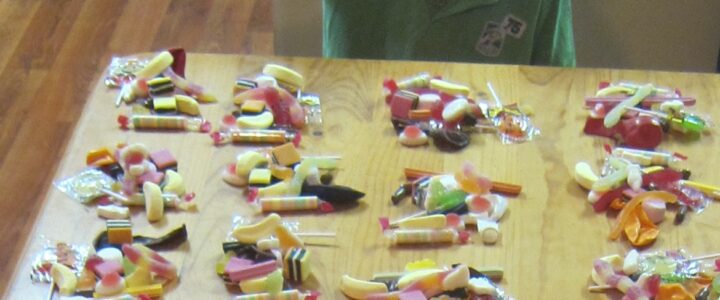
Ways to earn money for students shown through Chayse preparing lolly bags for his Candy Man business

Ways to earn money for students can start with a very simple idea. For Chayse, that idea was lollies — or candy for our American readers — and a plan to turn fifty dollars into his very own Candy Man business.

This is Part 1 of Chayse’s Candy Man story. Before the selling, the soccer grounds and the very heavy money jar, there had to be a plan.

Ways to earn money for students shown through Chayse preparing lolly bags after planning his Candy Man business
After planning his Candy Man business, Chayse soon moved into action.

Ways to Earn Money for Students: Chayse Plans a Candy Business

All kids love lollies. Chayse too really loves lollies! So it came as no surprise to see Chayse planning an enterprise that revolved around lollies.

Now Chayse is only four years old, so he needed a little help formulating his plan. Initially, he liked the idea of buying a heap of lollies, but I think he was thinking that he was going to be the one eating them!

Eventually, after much explaining, it became clear to him that he would be selling them, not eating them himself. His brothers and sisters all thought his enterprise idea was pretty cool and I’m sure were thinking, “Why didn’t I think of that!”

A Simple Business Plan for a Four-Year-Old

We don’t have a video of Chayse explaining his business plan. In fact, there isn’t much to it, so I’ll just explain it for you here.

We lent Chayse $50 to run his business. He planned to buy large bags of lollies from the supermarket, bag them up into small mixed bags, then sell them for twice what he paid.

His market would be all the hungry kids who play and watch soccer games on Saturday mornings at the local soccer fields.

For a four-year-old, that was a pretty good business plan. Product, start-up capital, packaging, pricing, customers and a selling location. Not bad for a little Candy Man!

Why This Is One of the Simplest Ways to Earn Money for Students

When families think about kids business ideas, it is easy to overcomplicate things. But children often learn best when the idea is simple enough for them to understand and exciting enough for them to care about.

Chayse understood lollies. He understood that kids liked lollies. He understood that soccer grounds were full of kids. With a little help from us, he could begin to understand buying, selling, profit and customers.

That is why simple projects can become powerful money lessons for kids. Children do not just hear words like “profit” and “investment”; they get to experience what those words mean.

From Pocket Money to Enterprise

Many children earn or receive pocket money each week, and there is nothing wrong with that. But when children create a small enterprise, they begin to see money differently.

Instead of waiting for money to arrive, they start looking for opportunities. They begin asking questions like:

  • What could I sell?
  • Who would buy it?
  • How much will it cost me?
  • How much could I sell it for?
  • What will I do if it works?

These are the sorts of questions that help children develop confidence, initiative and responsibility.

Entrepreneur Cameron Herold makes a similar point in his TED talk, Let’s raise kids to be entrepreneurs. Children can learn entrepreneurial thinking when they are encouraged to look for opportunities and create value.

Chayse’s Goal: Double His Money

If Chayse’s enterprise went to plan, he would double his money or get a 100% return. That would put a smile on any young four-year-old’s face.

Of course, before he could make any money, he still had to buy the lollies, package them, carry them around and sell them to real customers. That is where the real learning would begin.

The image above actually shows the next stage of Chayse’s Candy Man journey, when his plan moved from an idea into action. First came the goal, the $50 start-up capital and the discussion about what he could sell. Then came the exciting part — buying the lollies, sorting them into bags and getting ready to find his first customers.

The Candy Man Business Series

This post is Part 1 of Chayse’s Candy Man journey. You can follow the full series here:

Key Takeaway: Ways to Earn Money for Students Can Start Small

Key takeaway: Ways to earn money for students do not need to be complicated. Chayse’s Candy Man idea started with something he loved, a clear market, a simple product and a small amount of start-up money.

We will keep you updated with how his money-making enterprise goes.

Next up is Kit planning an enterprise. Kit is so excited that he reminds me of our late over-zealous Jack Russell Terrier when she used to go out for a walk!

We would love to hear from you, so please leave a comment.
Financial Freedom: Our Enterprise for Kids Journey Begins

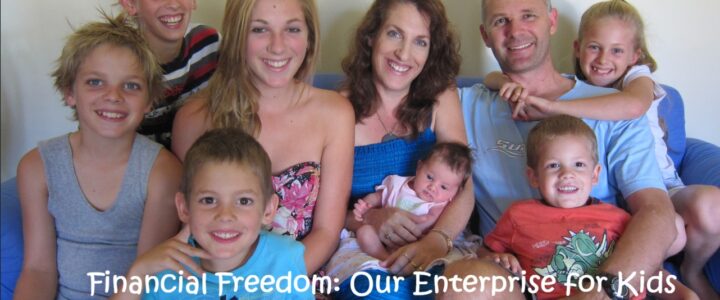
Enterprise for Kids family beginning their journey toward financial freedom

Financial freedom was the dream that began our Enterprise for Kids journey. We were one average, large and happy family daring to dream big, hoping to escape the Rat Race and help our children grow up with a different understanding of money, opportunity and enterprise.

“`

This was our very first post. It marked the beginning of a family adventure where we would learn alongside our children, challenge our own thinking and explore what it takes to raise enterprising kids.

“`

Enterprise for Kids family about to begin an entrepreneurial adventure
About to embark on our new entrepreneurial adventure.

Financial Freedom: Our Enterprise for Kids Journey Begins

Welcome to our blog, Enterprise for Kids!

We are one average, large and happy family daring to dream big.

We are on a journey to escape from the Rat Race and join the relative few who have achieved personal and financial freedom.

But we have seven gorgeous reasons to try.

We hope to inspire others to follow our lead and to provide our readers with insights and ideas into how it can be done.

Why We Started Enterprise for Kids

Our story begins with a huge understanding of what it takes to be a loving and adventurous family with wonderful family and friends, but only a little understanding of what it takes to be financially successful.

It is from this point, and with the help of a successful entrepreneurial mentor, that we will start our journey.

It is our hope that our children can gain a financial education and success mindsets surrounding money, whilst maintaining a genuine love of life.

For us, financial freedom is not just about money.

It is about having choices.

It is about being able to follow passions, serve others, support family, contribute to community and live with more freedom, purpose and possibility.

Teaching Our Children Enterprise Skills

We want to teach our children how to develop enterprise skills.

In simple terms, that means learning how to spot an opportunity.

We also want them to learn how to put that opportunity into practice through entrepreneurial skills, and of course, how to manage money successfully.

In addition to this, we want them to appreciate and be grateful for all the opportunities they attract, and learn to give back to the community in a way that makes a real difference.

This process will take time, but we hope you enjoy the learning with us.

The Australian Government’s MoneySmart guide to teaching kids about money is a useful reminder that parents can start early and make money part of everyday life.

That is exactly what we hoped to do through Enterprise for Kids — make money, enterprise, giving, gratitude and opportunity part of our family conversations.

Following Each Child’s Enterprise Journey

You will have the opportunity to follow each of our kids on their individual journeys, and ours too.

We also plan to introduce some of our kids’ friends to Enterprise for Kids, and our blog will follow their journeys too.

Conventional thinking may be challenged as we look and reflect upon our own belief systems and learn what it takes for a person to become financially and personally free.

We know we do not have all the answers.

In fact, much of this journey will be about learning by doing.

We will be learning as parents, and our children will be learning through real enterprise projects, money lessons, goal setting, mistakes, action and reflection.

Financial Freedom Begins with Mindset

One of the biggest things we hope to explore is mindset.

How do people think when they create personal and financial freedom?

How do they see opportunity?

How do they use money?

How do they manage risk?

How do they teach their children to think differently?

These are the questions we are beginning with.

As a family, we want our children to understand that there are many pathways in life. A job may be one path, but enterprise, creativity, investing, service, problem solving and contribution can also shape a person’s future.

The Beginning of the Enterprise for Kids Journey

So jump on board and let’s see where this exciting new adventure, Enterprise for Kids, takes us.

Visit our About Us page to meet us all.

Follow the Beginning of Our Family Enterprise Journey

Start here: This first post began the Enterprise for Kids journey. These early articles show how our family moved from dreaming about financial freedom to giving the kids real enterprise challenges.

Key Takeaway: Financial Freedom Starts with a Different Conversation

Key takeaway: financial freedom begins with mindset, learning and action. Enterprise for Kids started as our family’s attempt to teach our children about money, opportunity, gratitude, giving and enterprise while learning those same lessons ourselves.

Where to Next?

What kind of financial freedom conversation could begin in your family today?