Ways Children Can Make Money! Amber’s Enterprise Continued…

There are hundreds of ways children can make money! Yet when chatting to parents they often tell me that they would really like their kids to have a little business enterprise of their own, but they just can’t think of a good idea.

Well here’s the tip… think what the problems or needs that your local community has and maybe a kids’ enterprise could be built around it. Another angle to come from is to consider what skill your child might have that they could put to good use and build an enterprise around that.

Brainstorm ideas by jotting them down on paper. Keep going until you have exhausted all possible ideas whether or not you intend to use them or not. Try asking the neighbours what issues and problems that they have and add these to your list.

Generally people have ‘time’ issues and that is where a business can be started from. Not enough time to mow the lawn, clean the large rubbish bins, chop the wood, tend to the kids’ homework, clean the windows, rake the leaves, tutor the kids, pull the weeds, clean the car… you get the picture!

If you are still stumped for ways children can make money, then check back through this blog as it’s full of ideas.

Amber’s “New From Old” enterprise has been going great guns right from the beginning. Her money jars are filling up, and really she hasn’t had to do much work at all! She reached her goal that she set a while back and she is now preparing to take her business to another level (we’ll talk more about that in a later blog).

If you are new to our blog and haven’t yet had the chance to follow what Amber’s Enterprise entails, then click the link on the left side bar that says “Enterprising Howitt Family”. Here you will be able to read about all the Howitt Kids and their entrepreneurial journeys.

Toddler ride-on toys

Amber will make the fortnightly trip to the local Recycling and Waste Recovery Centre. It sells anything salvageable. The guy who runs the place now knows Amber and understands that she is running her own business. Amber has developed important skills of negotiating and connecting with a network.  When she identifies an opportunity she will confidently strike up a deal with the Recycle Man.

Much of the stuff for sale is really not worth the effort to resell and profit from. It is like looking for a gold nugget in amongst the boulders. Amber’s ability to pick profitable items has improved over the months and she now has an eye for a bargain.

Pet Cage

The items that can be resold are the ones that generally solve people’s problems (eg pet cages, baby toys, storage and exercise). These items need to be well presented and in good condition. So Amber looks for opportunities that don’t require spending lots of time and money fixing them up. Ideally she buys things that just need a good clean, a lick of paint or a new set of batteries.  She has learnt from her mistakes to check the items properly before buying them. She did buy a perfect condition four man tent still in its new box for $10, only to find out later that it had no pegs or poles. To buy pegs and poles new would blow her costs out and she would run at a loss. So it was put down to a learning experience. Does anyone have free pegs and poles??)

Fish aquarium

Sometimes Amber will see a possible opportunity, but holds off buying it until she has done her research.  She will work out what it will cost to repair or tidy it up (paint brushes, varnish, batteries, sand paper, labour, etc) and then she will look at what others are selling it for on Gumtree (Classifieds online). By doing her research, she then has an idea of how much she can pay for it in order to make a reasonable profit.

Amber sells almost all her items on Buy and Sell Bunbury Face Book. She set up her own Face Book page for the sole purpose to be able to participate in the buy and sell market. She writes her own ads, uploads her own pictures and converses with customers online and on the telephone. When a buyer arrives she will present her goods to them and collect payment.

Amber placing her adverts onto Buy & Sell Facebook with the gang watching on!

We’ve watched Amber continuously grow in confidence with her enterprise. She understands the many different ways children can make money and has found and built her own business around solving problems and using her skills of creativity and communicating with people.

Some of the items that Amber acquired and on-sold for profit can be seen in the pictures on this blog.

The five outdoor toddler toys were bought for a good price. She scrubbed them, put new batteries in one, charged the battery in another and sold them all for $60.

The aquarium and pet cages just needed a clean and she made a profit of $25.

Display shelves

Her corner display required screwing together and she made a profit of $20.

Her current project is a very large timber outdoor table. She paid $10 and hopes to sell that for a profit as well after sanding it back and varnishing it.

Amber has also been collecting succulent plants from friends. Her plan is to paint decorative ceramic pots and plant hardy succulents in them, then sell them at a market day.

Here is a video clip of Amber reflecting on her business and goals from several weeks ago. She talks about how her business is progressing, what she needs to do to attain her goal, buying assets and gifting money. Make sure you take a look by clicking here!

It will be very interesting to see where her entrepreneurial journey takes her as she grows older. She loves writing, so maybe she will write a book about her journey!

Amber making a sale!

Hopefully in this blog we have helped show some ways children can make money through enterprise. If you have any good ideas or tips for our subscribers, please leave a comment below.

In our next article we will talk about kids buying Gold!


How Do Entrepreneurs Think?

In an earlier article we spoke of charitable entrepreneurs such as Bill Gates, Warren Buffett and John Templeton. They, together with other wealthy people,  have extraordinary stories to tell about their entrepreneurial journeys. Some will tell you that they dropped out of school or were dyslexic and struggled with reading and writing. Others came from homes of poverty and then there were those born into wealthy entrepreneur families. Although they differed in their backgrounds and circumstances, what did prevail is that they all thought in a similar way. It is not circumstance that creates an entrepreneur, it is a mindset!

What we’ve come to understand is that for our family to become economically and personally free we need to throw out our conditioning around money and then reprogram our subconscious minds with a new success money mindset. The wealthy know this and have either been fortunate to have developed such a mindset from their upbringing or they have discovered for themselves (either consciously or unconsciously), a new way of thinking.

It is a fact that around 3% of the population actually do live a life of economic and personal freedom and the rest of us don’t (yes, we are definitely in that bracket). So what do the minority do that is so different to the rest of us?

More to the point… how do entrepreneurs think!

Before we look into it, consider this…

Whether we like it or not, we are being conditioned constantly to think a certain way about money. We are conditioned by our family, schools, advertising, politicians, TV and friends. Most people are tied to their jobs and to debt because the conditioning that they have received favours a money mindset of “lack”, not abundance.

Do any of the following resonate with you? …

“Money doesn’t grow on trees”

“Money is the root of all evil”

“You’ve got to work hard for your money”

“Get a good well paying job and you’ll be set for life”

“Buy a home, it will be your best investment ever”

“We can’t afford it”

“What job do you want to do when you grow up?”

“Go for the cheaper ones”

Only this morning I was listening to a friend talking with his teenage sons. He told them that they needed to get jobs. He explained that he had a job pushing shopping trolleys at their age. He even went down to the local IGA Supermarket and picked up applications for them to apply for jobs.

When I was fifteen I started out with a casual job working at a Target store. My hourly rate was $2.90 an hour!

All of the above are examples of conditioning. It is now known that much of our conditioning has been locked into our subconscious by the time we are four years old.

Our schools are designed to prepare workers for the work force; our banks make money by selling debt to people; our Government collect taxes and require people to be needy, submissive and controlled. They want people to take up jobs that only just pay enough to get by. Retail businesses make money by selling, so they condition us to spend; and our big businesses need workers to build their businesses. You see there is definitely a design to all this madness!

What our family has discovered is that our money mindsets are changing. We are learning that it is OK to accept money and to have money. In fact we deserve money!  It is OK to offer something of value to others for payment. Working hard in a job is not the only pathway for young people entering our big world.

There are other ways….. ways that will allow young people to really follow their passions and dreams and allow them to make a big contribution to whatever they consider to be important! Wouldn’t it be fantastic if all our kids could achieve economic and personal freedom!

People who have achieved financial freedom through being entrepreneurial have a mindset of abundance. Their habits differ and they do think differently.

Rather than me attempting to point out and explain “How Do Entrepreneurs Think” and go about their lives, I’ll instead refer you to, what I believe to be, one of the most influential books of all time in pointing the way to personal and financial achievement.

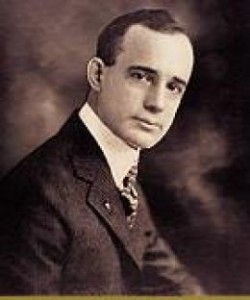
“Think and Grow Rich” by Napoleon Hill was originally published in 1937. The author spent his life studying successful people and recording how they think and act. He himself became very wealthy by following the distinctions in his own book and by modelling himself upon his mentors.

Think and Grow Rich is pre-eminently a “what to do” and “how to do” book. In it you’ll find the magic of self direction, organized planning, auto suggestion, master-mind association, an amazing revealing system of self-analysis, detailed plans for selling your personal services, and a wealth of other understandings from experiences of successful people who have proved their value.

The thirteen steps to riches described in this book offer the shortest dependable philosophy of individual achievement that has literally changed thousands of people’s lives!

This book could be worth a million dollars to you and your kids!

Cathy is currently re-writing Napoleon Hill’s book. The book she is writing will be suitable for kids to read, with simple explanations and modern examples that they can better relate to. It is a work in progress and once finished you’ll be the first to hear about it.

The original Think and Grow Rich book can be downloaded from the internet for free. Click here to download your copy today!

We would love to hear your comments on “How Do Entrepreneurs Think?” Please leave us a comment below. In our next Enterprise for Kids edition we will check back with Amber, Kit and Chayse to see how their enterprising businesses are going.


An Entrepreneur’s Conscience!

Is Having a Money Mindset Charitable?


Yay! Enterprise For Kids Rock!

I was talking with a dear friend and asked what she thought of our Enterprise for Kids blog. She thought that it was very well done and that her kids were very inspired by our kids’ enterprise experiences. Her children had read every blog post and watched every video, then her nine year old daughter sat down and planned an enterprise following all the lessons we talk about in our blog.

Wow!

That is exactly the sort of inspiration we hope to develop, especially with kids.

What happened next was a real surprise to me!


What! I have to give it all away!

My friend explained that she didn’t mind the idea of enterprise, but she wasn’t OK with her kids having an enterprise where they make money for themselves.

I was a little taken back when my friend said this. I really had never thought that there would be people with the view that kids shouldn’t be making money for self interest. I was also grateful that my friend was frank in sharing her beliefs as it helps me better understand mine.

Firstly there is no right or wrong in what people believe or do. Everyone is entitled to their views and I respect my friend’s view.

After this enlightening conversation, I came to realize how far our mindset around money has changed since we started out on our journey in search for economic and personal freedom. It also had me thinking about the entrepreneur’s conscience!

Wealthy entrepreneurs think very differently to the rest of us.

Generally I would also say that they are not selfish; although I’m sure there are some who are, like there are selfish poor people as well!

Wealthy people would have persisted with their goals and taken certain risks to get to where they are now. Many of the wealthiest entrepreneurial people in the world are also very charitable and give millions away supporting causes they believe in. It is much easier to be charitable when you are rich! Many who are struggling to make ends meet do not have the time, energy or money to make larger contributions to the world.

Bill Gates
Warren Buffett
John Templeton


Bill Gates, for example, employs many people to spend his money on charitable causes! Warren Buffett, who has lived in a very modest house all his life, gives away billions to charity! And Sir John Templeton (1912 – 2008) contributes $70 million each year through his foundation providing research grants and programs relating to the Big Questions of human purpose and ultimate reality (very interesting if you have the time to delve!).

Only last week I was speaking with a new entrepreneur friend who lives in Perth. He has recently created tremendous wealth developing property mostly in the Western Australian mining town, Port Hedland. He explained to me that he no longer needs to work and he now channels his energy into his passion. He is planning to take his young family to America where he has enrolled in a Theology university course. From there he plans to do mission work in Africa. Being a successful entrepreneur is allowing him to follow his charitable dream!

It could be argued that entrepreneurs, as opposed to the rest of us “workers”, have more free time, are less stressed, enjoy better health, eat better, travel more and their families are given more opportunities in life.

Do the rich have an entrepreneur’s conscience?

Probably more so than the rest of us!

The difference being is that they are in a much better position to make a real difference in our world than those of us who are tied to a “job” and to “debt”.

I’d like to thank my friend who allowed me to consider my views of an “entrepreneur’s conscience”.  I certainly value the importance of teaching kids enterprise, and I do support the view that enterprising kids should also be taught to be charitable.

Our view also is that a child has to walk before they can run…..meaning that for us, it’s OK for our kids to have a “selfish” goal because that is what motivates them at the time to take action and learn the entrepreneurial skills necessary to succeed. Then, when they have mastered that skill, they are taught to have a goal, but think about where they may like some of the money they earn to go. That is exactly the process we taught our Chayse (who’s 4) and Kit (who’s now 7) when they reset their goals. See this in action in an upcoming blog.

The more entrepreneurs we create the better our world will be!


As we revisit our own kids entrepreneurial journeys in this blog, we will share the lessons around their entrepreneur’s consciences and how we are teaching them to be charitable.

Next time we will talk a little more about the conditioning we have around money and how the wealthy do think differently.

Keep this discussion going by sharing your view in the comment box below.

Lastly, I’d like to take this opportunity to remind you about the Gold and Silver Seminar that we are holding in Bunbury this Sunday. It will be an informative presentation that will open your eyes to some excellent investment opportunities. The discussion after the seminar is a great way to meet and network with other investors and business people. Bring along your teens to kick start their financial education. Click Here to view our flyer and please pass it around to others who you think may be interested.

Young Bucks: How to Raise a Future Millionaire

Cameron Herold

I was looking for conversations on Twitter about raising Enterprising Kids, when I came across a very inspirational guy called Cameron Herold. He is a very successful entrepreneur with an excellent message to parents wanting to raise kids to be entrepreneurs. He shares his own life story and makes reference to the book “Young Bucks: How to Raise a Future Millionaire” by Troy Dunn.

Cameron, now in his late forties, was once one of those kids who simply didn’t fit into the regular schooling mould. In fact, these days his hyper-activity would have had him labelled with the disorders of ADHD and Bipolar. Cameron admits that he had, and still has, these “illnesses”, and were he born into this modern world, would have been dosed up on Ritalin and given referrals to the school Psych in order to mould and conform him to expected “societal” standards at school. Cameron explains that it was these afflictions that made him what he is today… a very successful entrepreneur! He says our schools are full of potential entrepreneurs who are suppressed by behaviour programs and Ritalin.

“Bipolar is the CEO disease!”

Steve Jobs

Steve Jobs, Ted Turner and all three founders of Netscape have two things in common. They are/were successful CEOs AND they all have/had Bipolar.

Cameron says ‘Don’t medicate kids with Attention Deficit Disorders. Imagine if Steve Jobs was given Ritalin, the world wouldn’t have been blessed with the amazing advancements in the technologies of Apple!”

Cameron Herald was brought up by his parents to be an entrepreneur. He points out that schools rarely teach kids how to think like and develop the skills to be entrepreneurs. Schools condition kids to fit into jobs, not build businesses. Cameron wasn’t comfortable with school and ended up dropping out.

Being an entrepreneur is not an inherited trait, but a learned behaviour!

In America, fewer than 18% of households are headed by a self employed business owner, however, self employed business owners are four times more likely to be millionaires than those who work for others! On average entrepreneurs make at least 25% more in income than the general population. (T.Stanley Phd & W.Danko Phd in “The Millionaire Next Door”)

Entrepreneurs learn to become entrepreneurs through necessity, such as immigrants and refugees, or they learn through observation, such as Robert Kiyosaki. Very few entrepreneurs learn about these skills at school. So, if you want your kids to learn about entrepreneurship, someone in their family must teach it!

It is interesting to note that 62% of Entrepreneurs say they do not have a family member who is an entrepreneur ((North Eastern University School of Technology Entrepreneurship Oct 2006), so rely on other mentors to teach them the necessary skills.

So how do you teach kids to be successful entrepreneurs?

Cameron Herold

Cameron Herald offers many excellent suggestions. He presents an outstanding talk, that goes for about 15 minutes. If you are following our blog, then you are likely to be a parent looking to give your children opportunities and choices in life which would include providing them with the know-how to develop enterprise skills. Cameron Herald’s talk is a must see! So go make a coffee, then click this link and soak up his energy and words!

In his talk, Cameron makes reference to a book that he says has practical and age specific advice on how to access your child’s strengths and weaknesses so that you can pre-think ideas to suggest to your children on what kinds of money making opportunities they can do.

The book is called “Young Bucks How to Raise a Future Millionaire” authored by Troy Dunn.

Young Bucks: How To Raise a Future Millionaire

Troy Dunn is also a self made millionaire and successful entrepreneur. He also happens to be a father to seven kids (just like us!), so I guess he is qualified to offer guidance!

In his book he explains that the first pre-requisite is to give your child the “Gift of Want”. They must have a real reason to pursue being an entrepreneur. They must want something badly enough as this is what will give them the motivation to get started and to keep going when the going gets tough!

Dunn leads parents through a series of steps to assist their child in deciding, researching and setting up a money making business. He teaches key concepts like marketing, pricing, negotiating etc and he gives plenty of terrific “enterprise for kids” ideas.

Amazon sell “Young Bucks: How to Raise a Future Millionaire” for $19.95 as a hard copy.

Cameron Herold states that one can change the world as an entrepreneur! All that is needed is a single, brilliant idea.

This takes me to my next point – to be an entrepreneur, we need to change the way we think. True entrepreneurs see obstacles and turbulence in life as  opportunities and in the midst of crises often create their own opportunities to solve the problem!

Cameron explains that teaching our kids skills such as leadership, tenacity, sales and attainment, help them to succeed. He says that we need to help them find the entrepreneur within themselves, and we need to make it cool! Kids who struggle at school need opportunity. His view is that we should be raising kids to be entrepreneurs, rather than lawyers! Don’t get me wrong, being a lawyer is an admirable profession, but for those children who have no desire or ability in attaining the results to be a lawyer, then entrepreneurship is even more important.

Cameron thinks parents should groom young entrepreneurs to hate the thought of getting a job! Don’t give kids pocket money as it conditions them to have/expect regular pay cheque. Rather, teach your kids to find things that need to be done around the house, then have them negotiate a fee for doing it. This teaches them to look for opportunities and to negotiate.

Teach kids habits to save. Have them use money boxes with three compartments. One for gifting, one for buying toys and one for buying assets such as money in the bank, gold or stocks.

Take opportunities to teach from real life examples in the real world. For example point out when someone is providing good customer service in a restaurant, or presents well as a salesman. Encourage your kids to sell their unwanted toys, to build inventions and to tell stories to the public.

Cameron Herold has allowed me, as a school teacher, to see kids in schools differently. I can see that there are some children who love the system and are more than happy to get a job and work for a salary, but there are an increasing number of children who don’t fit into the system, and perhaps unknowingly, are destined to be budding entrepreneurs. All they need is someone to release the “entrepreneur self” from within and then provide the opportunities for them to develop!

We need more people like Cameron Herold and Troy Dunn (Young Bucks: How to Raise a Future Millionaire) in our world. If you missed Cameron’s talk, here is the link again!

In our next post I have an invitation for those of you who live in Bunbury Western Australia!

Who Teaches Your Kids About Money?

If you don’t teach your kids about money, then there are plenty of people out there who will! And not all of them will teach your children what they really need to know.

Kids are conditioned by media and celebrities.

Our kids are educated financially from many sources whether we like it or not. Everywhere they go and everything they look at is conditioning our kids around money.

Teenage kids, for example, are very influenced by their peers, TV and social media. They are pressured to want to have all the latest and greatest of everything! AND…they have to have it now! If you have a teenager in your house (or even a preteen!), you will understand this very well. They will tell you that they are the “only” ones in the “whole world” who doesn’t have one! And if you try to compromise with a cheaper version from Target,… well, forget it! Brand name or nothing!

Many parents fall into the trap of giving into their kids’ persistent demands. We have…..more times than we should have!… and the older a kid gets, the better they are at arguing their point. Some parents may lend their child the money with the view of having them pay it back when they can afford it, or some simply pay for the item fully and don’t expect their child to pay anything back.

But what is this teaching children?

Our son Flynn was preparing to go on a camp with his school. He claimed that ALL the kids would have iPods and that he wanted to buy one to take on camp.

He counted up his money and found that he was short about $100. He was very persistent in his request and we decided to sit down and have a conversation with him around the value of money.

Our dilemma was this – If we were to say an outright “NO, we can’t afford it” then we would be conditioning him with a mindset around “lack of money.”

If we said “YES”, then we would be conditioning him with the mindset to “borrow, then spend!”….and probably not appreciate it too much.

So……………we came up with a solution we had been taught in our mentoring course.

We said “YES”. He could buy an Ipod……however, we weren’t able to pay for it. We brainstormed ideas with Flynn on how he could raise $100. Time was of the essence as he was going on camp in three days.

We came up with ideas such as increasing the marketing of his honey that he was selling through his Honey Enterprise; sell some of his unwanted things such as his surf board; or do a deal with his sister and buy the items she had lined up to sell as part of her “New from Old” enterprise and then resell them with mark up.

The discussion gave him motivation, and we took the punt that if he was really keen for the iPod, then he would make it happen.

The point of all this is that we didn’t automatically say “No, we can’t afford it”…… and we didn’t say “Yes, and we will pay for it”. Rather, we put the onus on Flynn to work out a way to achieve his goal without getting himself into debt. We used this opportunity to teach Flynn about money.

Our Money Mindset Mentor, Paul Counsel, says that in our society, kids are conditioned to “earn, spend and borrow” from a very early age. This conditioning carries through to adulthood and ties people to a job. They need this job to pay for the interest payments on their “things”.

Sporting heros are used to condition people.

It is hard for our kids to avoid this type of conditioning. Their sporting idols appear on TV advertisements telling them what a great investment they are making if they buy x,y or z……and finish with a trusting wink!

Celebrities promote all sorts of things from insurance and jewellery to holidays. Retailers offer low cost, easy monthly payments for expensive items that people really can’t afford. There goes the “earn, spend and borrow” cycle again. Even airlines offer credit these days!

The education faculties don’t teach your kids about money either. In fact they will also put young people into tremendous debt by financing their higher education courses. Young people who spent five years working hard for a qualification, come out at the end with a massive debt!

Locked into debt before you can even begin!

Here is a hard fact… this year the total amount of student loan debt in the US hit the $1 trillion mark. Back in 2010, the amount of U.S. student loan debt surpassed the total amount of credit card debt, and it continues to grow. The trend in Australia is following that of the US.

We can look at life as being a game full of experiences! We are here on earth to play the game. Yet from an early age the odds are stacked against us to achieve personal and financial freedom when we are “conditioned” to earn, spend and borrow for unproductive things.

Can this change? Absolutely.

And who is the best person to teach this change to your children?

Well, if you have already achieved financial and personal freedom, then the best teacher is YOU!

And if you haven’t, then find someone who has achieved the type of financial or personal success you would like for your kids. You may even learn something in the process. 🙂

Finding Enterprise Ideas

Finding Enterprise ideas. Easier said than done! Coming up with a brilliant enterprise idea that can make enough money to achieve your goal…. and ones that you feel inspired enough about to keep you going when things get tough…………well, that’s a tall order for an adult, let alone a kid!

The trick is to spend some time brainstorming. What I explained to my entrepreneurial kids, was that they needed to think of all the problems that our small community town has, and then look for solutions!

By solving people’s problems you will create opportunities for enterprise. In the video (which you can view here), I gave the following example to my kids.

No body likes getting cold. Winter is drawing near and people are chopping wood ready to fuel their fires. They will need kindle to get their fires started.

Problem: No-one likes scrambling around outside on a cold and rainy day gathering kindle to get their fire started.

Solution: Collect bundles of gum tree sticks (they are full of fuel and burn easily), bundle them up and pile them in a wheelbarrow to sell to people who need the kindling.

So, step one was finding the problem, step two, the solution and step three would be putting it into action. What a great and simple enterprise idea.

So after giving this example, the kids had no trouble finding enterprise ideas.

Our mentor, Paul Counsel often shares a great educational basis behind what it means to be entrepreneurial.

He encourages us to consider how we are an asset to others. What skills and knowledge do we have that could be of service to others?What are we good at?

For example Kaitlin and Amber are very good with looking after toddlers and babies. Everyday they are helping with their baby sister Akaisha. They feed her, change her nappy (diaper, for our American readers!), bathe her and take her for walks. They are both very skilled and have an ease with babies. They know when Akaisha is tired and they know how to soothe her when she is upset. This skill could lend itself to any number of enterprise opportunities.

Reading with siblings
Looking after Akaisha


The obvious enterprise would be baby sitting, but other ideas include:

Homework Support – Busy parents may need someone to listen to their toddlers read, learn spelling words and with writing practice.

Toddler Playmate – After school parents would appreciate an older child entertaining and playing with their toddler or baby. This would be more so in families with only one child as that child may lack in playmates. So why not offer to be a paid playmate.

Walk Younger Children Home from School – Busy parents may appreciate a responsible older child walking their kids home from school.

Sports/Dance/Art Trainer – Amber and Kaitlin could teach other kids how to throw and catch  a ball, bat, bounce on a trampoline or kick a football. If not a sports trainer, what about Music or Dance Teacher, or Art Coach. Both Amber and Kaitlin are extremely good at art!


Kaitlin loves kids.


All it requires, when finding enterprise ideas for kids, is a little imagination. Take the time to identify problems and look at what assets you have that could help people. “Helping people” is the key to enterprise.


Budding young musician

A tip for everyone: You can increase your value by up-skilling and becoming an expert in an area. You then create excellent enterprise opportunities for yourself. The more you increase your skill, the more valuable you become and the more you will be sought after by people. As a result, people will pay well for your time and knowledge.


For example, being a whiz on sorting computer glitches would make you very valuable to people who have computer problems, or being an expert pianist would create opportunities to teach others how to play the piano.

Many of these ideas aren’t new, but people, especially children, don’t take the time to look at their existing skill set.

Finding enterprise ideas can be fun and it isn’t that hard if you do a little thinking and brainstorming first. Our next blog will be very exciting!

Amber will reveal her enterprise idea that she will be embarking on in her quest to reach her goals…..so stay tuned…..