A vision board can help children turn a goal into something they can see, feel and act on. Visualising a goal, evoking the emotional response within, and then taking the necessary action are all important ingredients in achieving something meaningful.
“`
Whether the action involves acquiring knowledge, building skills, doing something physical or creating a small enterprise, children need a goal they can believe in before they are likely to follow through.
“`

Vision Board Goals for Kids: Enterprise, Money and Action
In fact, many leading sports men and women use visualisation as part of their preparation.
I remember reading about one of Australia’s very best runners, Cathy Freeman, who won gold in the 1994 Canadian Commonwealth Games in both the 200m and 400m races.
Cathy began her preparation for the 200m race two years earlier.
Every day she trained and visualised the race in her mind. Her visualisation included every detail of the race, from what she was wearing, to the lane she was in, and how she would run the race from start to finish.
She even pictured the time she would get and how much it would take to beat the second-place getter.
She was so mentally prepared that she had no doubts at all that she had the gold in the bag.


She had already won in her mind.
As it turned out, she ran the race beautifully. She is a living legend.
Why a Vision Board Can Help Kids Believe in a Goal
Imagine if our kids were able to muster up that sort of determination and self-belief.
It would make anything possible for them.
So our kids needed to see a real purpose in the kids enterprise project they were embarking on. Without a real purpose they could believe in, they would not have the steam to see it through.
Before we even considered kids enterprise ideas, I asked them to think of something they would like to buy with the profits they were going to make from their enterprise businesses.
It had to be something they really wanted.
It also had to be something they realistically believed they would be able to achieve.
From Dream to Dollar Amount
Coming up with ways to spend the money was easy, even though at this stage they still had no idea what enterprise project they would be doing.
But that didn’t matter.
The important part was that the kids established a realistic goal they could believe in with certainty.
If the kids wanted their goal badly enough, and focused on what they needed to do to get that money, then the enterprise had a much better chance of becoming fruitful.
Once the kids had a visual picture of what they wanted, the next stage was to convert it into a dollar amount.
I made a stipulation that their first enterprise idea may not completely reach the whole monetary target they had set for themselves, but it had to at least be able to pay my $100 back, plus $1.
This we called ROI, or Return On Investment.
Future enterprise ideas could contribute to the children realising the rest of their financial goal.
Finally, they needed to set an end date for the completion of their enterprise.
Vision Boards for Kids and Enterprise Goals
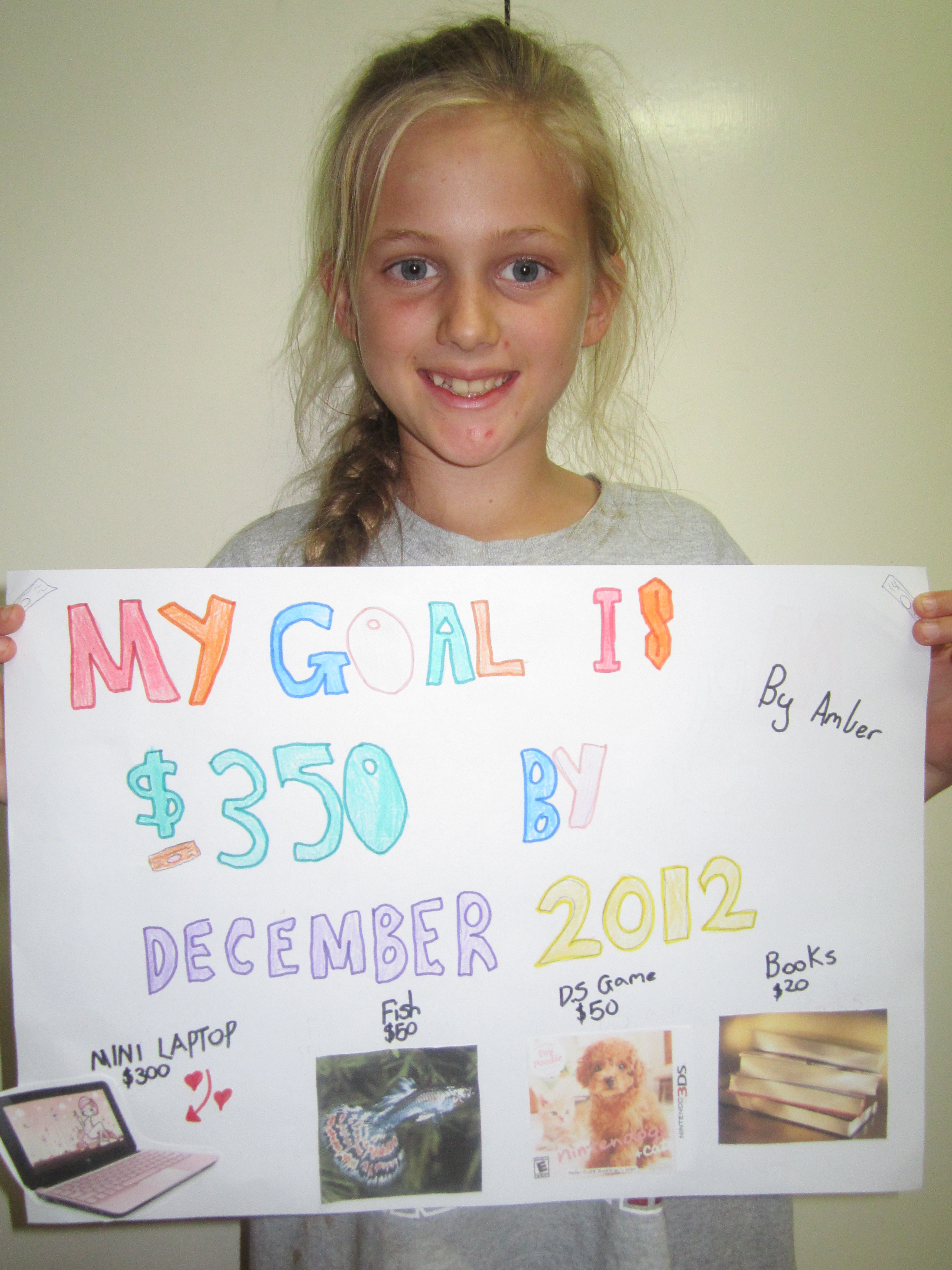
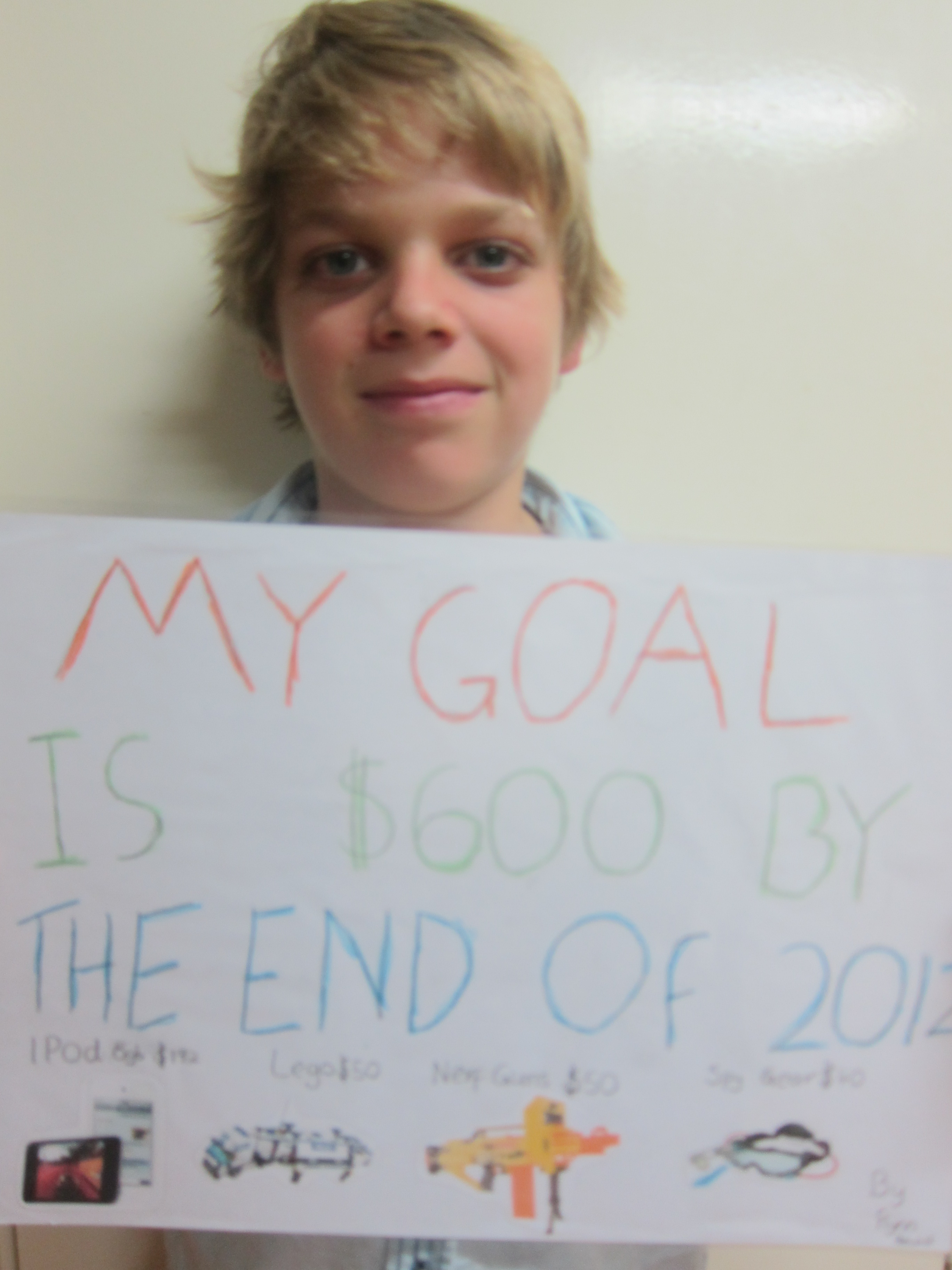
The kids jumped onto the computer to find images of the things they wanted to buy when they had made the money.
These images were printed, and each of the kids constructed a vision board.
I laminated the vision boards to make them special and long-lasting.
The vision boards were then stuck on their bedroom walls, where our little enterprising team could look, dream, think and evoke the visual pictures into their subconscious.
Why This Goal-Setting Activity Worked
This simple vision board activity helped our children connect their enterprise ideas to something personal.
It was no longer just about “starting a business”.
It was about creating money for a goal they could see.
That made the project more meaningful.
The process gave the kids:
- a clear picture of what they wanted,
- a reason to stay motivated,
- a dollar amount to work towards,
- an end date,
- and a practical reason to create an enterprise idea.
For children, this is powerful.
They can begin to understand that goals are not achieved by wishing alone. They are achieved by combining belief, focus, planning and action.
Vision Boards Need Action
A vision board is not magic on its own.
It works best when it is connected to action.
That is why we linked the children’s vision boards to their enterprise projects.
They could look at the pictures on their walls, but they also had to ask:
- How much money do I need?
- What can I do to earn it?
- What skills do I need to learn?
- Who can help me?
- What is my deadline?
- How will I know if my enterprise idea worked?
This moved the activity from dreaming into doing.
For a broader reflection on vision boards, visualisation and action, you can also read our article on Vision Board Ideas for Students.
Enterprise Goals for Kids
In the next blog, we’ll take you through the process of how the kids came up with each of their kids’ enterprise ideas.
See you then!
Key Takeaway: A Vision Board Helps Kids Focus
Key takeaway: A vision board can help children picture a goal, believe it is possible and connect that goal to action. When children turn a dream into a dollar amount, an end date and an enterprise idea, goal setting becomes real-world learning.
Where to Next?
- Read Vision Board Ideas for Students
- Read Amber’s New From Old Enterprise
- Read Flynn’s Honey Turns to Gold
- Read Kit’s Pocket Money Idea
- Read Coding for Kids: Jai’s Apple App Enterprise Idea
- Explore more Money Lessons for Kids
What goal would your child be excited enough to picture, plan and work towards?