Buy and Sell for Profit: Amber’s Rabbit Hutch Flip

Buy and sell for profit with Amber's rabbit hutch flip

Buy and sell for profit sounds simple, but it teaches children a lot. They have to spot an opportunity, understand value, negotiate a price, improve the item, advertise it well and then complete the sale.

“`

This is the second article in Amber’s New From Old series. After planning her enterprise idea, Amber wasted no time putting it into action — and her rabbit hutch flip became a wonderful first success.

“`

Amber contemplating how to buy and sell for profit through her New From Old enterprise
Amber contemplating her next New From Old enterprise opportunity.

Buy and Sell for Profit: Amber’s Rabbit Hutch Flip

Amber didn’t waste any time jumping into her New From Old money-making enterprise.

She bugged me to take her to the Dardanup Tip to see what she could find. So, after her Saturday soccer game, we paid a visit.

At the tip there was a salvage area where anything that could be recycled was put aside and sold. The current Shire of Dardanup Waste Transfer Station and Recycling Centre information still shows how recycling and Tip Shop-style reuse can be part of local waste recovery.

Almost immediately, Amber spotted an opportunity.

She saw a damaged rabbit hutch. We looked over it and could see that it was generally in good structural condition and could easily be repaired. However, it did need a paint job.

So Amber went up to the tip man and struck up a deal.

She bought the cage for $10.

Ten dollars was a real bargain! We looked up the exact same cage sold online in kit form and saw that people were paying around $180 for them.

Amber’s New From Old Series

This post belongs in Amber’s New From Old series, where she learns how to find second-hand items, improve them and sell them for profit.

Repairing the Rabbit Hutch

Arriving home, there was a buzz of interest as the neighbouring kids headed around to see Amber’s rabbit hutch. They were really curious to see what she was up to.

Amber bought a couple of paint brushes for $5. Then, using some old house paint she found in the shed, she and her friends set to work painting.

She also employed her brother Flynn and his mate Dan for $2 each to fix the broken part of the cage.

They thought that would be awesome!

Enterprise for Kids was now becoming infectious in the neighbourhood.

Chayse helping Amber repair the rabbit hutch for a buy and sell for profit project
Chayse helping Amber repair the rabbit hutch.
Amber fixing the door latch on a rabbit hutch to sell for profit
Amber fixing the door latch.

Learning to Add Value

This was a wonderful real-world money lesson.

Amber had not simply found something to sell. She had found something that needed attention, repair, paint and presentation before someone else would see its value.

That is one of the big lessons in learning to buy and sell for profit.

Profit often comes from seeing value that other people miss.

Amber was learning how to:

  • spot a bargain,
  • research the value,
  • negotiate the purchase price,
  • make repairs,
  • use help wisely,
  • advertise the item,
  • and sell for a profit.
Amber employing Flynn to help repair her rabbit hutch for a resale project
Amber employing Flynn to help her fix the rabbit hutch.

Pricing and Advertising the Rabbit Hutch

It was all great fun and, in no time at all, the cage was ready to be sold.

Amber continued her research into what to sell the cage for. She spoke with Darcy’s Mum about cages and also to Nicolette from next door. Both had owned rabbit cages and understood their value.

Finally, Amber decided that she would ask $90 for the bunny hutch.

Her next job was to put a free advert on the local Buy and Sell Bunbury Facebook page.

She put her ad up with a photo and waited for a response.

Amber photographing her rabbit hutch before advertising it to sell for profit
Now for the picture for Amber’s Facebook advert.
Amber's finished rabbit hutch ready to sell for profit
Amber’s finished enterprise idea.

Sold for $90!

You wouldn’t believe it!

Within ten minutes, the cage was sold for the full $90.

In fact, two other people had their hand up to buy the cage if the first deal fell through.

Amber met and thanked the man who came around to pick the cage up and eagerly took the cash payment.

She really did pull the money bunny out of the hat!

Amber’s Profit

All up, it was an outstanding result.

In only a few days, Amber’s profit was $71 after costs.

She was well on the way to attaining her goal.

With her money jar now looking very full, she was rearing to go for another visit to the tip!

She had already begun developing an enterprise mindset around business and money, and her financial IQ was growing.

What Amber Learnt About Buying and Selling

Amber’s rabbit hutch flip was not just about making $71.

It taught her that she could take an idea, act on it, solve problems, ask for help, make decisions and sell something successfully.

That kind of learning is powerful.

She also learnt that buying and selling for profit is not only about finding something cheap. It is about understanding value.

She had to ask:

  • Is this item worth fixing?
  • Can it be repaired easily?
  • What will the costs be?
  • What are similar items selling for?
  • Who might want to buy it?
  • How should I photograph and advertise it?
  • What price should I ask?

These are real business questions.

Buy and Sell for Profit: The Bigger Lesson

For children, a simple resale project can teach lessons that are difficult to learn from a worksheet.

Amber learnt through action.

She learnt that opportunity can sometimes be sitting at the tip, waiting for someone with imagination to notice it.

She learnt that old things can become valuable again.

She learnt that money can be created through effort, creativity and follow-through.

Most importantly, she learnt that she could do it.

That belief is one of the most valuable outcomes of all.

Key Takeaway: Buy and Sell for Profit Starts With Spotting Value

Key takeaway: buy and sell for profit projects can teach children how to spot value, negotiate, repair, research prices, advertise and complete a sale. Amber’s rabbit hutch flip showed that one small second-hand item can become a powerful real-world money lesson.

Where to Next?

What second-hand item could your child buy, improve and sell for profit?

Coding for Kids: Jai’s Apple App Enterprise Idea

Coding for kids with Jai’s Apple app enterprise idea

Coding for kids can be more than screen time. For a child who loves technology, gaming, social media and the internet, coding can become a way to create, solve problems and even explore enterprise ideas.

“`

Jai’s interest in technology became the starting point for his Apple app enterprise idea. Rather than only seeing his screen time as a problem, we wanted to help him channel that passion into something creative and entrepreneurial.

“`

Jai using technology as part of coding for kids and his Apple app enterprise idea
Jai loved technology, gaming and the internet — and we wanted to help him channel that interest into enterprise.

Coding for Kids: Jai’s Apple App Enterprise Idea

Jai, like many teenage kids, is fascinated by the internet, social media and gaming.

If you allowed him, he would spend day and night on his computer, iPod or mobile phone chatting to his friends, playing games or searching the net.

We are careful that he is well-rounded, with a balance of activities such as kicking the footy and playing with his family, while at the same time allowing him the opportunity to immerse himself in his passion.

Jai balancing exercise and technology while exploring coding for kids
Jai leads a balanced life.

That balance matters.

Technology can easily become passive entertainment, but it can also become a pathway into creativity, learning and enterprise. This is where coding for kids becomes so interesting.

A child who loves screens may also love designing, building, experimenting, creating games, solving problems or developing apps.

Turning Screen Time Into Enterprise

When we introduced the Family Project to Jai, he knew exactly what he wanted to do.

His very grand idea was inspired by a family friend who had developed a hugely successful company based around building iPhone apps.

Let me tell you, in a nutshell, his inspiring self-taught success story.

A friend of ours was originally from Switzerland and had worked most of his life in a newsagency. He also had a passion for windsurfing and would take every opportunity to visit the West Coast of Australia in pursuit of the consistent strong summer winds that make the WA coastline a windsurfer’s heaven.

In Perth, the capital city of Western Australia, the wind is named the Fremantle Doctor because it appears to come from the nearby coastal city of Fremantle and brings welcome relief from the summertime high temperatures.

Our friend then decided to leave his Switzerland home to follow his passion, and the Fremantle Doctor, and set up home permanently in Geraldton, a small coastal city north of Perth.

He literally became a beach bum who spent his afternoons windsurfing and kite surfing. In his spare time, he would play around on his computer.

A Self-Taught App Developer Story

He taught himself how to program apps for Apple iPhones and was able to make a few simple applications which he tried to sell online.

This is where his enterprise kicked off.

From the comfort of his backyard hammock, one of his apps began selling. Sales exploded, and millions of people from all around the world downloaded it. For each download, he received a payment.

His success seemed to happen almost overnight.

This entrepreneur went on to build a multi-million-dollar company with three other partners, all from Switzerland, who incidentally had also followed the Fremantle Doctor to Geraldton.

What this man, with no formal qualifications in the beginning, managed to do in only a few years was mind-blowing.

His story inspired my fourteen-year-old son.

Jai’s Apple App Enterprise Idea

Jai’s enterprise plan was to build an Apple app and sell it online.

How he would manage to do that was not known yet.

All he needed at the beginning was a goal and a rough plan. Then he could focus on and tackle each of the steps one by one.

Maybe Jai too would become an overnight success like our friend!

Jai with hair-raising ideas while exploring coding for kids and app development
Jai often has hair-raising ideas.

The wonderful thing about this kind of enterprise idea is that it starts with a child’s natural interest.

Jai already loved technology. The challenge was to help him move from consuming technology to creating with technology.

That is the opportunity parents can look for.

When a child spends hours on a device, the question is not only, “How do we stop this?”

Sometimes the better question is, “How could this passion become useful, creative or enterprising?”

Why Coding for Kids Matters

Coding for kids can teach much more than computer skills.

It can help children learn:

  • problem solving,
  • creative thinking,
  • logic,
  • design,
  • persistence,
  • testing and improving,
  • and how to turn an idea into something real.

For Jai, coding and app development also connected with enterprise.

An app is not just a piece of technology. It can be a product. It can solve a problem. It can be sold. It can reach people far beyond your own town.

That was the part that excited him.

Learning to Code and Build Apps

Today, there are many more resources available for children and teenagers who want to explore coding and app development.

Apple’s Swift Playground is one example of a tool that helps beginners learn to code and build apps using Swift.

Apple’s education resources also show how students can move from their first line of code through to building their first app with Swift Playground.

For families, the key is not necessarily to know exactly how the whole pathway will unfold.

The key is to help a child start.

From Passion to Pathway

This post preludes Jai’s enterprise pathway.

He began with a passion for technology, a story that inspired him and a big idea that felt exciting.

He did not yet know every step.

But he had a direction.

That is often how enterprise begins.

A child sees something, hears a story, connects it with their own interests and thinks, “Maybe I could do that too.”

That moment is worth encouraging.

Jai’s Enterprise Pathway

This article is part of Jai’s enterprise journey.

In our next blog, we revisit Amber and see how she is going with her New From Old enterprise.

Key Takeaway: Coding for Kids Can Build Enterprise Thinking

Key takeaway: coding for kids can turn a child’s interest in technology into creativity, problem solving and enterprise. Jai’s Apple app idea showed us that screen time can become more meaningful when children are encouraged to create, build and follow a pathway from passion to possibility.

Where to Next?

What technology interest could your child turn into a creative or enterprising pathway?

Small Business Ideas for Students: Kaitlin’s Portrait Drawing Enterprise

Small business ideas for students shown through Kaitlin's portrait drawing enterprise

Small business ideas for students often begin with a skill they already love using. For Kaitlin, that skill was drawing — especially pencil portrait sketches.

This is Kaitlin’s creative enterprise idea: using her artistic talent to draw portraits from photos and turn that skill into a simple student business.

Small business ideas for students with Kaitlin planning her portrait drawing enterprise
Kaitlin loves drawing.

Small Business Ideas for Students: Kaitlin’s Portrait Drawing Enterprise

I admire those very creative people who can draw!

Sadly, I am not one of those people, although there are some very artistic people in my family.

My sister won first prize in one of Australia’s richest art prizes, a $250,000 prize for an artwork she entered into “The Signature of Sydney”, which really kicked off her painting career. Also, my grandparents and aunt on my Dad’s side were respected artists.

So it is not surprising that our eldest daughter Kaitlin has an exceptional skill with drawing, and in particular pencil portrait sketches. From when she was very little, she would draw for hours and, over the years, has honed her skill.

Her Mum, Cathy, also has exceptional drawing skills and has encouraged and taught Kaitlin many of the skills she has today.

Looking at Skills as Enterprise Opportunities

When looking for an enterprise opportunity, it makes sense to look at what someone is already skilled at, then see if there is a need or problem in the community where that skill could be put to use.

This is one of the best ways to find kids business ideas. Rather than starting with the question, “How can I make money?”, children can start by asking:

  • What am I good at?
  • What do I enjoy doing?
  • Who might need this skill?
  • How could I help someone with it?
  • Would someone be willing to pay for that help?

For Kaitlin, the answer was clear. She loved drawing, she was good at portrait sketches, and people often like having personal artwork created from family photos.

That made portrait drawing a natural enterprise idea for her.

Small Business Ideas for Students Can Grow from Creative Skills

Kaitlin's mermaid drawing showing creative small business ideas for students
Kaitlin’s mermaid drawing.

Up-skilling yourself in your area of interest and becoming the best there is in that field will likely increase the demand for your kind of talent and services.

As a result, customers may choose you over your competitors and may be more likely to pay a premium.

I wrote an Enterprise for Kids post on this very topic a number of blogs ago. If you would like to learn more about how up-skilling can create enterprise for kids opportunities, then visit Finding Enterprise Ideas.

Kaitlin’s talent with drawing became the basis of her enterprising idea, and she explains her business plan in this short video.

Kaitlin’s Portrait Drawing Business Plan

Kaitlin's portrait drawing as a creative business idea for students
Kaitlin’s portrait drawing.

Kaitlin planned on spending $70 to buy the drawing and framing materials she required to run her business.

Her idea was to draw people’s portraits from a photo and sell the finished artwork either framed or unframed.

She planned to market her service on Facebook. In our local area, there was a classified Facebook Buy and Sell group for Bunbury, and this gave her a place to start showing people what she could offer.

Her aim was to complete one drawing a week with a sale value of about $30.

In her video, Kaitlin also considers the roadblocks with her business and looks at possible solutions. That is an important part of planning any student enterprise idea.

What Kaitlin’s Idea Teaches About Student Enterprise

This is a good example of how small business ideas for students do not always need stock, tools, complicated technology or large amounts of money to get started.

Sometimes the starting point is a skill.

For Kaitlin, the important business lessons included:

  • recognising a personal talent;
  • turning that talent into a service;
  • working out the cost of materials;
  • deciding whether to sell framed or unframed drawings;
  • thinking about how to find customers;
  • considering roadblocks before starting.

Those are valuable money lessons for kids, because they show that earning money is not only about doing chores or receiving pocket money. It can also come from creating value for someone else.

Creative Enterprise and Real-World Learning

One of the things I love about Kaitlin’s idea is that it connects creativity with real-world learning.

She was not just drawing for fun. She was thinking about how her drawings could become useful or meaningful to someone else.

That is an important shift. It helps children see that their skills can be assets. Their interests can become opportunities. Their creativity can serve other people.

This is also why we believe so strongly in raising entrepreneurial kids. The goal is not simply to make children business-minded. The deeper goal is to help them become observant, confident, capable and willing to try.

The Australian Government’s business planning guidance also highlights the value of thinking through customers, marketing and planning before starting a business. Even though Kaitlin’s idea was small, these same basic principles still applied. Developing a business plan helps clarify what you want to offer and how you plan to make it work.

Key Takeaway: Small Business Ideas for Students Can Begin with Talent

Key takeaway: Small business ideas for students can begin with the skills they already have. Kaitlin’s portrait drawing enterprise shows how creativity, practice, planning and confidence can turn a personal talent into a real business idea.

So we have covered all our kids’ enterprising ideas except for one. In our next post, we share Jai’s passion for electronics and gaming and how he plans to turn this interest into a money-making enterprise.

We would love to hear from you, so please leave a comment.

SEO settings

Dog Walking Business for Kids: Kit Plans His Enterprise

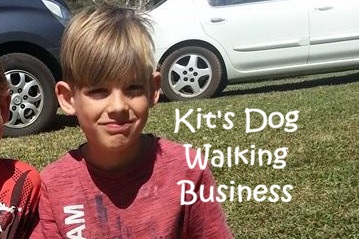
Dog walking business for kids shown through Kit Howitt walking a dog

A dog walking business for kids might sound simple, but for Kit it became a real lesson in confidence, problem-solving, service and earning money through enterprise.

This is the story of Kit’s pocket money idea and how he planned to turn dog walking into his first little business.

Dog walking business for kids with Kit planning his first enterprise idea
Welcoming Kit and his entrepreneurial idea.

Dog Walking Business for Kids: Kit Plans His Enterprise

Plenty of kids receive pocket money from their parents. The kids then either save it or spend it. When we used to give pocket money to our kids, they would spend it straight away. Usually, they spent their money on “junky” things that didn’t last long.

This was very frustrating as a parent, so we looked for ways to teach our children to use their money wisely and to build a money mastery mindset for them. From these early days, we came up with some fantastic ideas which we’ll share with you in later blogs.

This particular blog is about Kit’s pocket money idea and how he planned to run his enterprise.

Looking for a Need

Kit saw that there was a need in his neighbourhood for dog walkers. Whilst many people in our community walked their own dogs, there were also elderly or busy people who owned dogs and either didn’t have the energy or time to take their pet for a walk.

Kit figured that he could offer a service where he would take their pet for a walk on a lead.

At first, when he shared his idea, we thought he had gone bananas! Firstly, Kit had always been afraid of dogs and secondly, he was only six years old. Allowing a six-year-old to walk the streets with other people’s dogs was certainly not looking like a good idea.

However, one thing we have learnt is to never stifle a child’s enthusiasm and condition them to think their ideas are not good enough. So we decided to play along with his pocket money idea.

Why a Dog Walking Business for Kids Needed a Plan

A dog walking business for kids sounds easy on the surface, but when we talked it through with Kit, there were some very real roadblocks.

This is where the learning became valuable. Kit was not just coming up with a cute idea. He had to think about safety, customer trust, his own confidence, the dog’s needs, and whether the service would be worth paying for.

That is why small kids business ideas can be so useful. Children get to practise thinking through a real situation rather than just talking about business in theory.

Roadblocks and Solutions

We talked through a business plan with Kit and investigated the roadblocks that he might be faced with. Then we investigated the solutions.

The main issue was that he was too young to walk other people’s dogs by himself, so we discussed that he needed an older person to go along with him. This would also provide reassurance to the pet owners that their dog would be looked after. Luckily, his Grandad offered to help out. He reckons he needed the exercise anyway!

The other issue was that Kit wasn’t confident with dogs. So the plan was to carry a pocket of doggy treats to keep the dog happy and obedient. In addition, Kit would provide his own dog lead.

By offering doggy treats and a lead, Kit was “adding value” to his service.

We also talked about being safe and respectful around dogs. The RSPCA WA safety around dogs information is a useful reminder that children should be supervised around dogs and should understand how to behave calmly and safely around them.

Kit’s Dog Walking Enterprise Idea

Kit caring for a dog as part of his dog walking business for kids idea
Dog walking was Kit’s enterprise idea.

Kit’s idea was simple: offer to walk dogs for people who needed help.

That made it a service-based business. He did not need to buy stock like Chayse did with his lolly bags. Instead, Kit needed to offer his time, care and effort.

This gave us a great opportunity to talk about the difference between earning money from a product and earning money from a service. Both can be valuable money lessons for kids, but they teach slightly different things.

With Kit’s dog walking idea, the lesson was not just about money. It was about trust, responsibility and doing a job properly for someone else.

Could Kit Become the Next Dog Whisperer?

Kit with a dog while planning his dog walking enterprise idea
Could this be the next Dog Whisperer?

Kit decided that he would negotiate a walking fee of $5 for a half-hour walk. If he had one customer a day, then he could pocket $35 a week.

So it was on. Kit was now officially a professional dog walker!

And who knows… from these humble beginnings, he may even become the next famous Dog Whisperer!

What Kit Learned from Planning His Enterprise

Even before Kit walked his first dog, the planning process had already taught him a lot.

  • He noticed a need in the neighbourhood.
  • He thought of a service people might pay for.
  • He talked through the risks and roadblocks.
  • He found a way to make the idea safer by involving Grandad.
  • He added value with treats and a dog lead.
  • He thought about a simple fee for his service.

That is exactly the sort of thinking we want to encourage when we talk about raising entrepreneurial kids. It is not just about making money. It is about helping children notice opportunities, solve problems and back themselves enough to try.

Kit’s Dog Walking Business Series

This post is the planning stage of Kit’s dog walking idea. You can follow the next stage here:

  • Part 1: Kit Plans a Dog Walking Business — Kit notices a need, works through the roadblocks and plans his service.
  • Part 2: The Dog Whisperer! — Kit gets started, walks his first customer’s dog and earns money from his idea.

Key Takeaway: A Dog Walking Business for Kids Teaches More Than Money

Key takeaway: A dog walking business for kids can teach far more than earning pocket money. Kit’s idea helped him think about service, safety, value, responsibility, confidence and solving a real need in his community.

In our next Enterprise for Kids blog, we will introduce Kaitlin’s very creative enterprising idea and her well thought out business plan. Stay tuned for that one…

We would love to hear from you, so please leave a comment.

Ways to Earn Money for Students: Chayse Plans a Candy Business

Ways to earn money for students shown through Chayse preparing lolly bags for his Candy Man business

Ways to earn money for students can start with a very simple idea. For Chayse, that idea was lollies — or candy for our American readers — and a plan to turn fifty dollars into his very own Candy Man business.

This is Part 1 of Chayse’s Candy Man story. Before the selling, the soccer grounds and the very heavy money jar, there had to be a plan.

Ways to earn money for students shown through Chayse preparing lolly bags after planning his Candy Man business
After planning his Candy Man business, Chayse soon moved into action.

Ways to Earn Money for Students: Chayse Plans a Candy Business

All kids love lollies. Chayse too really loves lollies! So it came as no surprise to see Chayse planning an enterprise that revolved around lollies.

Now Chayse is only four years old, so he needed a little help formulating his plan. Initially, he liked the idea of buying a heap of lollies, but I think he was thinking that he was going to be the one eating them!

Eventually, after much explaining, it became clear to him that he would be selling them, not eating them himself. His brothers and sisters all thought his enterprise idea was pretty cool and I’m sure were thinking, “Why didn’t I think of that!”

A Simple Business Plan for a Four-Year-Old

We don’t have a video of Chayse explaining his business plan. In fact, there isn’t much to it, so I’ll just explain it for you here.

We lent Chayse $50 to run his business. He planned to buy large bags of lollies from the supermarket, bag them up into small mixed bags, then sell them for twice what he paid.

His market would be all the hungry kids who play and watch soccer games on Saturday mornings at the local soccer fields.

For a four-year-old, that was a pretty good business plan. Product, start-up capital, packaging, pricing, customers and a selling location. Not bad for a little Candy Man!

Why This Is One of the Simplest Ways to Earn Money for Students

When families think about kids business ideas, it is easy to overcomplicate things. But children often learn best when the idea is simple enough for them to understand and exciting enough for them to care about.

Chayse understood lollies. He understood that kids liked lollies. He understood that soccer grounds were full of kids. With a little help from us, he could begin to understand buying, selling, profit and customers.

That is why simple projects can become powerful money lessons for kids. Children do not just hear words like “profit” and “investment”; they get to experience what those words mean.

From Pocket Money to Enterprise

Many children earn or receive pocket money each week, and there is nothing wrong with that. But when children create a small enterprise, they begin to see money differently.

Instead of waiting for money to arrive, they start looking for opportunities. They begin asking questions like:

  • What could I sell?
  • Who would buy it?
  • How much will it cost me?
  • How much could I sell it for?
  • What will I do if it works?

These are the sorts of questions that help children develop confidence, initiative and responsibility.

Entrepreneur Cameron Herold makes a similar point in his TED talk, Let’s raise kids to be entrepreneurs. Children can learn entrepreneurial thinking when they are encouraged to look for opportunities and create value.

Chayse’s Goal: Double His Money

If Chayse’s enterprise went to plan, he would double his money or get a 100% return. That would put a smile on any young four-year-old’s face.

Of course, before he could make any money, he still had to buy the lollies, package them, carry them around and sell them to real customers. That is where the real learning would begin.

The image above actually shows the next stage of Chayse’s Candy Man journey, when his plan moved from an idea into action. First came the goal, the $50 start-up capital and the discussion about what he could sell. Then came the exciting part — buying the lollies, sorting them into bags and getting ready to find his first customers.

The Candy Man Business Series

This post is Part 1 of Chayse’s Candy Man journey. You can follow the full series here:

Key Takeaway: Ways to Earn Money for Students Can Start Small

Key takeaway: Ways to earn money for students do not need to be complicated. Chayse’s Candy Man idea started with something he loved, a clear market, a simple product and a small amount of start-up money.

We will keep you updated with how his money-making enterprise goes.

Next up is Kit planning an enterprise. Kit is so excited that he reminds me of our late over-zealous Jack Russell Terrier when she used to go out for a walk!

We would love to hear from you, so please leave a comment.

Family Business Ideas: Honey Pot of Gold!

Flynn as a budding young entrepreneur with one of our family business ideas

Family business ideas can start with something simple, practical and close to home. For Flynn, that opportunity came through raw honey, a family connection and a very enterprising plan that helped him learn real money lessons.

This is the beginning of Flynn’s honey business story — a family enterprise project where he learnt about opportunity, product value, buying wholesale, selling retail, confidence and taking action.

Flynn as a budding young entrepreneur with one of our family business ideas
Flynn — a budding young entrepreneur with a family business idea.

Family Business Ideas: Flynn’s Honey Enterprise Begins

Flynn is a natural budding young entrepreneur and he is never afraid to chase an opportunity. He often comes up with brilliant enterprising ideas, and the idea he planned to take on with Enterprise for Kids was a definite money spinner.

Before I tell you all about Flynn’s awesome enterprising idea, I want to introduce some food for thought.

Why Family Business Ideas Need a Different Money Mindset

Prior to us starting Enterprise for Kids, our children were following the same conditioning around money that we had: earn money, spend money, borrow money. Society encourages this greatly.

Whilst many people may not see anything wrong with this, many of us actually spend far more than we have coming in. The cycle never gets broken, and by the time we reach retirement age, we have very little to show for the many years of hard work we have put in.

That is why building an entrepreneurial mindset is so important. Breaking old conditioned habits is even more important. The younger you are, the less conditioning you have.

So while we want to develop in our children a great work ethos — working hard and with integrity — we also want to help them move beyond that. We want them to learn how to spot an opportunity, take action and then help others achieve success as well.

This system moves a person from being the worker, to seeing an enterprising opportunity, to switching on their entrepreneurial self, to finally becoming the expert in their field.

This is exactly why we care so much about raising entrepreneurial kids and helping them learn through real-life projects. Family business ideas give children a safe, practical way to begin that learning at home.

Entrepreneurial Thinking Behind Family Business Ideas

An entrepreneur’s focus is in the development of a great system and finding great people to run it. They use other people’s time and other people’s money to do the work for them.

Their systems can continue even after they pass from this world. A classic example is Thomas Edison’s formula for General Electric. He is no longer with us, but his empire continues.

That is one of the powerful lessons behind family business ideas. Children can begin to see that a business is not just a product. It is also a system, a process and a way of creating value for other people.

A Queen Bee Is Entrepreneurial

Akaisha dressed as an enterprising queen bee showing how systems support family business ideas
Enterprising Queen Bee.

A Queen Bee most definitely comes under the bracket of entrepreneur. She controls her entire empire from within her hive.

Thousands of honey bees — the workers — head out of her hive each morning collecting nectar, pollen and other resources for the hive, such as water. The worker bees will risk life and limb and literally work themselves to death. A worker bee only lives a few weeks.

The Queen Bee will have employees whose main job is to guard the hive from danger. Others clean the hive and many fan the hive to keep the temperature controlled. The queen will have workers who care for the nursery and for her own needs.

All she has to do is eat and lay eggs!

A beehive is a unique system consisting of many specialised individuals that each have a job to do. The system performs like it is one large living organism. If the Queen dies, then she will be replaced by another Queen Bee, the workers keep working and the hive goes on.

Not a lot different to General Electric, Apple or Ford Motor Company!

Flynn’s Honey Family Business Idea

Flynn negotiating a honey deal with his Grandad for a family business idea
Flynn negotiating a honey deal with his Grandad.

So what has Flynn’s idea got to do with a Queen Bee?

Flynn’s enterprising idea has everything to do with our Queen Bee and her empire.

In fact, his plan was to use her company’s product: honey.

Flynn intended to buy raw, unprocessed honey at wholesale in bulk and sell it in smaller jars at retail. He worked out his figures and could see excellent profit potential.

Once his business got underway, he could also see the potential for it to grow quite substantially.

I won’t tell you any more about his plans here, but if you missed the link above, you can listen to Flynn himself in this short video of Flynn explaining his awesome enterprise idea and business plan.

This is one of those kids business ideas that starts small, but teaches a lot: product value, buying wholesale, selling retail, confidence, negotiation and understanding profit.

Why Raw Honey Was a Clever Family Business Product

Seeing as we are on the topic of honey, I thought I would share a few facts about honey, and in particular raw, unprocessed honey.

Raw, unprocessed honey is pure, natural, unpasteurised and unadulterated. It is extracted from the beehive in its natural form and bottled. It is not filtered or heated.

Unlike many processed honeys, raw honey can retain more of its natural qualities from the hive, including pollen, propolis, minerals and flavour.

Mmmm… appears to be a fantastic product!

For Flynn, the clever part was not just that honey was useful and delicious. The clever part was that he could understand the product, buy it in bulk, bottle it in smaller jars and sell it in a way that made sense to customers.

That is why this became such a useful example of family business ideas in action. It was simple enough for a child to understand, but rich enough to teach real lessons about value, pricing, supply, confidence and profit.

Flynn’s Honey Business Series

This article is Part 1 in Flynn’s honey business series, a family enterprise story about family business ideas, product value, money lessons and learning by doing.

These family enterprise stories show how children can learn by doing, rather than just being told about business, money and opportunity.

Key Takeaway: Family Business Ideas Can Start Small

Key takeaway: Family business ideas do not need to be complicated. A simple product, a real opportunity and a child willing to take action can become a powerful lesson in entrepreneurship, confidence and money.

Where to Next?

If you enjoyed Flynn’s honey business story, you may also like:

So, what do you think? Is Flynn onto a real Enterprise for Kids success story? Follow along with the blog to see how he goes.

In our next blog, you’ll be inspired by another budding entrepreneur, four-year-old Chayse, as he showcases his business idea. It is as sweet as Flynn’s enterprising ideas!