Entrepreneurial kids need more than a good idea or a burst of enthusiasm — they need a strong sense of purpose that helps them keep going when the path becomes difficult.
This lesson became very clear to me after hearing Olympic gold medallist Natalie Cook speak in Perth. Natalie is a five-time Olympian and one of Australia’s most inspiring beach volleyball champions. Her message about success, purpose and the mindset of high achievers was powerful not only for athletes, but also for parents raising entrepreneurial kids.
Natalie Cook, Olympic gold medallist, shared powerful lessons about purpose and success.
Why Entrepreneurial Kids Need a Strong Purpose
Natalie Cook is a wonderful example of the connection between sport, business and personal success. She won Olympic gold with Kerri Pottharst at the Sydney 2000 Olympic Games and went on to become a respected speaker, leader and businesswoman. You can read more about her Olympic journey on the Australian Olympic Committee’s Natalie Cook profile.
When Natalie spoke in Perth, she explained that professional athletes and successful business owners have many things in common. Both need discipline, courage, focus and the ability to keep moving towards a goal, even when the obstacles are real.
Her message was captivating, humorous and very useful for cultivating a mindset for success in entrepreneurial kids — and, just as importantly, in their adult counterparts.
Natalie Cook’s Five Ps for Success
Natalie built her talk around what she called the Five Ps. These were principles that could apply to children, athletes, families and business owners alike.
Over a series of posts, I wanted to share these Five Ps and connect them to the way we raise enterprising, confident and purpose-driven children. I will also be adding one extra “P” of my own at the end. After hearing Natalie’s five, I wonder if you can guess what mine might be.
For this first part, we begin with one of the most important foundations of all.
Entrepreneurial Kids and the Power of Purpose
A person who truly reaches for success has a mindset that carries with it a very strong “Why,” or purpose.
Your “Why” must be stronger than your “Why not?”
If it is not, you may not have enough purpose to muster up the will to make your goals happen when barriers appear. A strong purpose gives children something deeper to hold onto. It turns a vague wish into a reason to keep trying.
Your “Why” has to be specific and close to the heart. It does not need to be complicated.
A friend of mine is driven to succeed because she desperately wants her mum to be happy and not have to work anymore. Another wants to buy a villa in Tuscany so that she can reconnect with her Italian family roots and create a sense of belonging.
These “Whys” are very different from saying, “Why not?” They are clear purposes, not poor explanations.
Teaching Purpose to Kids Through Real Conversations
Your “Why” will often come from one of two emotions: pain or pleasure. Usually, pain is the stronger of the two.
Think about the rags-to-riches stories we often hear about well-known success mentors and creators such as JK Rowling, Colonel Sanders, Sylvester Stallone, Walt Disney, Steve Jobs, Susan Boyle and Richard Branson. Their difficult experiences helped shape a strong “Why,” and that purpose became part of what carried them forward.
For entrepreneurial kids, this does not mean they need to experience hardship before they can succeed. It means they need to understand what matters to them. They need to begin asking deeper questions about contribution, growth, family, freedom, creativity and the kind of life they want to build.
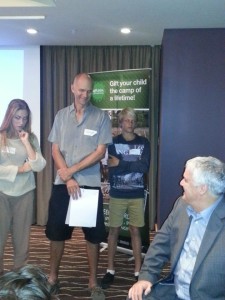
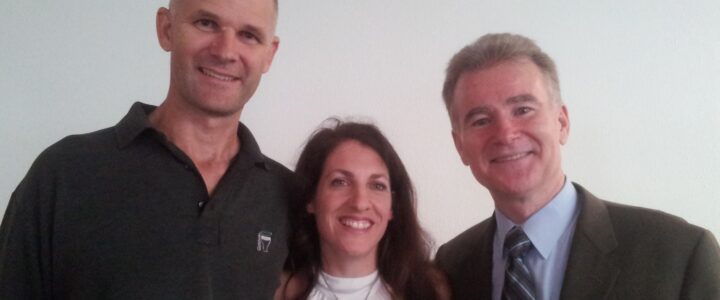
Amy, Cathy, Natalie, Tracey, Kym and Trevor after Natalie Cook’s inspiring talk.
I recently carried out a “Why” exercise with my son, Jai.
We had just returned from a career pathway meeting for his upcoming senior class. Every pathway the school presented seemed to end in landing a j-o-b — just-over-broke. Whether the route was through university, technical school or straight into the average 40-year career, the end result sounded much the same.
Worse still, because the students were nearing the end of high school, the pressure was on to make a choice. It felt like a limited choice, based on hastily presented ideas rather than a deeply considered purpose.
The result was confusion. Jai seemed torn between going to university with his mates because it sounded like fun, or leaving school with his cousin and going to make money in the mines.
This inconsistency told me that Jai’s “Whys” for both of these career paths were too vague.
Questions That Help Entrepreneurial Kids Find Their Why
So, we got to work.
We discussed why these two ideas sounded interesting to him. We talked about the difference between a strong “Why” and a casual “Why not?” We also explored why “Why not?” is unlikely to carry a person through the hard parts of either choice.
Then I asked Jai to ponder three questions:
How do you want to contribute to this world?
How do you want to grow as a person?
How do you want to be remembered when you pass?
These are big questions for a teenager. In fact, they are big questions for adults too.
But they matter.
If we want to raise entrepreneurial kids who can think for themselves, create opportunities and build meaningful lives, we need to help them move beyond surface-level choices. We need to help them understand what drives them.
Purpose Comes Before the Plan
Many children are asked what job they want before they are asked what kind of life they want.
They are asked what subjects they will choose before they are asked what they care about.
They are asked which pathway they will follow before they have had time to discover the purpose behind the pathway.
This is why purpose matters so much. A plan without purpose can become a list of tasks. Purpose gives the plan energy, direction and meaning.
For entrepreneurial kids, purpose is not just about making money. It is about knowing why they want to create, serve, solve, build, lead or contribute in the first place.
Next, we continue the journey in Part 2: People and Passion, where we explore how the right people and passions can help shape entrepreneurial kids and enterprising teens.
Natalie Cook’s Five Ps Series
This article is Part 1 in our series on Natalie Cook’s Five Ps for helping entrepreneurial kids and enterprising teens develop purpose, people, passion, perseverance, planning and a mindset for success.
We are always looking for feedback on our entrepreneurial kids articles. What is your “Why”? Leave a comment and share the purpose that keeps you moving forward.
Enterprising teens need more than a career pathway or a good business idea — they need the right people around them and a passion strong enough to keep them moving forward.
After my son Jai and I discussed the first of Natalie Cook’s Five Ps, Purpose, I asked him to make a timeline of his life. I wanted him to focus on his surroundings, but more importantly, on the people who would be with him.
Jai thinking about the people and passions that could help shape his enterprising teen journey.
Why Enterprising Teens Need the Right People
Natalie Cook’s second P is People.
Attracting the right people in life is key to building a successful young entrepreneur. But whether Jai chose to be an enterprising teen or follow a different path, what mattered most to me was his mindset for success in whatever direction he chose.
So, I asked him to imagine where he would like to be sitting five years from now — and with whom.
Then ten years from now.
Then forty years from now.
I asked him to picture what was around him, who his associates were, and what made those people so valuable to him that their presence would still be visible in his future decades later.
What Natalie Cook Taught About People and Success
Natalie Cook’s career is a powerful example of what the right people, passion and support can help create. Her official Olympic profile describes her as a five-time Olympian and Olympic gold and bronze medallist in beach volleyball, making her a strong real-world role model for enterprising teens. Read more about Natalie Cook’s Olympic journey here.
Natalie discussed the value of surrounding herself with the right people while training to become an Olympic gold medallist. Around her were coaches, mindset mentors, professionals and peers whose encouragement lifted her up rather than criticism that tore her down.
This is a powerful lesson for enterprising teens.
The people around our children influence how they think, what they believe is possible, and the standards they quietly begin to accept for themselves. Friends, mentors, coaches, teachers, family members and business role models can all shape a child’s confidence and direction.
As parents, we cannot choose every influence our children will meet. But we can help them become more conscious of the people they allow close to them.
It is important for enterprising teens to spend time with the sort of people they would like to learn from, grow with and, in some ways, emulate.
This goes beyond simple peer pressure. Children and teenagers absorb attitudes, habits, language, confidence and expectations from the people around them. If they are constantly surrounded by people who complain, criticise or limit possibility, that can become their normal.
But if they are surrounded by people who encourage, create, question, build, serve and keep learning, that can also become their normal.
This does not mean they need to abandon old friends or judge others harshly. It simply means they can learn to ask better questions:
Who encourages me to become better?
Who helps me believe more is possible?
Who lives with values I respect?
Who makes me feel more confident, creative and capable?
Who would I love to learn from?
These are not just business questions. They are life questions.
Enterprising Teens Learn Success by Helping People
One of the things I love about business and enterprise is that, at its heart, it is about people.
It does not matter whether the enterprise is large or small. It could be a child’s first market stall, a family business, a service project, a creative idea, or a future company. When young people learn to be genuinely helpful to others, their chances of success increase.
Helping people gives enterprising teens and adults an energy that attracts the right people into their lives. It teaches them that business is not only about making money. It is also about solving problems, creating value and building relationships.
This is a lesson children can begin learning very early.
Why Passion Matters for Enterprising Teens
Natalie Cook’s third P is Passion.
People are naturally attracted to those who have passion for what they do. Passion gives energy to an idea. It helps a young person keep going when the excitement wears off and the work begins.
Natalie has spoken about the importance of loving the process, not just the outcome. That is a valuable message for enterprising teens, because the process is where most of the growth happens.
Success is not only found in the final result. It is found in the practice, the learning, the mistakes, the conversations, the courage and the small daily decisions that eventually become a life.
Jai wanted something he could stick with for the long term.
Having him visualise himself, his surroundings and his companions far into the future helped him reach a place that felt more connected to his own passion. It was something apart from what others were expecting of him. It was a desire that felt less likely to fade with time.
His spirit was guiding him, rather than the social conditioning of school, friends and family.
People and Passion Come Before the Pathway
This is one of the problems I see with the way many teenagers are asked to make career decisions.
They are often asked to choose a pathway before they have deeply considered the people they want around them, the kind of contribution they want to make, and the passions that might sustain them over time.
For enterprising teens, this matters.
A pathway without people can feel lonely.
A pathway without passion can become heavy.
But when a young person begins to understand who inspires them, who strengthens them, and what lights them up from the inside, their decisions become clearer.
That does not mean every choice becomes easy. It means the choices begin to come from a deeper place.
Natalie Cook’s Five Ps Series
This article is Part 2 in our series on Natalie Cook’s Five Ps for helping entrepreneurial kids and enterprising teens develop purpose, people, passion, perseverance, planning and a mindset for success.
If you could enlist three people in the world to personally be your friend and mentor, who would they be? Mine would be Richard Branson, Robert Kiyosaki and Michael Clouse. Leave us a comment and share who would be on your list.
Justin Herald has the kind of entrepreneur story that can really capture kids’ attention. It is bold, unusual, funny and full of lessons about attitude, confidence, persistence and giving an idea a crack.
This story impressed our kids because it shows that success does not always come from perfect school results or following the expected path. Sometimes, the spark is attitude, action and the courage to try something different.
Justin Herald with his toys!
Editor’s note: This article was originally written after Trevor attended the Entrepreneur X Factor event in Fremantle in 2013. It has been lightly refreshed while preserving the original story and reflections.
Justin Herald: A Story That Will Impress Your Kids
This story will impress your kids. It certainly impressed ours.
There is also a little lesson in it for them.
It demonstrates that it is not necessarily only what children learn at school that brings future success. Sometimes, attitude, initiative, confidence and the willingness to take action can become powerful ingredients in a person’s life.
That is why stories like this are useful when we are trying to raise entrepreneurial kids. They help children see that business is not just about money. It is also about ideas, people, problem-solving and courage.
The Entrepreneur X Factor Event
When this article was first written, my friend Gary and I had recently attended an unusual business event in Fremantle called Entrepreneur X Factor. We really did not know what to expect.
On arriving, it was immediately apparent that there was tremendous energy in the room. People were friendly, engaging and full of ideas. Successful entrepreneurs Mike Handcock and Dave Rogers ran the show, along with multimillionaire guest speakers.
People from the event:
Mike HandcockDave RogersDr Joe
Why the Event Was So Unusual
There were two parts to the event.
The first sessions were all about Quantum Business, which was definitely not your normal run-of-the-mill business focus. After lunch, there was an exciting competition where participants stood up in front of the audience and publicly presented their business idea or concept.
The audience judged the event. Budding entrepreneurs seeking big business support were scored on their one-minute presentations. The competition was similar to the TV show The Lion’s Den. Investors were in the room looking to partner with the winner and help them grow their idea.
It was exciting and a little tense. The winner was a guy called Dr Joe.
I could share more about the Entrepreneur X Factor competition and the insights around Quantum Business, but the main purpose of this post is to share a story that will impress your kids.
The First Impression of Justin Herald
So here goes.
There was this tattooed guy in the room dressed in a checked shirt and jeans. He had a goatee and shaven head, wore a black choker necklace and earrings, and described himself as a self-proclaimed bogan who loved hotted-up cars.
This unusual character was introduced as Justin Herald. I had heard the name before, but could not quite remember where I had heard it.
Justin was one of the guest speakers. He came to the front to share his experience and offer some valued advice to us all. At the event, he told us the story of how he built a multimillion-dollar business from a very small beginning.
There were no airs or graces about Justin Herald. He was an everyday bloke who really did not care too much about what people thought of him. He spoke his mind, he had charisma, and he certainly had attitude.
How Justin Herald Started with an Attitude
Justin Herald’s dad was a church minister, and Justin grew up within a church community. It was in a church that his first business idea evolved.
During one particular church service, an elderly lady spoke to Justin and pointed out that he had an attitude problem and should mind his manners.
Justin did not take well to being told off about his attitude, especially at 25 years old. However, that moment ignited an idea.
As Justin told the story that day, he had only $1.25 in the bank and needed some cash to put his idea into action. He asked his brother for $50, bought some cheap shirts, took them to a printer, and had “Attitude” slogans printed on them.
He enlisted the support of his brother and mates. Each of them put on one of the freshly printed shirts and attended the Sunday service, making sure they all stood in full view of the opinionated lady.
She was not happy when she saw the blatant prank Justin had pulled. The shirts had served their purpose very well, and Justin was delighted.
However, something unexpected happened after the service. A number of people took an interest in the “Attitude” shirts. In fact, some people asked if they could buy one from Justin.
That was the beginning of something much bigger.
The Attitude Brand Begins
Justin Herald thought it might be worth a few dollars, so he used the money from selling the first six shirts to his mates and organised for more shirts to be printed with “Attitude” slogans.
Word got out, and his little business began to emerge.
He decided to try selling his shirts at the Sydney Markets. He had never done this before and had no idea how it would go. So he asked one of his mates if he would lend a hand.
His mate said, “No.”
So Justin asked if he would lend a hand for one hundred bucks, and his mate said, “I’d love to help!”
They arrived at the markets and were allocated a table. Justin tipped his box of shirts onto the table all jumbled up. The shirts were a novelty, and people were interested.
Justin Herald Sold Out in Two Hours
According to the story Justin shared with us, he sold out in the first two hours.
Justin and I.
His excitement and business grew from there. Justin told us that he printed more shirts and was soon selling as much as $10,000 worth of clothing during a weekend at the markets.
Next, he tried retail stores. The owners moved him on because they had never heard of “Attitude” branded shirts. They also said their customers were not asking for “Attitude” shirts.
Justin had an idea. He asked his mates to call retail stores in the area and ask if they had “Attitude” shirts in stock.
He gave it a few weeks and then paid a visit to these same stores with a sample of his shirts. This time, they were pleased to see him and could not wait to get his shirts up on display.
“You wouldn’t believe the number of calls we’ve had with people inquiring about Attitude shirts.”
Justin’s response was simple:
“Oh really?!”
Business Lessons Kids Can Learn from Justin Herald
Todd Hutchison, known as the Corporate Mechanic.
Justin Herald’s business continued to grow with the introduction of other lines of clothing. During his presentation, he spoke about being interviewed on television and sharing his story with a much wider audience.
Justin told us that within thirty minutes of one interview, the phone began ringing with retail stores placing orders for his shirts.
He said he had rarely needed to use traditional advertising because his unusual story regularly attracted attention from television programs, business magazines and newspapers. He made for an interesting story because he did not look or behave like the stereotypical businessman.
Justin Herald has a real sense of humour and loves to rib the people around him. He admitted that he had plenty of attitude himself and believed that this was part of why his brand worked.
He was also very easy to talk to and said that one of the secrets to a successful business is connecting with people.
That is a valuable lesson for children. Business is not just about selling a product. It is about understanding people, solving a problem, creating interest and building relationships. These same skills are often developed through simple family enterprise stories and real-world projects.
The Deal That Changed Everything
In the story Justin shared at the event, this chapter of the Attitude business drew to an end when a very large company approached him about a deal.
He was called to a board meeting. Justin rocked up in his jeans and checked shirt to confront a line of suited lawyers and business leaders. First came the formalities, and eventually they passed over the official offer for him to read.
Justin read the dollar number on the page in disbelief. He asked the lawyers if the comma was actually a comma or whether it was a dot.
They said it was a comma.
He then said, “Do I get a TV with that?”
They looked at one another and said, “Of course!”
Justin described it as a life-changing deal. He also told us that he took the television from their wall. They offered to get him a new one, but he said he did not want to muck around trying to rip up the box and packaging to fit it into his recycling bin.
From $1.25 to a Multimillion-Dollar Business
Beginning with the small amount of money described in his presentation, Justin Herald grew the Attitude business into a major brand in a relatively short time.
In the years that followed, Justin moved into other business ventures, mentoring, customer-service training and professional speaking.
Justin Herald’s Four Business Lessons
At the event, Justin left us with four excellent “Aha!” moments.
You need a switch. You need something that gives you the purpose, focus and drive required to start a business. His was the opinionated lady at church. Justin said he was very grateful for her.
Say “Next!” Justin explained that you will face barriers, setbacks and naysayers as you try to move ahead with your business. He says “Next!” and moves on. Many people fall back into their comfort zone and give up, but Justin encouraged us to keep going.
Networking matters. He said business is about the way you relate to your customers. Word of mouth and genuine relationships can help a business grow.
Give it a crack. This was his biggest tip. Stop waiting for everything to be perfect and take action.
After the presentation, Gary and I had the privilege of chatting to Justin Herald one-on-one. We found him to be a genuinely nice bloke.
He told us that the mates he still spent time with were the same bunch of blokes he had known when he was twenty. He said he had never made the grades at school, and his attitude had landed him in trouble many times during those years. However, it was also his attitude that helped shape the person and entrepreneur he became.
Let’s hope that Justin Herald’s success story inspires your kids like it did mine. Children do not have to fit every expected credential to become successful. They need confidence, courage, persistence and the willingness to learn through real-world action.
The original version of this article included a short biography from Justin Herald’s website at the time. His official website continues to share the story behind Attitude Inc and the business journey that followed.
According to Justin Herald’s official website, he was 25 years old and had only $50 to his name when he began changing the direction of his life. He created Attitude Inc, which became an international licensing success with annual turnover reported by his website as exceeding $20 million.
Justin’s success was widely recognised. His website lists him as International Entrepreneur of the Year in 2005 and a recipient of the Future Leaders Award, which recognised influential leaders of the next generation in Australia.
His website also describes him as a business mentor and conference speaker, as well as Managing Director of Customer Culture, a customer-service training company.
Justin’s official shop lists eight books, including Would You Like Attitude with That?, How to Grow Your Business Without Spending a Single Cent and several other books about motivation, ideas and business.
Key takeaway: Justin Herald’s story is a powerful reminder for kids that success can begin with a simple idea, a bit of attitude and the courage to take action. It is not enough to just think about an idea. At some point, you have to give it a crack.
Where to Next?
If you enjoyed this entrepreneur story, you may also like:
Raise Entrepreneurial Kids — ideas for helping children build initiative, confidence and real-world skills.
Inside Green School Bali: The Bamboo School That Changed How We Thought About Education
Green School Bali is unlike almost any school we had encountered before.
Built largely from bamboo in the forest of Bali, this remarkable school combines nature, creativity, sustainability and real-world learning in a way that immediately challenges conventional ideas about what school should look like.
But what interested our family most was not simply the extraordinary bamboo architecture.
It was the question behind it: what happens when a school is deliberately designed to make children curious, engaged, creative and connected to the real world?
After hearing Green School Bali’s principal speak about its philosophy, and later seeing our own children experience some of those ideas through Green SuperCamp, it became one of those educational experiences we continued talking about for years.
Green School Bali, the remarkable bamboo school set within the forests of Bali.
Editor’s note: This article was originally written during our early Enterprise for Kids journey and has been refreshed with updated formatting, links and reflections while retaining our original family experience of Green School Bali.
What Would You Like to Explore?
Green School Bali caught our attention for several reasons. Start with the part that interests you most, or keep scrolling for our full family story.
Why Is It Called Bali’s Bamboo School?
Explore the extraordinary bamboo architecture, natural campus and sustainable learning environment.
See the Bamboo Campus →
What Makes the Learning Different?
See how themes, creativity, real-world experiences and student engagement shaped the approach to learning.
Explore the Learning Approach →
What Did Our Kids Experience?
Follow our family connection with Green School Bali and the experience our children later had through Green SuperCamp.
Read Our Family Experience →
Green School Bali: A Different Vision for Education
Imagine a school with a natural, holistic, student-centred learning environment that encourages young people to be creative, innovative, environmentally aware and connected to the real world.
Many schools aspire to this kind of vision, but few capture the imagination quite like Green School Bali.
Located in the forests of Bali, Indonesia, the school is famous around the world for its remarkable bamboo buildings. This is why people searching for the bamboo school in Bali are often looking for Green School Bali.
But the buildings are only one part of the story.
The school also stood out to us because of its philosophy, curriculum, connection with nature and its willingness to question conventional ideas about how children learn.
Why Green School Bali Is Known as the Bamboo School
Green School Bali is famous for its extraordinary bamboo architecture.
One of the first things that makes Green School Bali unforgettable is the campus itself.
The school was constructed largely from bamboo and natural materials, creating buildings that seem to belong to the tropical landscape rather than sit apart from it.
For anyone searching for “bamboo school Bali” or “Bali bamboo school”, this extraordinary campus is usually what first captures their attention.
But the bamboo architecture also reflects something deeper about the school’s philosophy. Sustainability and connection to the natural environment were not simply topics children studied from a textbook. They were visible in the place where the children learned every day.
Students were involved in practical learning connected with sustainability, food, animals and environmental responsibility.
Gardens and campus fields at Green School Bali.
When this article was originally written, bamboo homes also surrounded the school. Local and international families had chosen to live in Bali so their children could experience this different approach to education.
There were also studios being developed with the idea that entrepreneurs could work nearby and students could gain exposure to real businesses.
That particularly interested us because it connected education with something we have always valued at Enterprise for Kids: letting children encounter the real world rather than keeping learning completely separate from it.
A Presentation That Challenged Our Thinking
Alan Wagstaff shared the Green School Bali philosophy.
Cathy, myself and our kids had the opportunity to attend an excellent presentation in Perth about Green School Bali.
The principal at the time, Mr Alan Wagstaff, showcased the school and spoke passionately about its philosophy on education.
Green School Bali was turning heads, but what stayed with us was not simply the novelty of a beautiful school made from bamboo.
Alan spoke about student engagement, relevance, creativity and preparing children for life beyond the classroom.
It raised a question that fitted closely with many of our own ideas about raising children:
Is education mainly about compliance, testing and delivering content, or should it also help children develop confidence, initiative, creativity, problem-solving and a sense of purpose?
That question stayed with us.
Why Green School Bali Mattered to Our Family
At Enterprise for Kids, we have always been interested in experiences that help children become capable, confident and enterprising.
Literacy and numeracy are important, but children also need opportunities to create things, lead, solve problems, manage money, communicate, work with others and discover what they are capable of.
Children need space to think, question, experiment, make mistakes, solve real problems and connect what they are learning with the world around them.
They also need practical life skills such as financial education for kids, communication, responsibility and initiative.
What Makes Green School Bali So Different?
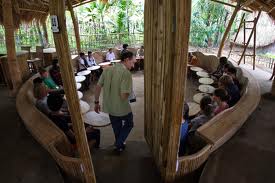
A Green School Bali classroom.
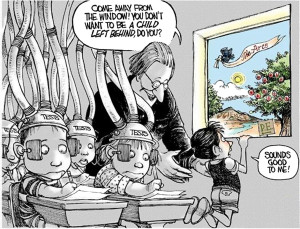
One of the most powerful ideas behind Green School Bali was that children should not simply be treated as numbers sitting at desks waiting to be told what to do next.
Ideas were encouraged to be noticed, explored and developed.
Creativity was not treated as something extra to squeeze in after the “important” subjects had been completed. It formed part of the learning environment itself.
That kind of educational philosophy speaks strongly to families who want children to grow into confident, creative and capable young people.
Student Engagement and Real-World Learning
Alan Wagstaff was very direct about one of the problems he saw in conventional education: older students can become disengaged from their learning.
Many children reach a point where they question how much of what they are learning will matter once they leave school.
We heard similar comments from our own teenage children. I can also think back to parts of my own schooling and teacher training where the content seemed disconnected from the skills I later needed in work and everyday life.
Alan challenged the way school timetables are traditionally structured.
Rather than allowing the entire day to revolve around disconnected subjects, Green School Bali explored more student-centred and integrated learning.
Literacy and numeracy matter enormously, but they are not the whole picture of a child’s development.
Children also need creativity, enterprise, emotional intelligence, communication, physical development, curiosity and meaningful connections between learning and life.
What Creates Life Success?
What is it about schooling that actually helps create success in life?
One powerful starting point is surprisingly simple:
Children need to turn up engaged.
When children are curious, interested and engaged, learning becomes more meaningful.
Their education needs to feel realistic and relevant to them as individuals.
Every day, children are developing academically, socially, emotionally and practically. Their progress cannot always be understood simply by comparing them with somebody else.
Parents can ask not only, “How does my child compare?” but also:
What is my child learning? What are they becoming? What strengths are beginning to emerge?
How Green School Bali Teaches Children
Alan explained how children were being educated at Green School Bali at the time of our original article.
Programs were structured around themes and collaboratively planned by teacher team leaders. Teachers then incorporated proficiency lessons within those broader themes.
Students could see the continuum of what they needed to learn in different areas of the curriculum and work towards those skills at an appropriate level.
Over time, this approach helped children take more responsibility for their own learning.
Green School Bali students learning through themes and real-world inquiry.
Within the broader themes, students followed interests, developed ideas, identified what they needed to learn and took part in investigations and study groups.
Every day, children were challenged across what Alan described as the Big Four: physical, emotional, intellectual and interpersonal learning.
For example, if the broad theme was “Waves”, learning might include:
Physical: experiencing waves by surfing.
Emotional: painting a wave or creating a wave melody.
Intellectual: investigating how waves form.
Interpersonal: sitting beside the waves and reflecting or meditating.
Instead of treating knowledge as a series of completely separate compartments, children could explore one theme through several different kinds of learning.
Learning Beyond the Classroom
Another part of Green School Bali that appealed strongly to us was its connection with authentic experience.
Alan explained that opportunities were used to provide practical real-life learning in areas such as:
environmental education
health and wellbeing
performing arts
enterprise education
visual arts
connection with the wider world
Learning did not have to stop at the edge of the school grounds.
Adults, businesses, the environment and the surrounding community could all become resources for learning.
Green School Bali’s aim was for children to want to go to school and to become genuinely engaged in what they were learning.
The emphasis was on relevance, purpose and valuing individual students rather than relying only on testing and comparison.
Comparison can place unnecessary pressure on children.
A more meaningful question may be whether a child is discovering what they are capable of and beginning to understand how their learning connects with their life.
Green School Bali as an Example of What Education Could Become
Green School Bali students learning in a natural environment.
When our original article was written, Green School Bali was still relatively young, yet it had already attracted considerable attention from families and educators interested in sustainability and alternative approaches to education.
Alan Wagstaff and the school’s founders had a vision to create change by demonstrating another way of educating children.
Instead of simply waiting for education systems to change from the top down, Green School Bali was attempting to model something different from the ground up.
For us, that was one of the most powerful aspects of the story.
It showed us that education could be creative, practical, sustainable and genuinely connected with real life.
Our Kids’ Green School Bali Experience Through Green SuperCamp
Green SuperCamp Bali gave our children a powerful real-world learning experience.
Our family’s connection with these ideas did not end with listening to a presentation.
Another way our children experienced the broader Green School Bali philosophy was through Green SuperCamp.
Kaitlin, Jai and Flynn attended Green SuperCamp and came back full of stories, experiences and new ideas.
At the time of this original article, we were planning for them to attend again along with our eleven-year-old daughter Amber.
The experience reinforced many of the same ideas that had first attracted us to Green School Bali: confidence, leadership, teamwork, reflection, challenge and learning by doing.
Michael Clouse gave us a powerful reminder that most people are busy etching out a living, while only a handful of people are intentionally designing a life.
That idea stayed with us because it is exactly the kind of thinking we want our children to see. If we can learn to think differently about time, money, leadership and choices, then our children have another model for designing their own pathway in life.
Michael Clouse shared powerful ideas about leadership, time, money and designing a life.
Michael Clouse and the Choice to Design a Life
“Most people are etching out a living and only a handful of people are designing a life.”
This is such a powerful statement, and one we often do not take the time to consider carefully. After many years of etching out a living, we are finally ready to design a life for ourselves and our children.
When we can do that, our children have another example in front of them. They can begin to see that life does not have to be only about earning money, paying bills and following the same pathway as everyone else. They can begin to make more informed choices about their own future.
We were fortunate to hear Michael Clouse speak at the annual Isagenix Convention on the Gold Coast. Michael gave an excellent talk about leadership, time, money and the thinking behind success.
Here we are with Michael Clouse after hearing his leadership message.
Who Is Michael Clouse?
Michael Clouse is a professional network marketer, author, trainer and speaker. His official website describes his long career in network marketing, along with his books, articles, videos and audio training programs. You can learn more through Michael Clouse’s official website.
Before I share the message we took from his talk, I want to introduce why Michael made such an impression on us.
Michael came from a disadvantaged home, yet managed to become highly successful. Early in his career, he studied successful network marketers around the world and modelled himself on their habits, thinking and leadership principles.
That alone is a valuable lesson for our children. Success often leaves clues. If children can learn to observe people who are already achieving something worthwhile, they can begin to notice the habits, values and decisions behind that success.
Michael Clouse on Balancing Money and Time
One of the strongest ideas Michael Clouse shared was the importance of balancing money and time.
Most people give up time in order to earn money. Throughout their lives, they work hard in a job or small business to bring home the bacon. As a result, they may slowly increase their money, but they often become time poor. Later in life, they may finally have more time, but their income can drop.
People will argue that they have little choice. They have families to raise, mortgages to pay and expenses to cover. They need to work. In many ways, this is true.
But from an entrepreneurial point of view, it is still worth asking a bigger question:
How can we create more freedom with both time and money?
Wealthy people often create or buy back time. This might mean paying someone to clean the house, do the accounts, cook meals or help with tasks that free them to spend more time with the people they love and the experiences they value.
This is not just a money lesson. It is a life lesson.
Leadership Lessons for Kids from Michael Clouse
The reason this message matters for Enterprise for Kids is not because every child should become a network marketer. It matters because children need to know there are many possible pathways in life.
They can choose a job. They can build a business. They can create a product. They can offer a service. They can invest. They can become leaders. They can learn from mentors. They can think carefully about the kind of life they want to design.
Michael Clouse challenged us to think about leadership, not just income. Leadership is about responsibility, commitment, communication, consistency and helping others grow.
These are lessons children can begin learning long before they become adults.
Network Marketing Success Principles
Future Choice by Michael Clouse explores network marketing as one possible career path.
According to Michael, network marketing was one possible solution to the time-money balance because it allowed people to build a business through systems, tools, relationships and leadership.
For us, the bigger lesson was not just about one business model. It was about studying success principles and then asking which of those principles our children could learn from.
Michael reminded us of a simple idea:
Success leaves clues.
Here are some of the success principles we took from his talk.
Get Into the Game and Stay in the Game
Figure out what is in it for you, and then commit. You will meet challenges and have to overcome barriers. Being fully committed helps carry you through the difficult parts.
This applies to children as much as adults. Whether they are learning an instrument, building a small enterprise, playing sport or developing a new skill, they need to learn that success usually requires staying in the game long enough to improve.
Focus on the Fundamentals
With a networking business, Michael explained that the fundamentals include connecting with people, presenting to people, and teaching others how to run their business when they say yes.
For children, we can translate this into simple leadership lessons:
Learn how to talk with people.
Learn how to explain your idea clearly.
Learn how to help others understand what to do next.
Learn how to keep improving your skills.
Keep the Main Thing the Main Thing
Michael’s phrase “Keep the main thing the main thing” is a good one for adults and children alike.
It means sticking to the system that works. It means not being distracted by every new idea. It means asking, “What is the most important thing I need to do today?”
In business, that might mean telling your story, using the tools provided, connecting with people and becoming better tomorrow than you were yesterday.
For children, it might mean finishing the project, practising the skill, serving the customer, asking for feedback, or following through on the plan they started.
Recognise Effort and Progress
Lynn Hagedorn was shared as an example of what can happen when strong systems, leadership and commitment come together.
Recognition was another important part of Michael’s leadership message.
Be sincere and recognise every accomplishment, both publicly and privately. Recognise yourself, the company and your team.
One of the lines that stood out was:
“Babies cry for it and men die from it.”
Praise and recognition matter. Children need to know that their effort has been seen. They need to experience the confidence that comes from being encouraged, acknowledged and supported.
Michael Clouse teaches and uses these simple principles. He built successful networking businesses and mentored others who went on to create strong results of their own. The example of Lynn Hagedorn shows what can happen when commitment, systems, belief and leadership come together.
Michael Clouse and Career Choices for Teenagers
Kaitlin, our eldest daughter, came along to hear Michael speak as well. We figured it was a tremendous opportunity for her to learn about success from a successful person.
Network marketing may or may not become part of her future. That is not really the point.
The point is that young people benefit from seeing different possibilities. They need to know about jobs, business, leadership, enterprise, investment, creativity and service. They need to understand that their future can include more than one pathway.
It simply broadens the choices a young person has.
This is why we believe exposing children and teenagers to strong leadership ideas is so valuable. It helps them think. It helps them question. It helps them notice the difference between simply earning a living and designing a life.
Michael Clouse, Time Freedom and Money Lessons for Kids
For us, the lasting lesson from Michael Clouse was not just about network marketing. It was about time freedom, leadership, contribution and being intentional.
Our children are watching how we live. They are watching how we work. They are watching whether we are exhausted, inspired, trapped, free, generous, stressed or purposeful.
If we want them to make strong choices later in life, we need to let them see different possibilities now.
That is why this message belongs on Enterprise for Kids. It is part of the wider conversation about raising entrepreneurial kids who can think clearly about money, time, leadership and the kind of life they want to create.
Key Takeaway: Help Children Think Beyond Earning a Living
Key takeaway: Michael Clouse challenged us to think about designing a life, not just earning a living. For children and teenagers, that message can open up powerful conversations about leadership, money, time freedom, career choices and entrepreneurial thinking.
Money Mastery became much more than a financial education program for us. It became a deep journey into mindset, values, financial freedom and the kind of life we wanted to model for our children.
Have you ever had that inner desire to make a difference in the world, but felt frustrated that so much of your time and energy was being poured into simply earning enough money to keep up with life, bills and raising a family?
The world can only change from within — a powerful idea behind our Money Mastery journey.
Money Mastery and the Desire to Make a Difference
Have you wondered what you could do if you had the resources of time, knowledge and money to be that difference?
Children grow up full of potential and excitement about their lives and what they wish to accomplish. Ideally, we as parents want to be an inspiration to them. We want to show by example that they too can achieve what they put their minds to.
Do you ever wonder what worldly achievements and contributions your children will end up making?
Cath and I have huge dreams. We are aiming for the stars. We aspire to achieve, experience and contribute in a grand way. We want to lead our own children to think big, experience life deeply and make a significant difference to the lives of others while they are here on Earth.
Money Mastery helped us think bigger about life, contribution and financial freedom.
This is our “Why”, and it is why we began the journey seeking the understanding and mindset shifts required to achieve financial freedom.
Paul Counsel and the Money Mastery Mentoring Program
This past year has been, by far, the biggest year for us in terms of shifting our mindset around success.
In March, we embarked on a year-long Money Mastery Mentoring Program led by Dr Paul Counsel. Paul opened our eyes to possibility, gave us tools to make the inner shifts required to achieve financial freedom, and helped us look more closely at the subconscious thinking and conditioning that can shape our results.
Our year felt like a roller-coaster ride. There were ups, downs and plenty of bumps along the way. It was full-on trying to sort out the logistics of children, family life and busy schedules while still maintaining momentum.
Without our beautiful friends and family supporting us throughout the year, I am certain we would not have made it this far.
Lasting change begins with the way we think, choose and act.
Money Mastery, Financial Freedom and Self Discovery
The Money Mastery program was largely about achieving financial freedom. But for us, it was also a self-discovery mentoring program.
Through the process, we revealed so much about ourselves: our deep-rooted values, our subconscious thinking, our conditioning and our future realities.
That matters because financial freedom is not only about numbers. It is also about beliefs, choices, habits, values and identity.
We came to understand that if our inner thinking does not shift, our outer financial results are unlikely to shift in a lasting way.
This is one of the lessons we want our children to absorb. Money is not just something to earn and spend. It is connected to choices, freedom, contribution and the way we design our lives.
Money Mastery and the Mindset We Model for Our Children
As parents, we can talk to our children about money, success and contribution. But what they watch matters even more.
They watch whether we think big or small. They watch whether we believe we can change. They watch whether we stay stuck in old patterns or choose to grow. They watch whether we simply talk about financial freedom or actually take steps toward it.
That is why Money Mastery was so important for us. It challenged us to look at the patterns we were living from and the example we were setting.
If we want our children to become confident, capable and entrepreneurial, then they need to see us learning, stretching and taking responsibility for our own growth as well.
The Money Mastery Mentoring Program helped us reflect deeply on mindset, values and financial freedom.
Financial Freedom, Family Values and Big Dreams
One of the big distinctions for us was understanding the link between business, money and our highest values.
Our children have always been our highest value. That is beautiful, but it also meant that family life naturally took our time, focus and energy. We had to learn how to align our desire for business, contribution and financial freedom with our value of family, rather than feeling as if they were competing against each other.
That is one of the reasons Enterprise for Kids became so meaningful to us.
It allowed us to connect family, learning, enterprise and money lessons together. It gave us a way to grow our own entrepreneurial mindset while helping our children understand confidence, creativity, responsibility and opportunity.
Money Mastery helped us see that financial freedom is not separate from family. Done well, it can support family, strengthen choices and open up more possibilities for the future.
Our Money Mastery Review
As we reached the final weekend of our year-long Money Mastery Mentoring Program, we found ourselves reflecting on how much had changed.
There were many things to weigh up about what came next, but one thing was certain: our future felt as though it was opening wide before us.
We decided to write a full review of our Money Mastery Mentoring Program. In that review, we shared why we chose to take on such a mentoring program, what the year was like, and some of the massive distinctions that changed our lives.
We invite you to read about our journey and experiences, and to pass it on to interested friends.
Real change often begins when we are willing to look honestly at ourselves.
We are hopeful that when you read it, you gain inspiration and perhaps some real insight into your own life. We reflected on some of the reasons why things happen the way they do, and why they sometimes do not.
So go make yourself a cuppa, sit down in a comfy chair and take the time to read our full Money Mastery Mentoring Program review.
Key takeaway: Money Mastery is not only about financial strategies. For us, it was about mindset, family values, financial freedom and the inner shifts needed to create a bigger future for ourselves and our children.
Have you ever taken on a program, mentor or experience that changed the way you think about money, family and the future? We would love to hear your thoughts in the comments.