Business ideas for students do not have to be complicated. Sometimes they begin with a four-year-old, a box full of lolly bags, a soccer ground full of hungry kids and a very determined little Candy Man.
This is Part 3 of Chayse’s Candy Man story, where his lolly bag idea moved from planning and preparation into real selling, real customers and real profit.
Business Ideas for Students: Chayse the Candy Man
We thought it was time that we revisited our little Candy Man Chayse. When we last followed his enterprising adventure, he had bought his lollies and bagged them up ready to sell.
If you missed the earlier parts of Chayse’s journey, you can follow the story from the beginning:
- Part 1: The Candy Man Planning an Enterprise — Chayse plans his lolly bag business.
- Part 2: The Candy Man Entrepreneur — Chayse buys the lollies, bags them up and prepares to sell.
- Part 3: Chayse the Candy Man — Chayse takes his product to the soccer grounds and makes his first real profit.
Now he has to find a market for his product and learn to be a salesman. Before we share Chayse’s exciting adventure, we thought it would be interesting to consider the benefits of children earning pocket money through enterprise, as opposed to children receiving a weekly allowance.
Why Business Ideas for Students Build a Different Mindset

Children earning pocket money through enterprise will develop the mindset and skills of an entrepreneur. Giving children a weekly allowance can condition them to think like “workers”.
Robert Kiyosaki describes a worker as someone prepared to give their time for money, whilst an entrepreneur builds systems and businesses that produce cash flow. Workers are more often than not time poor and cash poor, whilst entrepreneurs are generally time rich and cash rich.
Why is it then that the vast majority of us leave school and become workers?
A child receiving a weekly pocket money allowance is equivalent to a worker receiving a weekly salary. Relying upon a weekly allowance will not necessarily encourage children to look for opportunities for enterprise.
Their pocket money may or may not be aligned with doing household chores, just as a worker receives payment for doing work. Many kids leave school and slot into jobs for the rest of their lives because they have not been able to explore the entrepreneur within themselves.
Children Earning Pocket Money Through Enterprise
Children earning pocket money through enterprise develop a whole different mindset. Parents of these children will encourage their children to look around to find opportunities.
These kids learn to identify problems that they can solve and they learn the art of negotiation. Enterprising children understand assets, liabilities, cash flow and profit. They will understand markets and customer service and they will develop the confidence to promote themselves.
Business ideas for students can also help children value their profits and spend their money wisely. Weekly allowances are easily received and easily spent, especially when children know that more money will follow. This can condition kids to be reliant on a salary.
Enterprising children become self-motivated to make money, and as they celebrate their successes, they quickly come to understand that they can in fact make a lot more money than their friends receiving weekly allowances.
Entrepreneur Cameron Herold makes a similar point in his TED talk, Let’s raise kids to be entrepreneurs. He encourages parents to help children look for opportunities, negotiate and learn how to create value rather than simply expect a regular allowance.
A Real Student Business Idea at the Soccer Grounds

Kids may not be motivated to do this at first, especially if they have been used to receiving a weekly allowance. The trick here is to make sure they have a big “Why!” They need to want something badly enough. This then becomes their goal and reason.
So let’s get back to Chayse’s enterprising story. Was he able to earn his pocket money through his lolly bag business?
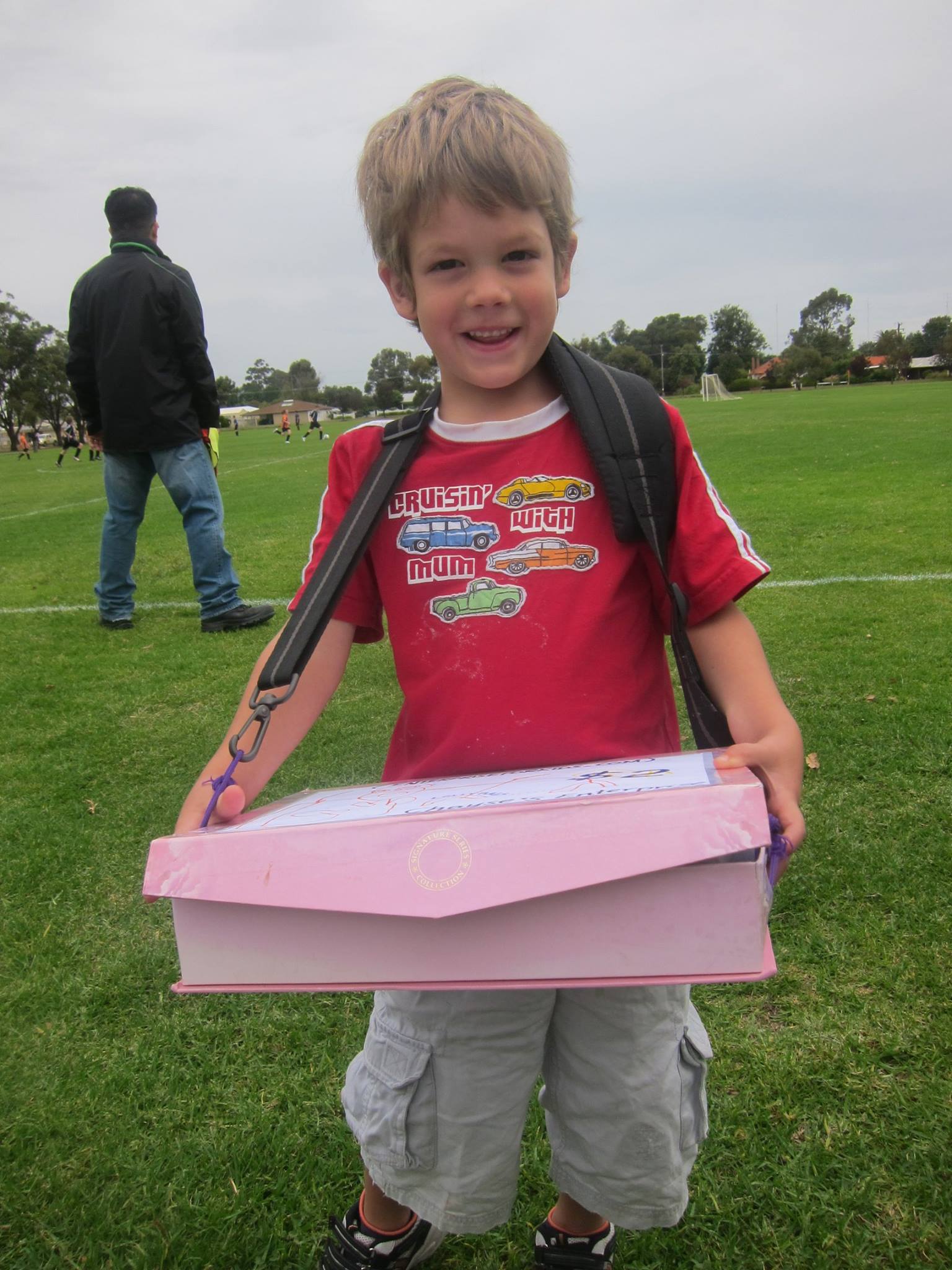
He had his first opportunity to sell his lolly bags at his big brothers’ soccer games. During the game, the spectators, who were his potential customers, milled around on the sidelines.
So we primed him on what to say to customers. We also enlisted the help of his brothers, Amber and friends. It was all great fun and soon enough the customers came rolling in.
Now who could knock back buying lollies from a cute smiling four-year-old?
Business Ideas for Students Need Real Customers
His lolly bags sold like hot cakes for two dollars each. Chayse could not hold up the box because it was too heavy, so he managed the money jar whilst his helpers held the box.
He had to take his customers’ money and give change.
As word spread that there were lollies for sale, kids came racing in from all directions to buy Chayse’s product. The box became lighter and the money jar heavier, but despite the weight, he was not going to relinquish it.
Chayse looked after his helpers by giving them each a lolly bag. Hopefully they will be willing helpers the next time he sells something.
Chayse also paid back the money his Dad lent him as capital to buy the lollies and plastic bags from the supermarket.
Profit, Confidence and a Very Heavy Money Jar
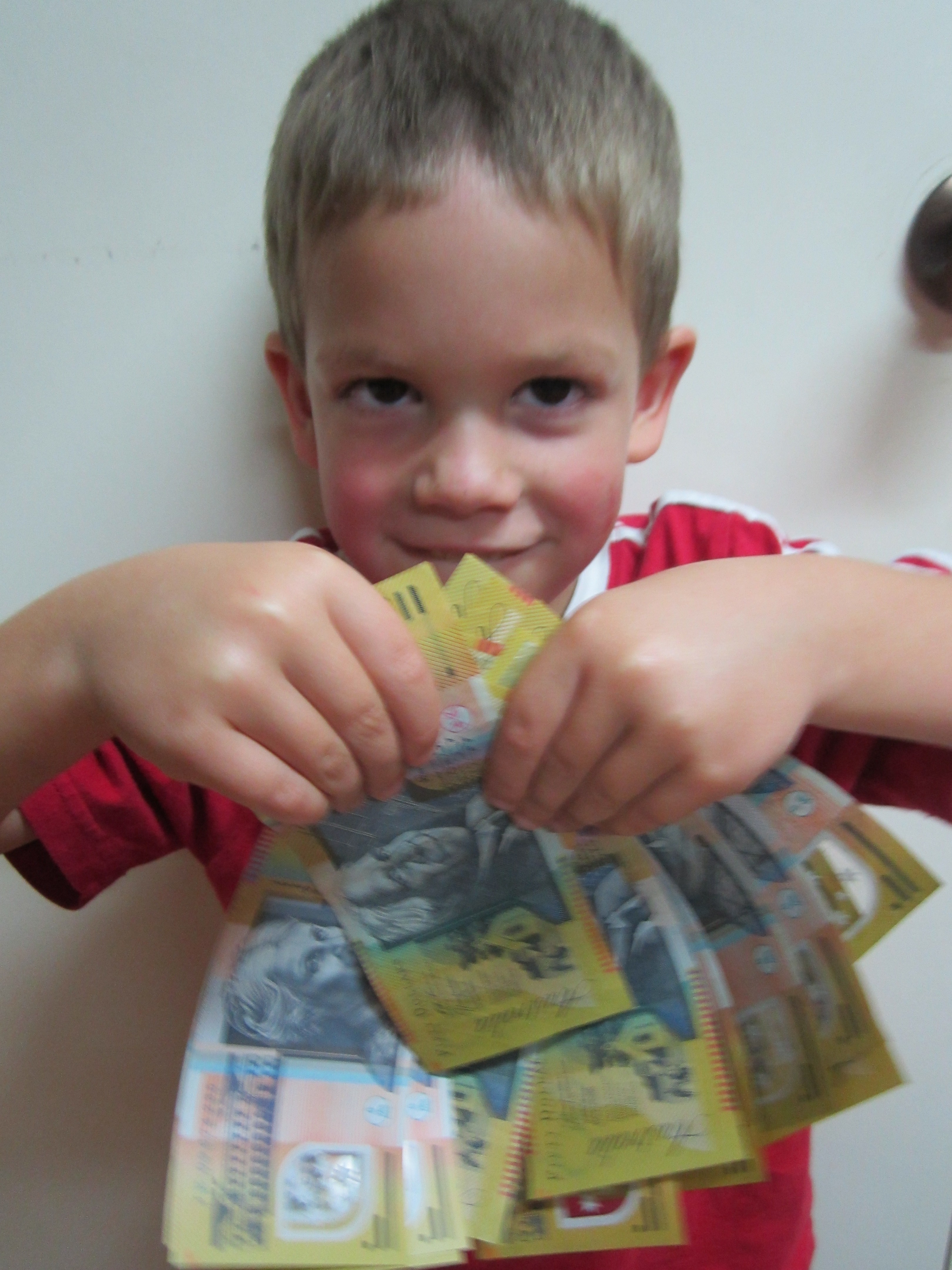
All up, he was delighted with his fifty dollars net profit. He is now well on his way to reaching his goal to buy toy Nerf Guns.
In fact, his business was so successful that Kit has recently decided to partner with him for his next endeavour. Under their mother’s guidance, they will research and decide on a charity that could benefit from some of their profits.
So, stay tuned for that one!
Chayse is one of those children earning pocket money through enterprise. It would have taken him five weeks, with a weekly allowance of $5 a week, to save the equivalent of what he profited at the soccer grounds during one soccer game.
That is why simple business ideas for students can be so powerful. They give children a real reason to be brave, talk to people, handle money, serve customers and learn that effort can create opportunity.
The Candy Man Business Series
This post is Part 3 of Chayse’s Candy Man journey. You can follow the full series here:
- Part 1: The Candy Man Planning an Enterprise — Chayse plans his lolly bag business and receives $50 start-up capital.
- Part 2: The Candy Man Entrepreneur — Chayse buys the lollies, prepares the bags and gets ready to sell.
- Part 3: Chayse the Candy Man — Chayse sells his lolly bags at the soccer grounds and makes a profit.
Key Takeaway: Business Ideas for Students Can Start Small
Key takeaway: Business ideas for students do not need to be complicated. Chayse’s lolly bag business helped him learn about customers, selling, profit, confidence, helpers, start-up money and responsibility — all through one simple project at the soccer grounds.
In our next Enterprise For Kids blog, we’ll introduce you to a self-made millionaire who has some excellent tips for parents wanting to raise entrepreneurial kids. Don’t miss this article!
We would love to hear from you, so please leave a comment.
What a great success for Chayse! I find the link between pocket money and salary interesting. I’ve always believed the purpose of pocket money was to teach children the “value’ of money and to learn how to manage it. Learning it would take 5 weeks the “long” way is a pretty good lesson expecially now that Chayse can compare that to ‘enterprise”. What do you think – a mix of pocket money AND enterprise could be a great recipe?
Hi Linda,
Pocket money certainly has it’s lessons for children, but taking it to the next level where they see they can actually earn more money in an entrepreneurial way if they are prepared to put in the time and effort required. Eventually they will learn to leverage their time and still make the money, and eventually (if they are REALLY entrepreneurial), they will produce passive income. So, yes, one step at a time…always. 🙂
Cath and Trev