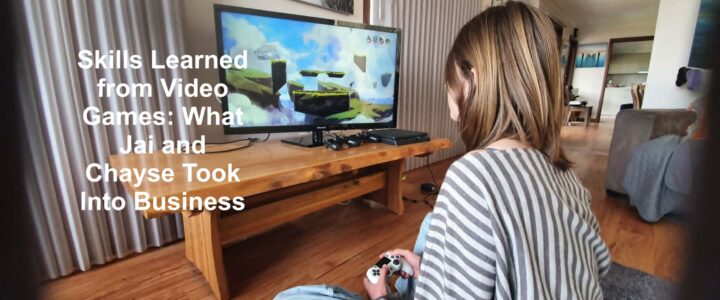
The skills learned from video games are not always obvious to parents while their children are playing.
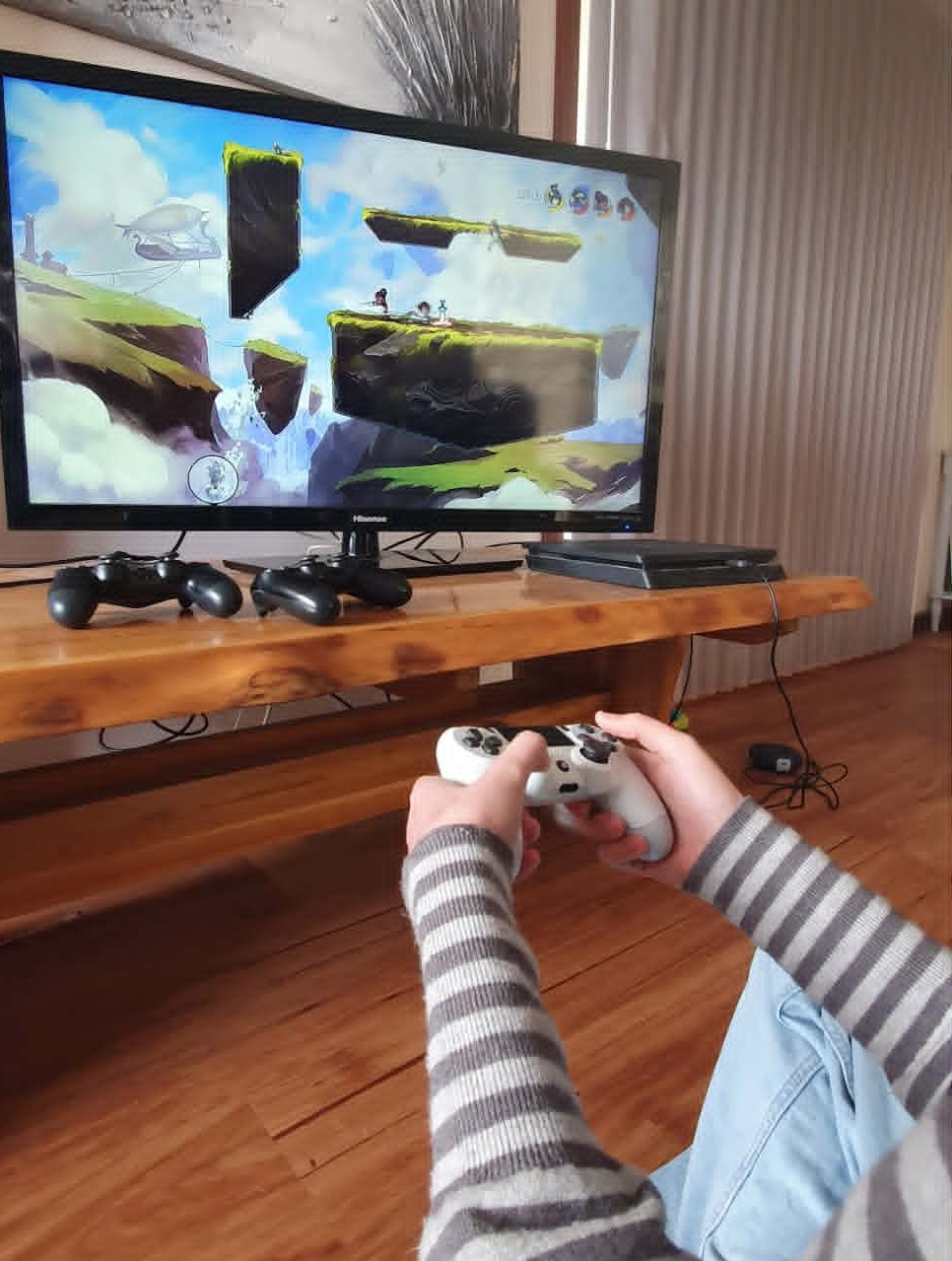
All seven of our children grew up with some exposure to computer and online games. It was never completely over the top, although there were certainly times when a couple of them devoted quite a few hours to it. Gaming was only one small part of the broader family enterprise and real-world learning journey we were sharing with them.
Like many parents, we sometimes wondered whether that time could be better spent elsewhere.
Looking back, however, Jai and Chayse both believe that some of the skills learned from video games helped shape the way they later approached business. They were not intentionally learning entrepreneurship at the time. They were playing games, competing with other people, trying to improve and becoming absorbed in challenges that interested them.
It was only later that they began to recognise the connection.
The Skills Learned from Video Games Were Not Obvious at the Time
Gaming is an interesting subject for parents because it is easy to see the time being spent, but not always the learning taking place.
We can see a child sitting at a computer for several hours. What we may not see is that they are solving problems, managing resources, communicating with other players, making quick decisions or trying to understand why a particular strategy has failed.
That does not mean all gaming is beneficial. There is a big difference between playing with purpose and simply remaining glued to a screen because a game is difficult to put down.
However, I also do not think it is helpful to assume that every hour spent gaming has been wasted.
The skills learned from video games were different for each of them. Chayse’s experience was largely about Minecraft, online economies and managing people. Jai’s experience was more about competition, focused practice and learning through immersion. Both examples fit with our wider approach to raising entrepreneurial kids through everyday experiences rather than formal business lessons alone.
Both later recognised elements of those experiences in the way they worked and built businesses.
Games have also been part of our family’s money learning in a more deliberate way. In our refreshed article about Cashflow 101 and games about entrepreneurship, we explore how board games can make ideas such as assets, liabilities, risk and cash flow easier for children to discuss.
Chayse Was Running a Minecraft Business at Twelve

In 2019, Chayse was spending up to four hours a day playing Minecraft.
This was not the ordinary version of Minecraft where a player quietly builds a house or explores a private world. He was playing on large online servers with thousands of other people.
Many of these servers had their own economies. Players could earn in-game money, buy and sell items, trade resources, own land and negotiate with one another.
At one point, twelve-year-old Chayse owned an area of approximately 1,000 by 1,000 Minecraft blocks. He began dividing the land and renting sections to other players.
As the project grew, he recruited more than ten people to help build and expand it. Eventually, he began paying his brother to supervise the workers.
He had effectively hired a manager.
Chayse also sold property to some of the wealthiest players on the server, hosted events and minigames, and negotiated a server rank that would normally have required real money.
His username became well known among the regular players.
At the time, he did not think of it as running a business. He was simply trying to become successful within the game. Looking back, though, he can see that he was dealing with many of the same things he would later encounter in real work. It also adds another layer to his earlier childhood enterprise story, Chayse the Candy Man, where selling to real customers began building confidence long before he understood the language of business.
Skills Learned from Video Games Through Minecraft
One of the main things Minecraft taught Chayse was that a large project cannot be completed by one person.
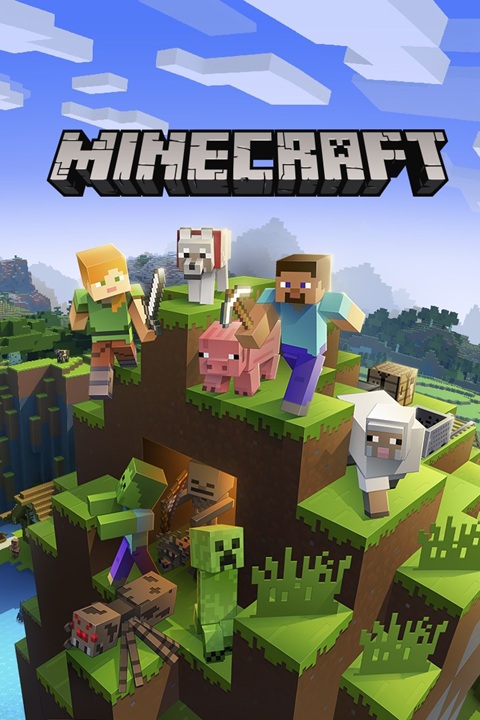
He needed other players to help him expand the property, but simply recruiting people was not enough. He had to explain what he wanted built, provide the materials and make sure everyone understood their role.
Years later, when he began working with user-generated content creators, the connection between those early experiences and the skills learned from video games became clear.
Managing creators also involves giving people the resources and direction they need. Instead of supplying Minecraft blocks and land, he may provide a campaign strategy, information about a product, examples of useful content and feedback on what needs to change.
The setting is completely different, but the management principle is much the same.
Chayse also learned that people work more effectively when there is some sort of system in place. Paying his brother to supervise the Minecraft workers allowed him to focus on other parts of the project.
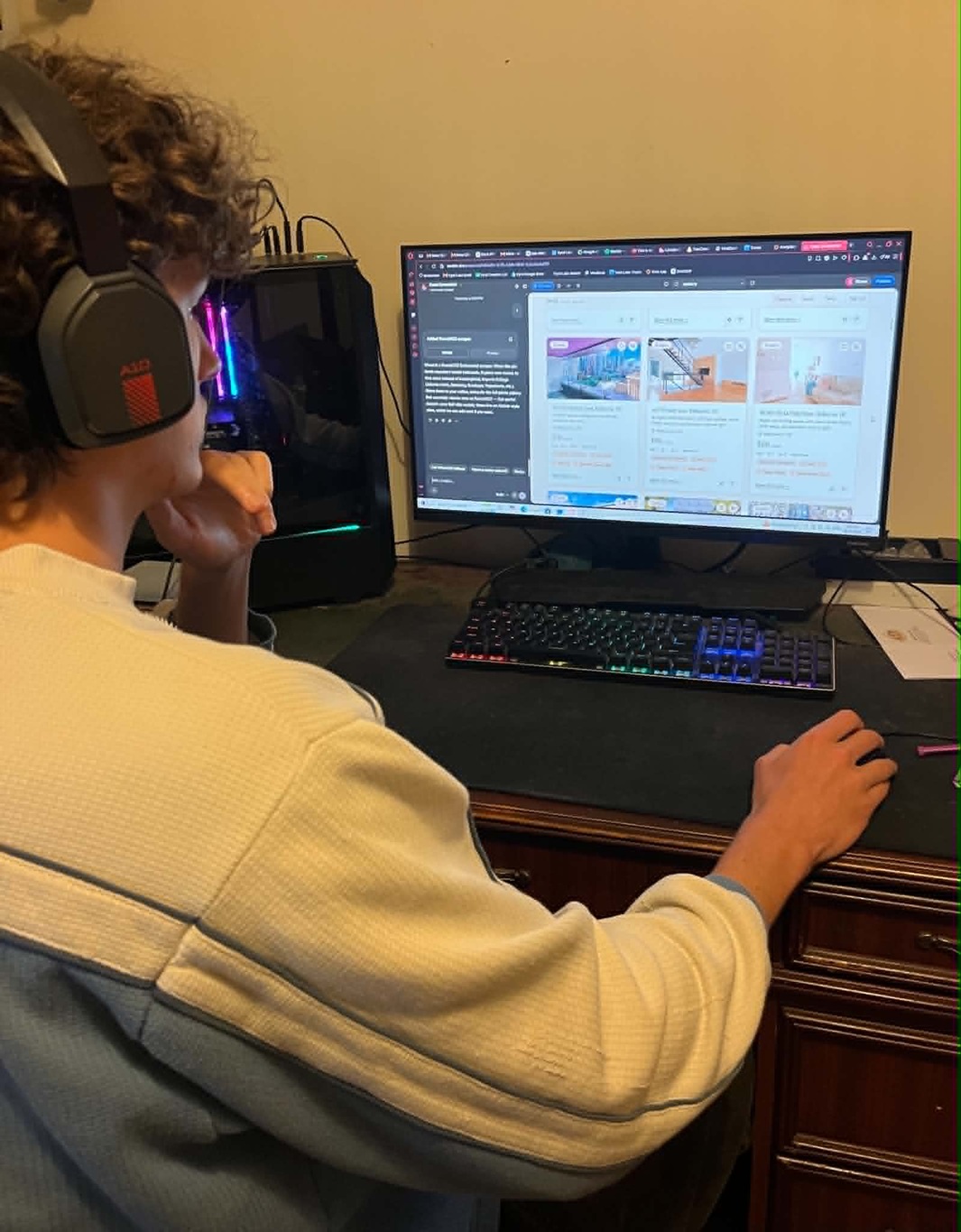
Today, he thinks about how software, processes and delegation can make managing creators easier.
Minecraft also exposed him to ideas around buying and selling, pricing, rent, scarcity and negotiation. The money and property were virtual, but the people he was dealing with were real. They could accept an offer, reject it, misunderstand him, compete with him or decide to go elsewhere. It was a very different setting, but it connected with the same basic ideas we explore in our article on financial education for kids, assets and liabilities.
That gave him a surprisingly practical introduction to how people behave within a marketplace.
Jai’s Gaming Experience Taught Him Something Different
Jai’s strongest lesson did not come from Minecraft.

For him, one of the most influential games was Toribash, an online fighting game in which players control the individual joints of their character.
The game pauses briefly while each player decides how their character will move. The characters then act according to those instructions before the game pauses again.
It requires players to anticipate what an opponent might do and adjust their decisions as the match develops.
When Jai first began playing, he recalls being ranked somewhere in the 400,000s.
He became determined to improve, so he started studying one of his favourite players. He watched how the player approached each match, paid attention to the game mode he used and tried to understand the thinking behind his decisions.
Jai then concentrated heavily on one particular mode rather than moving between lots of different ones.
Within about four months, he says he had reached number three in the world.
What stayed with him was not the ranking itself. One of the most valuable skills learned from video games was the ability to improve quickly when he became deeply interested in something and deliberately surrounded himself with it.
Immersion Became Jai’s Bigger Lesson
Jai later had a conversation with his uncle, who had played professional online poker against some of the best players in the world.

His uncle explained that poker had become part of almost everything he did. He played it, watched it, studied it and spent time with people who were better than he was.
Jai recognised the same pattern in his Toribash experience.
He had not improved by occasionally playing a game when he felt like it. He improved because he became completely immersed in understanding it.
That idea later carried into his business life.
When Jai wanted to become better at creating video advertisements for brands, he joined communities, connected with agency owners, studied other businesses and created content constantly. He also co-founded a product brand, Naming This Later, which helped him understand what it was like to be the customer purchasing advertising and creative services.
His agency later grew from no revenue to approximately $1 million in eighteen months. More recently, Jai shared the same practical thinking while helping Chayse map out a million dollar business plan during their Geraldton road trip.
Jai does not claim that playing Toribash created that business. The connection is more subtle than that.
Gaming helped him recognise the way he learns best. When he finds something that genuinely interests him, he studies it closely, spends time with people who understand it and keeps working at it until he becomes capable.
As Jai wrote to his email audience:
“I just liked playing video games and they taught me a powerful lesson in life: immersion is how you succeed.”
How the Skills Learned from Video Games Appeared in Their Businesses
The skills learned from video games did not transfer neatly from a screen into a business. There was no moment where either of them simply copied what they had done in a game.
Instead, certain ways of thinking began to reappear.
Chayse had already experienced what it felt like to organise people, delegate work and develop systems. Jai had experienced the value of studying successful players, concentrating on one area and continuing through repeated losses.
Both had become comfortable with trying something, seeing what happened and adjusting their approach.
That is a very useful habit in entrepreneurship.
A business idea rarely works perfectly the first time. There are customers who say no, offers that do not sell and plans that need to be changed. People who are used to treating failure as information are often more willing to keep experimenting. This is closely connected to the way we help children move through limiting beliefs and setbacks without allowing one result to become a fixed story about who they are.
Other skills learned from video games can include collaboration and quick decision-making. Players may need to share responsibilities, communicate under pressure and respond to events they did not expect.
Again, none of this means that every gamer will become an entrepreneur. It simply shows that some gaming environments can expose children to skills that later become useful elsewhere. The willingness to act, learn and adjust also appears in our refreshed Justin Herald entrepreneur story, which has always been one of our stronger examples of attitude shaping opportunity.
What I Have Seen Through Minecraft as a Teacher
My interest in this subject also comes from being a school teacher.
As a teacher, I have also seen how the skills learned from video games can be directed into classroom learning through Minecraft. Students who may be reluctant to engage with an ordinary worksheet can become extremely motivated when they are asked to solve a similar problem through Minecraft.
They can work together to recreate historical locations, plan sustainable communities, demonstrate mathematical ideas, build working structures and explain the reasoning behind their designs.
The benefit is not just that the activity feels fun.
Students have to communicate, share decisions and solve problems together. A group may have plenty of ideas but still struggle if nobody listens, responsibilities are unclear or one person tries to control the entire project.
Those are real collaboration lessons.
Minecraft Education has been designed specifically for classroom use and provides teachers with structured lessons and tools across subjects such as coding, science, history and mathematics.
The official Minecraft Education site provides classroom resources, ready-to-use lessons and learning activities across a range of subjects.
The teacher still plays an important role. Giving students access to Minecraft does not automatically make an activity educational. There needs to be a clear purpose, some guidance and an opportunity for students to explain what they have learned. This is the same principle behind our wider focus on real-world learning that builds confidence and initiative.
The Risks of Gaming Still Matter
A balanced discussion also needs to acknowledge the negatives.
Online games can consume a great deal of time. Because many games are open-ended, there is always something else to build, improve, earn or complete.
Gaming becomes a concern when it regularly takes the place of sleep, exercise, schoolwork, family interaction or real-world friendships.
Public multiplayer servers can also expose children to toxic conversations, bullying, scams and inappropriate behaviour. Chayse’s Minecraft experience involved real people in a public environment, so there were risks alongside the valuable lessons.
Parents still need to know which games their children are playing, who they are communicating with and whether appropriate safety settings are being used.
We also need to watch for the difference between enthusiasm and unhealthy dependence.
A child can be deeply interested in a game without it becoming harmful. The warning signs usually appear when the gaming begins to negatively affect other important areas of life.
Helping Children Recognise the Skills Learned from Video Games
One of the useful things parents can do is take an interest in what is happening inside the game.
Rather than only asking how long they have been playing, we might ask what they are trying to achieve, what has gone wrong or whether they are working with anyone else. It is another practical way to encourage entrepreneurial thinking in children without turning every interest into a formal lesson.
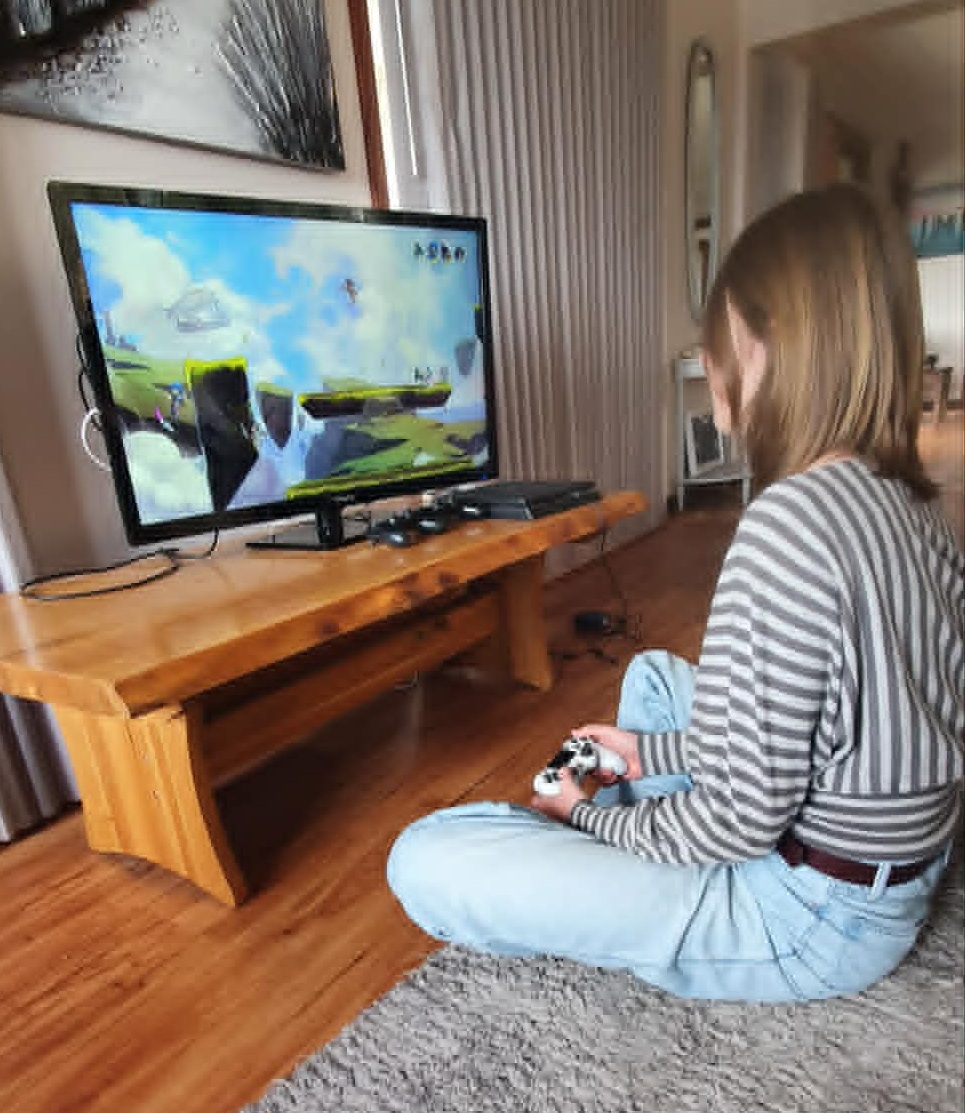
A child may explain that they are building something for other players, organising a team, collecting resources or trying to understand why a particular strategy keeps failing.
Those conversations can help us see whether genuine learning is taking place and help children name the skills learned from video games. They may also help the child recognise skills they had not previously thought about.
At twelve, Chayse did not use words such as delegation, property management or business systems. Jai did not describe his Toribash experience as deliberate practice or competitive analysis.
They understood those ideas later because they had something practical to connect them to.
Parents could also ask:
- What is the hardest part of the game?
- How did you work out what to do?
- Are you helping or managing other players?
- What did you try that did not work?
- Is there someone in the game you are learning from?
- Does anything you are doing remind you of something outside the game?
These questions create a discussion rather than turning gaming into another formal lesson.
Gaming Was Only One Part of Their Development
It is important not to give video games all the credit.
The skills learned from video games were only one part of our children’s development. They also played sport, travelled, went to school, tried small businesses and had many real-world experiences. Our enterprising dinner table conversations and the practical projects collected in our family enterprise stories gave them many other places to test ideas and build confidence. Gaming was only one influence among many.
What it did provide was another place where certain interests and abilities could develop.
Chayse enjoyed building systems, managing people and finding opportunities inside an economy.
Jai enjoyed analysing how people became successful and then immersing himself in improving.
Those traits may have found another outlet even if they had never played online games. Gaming simply provided an early environment in which they could practise them.
The Bigger Lesson About Skills Learned from Video Games
The skills learned from video games can extend well beyond the games themselves, but that does not happen automatically.
It depends on the game, the child, the way they play and whether they eventually recognise how those experiences might apply elsewhere.
For Chayse, Minecraft offered early lessons in buying, selling, leadership, delegation and creating systems.
For Jai, Toribash demonstrated the power of immersion, focused practice and learning from people who were already highly skilled.
Neither of them knew at the time that these experiences would later influence their approach to business. Their wider journeys are shared in our update on what happened to our seven enterprising kids, and the Our Enterprising Kids Today page connects many of those childhood experiences with the paths they are following now.
They were simply following interests that captured their attention.
As parents and teachers, perhaps the lesson is not that children should spend more time gaming. It is that we should remain curious about where their interests might be leading them.
Sometimes useful learning is taking place in places we did not think to look.