A Financial Education for Kids… Asset or Liability?

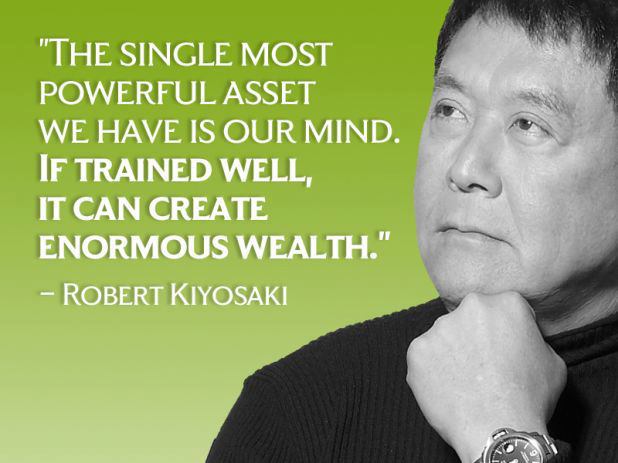
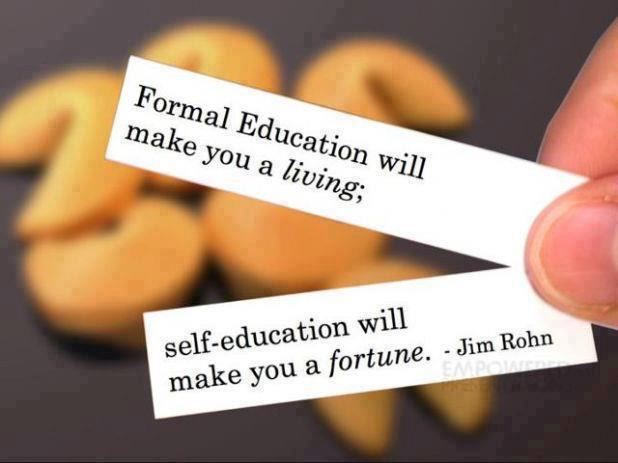
Robert Kiyosaki, famously known for his book “Rich Dad Poor Dad” points out that kids need to be given a financial education and that they are unlikely to get a financial education from school!
Kiyosaki emphasises that by teaching kids to understand balance sheets, you are giving them the basis of a financial education. Balance sheets have two columns, Assets and Liabilities. Kids need to know the difference between Assets and Liabilities.

Kiyosaki’s simple definition of an asset is something that puts cash into your pocket and a liability is something that takes cash out of your pocket! Examples of assets are stocks, investment property, bonds, gold, businesses and valuable antiques. Examples of liabilities are cars, boats, houses, clothes, holidays, TVs and if you are a kid, toys.

Rich people start out by taking the money they earn from salary to buy assets. These assets put cash into their pockets. They take some of that cash to then buy liabilities. They also use some of the cash to buy more assets. Eventually their assets provide enough cash flow that they no longer need a “job”.
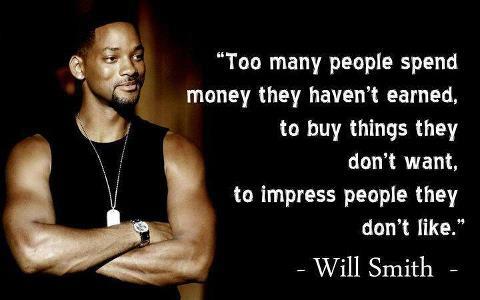
On the other hand, the poor and middle-class earn a salary, which they spend on liabilities with little or nothing left over to buy assets. As they go through life they buy more and more liabilities and have to work harder to earn more money to pay for them. Many will borrow money to buy more things.

When kids understand a balance sheet, they can then be encouraged to develop the habit of putting some of the money they get into buying assets before spending it all on liabilities. This habit will be the basis to them creating wealth as they grow up.

I had a good conversation with Flynn a while back. He has made a large sum of money from his Honey Enterprise and has already spent some of it on his goal, which was to buy an iPod.

Flynn has some mates who are mad keen on riding motorbikes and Flynn now has his sights set on buying one.

I explained that he could buy one, but first he must understand that a motorbike is a liability and will take money from his pocket (devalue, repairs, fuel, safety equipment etc). I then explained what Robert Kiyosaki teaches about balance sheets. Flynn took what I explained on board and as a result of our chat he now keeps three jars of money. One for gifting, one for his liability (the motorbike) and one for buying assets!

So what assets can a kid buy?

Chart showing Silver's value over the past 5 years

Well cash could be considered an asset (however, over time currencies generally devalue, so maybe it isn’t a true asset unless it is gaining a good interest from the bank!). Kids can buy collectables or small amounts of gold and silver. With their parents help they could also buy shares in companies, or put their cash into building their enterprise… as in Flynn’s case, more wholesale honey or even a bee hive of his own!

Flynn decided that he wants to buy silver. Currently its market value is about $30 an ounce and can be bought from the Perth Mint. Five years ago silver was only $9 an ounce. That’s a pretty good gain considering that the GFC was during this time! In fact, at one stage silver reached as high as $47 early last year!

Flynn is getting a Financial Education.

This conversation about silver is very relevant to my next guest I am about to introduce to you. Andrew Smith is an expert in Silver and Gold. He is a qualified mining engineer, who is involved with a company (www.orica-miningchemicals.com) selling chemicals to gold mines. He has been involved with Gold and Silver mining for many years and has an in depth knowledge of the fundamentals of gold and silver and investing in these precious metals. If you are interested in capitalizing on the precious metals’ opportunities and seeing Andrew present live in Bunbury, WA, click this link.


Young Bucks: How to Raise a Future Millionaire

Cameron Herold

I was looking for conversations on Twitter about raising Enterprising Kids, when I came across a very inspirational guy called Cameron Herold. He is a very successful entrepreneur with an excellent message to parents wanting to raise kids to be entrepreneurs. He shares his own life story and makes reference to the book “Young Bucks: How to Raise a Future Millionaire” by Troy Dunn.

Cameron, now in his late forties, was once one of those kids who simply didn’t fit into the regular schooling mould. In fact, these days his hyper-activity would have had him labelled with the disorders of ADHD and Bipolar. Cameron admits that he had, and still has, these “illnesses”, and were he born into this modern world, would have been dosed up on Ritalin and given referrals to the school Psych in order to mould and conform him to expected “societal” standards at school. Cameron explains that it was these afflictions that made him what he is today… a very successful entrepreneur! He says our schools are full of potential entrepreneurs who are suppressed by behaviour programs and Ritalin.

“Bipolar is the CEO disease!”

Steve Jobs

Steve Jobs, Ted Turner and all three founders of Netscape have two things in common. They are/were successful CEOs AND they all have/had Bipolar.

Cameron says ‘Don’t medicate kids with Attention Deficit Disorders. Imagine if Steve Jobs was given Ritalin, the world wouldn’t have been blessed with the amazing advancements in the technologies of Apple!”

Cameron Herald was brought up by his parents to be an entrepreneur. He points out that schools rarely teach kids how to think like and develop the skills to be entrepreneurs. Schools condition kids to fit into jobs, not build businesses. Cameron wasn’t comfortable with school and ended up dropping out.

Being an entrepreneur is not an inherited trait, but a learned behaviour!

In America, fewer than 18% of households are headed by a self employed business owner, however, self employed business owners are four times more likely to be millionaires than those who work for others! On average entrepreneurs make at least 25% more in income than the general population. (T.Stanley Phd & W.Danko Phd in “The Millionaire Next Door”)

Entrepreneurs learn to become entrepreneurs through necessity, such as immigrants and refugees, or they learn through observation, such as Robert Kiyosaki. Very few entrepreneurs learn about these skills at school. So, if you want your kids to learn about entrepreneurship, someone in their family must teach it!

It is interesting to note that 62% of Entrepreneurs say they do not have a family member who is an entrepreneur ((North Eastern University School of Technology Entrepreneurship Oct 2006), so rely on other mentors to teach them the necessary skills.

So how do you teach kids to be successful entrepreneurs?

Cameron Herold

Cameron Herald offers many excellent suggestions. He presents an outstanding talk, that goes for about 15 minutes. If you are following our blog, then you are likely to be a parent looking to give your children opportunities and choices in life which would include providing them with the know-how to develop enterprise skills. Cameron Herald’s talk is a must see! So go make a coffee, then click this link and soak up his energy and words!

In his talk, Cameron makes reference to a book that he says has practical and age specific advice on how to access your child’s strengths and weaknesses so that you can pre-think ideas to suggest to your children on what kinds of money making opportunities they can do.

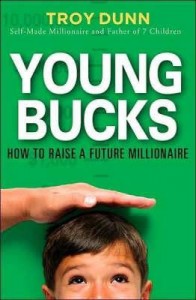
The book is called “Young Bucks How to Raise a Future Millionaire” authored by Troy Dunn.

Young Bucks: How To Raise a Future Millionaire

Troy Dunn is also a self made millionaire and successful entrepreneur. He also happens to be a father to seven kids (just like us!), so I guess he is qualified to offer guidance!

In his book he explains that the first pre-requisite is to give your child the “Gift of Want”. They must have a real reason to pursue being an entrepreneur. They must want something badly enough as this is what will give them the motivation to get started and to keep going when the going gets tough!

Dunn leads parents through a series of steps to assist their child in deciding, researching and setting up a money making business. He teaches key concepts like marketing, pricing, negotiating etc and he gives plenty of terrific “enterprise for kids” ideas.

Amazon sell “Young Bucks: How to Raise a Future Millionaire” for $19.95 as a hard copy.

Cameron Herold states that one can change the world as an entrepreneur! All that is needed is a single, brilliant idea.

This takes me to my next point – to be an entrepreneur, we need to change the way we think. True entrepreneurs see obstacles and turbulence in life as  opportunities and in the midst of crises often create their own opportunities to solve the problem!

Cameron explains that teaching our kids skills such as leadership, tenacity, sales and attainment, help them to succeed. He says that we need to help them find the entrepreneur within themselves, and we need to make it cool! Kids who struggle at school need opportunity. His view is that we should be raising kids to be entrepreneurs, rather than lawyers! Don’t get me wrong, being a lawyer is an admirable profession, but for those children who have no desire or ability in attaining the results to be a lawyer, then entrepreneurship is even more important.

Cameron thinks parents should groom young entrepreneurs to hate the thought of getting a job! Don’t give kids pocket money as it conditions them to have/expect regular pay cheque. Rather, teach your kids to find things that need to be done around the house, then have them negotiate a fee for doing it. This teaches them to look for opportunities and to negotiate.

Teach kids habits to save. Have them use money boxes with three compartments. One for gifting, one for buying toys and one for buying assets such as money in the bank, gold or stocks.

Take opportunities to teach from real life examples in the real world. For example point out when someone is providing good customer service in a restaurant, or presents well as a salesman. Encourage your kids to sell their unwanted toys, to build inventions and to tell stories to the public.

Cameron Herold has allowed me, as a school teacher, to see kids in schools differently. I can see that there are some children who love the system and are more than happy to get a job and work for a salary, but there are an increasing number of children who don’t fit into the system, and perhaps unknowingly, are destined to be budding entrepreneurs. All they need is someone to release the “entrepreneur self” from within and then provide the opportunities for them to develop!

We need more people like Cameron Herold and Troy Dunn (Young Bucks: How to Raise a Future Millionaire) in our world. If you missed Cameron’s talk, here is the link again!

In our next post I have an invitation for those of you who live in Bunbury Western Australia!

Children Earning Pocket Money… the Candy Man!

We thought it was time that we revisited our little Candy Man Chayse! When we last followed his enterprising adventure he had bought his lollies and bagged them up ready to sell.

If you missed that article, then click here.

Now he has to find a market for his product and learn to be a salesman. Before we share Chayse’s exciting adventure we thought that it would be interesting to consider the benefits of children earning pocket money through enterprise as opposed to children receiving a weekly allowance.

Children earning pocket money through enterprise will develop the mindset and skills of an entrepreneur! Giving children a weekly allowance conditions them to be “workers”. Robert Kiyosaki describes a worker as someone prepared to give their time for money, whilst an entrepreneur builds systems and businesses that produce a cash flow. Workers are more often than not time poor and cash poor, whilst entrepreneurs are generally time rich and cash rich.

Why is it then that the vast majority of us leave school and become workers?

A child receiving a weekly pocket money allowance is equivalent to a worker receiving a weekly salary. Relying upon a weekly allowance won’t encourage children to look for opportunities for enterprise. Their pocket money may or may not be aligned with doing household chores, just as a worker receives payment for doing work. Many kids leave school and slot into jobs for the rest of their lives because they have not been able to explore the entrepreneur within themselves!

Chayse with his box of candy!

Children earning pocket money through enterprise develop a whole different mindset. Parents of these children will encourage their children to look around to find opportunities. These kids learn to identify problems that they can solve and they’ll learn the art of negotiation. Enterprising children understand assets, liabilities, cash flow and profit. They will understand markets and customer service and they will develop the confidence to promote themselves.

Children earning pocket money though enterprise are more likely to value their profits and spend their money wisely. Weekly allowances are easily received and easily spent (knowing that more money will follow). This conditions kids to be reliant on a salary.

Enterprising children become self motivated to make money, and as they celebrate their successes, they quickly come to understand that they can in fact make a lot more money than their friends receiving weekly allowances.

According to entrepreneur, Cameron Herold (ted.com), parents wanting to raise entrepreneurial children won’t give pocket money to their kids. They will encourage their kids to go around their home or community and identify opportunities. These kids then make a plan and negotiate with either their parents or people in the community to provide the service or product for payment.

Getting prepared with his helpers.
Selling to customers.

Kids may not be motivated to do this at first, especially if they have been used to receiving a weekly allowance. The trick here is to make sure they have a big “Why!” They need to want something badly enough. This then becomes their goal and reason.

So back let’s get back to Chayse’s enterprising story! Was he able to earn his pocket money through his Lolly Bag business?

He had his first opportunity to sell his lolly bags at his big brothers’ soccer games. During the game the spectators (his potential customers) mill around on the sidelines. So we primed him on what to say to customers. We also enlisted the help of his brothers, Amber and friends. It was all great fun and soon enough the customers came rolling in!

Now who could knock back buying lollies from a cute smiling four year old!

His lolly bags sold like hot cakes for two dollars each. Chayse couldn’t hold up the box because it was too heavy, so he managed the money jar, whilst his helpers held the box. He had to take his customers money and give change.

As word spread that there were lollies for sale, kids came racing in from all directions to buy Chayse’s product. The box became lighter and the money jar heavier…  but despite the weight, he wasn’t going to relinquish it!

Chayse looked after his helpers by giving them each a lolly bag. Hopefully they will be willing helpers the next time he sells something.

Chayse also paid back the money his Dad lent him as capital to buy the lollies and plastic bags from the supermarket.

All up he was delighted with his fifty dollars net profit! He is now well on his way to reaching his goal to buy toy Nerf Guns. In fact his business was so successful, that Kit has recently decided to partner with him for his next endeavour! And under their mother’s guidance, they will research and decide on a charity that could benefit from some of their profits. So, stay tuned for that one!

Chayse is one of those children earning pocket money through enterprise. It would have taken him five weeks, with a weekly allowance of $5 a week to save the equivalent to what he profited at the soccer grounds during a soccer game.

In our next Enterprise For Kids blog we’ll introduce you to a self made millionaire who has some excellent tips for parents wanting to raise entrepreneurial kids. Don’t miss this article!

Money… We All want it, but at what Cost?

In the last blog we spoke about “who it is that teaches our kids about money”. We’d like to delve a little deeper with this topic in this blog. Our intention is to build an understanding of why most of us have settled into the role of being a “worker” rather than following the “entrepreneurial” path. You will also learn a little more about what we are endeavoring to achieve as a family.

Our kids, like all kids, want to have their own money so that they can have a little independence and buy the things that they want. In our family our children sometimes receive money when it is their birthday and they also get a little pocket money.

Kaitlin, our eldest, has a part time job working at a local Brewery serving lunches and doing the kitchen work. She works hard and it pays pretty well. However, to take on a job, she loses some of her weekends and time to do her school work and have a social life. She also commits time to regular baby sitting work for some of the families in the area.

At present the money mindset of my children is much the same as ours, which is likely to be the same as most other people, and that is to earn money, spend and borrow money!

Generally most of us either have a job where we give time for a salary or we have a business where we give our time for a monetary return. Whatever the case, we are tied down and limited with what money we earn and we sacrifice our time for it. Sound familiar?

The funny thing is, that right from an early age we are conditioned to accept this to be the norm and often our minds are generally closed off to entrepreneurial ideas and opportunities. Our schools train us and prepare us for the workforce. Our parents will do the same by pointing us towards a vocation.

Adding to this, media advertising, TV, politicians, universities and our peers all guide us towards getting a job. It is all around us, well intentioned people and institutions all keeping us on the “straight and narrow” pathway of getting a job (earn!), then spending our money on things (spend!) and then borrowing money to spend on more things (borrow!).


Finance companies advertising loans

Look at the people around you and you will see this pattern repeated everywhere. People with expensive things like houses, TVs, holidays, cars, boats and caravans. Most are servicing mortgages to pay for it all. The more things they acquire during their lives the harder and longer they have to work to pay for the things. Most people can see no way out of their situation and accept that this is what is supposed to happen. The average Australian spends about $1.15 out of every dollar they earn!

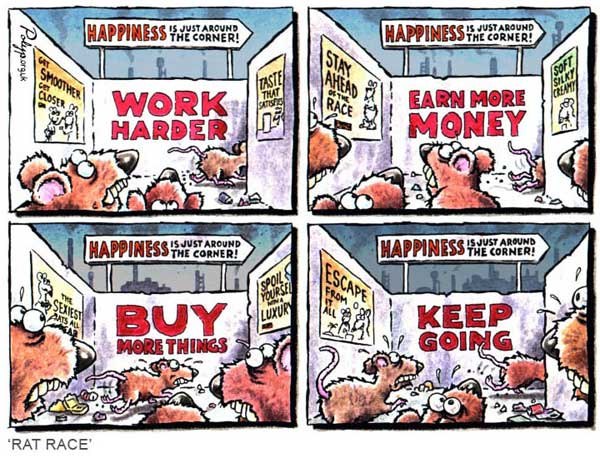
The Rat Race!

In fact most of us have been conditioned to accept this money mindset which locks us into the“Rat Race!”

Now you may challenge us by saying, what’s wrong with our kids entering the workforce, what’s wrong with spending what they earn and borrowing some more! Honestly, there is nothing wrong or right about it at all. It is just what it is.

For us though, we’re looking for a new direction where we have the time to follow our passions and to be able to give freely to our family, community and world without worrying how to pay for it. Our goal is to break out of the “worker” mindset.

We seek to know how the relatively few, “financially and time free” people managed to rise above the Rat Race. We want to know what they do that is different. How do they think and what is their conditioning around money mindset!

What’s more, we wish for our kids to grow up with the mindset of an entrepreneur! It is important to us that they get a “financial education”.

A Financial Education won't come from the teacher.

From what we’ve discovered so far, is that kids need to start very early to develop their entrepreneur mindset and the skills needed to manage money and build enterprise. They need role models who can foster a different thinking and parents who encourage and look for opportunities that foster enterprise. Open discussions about money and business will help to develop a financial education for kids.

We desire for our seven children to grow up having choices. We want their pathways to be wide with opportunity! We encourage them to follow their passion and not be conditioned into the “earn, spend and borrow” mindset. We hope that they will think differently, have belief in themselves and develop the habits of people who have achieved personal and financial freedom.

We know we have a challenge ahead of us, as our kids have already been conditioned from an early age. Using Kaitlin as an example; she earns money, spends freely and already has a debt. She is studying hard to go to university with all her friends and then ultimately to get a good paying job. Once again I’ll point out that there is no right or wrong about this, only that we would like her to see that there are other ways.

It is always going to be a challenge whilst we have that same conditioning and mindset. Although striving to change our thinking, we recognise that it will take time and persistence to learn new habits and shift old belief systems. However, we are very confident that this year, is the year that we will have a break through. We have enlisted the help of a Money Mindset personal mentor, who is helping us develop a new thinking. He is there to help us transform in our thinking through our actions…. and as we do so, so will our children.

With our up coming blogs we will share his education with you.


Who Teaches Your Kids About Money?

If you don’t teach your kids about money, then there are plenty of people out there who will! And not all of them will teach your children what they really need to know.

Kids are conditioned by media and celebrities.

Our kids are educated financially from many sources whether we like it or not. Everywhere they go and everything they look at is conditioning our kids around money.

Teenage kids, for example, are very influenced by their peers, TV and social media. They are pressured to want to have all the latest and greatest of everything! AND…they have to have it now! If you have a teenager in your house (or even a preteen!), you will understand this very well. They will tell you that they are the “only” ones in the “whole world” who doesn’t have one! And if you try to compromise with a cheaper version from Target,… well, forget it! Brand name or nothing!

Many parents fall into the trap of giving into their kids’ persistent demands. We have…..more times than we should have!… and the older a kid gets, the better they are at arguing their point. Some parents may lend their child the money with the view of having them pay it back when they can afford it, or some simply pay for the item fully and don’t expect their child to pay anything back.

But what is this teaching children?

Our son Flynn was preparing to go on a camp with his school. He claimed that ALL the kids would have iPods and that he wanted to buy one to take on camp.

He counted up his money and found that he was short about $100. He was very persistent in his request and we decided to sit down and have a conversation with him around the value of money.

Our dilemma was this – If we were to say an outright “NO, we can’t afford it” then we would be conditioning him with a mindset around “lack of money.”

If we said “YES”, then we would be conditioning him with the mindset to “borrow, then spend!”….and probably not appreciate it too much.

So……………we came up with a solution we had been taught in our mentoring course.

We said “YES”. He could buy an Ipod……however, we weren’t able to pay for it. We brainstormed ideas with Flynn on how he could raise $100. Time was of the essence as he was going on camp in three days.

We came up with ideas such as increasing the marketing of his honey that he was selling through his Honey Enterprise; sell some of his unwanted things such as his surf board; or do a deal with his sister and buy the items she had lined up to sell as part of her “New from Old” enterprise and then resell them with mark up.

The discussion gave him motivation, and we took the punt that if he was really keen for the iPod, then he would make it happen.

The point of all this is that we didn’t automatically say “No, we can’t afford it”…… and we didn’t say “Yes, and we will pay for it”. Rather, we put the onus on Flynn to work out a way to achieve his goal without getting himself into debt. We used this opportunity to teach Flynn about money.

Our Money Mindset Mentor, Paul Counsel, says that in our society, kids are conditioned to “earn, spend and borrow” from a very early age. This conditioning carries through to adulthood and ties people to a job. They need this job to pay for the interest payments on their “things”.

Sporting heros are used to condition people.

It is hard for our kids to avoid this type of conditioning. Their sporting idols appear on TV advertisements telling them what a great investment they are making if they buy x,y or z……and finish with a trusting wink!

Celebrities promote all sorts of things from insurance and jewellery to holidays. Retailers offer low cost, easy monthly payments for expensive items that people really can’t afford. There goes the “earn, spend and borrow” cycle again. Even airlines offer credit these days!

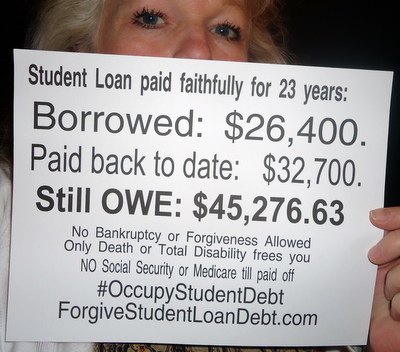
The education faculties don’t teach your kids about money either. In fact they will also put young people into tremendous debt by financing their higher education courses. Young people who spent five years working hard for a qualification, come out at the end with a massive debt!

Locked into debt before you can even begin!

Here is a hard fact… this year the total amount of student loan debt in the US hit the $1 trillion mark. Back in 2010, the amount of U.S. student loan debt surpassed the total amount of credit card debt, and it continues to grow. The trend in Australia is following that of the US.

We can look at life as being a game full of experiences! We are here on earth to play the game. Yet from an early age the odds are stacked against us to achieve personal and financial freedom when we are “conditioned” to earn, spend and borrow for unproductive things.

Can this change? Absolutely.

And who is the best person to teach this change to your children?

Well, if you have already achieved financial and personal freedom, then the best teacher is YOU!

And if you haven’t, then find someone who has achieved the type of financial or personal success you would like for your kids. You may even learn something in the process. 🙂