Youth Enterprise…. Kaitlin and Jai

So far we have seen Flynn building a great Honey enterprise and actually achieve his goal. Kit had a go at “dog walking”, but quickly cottoned onto the fact that Chayse was making more money than him selling lollies or candy at the local Soccer fields, so has been pursuing that with his brother. They have made quite a team, and we will revisit them in an upcoming blog post. Amber has actually reached her goal with her “New from Old” endeavours and we will celebrate her achievement in another post also.

So that leaves our creative Artist, Kaitlin, and our budding App Developer Jai.

It has been interesting to note on the kids’ journeys, that it is actually easier to introduce a different mindset around money to children who are younger than it is to teenagers or older children. Why would teaching youth enterprise be so challenging? Well, the answer is simple really. In our case, Kaitlin and Jai have been a lot more conditioned around money than the younger siblings. They have been around longer with us as their major source of education. Our thoughts/objections/subconscious beliefs have been ingrained into these two and it is now quite a process to change those beliefs.

Kaitlin and Jai

Luckily for us, Kaitlin and Jai are both quick learners and understand the concepts we have been trying to teach. The main obstacle has been providing the “time” to put this newfound knowledge into action. Being teenagers, their lives are full of homework/study, sporting commitments, social life and social media. All of these are things we want to encourage in our children, so our challenge has been finding the time to also include a Financial Education.

But in the end, as with everything, “life” has been the best teacher of all.

Jai hasn’t had an urgency to pursue his App Developing as there was no time line on when his goal needed to be reached. But since then, his goal has changed. Jai has been accepted into the Country Week Soccer team and will be competing in Perth during the holidays. He has to pay for a good portion of this trip. He suddenly has a renewed vision and goal to aim for, and he has spent countless hours researching a variety of ways to make the money in a short amount of time, kicking his youth enterprise into action!

Jai's focus or goal has changed.....
Jai loves being active and he now has a new goal.


He has come up with different ways to make the money, some of them he wasn’t interested in before. The sorts of opportunities Jai has been looking at are mowing lawns in our neighborhood, finding items to sell and hiring out exercise equipment. Together, he and Trevor worked out he needed to find $10 a day to be able to afford his portion. He has been negotiating with us over particular jobs that need doing around the house (above and beyond household chores) and been getting on and doing them. He has gone through many of his good quality items that were a “must have” when he bought them, then realised that perhaps he didn’t need them as much as he first thought. These, he has posted on Facebook to sell.

So, whilst Jai’s App developing has taken a backseat, it hasn’t been forgotten, it is just something he has recognised as a longer term project and pursuing it now wouldn’t give him the instant money needed to go on this trip. We are proud of his efforts and are sure he will reach his goal in time.

Jai reflected on his Entrepreneurial Journey a few weeks back. Click here to view!

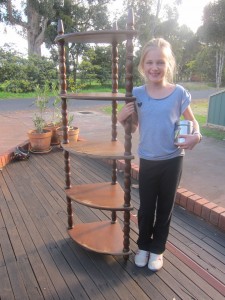
Kaitlin doing what she loves!

Kaitlin, our artist in residence, is finally learning to manage her energy around study, social life, sport and her youth enterprise ventures. She has put a time line in place and is having more requests for art, so has to now take the time to start each piece so it can be finished in time for Christmas (for some) and earlier for others. Having a boyfriend has actually increased her self effacy as she needs to complete certain things before socialising.

Kaitlin and Lachlan


Luckily, lachlan encourages Kaitlin to do that, because he actually wants to have a social life too!

Kaitlin and her friend Georgia are also realising the power of leveraging their time. They have come up with some great ideas around Enterprise and have put steps in place to pursue these ideas. They are longer term goals, but in the end will reap more rewards than working a job. However, they still see the need to pursue their “job” in the meantime, to give them the money to put towards their enterprise when it is up and running. We will keep you posted with their endeavours.

Kaitlin & Georgia

So the journey towards Financial freedom is always a rocky one,  but one worth following regardless of what else is going on in your life. Our kids are teaching us so much along the way, and whilst all of their efforts aren’t successful, they are learning from that and moving forward……..and we couldn’t be prouder.


A Financial Education for Kids… Asset or Liability?

A Financial Education for Kids… Asset or Liability?

Financial education for kids does not need to be complicated. One of the most useful money lessons children can learn early is the difference between an asset and a liability.

When children understand this difference, they begin to see money as something they can manage, grow and use wisely — not just something to spend as soon as they receive it.


Money lessons for kids using give spend and grow jars
A simple jar system can help children understand money choices.

Why Financial Education for Kids Matters

Robert Kiyosaki, famously known for his book Rich Dad Poor Dad, has often pointed out that children need a financial education — and that they are unlikely to receive a complete financial education from school alone. You can learn more about his approach to money education at Rich Dad.

One of the most helpful starting points in financial education for kids is teaching children how to think about money in terms of assets and liabilities. This gives them a simple framework for making better money choices as they grow.

A balance sheet has two main sides: assets and liabilities. When kids understand the difference between the two, they can begin to ask better questions before they spend their money.

This is also why practical money lessons for kids are such an important part of raising capable, confident and enterprising children.

Assets and Liabilities Explained for Kids

A simple way to explain assets and liabilities to children is this:

An asset helps you build or keep value.
A liability costs you money to own, use or maintain.

Robert Kiyosaki’s simple definition is that an asset puts money into your pocket, while a liability takes money out of your pocket.

For adults, assets might include shares, investment property, bonds, businesses, precious metals or other things that can hold value or create income. Liabilities might include cars, boats, expensive holidays, clothes, electronics or anything that costs money without helping your money grow.

For children, this idea can be made much simpler. A toy, bike, motorbike, game console or phone might be exciting to buy, but it usually does not put money back into their pocket. It may also bring extra costs, repairs, upgrades or accessories.

An asset, on the other hand, could be something that helps them earn, save or grow money over time. This might include supplies for a small enterprise, tools they can use to create value, money set aside for a future opportunity, or simple investments made with parental guidance.

The goal of financial education for kids is not to stop children from enjoying their money. The goal is to help them pause and ask:

“Will this help my money grow, or will it simply take money away?”

How Financial Education for Kids Changes Money Thinking

Assets and liabilities for kids explained through a simple money lesson
Helping children ask: will this help my money grow or simply take money away?

When children only think about money as something to spend, it can disappear very quickly. They earn it, receive it or save it — and then look for the next thing to buy.

But when children start thinking about assets, they begin to see another possibility. Money can be used to create more opportunities.

They might put some money aside for a small business idea. They might buy materials to make something they can sell. They might save toward equipment that helps them learn a useful skill. They might even begin to understand shares, savings accounts or other forms of investing with the support of their parents.

This is where financial literacy for students becomes practical. It is not just about worksheets, definitions or classroom activities. It is about helping children make real decisions with real money in real life.

These kinds of real-life lessons also connect closely with family enterprise stories, because children often learn best when money, work and responsibility are connected to something they are actually doing.

A Real-Life Financial Education for Kids Lesson with Flynn

I had a good conversation with Flynn a while back. He had made a large sum of money from his honey enterprise and had already spent some of it on one of his goals — buying an iPod.

Flynn also had some mates who were mad keen on riding motorbikes, and he soon had his sights set on buying one too.

Rather than simply saying yes or no, we used the moment as a practical money lesson.

I explained that he could buy one, but first he needed to understand that a motorbike is a liability. It could take money from his pocket through devaluation, repairs, fuel, safety equipment and maintenance.

We then talked about what Robert Kiyosaki teaches about balance sheets, assets and liabilities.

Flynn took the conversation on board. As a result, he started keeping three jars of money:

  • one for gifting
  • one for the liability — the motorbike
  • one for buying assets

This simple jar system helped turn an ordinary childhood purchase into a meaningful financial education for kids lesson.

You can read more about Flynn’s early enterprise journey in Honey Pot of Gold.

Simple Assets Kids Can Understand

So what assets can a kid buy?

Children do not need to start with complicated investments. At first, the most important asset they can build is the habit of setting money aside before spending everything.

Depending on their age and with parental guidance, children might learn about:

  • savings accounts
  • supplies for a small business
  • tools or equipment that help them create value
  • shares or managed investments explained in simple terms
  • collectables or precious metals as historical examples of storing value
  • reinvesting money back into their own enterprise

In Flynn’s case, one possible asset could have been more wholesale honey for his business, or even a bee hive of his own.

At the time, Flynn became interested in buying silver. That conversation was useful because it helped him understand that money could be used for more than spending. It could also be directed toward things that might hold or grow value over time.

This is not about telling children exactly what to invest in. It is about helping them develop the habit of thinking before they spend.

Financial Education for Kids: Precious Metals and Investment Lessons

Silver coins used as a financial education lesson for kids
Silver coins became part of a real-life conversation about assets, liabilities and money choices.

The original version of this post included a discussion about silver prices at the time. That was part of the real conversation Flynn and I were having back then.

Precious metals such as gold and silver can be useful examples when teaching children about storing value, but prices change, markets change, and every family’s financial situation is different. The Perth Mint is one place families may come across information about gold and silver, but any conversation about precious metals, shares or other investments should be treated as a learning opportunity, not as financial advice.

For children, the deeper lesson is this:

Money can be spent, saved, given, invested or used to build something valuable.

That one idea can shape the way children think about money for the rest of their lives.

How Parents Can Teach Financial Education for Kids at Home

Parents do not need to be financial experts to teach simple money lessons for kids. The best lessons often come from everyday conversations.

Here are some simple questions you can ask when your child wants to buy something:

  • Will this cost you more money after you buy it?
  • Will this help you learn, earn or create something?
  • Is this something you really value, or is it just a quick want?
  • Could some of your money be kept aside for a future opportunity?
  • How could you use part of your money to help someone else?

These questions help children build awareness. They also help children understand that money choices are connected to values, responsibility and future possibilities.

That is the heart of financial education for students and children. It is not about making them fearful of spending. It is about helping them become thoughtful, capable and confident with money.

For another family example, you may also like Kids Biz Program by Amber.

Flynn Is Getting a Financial Education

Flynn holding money earned through his honey enterprise
Flynn’s honey enterprise became a real-world lesson in earning, saving, giving and thinking about assets.

Flynn’s honey enterprise gave him more than pocket money. It gave him a real-world classroom.

Through earning, saving, spending, giving and thinking about assets, he began learning lessons that many adults are still trying to master.

That is why enterprise can be such a powerful teacher for children. It gives them the chance to experience money, responsibility and decision-making in a practical way.

When children run small enterprises, sell products, save toward goals or think carefully about what they do with their money, they are not just learning business skills. They are learning life skills.

Key takeaway: Financial education for kids begins with simple, real-life conversations. When children understand the difference between assets and liabilities, they can start making wiser choices with the money they earn, save and spend.

Where to Next?

If you enjoyed this money lesson, you may also like:

Young Bucks: How to Raise a Future Millionaire

Cameron Herold

I was looking for conversations on Twitter about raising Enterprising Kids, when I came across a very inspirational guy called Cameron Herold. He is a very successful entrepreneur with an excellent message to parents wanting to raise kids to be entrepreneurs. He shares his own life story and makes reference to the book “Young Bucks: How to Raise a Future Millionaire” by Troy Dunn.

Cameron, now in his late forties, was once one of those kids who simply didn’t fit into the regular schooling mould. In fact, these days his hyper-activity would have had him labelled with the disorders of ADHD and Bipolar. Cameron admits that he had, and still has, these “illnesses”, and were he born into this modern world, would have been dosed up on Ritalin and given referrals to the school Psych in order to mould and conform him to expected “societal” standards at school. Cameron explains that it was these afflictions that made him what he is today… a very successful entrepreneur! He says our schools are full of potential entrepreneurs who are suppressed by behaviour programs and Ritalin.

“Bipolar is the CEO disease!”

Steve Jobs

Steve Jobs, Ted Turner and all three founders of Netscape have two things in common. They are/were successful CEOs AND they all have/had Bipolar.

Cameron says ‘Don’t medicate kids with Attention Deficit Disorders. Imagine if Steve Jobs was given Ritalin, the world wouldn’t have been blessed with the amazing advancements in the technologies of Apple!”

Cameron Herald was brought up by his parents to be an entrepreneur. He points out that schools rarely teach kids how to think like and develop the skills to be entrepreneurs. Schools condition kids to fit into jobs, not build businesses. Cameron wasn’t comfortable with school and ended up dropping out.

Being an entrepreneur is not an inherited trait, but a learned behaviour!

In America, fewer than 18% of households are headed by a self employed business owner, however, self employed business owners are four times more likely to be millionaires than those who work for others! On average entrepreneurs make at least 25% more in income than the general population. (T.Stanley Phd & W.Danko Phd in “The Millionaire Next Door”)

Entrepreneurs learn to become entrepreneurs through necessity, such as immigrants and refugees, or they learn through observation, such as Robert Kiyosaki. Very few entrepreneurs learn about these skills at school. So, if you want your kids to learn about entrepreneurship, someone in their family must teach it!

It is interesting to note that 62% of Entrepreneurs say they do not have a family member who is an entrepreneur ((North Eastern University School of Technology Entrepreneurship Oct 2006), so rely on other mentors to teach them the necessary skills.

So how do you teach kids to be successful entrepreneurs?

Cameron Herold

Cameron Herald offers many excellent suggestions. He presents an outstanding talk, that goes for about 15 minutes. If you are following our blog, then you are likely to be a parent looking to give your children opportunities and choices in life which would include providing them with the know-how to develop enterprise skills. Cameron Herald’s talk is a must see! So go make a coffee, then click this link and soak up his energy and words!

In his talk, Cameron makes reference to a book that he says has practical and age specific advice on how to access your child’s strengths and weaknesses so that you can pre-think ideas to suggest to your children on what kinds of money making opportunities they can do.

The book is called “Young Bucks How to Raise a Future Millionaire” authored by Troy Dunn.

Young Bucks: How To Raise a Future Millionaire

Troy Dunn is also a self made millionaire and successful entrepreneur. He also happens to be a father to seven kids (just like us!), so I guess he is qualified to offer guidance!

In his book he explains that the first pre-requisite is to give your child the “Gift of Want”. They must have a real reason to pursue being an entrepreneur. They must want something badly enough as this is what will give them the motivation to get started and to keep going when the going gets tough!

Dunn leads parents through a series of steps to assist their child in deciding, researching and setting up a money making business. He teaches key concepts like marketing, pricing, negotiating etc and he gives plenty of terrific “enterprise for kids” ideas.

Amazon sell “Young Bucks: How to Raise a Future Millionaire” for $19.95 as a hard copy.

Cameron Herold states that one can change the world as an entrepreneur! All that is needed is a single, brilliant idea.

This takes me to my next point – to be an entrepreneur, we need to change the way we think. True entrepreneurs see obstacles and turbulence in life as  opportunities and in the midst of crises often create their own opportunities to solve the problem!

Cameron explains that teaching our kids skills such as leadership, tenacity, sales and attainment, help them to succeed. He says that we need to help them find the entrepreneur within themselves, and we need to make it cool! Kids who struggle at school need opportunity. His view is that we should be raising kids to be entrepreneurs, rather than lawyers! Don’t get me wrong, being a lawyer is an admirable profession, but for those children who have no desire or ability in attaining the results to be a lawyer, then entrepreneurship is even more important.

Cameron thinks parents should groom young entrepreneurs to hate the thought of getting a job! Don’t give kids pocket money as it conditions them to have/expect regular pay cheque. Rather, teach your kids to find things that need to be done around the house, then have them negotiate a fee for doing it. This teaches them to look for opportunities and to negotiate.

Teach kids habits to save. Have them use money boxes with three compartments. One for gifting, one for buying toys and one for buying assets such as money in the bank, gold or stocks.

Take opportunities to teach from real life examples in the real world. For example point out when someone is providing good customer service in a restaurant, or presents well as a salesman. Encourage your kids to sell their unwanted toys, to build inventions and to tell stories to the public.

Cameron Herold has allowed me, as a school teacher, to see kids in schools differently. I can see that there are some children who love the system and are more than happy to get a job and work for a salary, but there are an increasing number of children who don’t fit into the system, and perhaps unknowingly, are destined to be budding entrepreneurs. All they need is someone to release the “entrepreneur self” from within and then provide the opportunities for them to develop!

We need more people like Cameron Herold and Troy Dunn (Young Bucks: How to Raise a Future Millionaire) in our world. If you missed Cameron’s talk, here is the link again!

In our next post I have an invitation for those of you who live in Bunbury Western Australia!

Business Ideas for Students: Chayse the Candy Man

Business Ideas for Students: Chayse the Candy Man

Business ideas for students do not have to be complicated. Sometimes they begin with a four-year-old, a box full of lolly bags, a soccer ground full of hungry kids and a very determined little Candy Man.

This is Part 3 of Chayse’s Candy Man story, where his lolly bag idea moved from planning and preparation into real selling, real customers and real profit.

Business ideas for students shown through Chayse selling lolly bags at the soccer grounds
Chayse selling lolly bags at the soccer grounds as part of his Candy Man enterprise.

Business Ideas for Students: Chayse the Candy Man

We thought it was time that we revisited our little Candy Man Chayse. When we last followed his enterprising adventure, he had bought his lollies and bagged them up ready to sell.

If you missed the earlier parts of Chayse’s journey, you can follow the story from the beginning:

Now he has to find a market for his product and learn to be a salesman. Before we share Chayse’s exciting adventure, we thought it would be interesting to consider the benefits of children earning pocket money through enterprise, as opposed to children receiving a weekly allowance.

Why Business Ideas for Students Build a Different Mindset

Robert Kiyosaki quote about wealth and entrepreneurial thinking for children

Children earning pocket money through enterprise will develop the mindset and skills of an entrepreneur. Giving children a weekly allowance can condition them to think like “workers”.

Robert Kiyosaki describes a worker as someone prepared to give their time for money, whilst an entrepreneur builds systems and businesses that produce cash flow. Workers are more often than not time poor and cash poor, whilst entrepreneurs are generally time rich and cash rich.

Why is it then that the vast majority of us leave school and become workers?

A child receiving a weekly pocket money allowance is equivalent to a worker receiving a weekly salary. Relying upon a weekly allowance will not necessarily encourage children to look for opportunities for enterprise.

Their pocket money may or may not be aligned with doing household chores, just as a worker receives payment for doing work. Many kids leave school and slot into jobs for the rest of their lives because they have not been able to explore the entrepreneur within themselves.

Children Earning Pocket Money Through Enterprise

Children earning pocket money through enterprise develop a whole different mindset. Parents of these children will encourage their children to look around to find opportunities.

These kids learn to identify problems that they can solve and they learn the art of negotiation. Enterprising children understand assets, liabilities, cash flow and profit. They will understand markets and customer service and they will develop the confidence to promote themselves.

Business ideas for students can also help children value their profits and spend their money wisely. Weekly allowances are easily received and easily spent, especially when children know that more money will follow. This can condition kids to be reliant on a salary.

Enterprising children become self-motivated to make money, and as they celebrate their successes, they quickly come to understand that they can in fact make a lot more money than their friends receiving weekly allowances.

Entrepreneur Cameron Herold makes a similar point in his TED talk, Let’s raise kids to be entrepreneurs. He encourages parents to help children look for opportunities, negotiate and learn how to create value rather than simply expect a regular allowance.

A Real Student Business Idea at the Soccer Grounds

Chayse selling lolly bags to customers at the soccer grounds
Selling to customers.

Kids may not be motivated to do this at first, especially if they have been used to receiving a weekly allowance. The trick here is to make sure they have a big “Why!” They need to want something badly enough. This then becomes their goal and reason.

So let’s get back to Chayse’s enterprising story. Was he able to earn his pocket money through his lolly bag business?

He had his first opportunity to sell his lolly bags at his big brothers’ soccer games. During the game, the spectators, who were his potential customers, milled around on the sidelines.

So we primed him on what to say to customers. We also enlisted the help of his brothers, Amber and friends. It was all great fun and soon enough the customers came rolling in.

Now who could knock back buying lollies from a cute smiling four-year-old?

Business Ideas for Students Need Real Customers

His lolly bags sold like hot cakes for two dollars each. Chayse could not hold up the box because it was too heavy, so he managed the money jar whilst his helpers held the box.

He had to take his customers’ money and give change.

As word spread that there were lollies for sale, kids came racing in from all directions to buy Chayse’s product. The box became lighter and the money jar heavier, but despite the weight, he was not going to relinquish it.

Chayse looked after his helpers by giving them each a lolly bag. Hopefully they will be willing helpers the next time he sells something.

Chayse also paid back the money his Dad lent him as capital to buy the lollies and plastic bags from the supermarket.

Profit, Confidence and a Very Heavy Money Jar

Chayse holding money earned from his lolly bag business
Chayse was delighted with his profit.

All up, he was delighted with his fifty dollars net profit. He is now well on his way to reaching his goal to buy toy Nerf Guns.

In fact, his business was so successful that Kit has recently decided to partner with him for his next endeavour. Under their mother’s guidance, they will research and decide on a charity that could benefit from some of their profits.

So, stay tuned for that one!

Chayse is one of those children earning pocket money through enterprise. It would have taken him five weeks, with a weekly allowance of $5 a week, to save the equivalent of what he profited at the soccer grounds during one soccer game.

That is why simple business ideas for students can be so powerful. They give children a real reason to be brave, talk to people, handle money, serve customers and learn that effort can create opportunity.

The Candy Man Business Series

This post is Part 3 of Chayse’s Candy Man journey. You can follow the full series here:

  • Part 1: The Candy Man Planning an Enterprise — Chayse plans his lolly bag business and receives $50 start-up capital.
  • Part 2: The Candy Man Entrepreneur — Chayse buys the lollies, prepares the bags and gets ready to sell.
  • Part 3: Chayse the Candy Man — Chayse sells his lolly bags at the soccer grounds and makes a profit.

Key Takeaway: Business Ideas for Students Can Start Small

Key takeaway: Business ideas for students do not need to be complicated. Chayse’s lolly bag business helped him learn about customers, selling, profit, confidence, helpers, start-up money and responsibility — all through one simple project at the soccer grounds.

In our next Enterprise For Kids blog, we’ll introduce you to a self-made millionaire who has some excellent tips for parents wanting to raise entrepreneurial kids. Don’t miss this article!

We would love to hear from you, so please leave a comment.

Dale Beaumont – The Next Generation

Part of what we love about this blog is that we get to share the amazing success of young entrepreneurs with not only our readers, but our kids. As we’ve been learning on Paul Counsel’s course, and what Dale Beaumont has reiterated, is that who you “hang with” is who you become like. Now that can be a scary thought or it can be an inspiring thought, depending on your peers and the people you spend the most time with.

Luckily we have wonderful family and friends, but for us, it’s also important to include peers who have achieved success in the areas we are lacking. Some of our family and friends fulfil those needs, but a sure way of increasing self effacy in these areas for us and our kids is to mix with other successful entrepreneurs.

Dale Beaumont is one such inspiring young entrepreneur. He doesn’t see himself as that young anymore, but his success started at the tender age of 19. Prior to developing his entrepreneurial skills, Dale was an accomplished gymnast and probably what you would call an overachiever. When Dale was 19 he co-authored a book called “The World at Your Feet” which was the basis of his successful program “Tomorrow’s Youth”. Here, he taught young kids essential life skills.

Dale started his journey when he was only 19.
Dale Beaumont wrote Secrets Exposed Series.


In 12 short years he has published 15 books in the “Secrets Exposed” series, built amazing relationships with other young successful entrepreneurs, business owners and “thought” leaders and has recently developed the Business Blueprint model which has amazing systems to keep you ahead of your competition in business and free your valuable time where you can concentrate on things other than work 24/7.

Dale with one of his children
Inside the Sistine Chapel


Dale is married and has two gorgeous boys, so his focus is actually on travelling with his young family to all corners of the world. He is only able to do this because he is financially free and has set amazing systems in place within his business so everything ticks along with or without him! So you could imagine how appealing that is to Trev and I!

I won’t talk about the whole workshop that myself and my good friend Sally went to in Perth, but I thought I would share some highlights with you that really stuck with me as he spoke.

Presenting at Business Blueprint

“Empty bank accounts don’t feed the people.”

“The poor can’t help the poor.”

Just these two sayings alone say it all. Some people in this world want money for money’s sake – so they can have nice things and show off to others how well they are doing. Others want money so they can have nice things, enjoy wonderful experiences, but also do good things in this world and make a difference to the lives of others. We fall into that category.

Dale supports “Hands Across the Water” project in Thailand and it was inspiring to see him obviously making a difference to the lives of many boys and girls there. He even takes other entrepreneurs there with him, so they can have more purpose in their lives and help use their money in useful ways.

New Rules of Business Seminar

The internet has changed business forever and if you don’t embrace that change, your business will get left behind. A classic example of this was the Borders Bookstore. They were a wonderful “physical” resource, but chose not to keep up with how fast the internet was growing and actually sold their software of selling books online to their competitor, who did see the potential of the internet. That competitor was Amazon……..and I think most of you will agree that it has gone from strength to strength, whilst Borders, sadly, had to close their doors.

What I loved about Dale’s seminar is that you don’t have to do it all yourself, in fact, you would be crazy to. There are ways of making your business and your life easier and Dale spells these out with the amazing systems he has in place.

Dale shared with us something he learnt when he was just starting out in  business.

The Coffin or the Hourglass.

The Coffin or the Hourglass

Basically many people starting in business spend more time on taking action than they do strategising or planning where they want their business to end up. Now taking action is important, but you don’t want your business to be like a coffin, where little time is spent strategizing, heaps of time is spent taking action (but sometimes not very fruitful) and the results then speak for themselves.

The hourglass on the other hand, is all about putting the time in with the planning, strategising, and “thinking” stage. With well thought out plans in place, the action you take is more focused and the results are more fruitful.

So what would you prefer? A business with the “coffin” model or one with the “hourglass” model?

I think what has made Dale so successful in such a short amount of time is his ability to let go of the things that could be done by someone else (outsourcing), and focus on the things he needs to do to be effective within his business. Dale uses particular software to help systemize his business, so his time is leveraged and far more productive.

Office Autopilot

Office Auto Pilot... an excellent automated system

One such program is called “Office Autopilot” and has an amazing array of uses and ways of streamlining the processes that you must go through to keep your businesses ticking along nicely. I’m sure there are others programs or software, but having just purchased this particular one myself and seeing first hand how Dale uses the software to enhance productivity within his business, I am more than happy to list a few of it’s features below.

Office Autopilot” Software allows you to split test, track and automate emails through their Email Marketing function. Order forms, memberships, subscriptions, refunds and automated card handling are all made easy with it’s Web Payment Processing system.

The Contact Database is all in one place for the history, purchases, referrals, files and notes etc. The Software covers Market Automation, Affiliate tracking, and Direct Mail Postcards (where you can personalise your business).

I love the If-Then Rule System where you can easily write extremely flexible and powerful rules to automate what happens next in your business. So basically, the system will have your rules “if this happens, send this email, if that happens, sent that email. This is such a time saving feature of the Office Autopilot.

The Software has a WordPress Integration system where you can set up a Word Press site in seconds. You can build a totally integrated membership site in minutes and add smart forms or order forms with a click of the button.

The program builds leads with drag’n’drop landing page creator and can split test pages for marketing purposes. Event Management from events, webinars to teleseminars make follow up easy and with Task Management processes and great Customer Service and Training, what more could you need.

As mentioned earlier, there are many programs out there, but this one is a good email marketing system combined with a good CRM system. Many are just one or the other.

So, how does all of this relate to Entrepreneurial Kids, you may ask.  Well, for any business that our kids choose to start, using the internet will be a given, especially when they are young adults. If we want our kids to be competitive in today’s markets, we need to show them the way by taking the time ourselves to invest in “cutting edge” programs. They in turn, will follow our lead and already have the mindset that says “Get savvy! Learn…learn…learn!”

Bed time reading!

Generation Y (anyone born after 1980) are already building and creating things that will improve efficiency in their lives. Why spend time on something that takes 6 hours if you can streamline it and do it in one hour! That’s what our children are going forth into when they build their businesses.

And we agree totally. Life is not meant to be all about work. We want to work to live, not live to work……and we want our kids to get this concept too.

But in the meantime, if you are looking for an inspiring mentor and stimulating bedtime reading why not get stuck into one of Dale Beaumont’s books. Each of his books are either authored or co-authored by Dale and cost less than $10 from Amazon. His Secrets Exposed Series of books are the perfect gift for someone to kick start their entrepreneurial journey.

Young Achievers
Male Entrepreneurs
Small Business Owners
Female Entrepreneurs


Great Success Coaches
Entrepreneurs Under 40
Property Millionaires
Great Public Speakers


What “The Secret” left out!

My Dreams

As a kid I always wanted to be a farmer.

When growing up I had a framed picture of a farm on my bedroom wall and I would look and think about it everyday for years. It featured a big wooden barn sitting on a grassy hill with duck ponds, sheep, a dog, tractor and kids running around.

Our Farm in summer.

The funny thing was that twenty years later Cathy and I found and bought a little farm and it was just about identical to the picture from my bedroom wall. The little farm house sat on a green grassy hill (which is rare in Western Australia with its semi arid countryside), it had a big wooden barn, sheep, ducks, a dog and a tractor. To top it off we raised most of our kids there during their early years. I had no idea until later that the very farm we owned was what I used to dream and think about as a kid.

When the movie, “The Secret” came out, I was fascinated by the featured stories of people visualizing in their minds what they wanted and then over time, having those same things arrive for them in their physical world. I guess that is exactly what happened to me… though it did take twenty years!

Kit camping on the Cocos Islands... a dream come true!
Our Cocos experience!


This unique “law of the universe” came to play many times in our lives over the years. Our experience living on the Cocos Islands was a visual thought ten years before it became a reality, and traveling Canada and the US in our motor home with the family was another example of a visualization becoming a reality.

Vision Boards

Making a Vision Board is one way to build a visual picture of what you want. Cath and I have created Dream Boards and stowed them away, only to pull them out again some years later to see that several of the dream pictures can be ticked off as having been achieved… kite surfing, large aquarium, more kids, fishing boat… to note a few more examples.

Kite Surfing
My Vision Board from 2005. All these images, bar one, have become a reality.

We believe that Vision Boards help with visualizing what you want and because of that, we encourage our kids to make and display dream boards too. They think it’s all great fun!

The Problem with The Secret!

See, believe and you will conceive is the universal law that The Secret portrayed. It is amazing how your subconscious mind has so much power as to bring about reality from thoughts. The funny thing is that when I read forums with discussions about the laws of the universe I see many people being very frustrated about not being able to bring about in their physical world all the things they are visualizing and believing. They meditate, focus, make vision boards and think about what things they want in their lives, but despite all their efforts they are unable to conceive it to reality.

The Solution…

Our Money Mastery mentor says that there was an important ingredient that “The Secret” left out. He explained that whilst you need to visualize what you want, then emote it into existence, if you don’t have a persistent focus (or clear intention), then it is unlikely that what you want will easily come about in your reality.

He said, “The problem is that people have their focus elsewhere”. Like in our situation… we’re busy all week at work and when we’re home our whole attention is taken up with sorting the kids, doing the household chores and keeping up with our social life.

Our focus is drawn away from the things that we want to achieve, even though we may visualize them.

Often when people hit a rock bottom point in life, it is only then that their minds pinpoint their focus. This may be a near death experience, serious illness, break up with a partner or suddenly becoming financially bankrupt. It is only then that your conscious and subconscious minds align with an inner drive for change.

Our Subconscious Limits

The other thing that Paul (our Money Mindset mentor) explains is the “Belt” concept.

Our subconscious mind has an upper and lower limit to every aspect of our lives, including wealth, happiness, relationships, health etc. This is what we call our Comfort Zone.

Using money as an example, let’s say my subconscious is only comfortable earning $100,000 a year. That is my upper limit and if I ever exceed that by 10%, I will do something to self sabotage and bring that amount of money back to what I am comfortable receiving. Self sabotage may include spending it, losing it on the stock market, giving it away, gambling it away and so on.

So even though consciously I think I would like a million dollars, that will never happen until I have changed the upper limit of my subconscious around money. Subconscious mind is far more powerful than my conscious mind and that is why mentors such as Paul are so valuable because he helps us develop strategies to push our upper limit higher to allow more of what we want into our lives.

The same principle holds true for all areas of our lives. We may have a limit on how much happiness we are allowed to feel, so if a relationship is going along brilliantly, but we don’t think we deserve that much happiness (on a subconscious level), then we will do something to sabotage that happiness – more often than not, it involves picking a fight, creating a drama in our lives or doing something to hurt the other partner.
The same can be applied to health, relationships, weight loss, finances, anything really

The trick to mastering this law of the universe is to gradually work up to the bigger dreams by visualizing and intending for smaller dreams that will lead to the ultimate one. In other words, take smaller steps, then celebrate them once they are reality. The idea is that over time your subconscious mind will raise its upper limit to meet that of your conscious mind. When the two are aligned the physical reality will, in time, materialize.

Vision Boards for Kids

Ambers Vision Board

It took up to twenty years for dreams of mine to come about, so don’t allow a moment more to pass you or your kids by. Encourage your kids to make vision boards, teach them how to visualize and emote what they want. Establish a plan and then, most importantly, help them make it their absolute focus! If you need some help, then have a look at this book written by John Assaraf.  He is an expert on the topic as he himself was a major feature in the DVD “The Secret”.